What is Customer Engagement Analytics and How to Use It
Sirazum Monir Osmani
Analyzing customer engagement involves systematically collecting and closely examining how customers interact with a brand digitally. It turns behavioral signals such as clicks, usage patterns, and responses into insights.
What is Customer Engagement Analytics
Customer engagement analytics is the practice of collecting and analyzing data on how customers interact with your brand across digital touchpoints. It helps businesses increase retention, satisfaction, and revenue. The analysis focuses on turning behavioral signals (clicks, usage, responses) into actions like better personalization, journeys, and products.
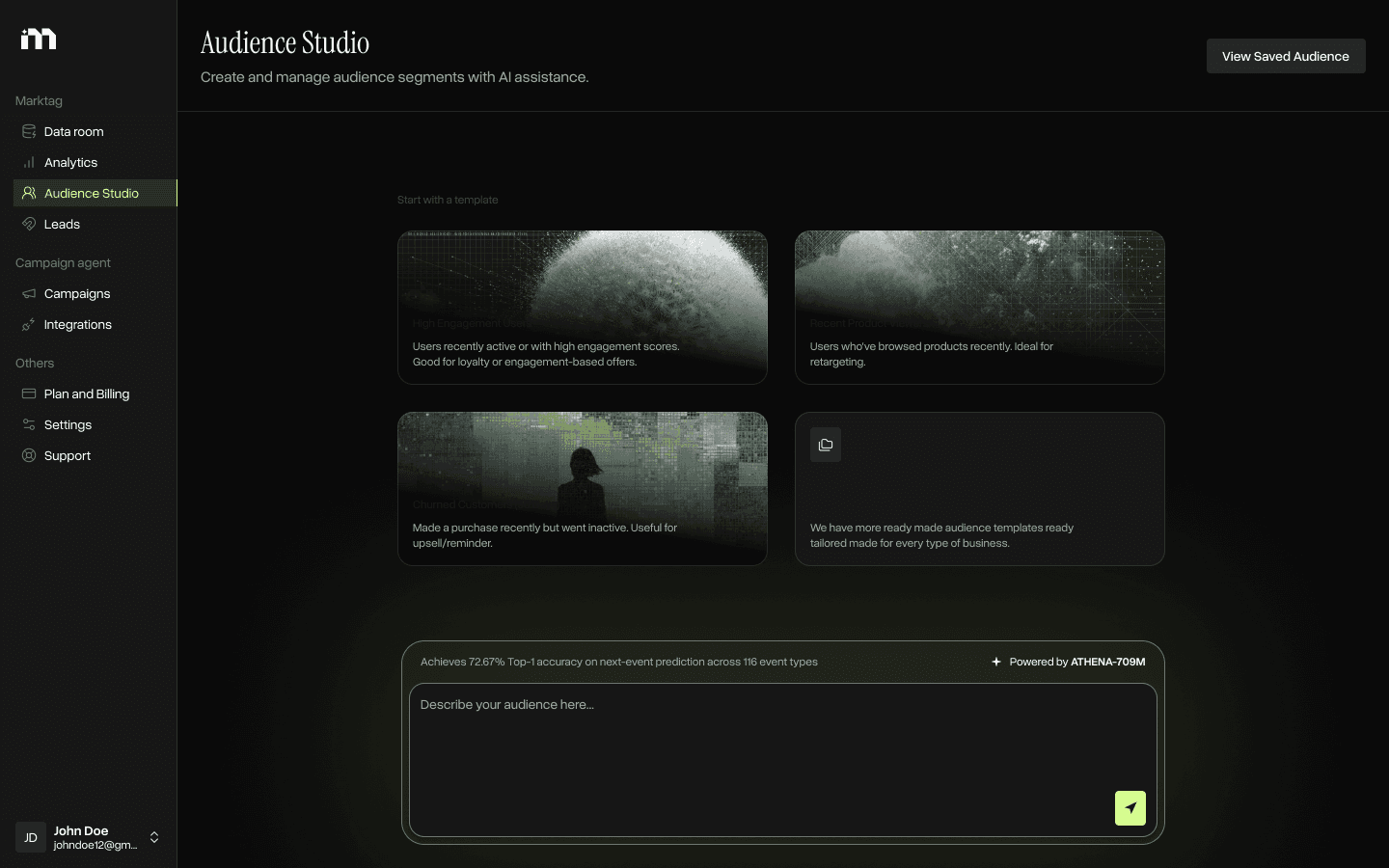
Customer engagement platforms such as Markopolo process behavioral signals in real-time, capturing hesitation patterns, scroll depth, and comparison behavior.
The goal is to understand customer intent and behavior patterns, not just count clicks. Harvard Business Review states that companies using advanced analytics become 5% more productive and 6% more profitable.
Traditional analytics tells you what happened. Engagement analytics tells you why and what comes next. When someone abandons a cart, basic analytics records the event. Engagement analytics reveals they compared prices for three minutes, visited from mobile during lunch, and previously bought after reading reviews.
How to Collect Customer Engagement Data for Analysis
Implement Comprehensive Tracking Across Channels
Track every customer interaction across digital properties. Install tracking pixels that capture page views, clicks, and product interactions. Connect email platforms to monitor engagement. Integrate your CRM to link offline and online behavior. Advanced systems capture behavioral nuances—mouse movements show hesitation, rage clicks indicate frustration, and session depth reveals research phase.
Centralize Data in a Unified Hub
Centralize data in a unified platform connecting website tracking, CRM, app interactions, and purchase history. A Journal of Marketing Research study found that businesses using unified customer data platforms saw 2.5x higher customer lifetime value.
Capture Behavioral Context, Not Just Events
Collect context around each action. Modern systems use behavioral vectorization to create semantic representations of customer intent. AI models can predict customer actions more accurately than traditional event-based tracking.
How to Use Engagement Analytics to Increase Customer Acquisition and Retention
Identify High-Intent Prospects
Engagement analytics reveals which prospects are closest to buying. Look for repeated visits, deep content engagement, pricing page views, and competitor comparisons. Create scoring models weighting behaviors by conversion correlation. Markopolo's Audience Studio creates dynamic cohorts that update as behavior changes, automatically prioritizing high-intent prospects.
Personalize Based on Individual Behavior
Move beyond inserting first names into emails. Real personalization addresses individual needs and buying patterns. McKinsey research shows personalization can reduce acquisition costs by up to 50% and lift revenues by 5-15%. Markopolo's Campaign Agent creates unique journeys—sending price-match guarantees to price-sensitive shoppers while offering premium buyers VIP access.
Re-engage Declining Customers
Identify customers drifting away before they churn. Declining login frequency or reduced purchases signal risk. Use behavioral data to understand why engagement dropped, then tailor re-engagement strategies accordingly.
Key Metrics in Customer Engagement Analytics
Customer Effort Score (CES)
CES measures how easy you make things for customers. According to IBM, CEB found that 94% of customers with low-effort experiences intend to repurchase versus just 4% with high-effort experiences. Track CES across touchpoints to identify and eliminate friction.
Net Promoter Score (NPS)
NPS measures loyalty by asking how likely customers are to recommend you. Track over time and across segments. Follow up with detractors to address concerns and thank promoters to encourage referrals.
Customer Lifetime Value (CLV)
CLV predicts total revenue a customer will generate. Calculate by multiplying average purchase value by frequency and lifespan. Use CLV to inform acquisition spending and segment marketing efforts.
Churn Rate
Churn measures the percentage of customers who stop buying. Track leading indicators like declining usage or support complaints to intervene before cancellation.
Engagement Rate
Engagement rate measures how actively customers interact with your brand. High engagement correlates with retention and revenue. Track changes over time to understand content resonance.
How Does Customer Engagement Analytics Benefit Businesses
Increases Revenue Through Precision Targeting
Analytics shows which customers are ready to buy and which need nurturing. This precision increases conversion rates 2-3x compared to demographic targeting alone while reducing wasted spend.
Reduces Churn Through Early Intervention
Identifying at-risk customers before they leave enables timely intervention. Since acquiring new customers costs 5-25x more than retaining existing ones (Bain & Company), small retention improvements dramatically boost profitability.
Improves Products Through Usage Insights
Engagement data reveals which features customers value and which they ignore, guiding development priorities toward what actually matters to users.
Enhances Experience Through Personalization
71% of consumers expect personalized interactions (McKinsey). Companies that deliver meet this expectation and build loyalty while those that don't lose business to competitors.
5 Best Practices for Customer Engagement Analytics
1. Focus on Actionable Metrics
Track metrics that drive decisions. Connect engagement metrics to business outcomes rather than vanity numbers.
2. Analyze Behavior in Context
Never interpret data in isolation. Consider industry benchmarks, product complexity, and customer lifecycle stage.
3. Test and Iterate
Use analytics to generate hypotheses, then test them. Run A/B tests and let data determine winners.
4. Combine Quantitative and Qualitative
Supplement behavioral data with surveys and interviews to understand the "why" behind the "what."
5. Ensure Privacy and Transparency
Collect data responsibly following regulations like GDPR. Be transparent about data use to build customer trust.
Why is it Important to Analyze the 5 Stages of Customer Engagement
Awareness Stage
Track content views, time on site, and pages per session to understand which channels and content attract high-quality prospects. Optimize top-of-funnel marketing based on these insights.
Consideration Stage
Monitor repeat visits, competitor searches, and deep content engagement. Markopolo identifies research phases through behavioral patterns, enabling timely intervention with relevant information.
Purchase Stage
Track cart additions, checkout starts, and abandonment points. Identify friction sources and optimize based on preferences like device type and time of day.
Retention Stage
Monitor product usage, support interactions, and repurchase frequency. Declining engagement signals churn risk—intervene before customers decide to leave.
Advocacy Stage
Track referrals, reviews, and community participation. Nurture advocates with recognition and exclusive access—they drive growth through word-of-mouth.
How Does Analytics Help the 4 P's of Customer Engagement
Presence
Analytics reveals where customers spend time and how they prefer to communicate. Optimize your channel presence based on engagement data. Markopolo orchestrates engagement across email, SMS, push notifications, WhatsApp, and voice calls based on individual preferences.
Personalization
Use behavioral data to personalize content, timing, offers, and channels. Epsilon found that 80% of customers are more likely to purchase when brands offer personalized experiences.
Proactivity
Enable automated workflows triggered by engagement patterns. When analytics detects high-intent behavior, route leads to sales immediately. When risk signals appear, alert customer success teams.
Performance
Track engagement metrics across campaigns and channels. Identify what works and scale it. Link engagement metrics to business outcomes—focus on conversion and revenue over vanity metrics.
Using Predictive Analytics to Reduce Churn
Predictive analytics uses historical engagement data to forecast future behavior. Models analyze patterns preceding past cancellations, then identify current customers showing similar signals like declining login frequency, reduced usage, support tickets, and competitor content engagement.
Build churn prediction models using machine learning trained on your historical data. Once you identify at-risk customers, create targeted retention campaigns.
Markopolo's AI processes behavioral vectors to predict customer actions with over 90% accuracy, identifying abandonment risk three pages before it happens.
Personalization Through Engagement Data
Effective personalization requires understanding individual preferences, behaviors, and contexts. Tailor content to browsing history interests. Adjust messaging tone based on engagement patterns. Optimize timing based on when individuals typically engage. Select channels based on response rates.
Use behavioral segmentation rather than demographic segmentation. Two people with identical demographics might behave completely differently—one researches extensively, another makes impulse purchases. Their needs differ despite matching demographics.
Markopolo creates individual AI agents for each customer that understand complete behavioral fingerprints and orchestrate unique journeys.
How Markopolo AI Solves Common Customer Engagement Analytics Challenges
Fragmented Data Across Systems
Most businesses struggle with data scattered across analytics tools, CRMs, email platforms, and payment processors. Markopolo's Data Room powered by MarkTag connects all sources into a unified hub, creating complete attribution models that track every touchpoint.
Understanding Intent Beyond Actions
Traditional analytics captures events without context. MarkTag transforms raw events into 384-dimensional behavioral vectors representing semantic understanding of customer intent—capturing hesitation patterns, comparison behavior, and contextual signals that reveal why customers act.
Scaling Personalization
Creating personalized experiences for millions manually is impossible. Markopolo's Campaign Agent uses AI to generate unique customer journeys at scale, processing behavioral data in under 50 milliseconds for real-time journey generation.
Acting in Real-Time
Many platforms are retrospective. Markopolo processes engagement data in real-time using streaming analytics, detecting behavioral changes as they happen and triggering immediate responses. The AI identifies abandonment risk before customers leave.
Proving ROI
Markopolo's Analytics system uses lifetime attribution models that assign value to each engagement across the complete customer journey. Businesses see exactly which activities drive conversions, retention, and customer lifetime value.