10 Best Push Notification Marketing Automation Tools for eCommerce: Comparison, Pros, Cons (Full Guide 2026)
Sirazum Monir Osmani
Tool | Best feature | Starting price | Push channel | Key eCommerce use cases |
|---|---|---|---|---|
Markopolo AI | 1:1 hyper-personalization and behavioral intelligence | Custom pricing; 30-day free trial with no credit card required | Web (browser), mobile (app) | Cart, checkout, and browse recovery abandonment, product nudges, price drops, stock and wishlist alerts, lifecycle automation, custom campaigns |
PushEngage | Quick no-code campaign setup | Starts at $8/month billed annually or $19/month billed monthly; free plan available | Web (browser), mobile (app) | Cart reminders, price drops, stock alerts |
OneSignal | High-volume delivery infrastructure | Free plan available; Growth starts at $19/month plus usage charges | Web (browser), mobile (app) | Segmented campaigns, cart recovery, promotions |
Klaviyo | Native integration with its email and SMS ecosystem | Free plan available; paid pricing starts based on contacts and usage | Web, (browser), mobile (app) | Lifecycle push flows, cart reminders |
Omnisend | Pre-built automation templates | Free plan includes up to 500 web push notifications/month; Standard starts at $11.20/month for 500 contacts | Web (broswer) | Cart recovery, browse abandonment, product alerts |
Pushly | Publisher-grade monetization tools | Free plan available; Pro starts at $15/month plus $0.005 per active device | Web (broswer) | Cart rescue, behavioral targeting, upsells |
Pushwoosh | Cross-platform SDK flexibility | Free for up to 1,000 monthly active users with unlimited push notifications; custom pricing above that limit | Web (browser), mobile (app) | Cart recovery, retention campaigns |
PushAlert | Fast setup | Free for up to 3,000 subscribers; paid plans start at $12/month | Web (broswer) | Cart alerts, price drops, restock notifications |
VWO Engage (formerly PushCrew) | Built-in experimentation capabilities | Custom, demo-based pricing | Web (broswer) | Cart nudges, exit-intent offers |
WebEngage | Enterprise-grade journey orchestration | Custom pricing; contact sales for a quote | Web (browser), mobile (app) | Lifecycle push, segmentation, retention |
Start using push notification automation tool for your eCommerce brand today
Explore Markopolo AI's push notification fueatres
No credit card required

10 best push notification marketing automation tools for eCommerce
Markopolo AI
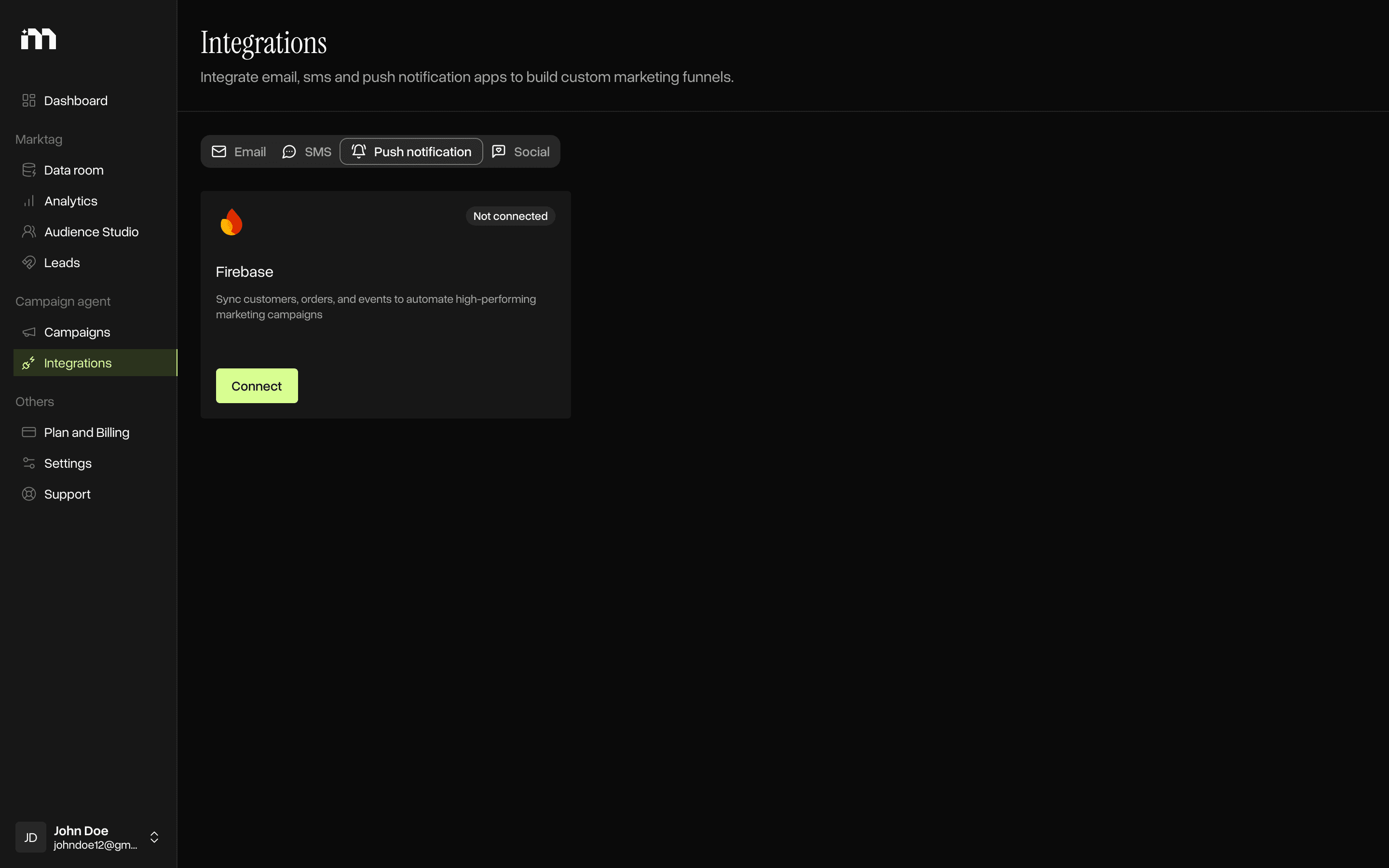
Markopolo AI is a push notification automation tool built for eCommerce brands that want to incorporate push messaging into their lifecycle marketing.
The platform combines 1:1 hyper-personalization with behavioral targeting, which allows online stores to respond to shopper behavior in real time. It can send both web (browser) and mobile (app) notifications.
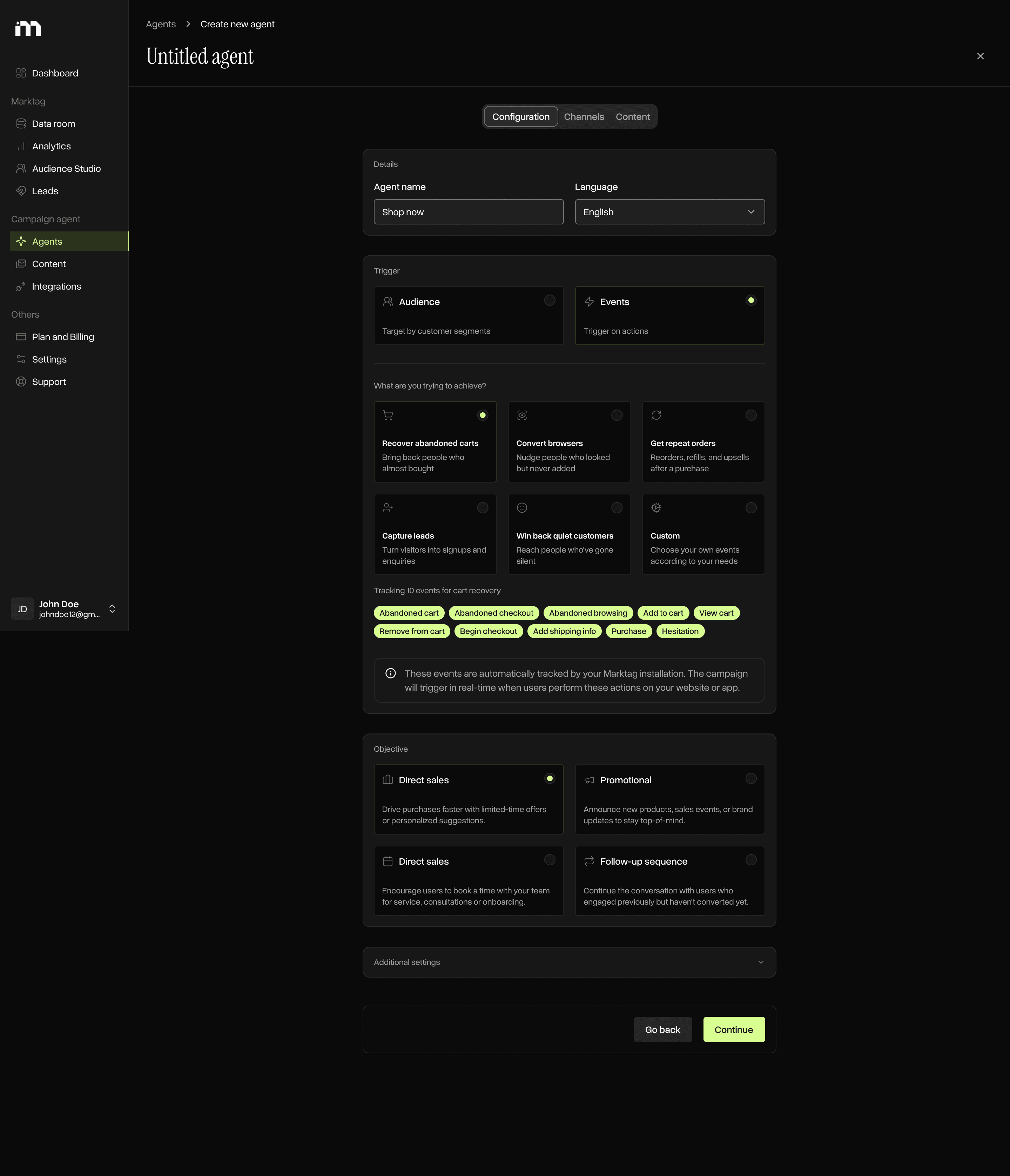
Markopolo AI first tracks what shoppers do inside your online store through its proprietary behavioral intelligence. It then identifies individual customers in real time through behavioral vectorization, which considers signals such as mouse movements, browsing and scrolling patterns, clicks, and other on-site interactions.
Markopolo AI lets eCommerce marketers and store owners configure push campaigns by setting a clear objective and mapping it to specific shopper events that trigger each notification.
These can include welcome flows, browse abandonment, cart abandonment, checkout abandonment, personalized product recommendations, win-back campaigns, reorder reminders, etc.
Markopolo AI then identifies the right person for each campaign and crafts a 1:1 hyper-personalized push notification tailored specifically to that receiver. As a result, eCommerce brands using Markoplo AI see improved revenue recovery and customer retention through non-spammy, gentle nudges that resonate with each shopper.

Markopolo AI also comes with revenue attribution, which shows how much revenue each push automation campaigns generate directly inside its dashboard. It also gives you a clear picture of your push automation performance metrics, such as open rates, click-through-rates, dismissed rates, etc.
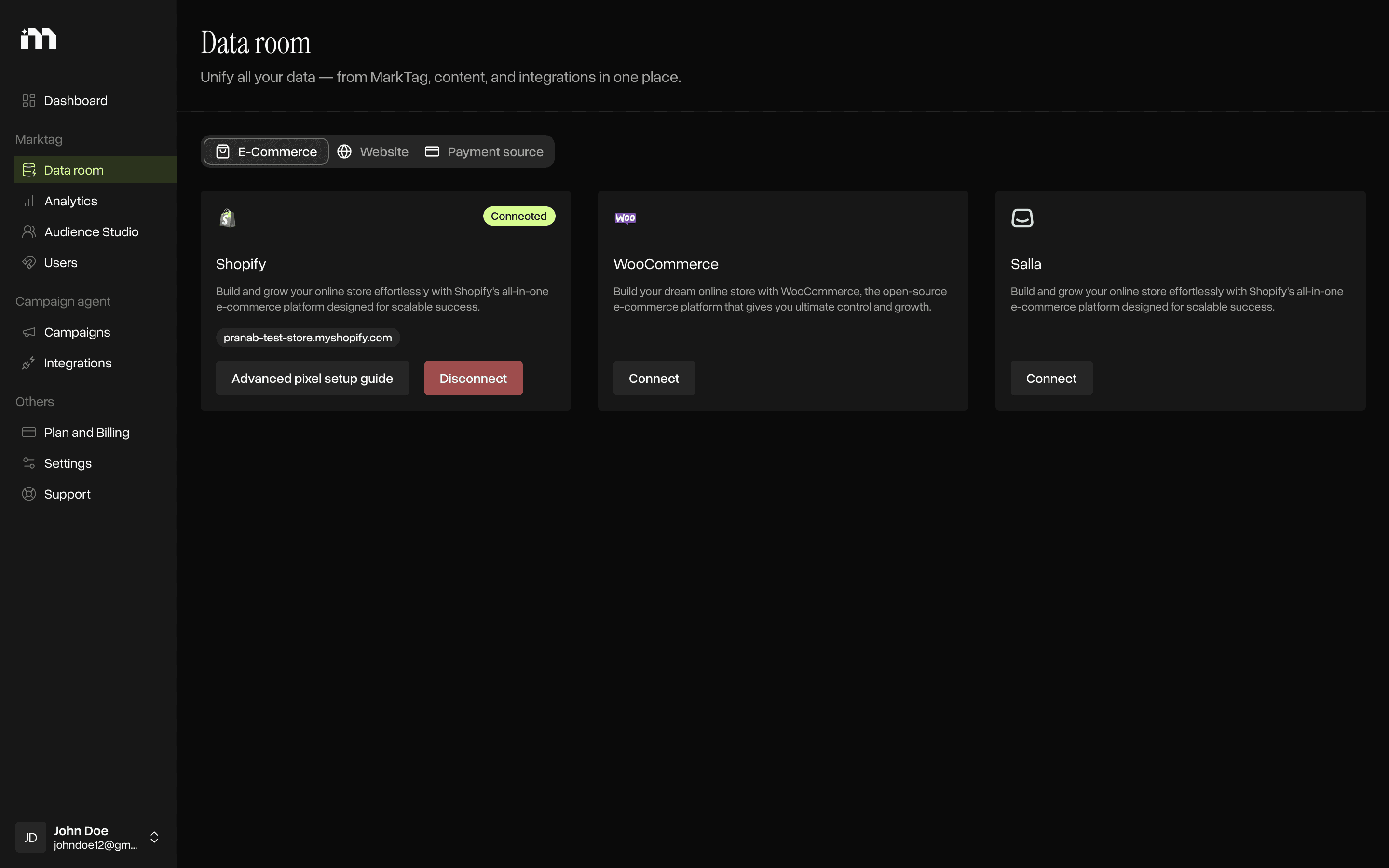
Merchants using Shopify, WooCommerce, BigCommerce, or custom eCommerce ecosystems can easily set up Markopolo AI. CRM integration is also avaialbe in this platform. Markopolo AI caters to online retail and eCommerce businesses of all sizes, from SMBs to mid-market and enterprise.
Pros
1:1 hyper-personalization
Behavioral intelligence
Real-time capabilities
Flexible pricing with customized plans
CRM integration
Context-aware and omnichannel stack: push notifications (both web and mobile), email, SMS, WhatsApp, AI voice calls.
Can be used a push notification only tool
White-glove onboarding
Audience segmentation
Cons
Not ideal for batch-and-blast campaigns
Requires active customer data to perform at its best
PushEngage
PushEngage is a reliable push notification automation tool for eCommerce teams that need web and mobile push campaigns without building a complex retention stack from scratch.
It supports common store-triggered campaigns such as welcome drips, cart abandonment, browse abandonment, price drop alerts, back-in-stock notifications, and order updates, making it practical for merchants that want straightforward recovery and re-engagement flows.
The platform also includes segmentation, automated workflows, rich notifications, scheduling, A/B testing, and analytics, so marketers can target subscribers based on behavior and campaign conditions.
Pros
Easy setup for web and mobile push notifications
Useful eCommerce automations for abandonment and product alerts
Segmentation and workflow-based targeting
Rich notifications with images and CTA buttons
Supports WooCommerce, Shopify, and other store ecosystems
Cons
Personalization is less advanced than 1:1 behavioral approach
More focused on push than a broader omnichannel automation stack
Advanced use cases may require plan upgrades or more configuration
OneSignal
OneSignal is a strong push notification automation software for eCommerce brands that want to manage push, email, SMS, and in-app messaging from one customer engagement platform. For online stores with both web and mobile audiences, it can support product updates, promotional campaigns, onboarding messages, abandoned cart recovery, and re-engagement journeys across multiple channels.
OneSignal works well for teams that want scalable message delivery, segmentation, and journey-based automation without heavy engineering work. Marketers can build targeted segments, trigger abandoned cart reminders, and coordinate follow-up messages based on customer activity.
Pros
Supports web push, mobile push, email, SMS, and in-app messaging
Useful for abandoned cart and re-engagement workflows
Strong segmentation and customer journey automation
Scales well for apps and high-volume messaging needs
Flexible enough for both product and marketing teams
Cons
Advanced setup may require technical support or developer involvement
Personalization depends heavily on how well events, tags, and segments are configured
Klaviyo
Klaviyo is a strong option for eCommerce brands that want push notifications to work alongside email, SMS, WhatsApp, and other customer lifecycle channels. Its automation flows can trigger messages from shopper behavior, including abandoned carts, browse activity, post-purchase engagement, win-back campaigns, and product-related follow-ups.
For push specifically, Klaviyo is most useful when a brand already uses it as its customer data and messaging hub. Marketers can add mobile push notifications to flows such as abandoned cart reminders, using customer events, segments, variables, and template tags to personalize the message.
Pros
Strong email, SMS, and push automation in one platform
Useful flow builder for cart, browse, post-purchase, and win-back journeys
Advanced segmentation based on customer data and behavior
Good fit for Shopify and other eCommerce ecosystems
Personalization options using events, properties, and dynamic content
Cons
Push is more mobile-app focused than web-push focused
Can feel complex for merchants that only need push automation
Not ideal for real-time 1:1 behavioral push personalization
Pushly
Pushly is a push notification platform that fits eCommerce brands looking for structured web push campaigns, subscriber targeting, and revenue-focused reporting. Its eCommerce use cases include abandoned cart, browse abandonment, back-in-stock, price drop, and post-purchase automations, which makes it useful for stores that want to bring shoppers back after high-intent actions.
The software also supports audience segmentation based on behavior and events, helping marketers send more relevant notifications instead of the same message to every subscriber. Still, Pushly is more campaign- and segment-driven than deeply individualized.
Pros
Strong web push notification capabilities
Useful eCommerce automations for cart, browse, stock, and price alerts
Behavior- and event-based audience segmentation
Revenue analytics for push campaign performance
Suitable for teams that want focused push execution
Cons
Not advanced enough for 1:1 behavioral personalization
More limited as an omnichannel lifecycle marketing stack
Best results depend on a well-built subscriber base
Omnisend
Omnisend can be a very good push notification automation tool for eCommerce brands that want web push to work alongside email and SMS.
Omnisend’s push features support manual campaigns, automated workflows, audience segmentation, abandoned cart messages, browse abandonment triggers, product-view triggers, scheduled sends, personalization tokens, and click-through reporting.
The platform is especially useful for merchants that already rely on Omnisend for lifecycle automation and want to add browser push into cart recovery, promotional, or re-engagement flows.
Pros
Combines web push with email and SMS automation
Useful triggers for cart, browse, and product-view activity
Audience segmentation and personalization tokens
Pre-built push templates and scheduled sends
Click-through reporting and real-time delivery tracking
Cons
No 1:1 behavioral personalization
Focused on web push than native mobile app push
Best fit if the store already wants Omnisend’s broader email/SMS stack
Pushwoosh
Pushwoosh is a customer engagement platform for eCommerce brands that want push notifications as part of a broader messaging setup. It supports push notifications, in-app messages, email, SMS, WhatsApp, web popups, and other channels, making it useful for stores that need coordinated app and website communication rather than push alone.
Pushwoosh is more mobile-engagement oriented.
For eCommerce use cases, Pushwoosh can support cart abandonment reminders, re-engagement campaigns, onboarding flows, product updates, and lifecycle journeys through its Customer Journey Builder. Its segmentation and analytics help teams track delivery, opens, interactions, and campaign performance.
Pros
Supports push, in-app, email, SMS, WhatsApp, and web popups
Useful Customer Journey Builder for automated lifecycle campaigns
Strong fit for mobile-first eCommerce apps
Segmentation and campaign analytics included
Can support cart abandonment and re-engagement flows
Cons
Less specialized than for 1:1 eCommerce behavioral personalization
May feel more app-focused than web-store focused
Advanced omnichannel setup can require careful configuration
Cons
Less advanced for 1:1 behavioral personalization
More web-push focused than omnichannel lifecycle-focused
Segmentation may require stronger setup through variables or site data
PushAlert
PushAlert is a web push notification automation tool for eCommerce brands that want cart recovery, product alerts, and visitor re-engagement without depending on a single store platform. It supports abandoned cart notifications, in-stock alerts, price-drop alerts, shipment alerts, A/B testing, conversion funnels, and performance analytics, making it practical for stores that need focused push automation rather than a full enterprise engagement suite.
The tool also offers plugins for WooCommerce, WordPress, Shopify, Magento, Joomla, and PrestaShop, along with REST API options for more custom setups.
Pros
eCommerce automations for cart, stock, price-drop, and shipment alerts
Works across multiple eCommerce platforms
A/B testing and conversion funnel support
REST API option for custom implementation
Useful analytics for campaign performance
Cons
Not ideal for 1:1 behavioral personalization
More focused on web push than omnichannel lifecycle marketing
Custom stores may need technical setup for best results
WebEngage
WebEngage is a customer engagement and retention platform for eCommerce brands that need push notifications as part of a wider omnichannel lifecycle strategy. It supports mobile push, web push, WhatsApp, SMS, email, and other engagement channels, making it suitable for brands that want to coordinate campaigns across multiple customer touchpoints.
For push automation, WebEngage offers segmentation, contextual messaging, templates, campaign reporting, and workflows based on user actions such as cart activity or checkout drop-off. It is a capable option for mature teams that already think in terms of journeys, cohorts, and retention analytics.
Pros
Supports web push and mobile push notifications
Omnichannel engagement across email, SMS, WhatsApp, and other channels
Segmentation based on user behavior and preferences
Campaign reporting and performance analytics
Useful for journey-based retention marketing
Cons
Can feel complex for smaller eCommerce teams
Not specialized for 1:1 shopper-level personalization
Requires strong data and journey setup to get the best results
VWO Engage
VWO Engage is a web push notification tool for eCommerce brands that want to re-engage visitors after they leave the website. It supports triggered campaigns that can send automated notification sequences based on real-time website behavior, including buyer-journey nudges, cart recovery, onboarding messages, and other action-based flows.
The platform also offers scheduling, notification expiry, local time-based delivery, and segmentation options, which makes it useful for time-sensitive promotions and targeted campaigns.
Pros
Strong web push notification capabilities
Triggered campaigns based on website behavior
Scheduling, expiry, and local time-based delivery
Useful for cart recovery, onboarding, and promotions
Part of the broader VWO platform
Which push notification automation software is best for your eCommerce store?
The best push notification marketing tool for an eCommerce store depends on its specific needs and goals, including tech stack, channels, team workflow, and how aggressively it wants to personalize and automate customer journeys.
Understanding how push notification automation works in eCommerce, from behavioral triggers and segmentation to timing, consent, and attribution; makes it easier to identify which capabilities your store actually needs.
The following tools are best suited to different use cases, so choose the one that most closely matches your requirements.
Markopolo AI is the best fit when you want eCommerce-specific 1:1 behavioral personalization and lifecycle marketing.
PushEngage works well for merchants that need simple, reliable push campaigns without a heavy setup.
OneSignal makes sense if your store needs scalable messaging across web, app, email, SMS, and in-app channels.
Klaviyo is strongest when push notifications need to plug into an existing email and SMS lifecycle strategy.
Pushly is a practical choice for brands focused on web push targeting and measurable revenue impact.
Omnisend suits teams that want commerce-friendly omnichannel automation with a simpler learning curve.
Pushwoosh should be considered when mobile app engagement is central to your retention strategy.
PushAlert fits stores that need platform-flexible web push automation for carts, alerts, and re-engagement.
VWO Engage is useful for behavior-based web push campaigns inside the broader VWO ecosystem.
WebEngage is better for mature teams building advanced retention journeys across several channels.
Use Markopolo AI for eCommerce push notification automation
You can use our platform both as a push-only tool and an omnichannel tool
No credit card required.
How to choose push notification automation tools for eCommerce?
By matching how your store sells, choose a tool that collects subscribers reliably and uses customer events to drive automation.
The right platform must recover revenue now while giving you enough data control, consent management, and channel flexibility to support future lifecycle campaigns.
Match the tool to the push channel
First and foremost, decide whether you need browser-based web push, native mobile app push, or both. Web push reaches site visitors who opt in through a browser. Mobile app push only matters if you have an app. A merchant without one should not pay mainly for app-engagement infrastructure.
Prioritize eCommerce event triggers
Your minimum useful trigger is cart abandonment because it targets shoppers closest to purchase. As order volume grows, add browse abandonment, price-drop, back-in-stock, post-purchase, and win-back workflows to cover more stages of the buying journey.
Check native store integrations
The platform should easily receive product, customer, cart, inventory, and order events from Shopify, WooCommerce, BigCommerce, or your custom stack. Weak integration creates delayed triggers, missing personalization fields, and unreliable attribution.
Evaluate attribution, consent, and scalability
Look past delivery and click rates. Check revenue attribution, conversion tracking, subscriber controls, permission handling, frequency caps, and pricing at your projected subscriber volume so performance stays measurable as you scale.
What to check before implementing push notification automation tools for eCommerce?
Before setting up push marketing software for your eCommerce brand, confirm that it fits how you sell, handles consent properly, and works with reliable customers and store data.
Permission and opt-in experience
Push notifications require user permission, making the opt-in experience central to subscriber growth. Check whether the platform supports clear permission prompts, appropriate timing, and consistent delivery across browsers, devices, and operating systems. Shoppers are more likely to subscribe when the prompt communicates a clear benefit.
Frequency and data accuracy
Choose a tool with frequency controls that prevent shoppers from receiving too many reminders. Cart recovery, inventory alerts, and price-drop campaigns also require accurate product, cart, and order events. Reporting should separate direct conversions from assisted conversions to avoid overstating push-generated revenue.
Integration and real-time sync
The platform should sync customer behavior, cart activity, inventory, and order data with Shopify, WooCommerce, or your custom store infrastructure. Delayed or incomplete data can result in outdated alerts and poorly timed campaigns.
Artificial intelligence and automation control
AI should improve decisions such as audience selection, send timing, message relevance, and the next best action. So, when choosing an AI push notification tool for eCommerce, check what the AI actually automates, which customer signals it uses, and whether your team can review, adjust, or override its recommendations.
FAQs
Can Markopolo AI be used as a push notification automation tool for eCommerce?
Yes. Markopolo AI automates web and app push notifications for eCommerce stores using real-time customer behavior and first-party data.
Can eCommerce brands use Markopolo AI solely for push notification automation?
Yes, brands using this platform can focus solely on push notifications. Markopolo AI comes with omnichannel and context-aware features (push, email, SMS, WhatsApp, AI voice). So, it’s up to the user which channels they want to use.
How can eCommerce brands use push notification marketing tools without being spammy?
Send notifications only when shopper behavior creates a relevant reason, such as cart abandonment, a price drop, or an inventory update. Apply frequency limits and suppress messages after purchase.
Why are first-party, server-side, and cookieless tracking important for eCommerce push marketing tools?
They provide more reliable behavioral and purchase data when browser cookies, privacy restrictions, or ad blockers reduce visibility. Better data produces more accurate triggers, targeting, and attribution.
Why is behavioral targeting important for eCommerce push notifications?
Behavioral targeting connects each notification to what the shopper viewed, added, abandoned, or purchased. This makes messages more timely and relevant than sending the same promotion to every subscriber.
When should you use an omnichannel eCommerce marketing automation tool instead of a push-only tool?
Use a push-only tool for simple browser or app campaigns. Choose omnichannel marketing automation tools for eCommerce when customer journeys need to coordinate push with email, SMS, WhatsApp, or other channels without repeating messages.
FAQs
Can Markopolo AI be used as a push notification tool for ecommerce?
Yes. Markopolo AI includes web push notifications for eCommerce, helping recover abandoned carts, re-engage visitors, and increase repeat purchases.
Does Markopolo AI support web push notification automation for ecommerce brands?
Yes. It automates web push notifications using customer behavior, AI-powered audience segmentation, and real-time shopping events.
Can ecommerce businesses use Markopolo AI only for push notifications?
Yes. You can use only its push notification capabilities, although combining push with email, SMS, and WhatsApp delivers better customer engagement.
Does Markopolo AI automate personalized push notifications using AI?
Yes. It uses AI and first-party customer data to personalize push notifications based on browsing behavior, purchase intent, and lifecycle stage.
Is Markopolo AI a good alternative to push notification tools like PushOwl, OneSignal, and PushEngage?
Yes. Markopolo AI is a good choice for brands seeking alternatives for PushOwl, OneSignal, PushEngage, etc. that want 1:1 hyper-personalization and behavioral intelligence.