Real-time customer engagement for ecommerce: definition, strategies, and benefits
Sirazum Monir Osmani
What is real-time customer engagement?
Real-time customer engagement involves businesses interacting with customers instantly across channels like SMS, WhatsApp, push notifications, emails, and voice calls to deliver timely, personalized responses.
It means recognizing what customers are doing in the moment. It could be browsing, asking questions, or abandoning their carts. Then you respond right away with relevant offers, support, or a gentle nudge. This turns one-size-fits-all emails into dynamic experiences that use real-time data about each customer’s behavior and preferences.
Let's see how you can utilize real-time customer engagement to boost conversion and increase revenue for your ecommerce store.
15 strategies for real-time customer engagement
1. Nudge customers right when they're hesitating
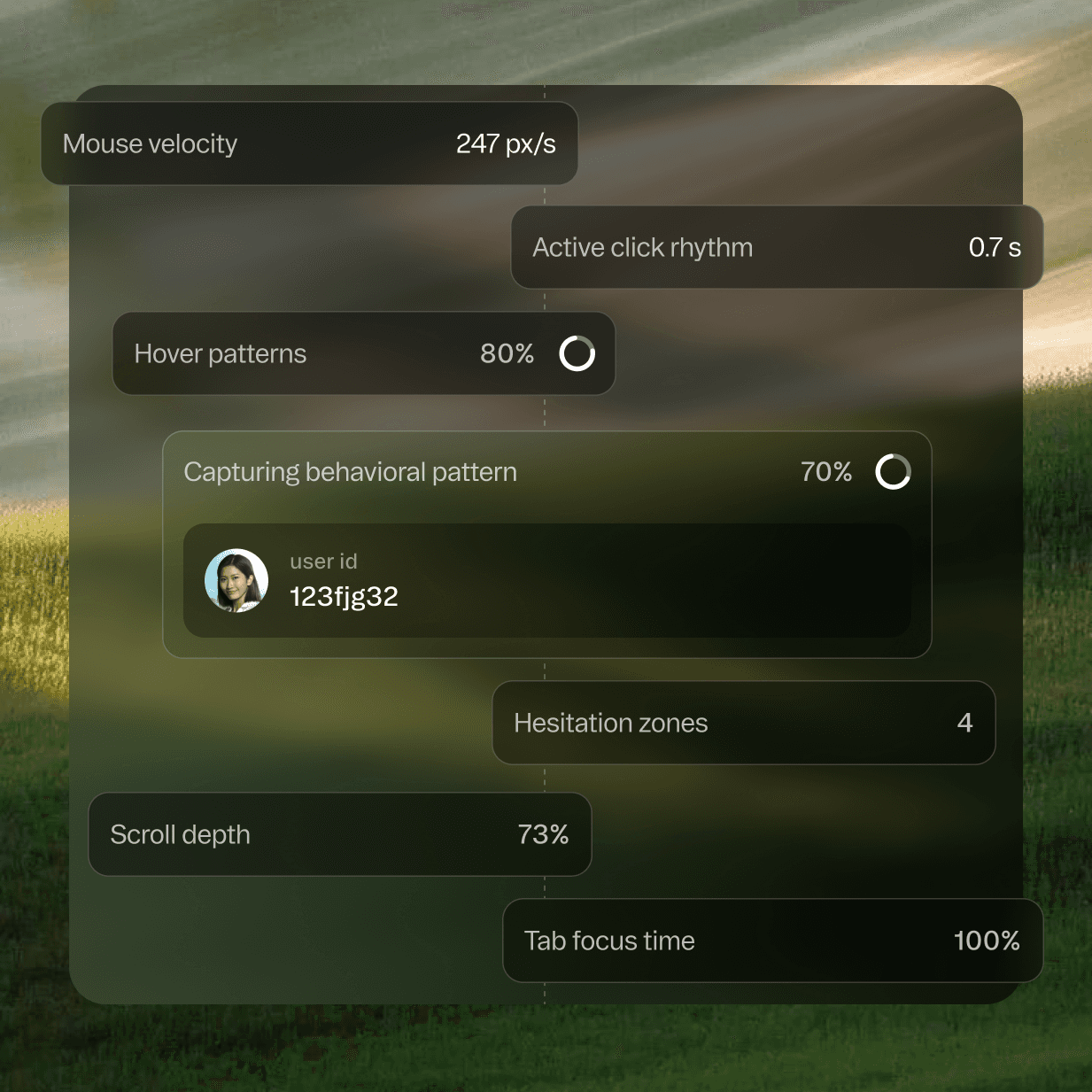
Every online store has visitors who hover over the "Add to Cart" button. At the same time, they zoom into product images, take screenshots, and then just scroll away. AI-native customer engagement platforms pick up on these micro-hesitation signals in real time. Instead of letting that moment pass, the AI sends a WhatsApp text from a product expert that feels personal and warm. Such as,
"Hey, Michael! I saw you checking out that jacket. Something that usually gets overlooked about it is…” |
|---|
It catches people in the exact moment of indecision and gives them a reason to stay engaged, using a format they don't expect.
2. Show shoppers someone who bought just like them
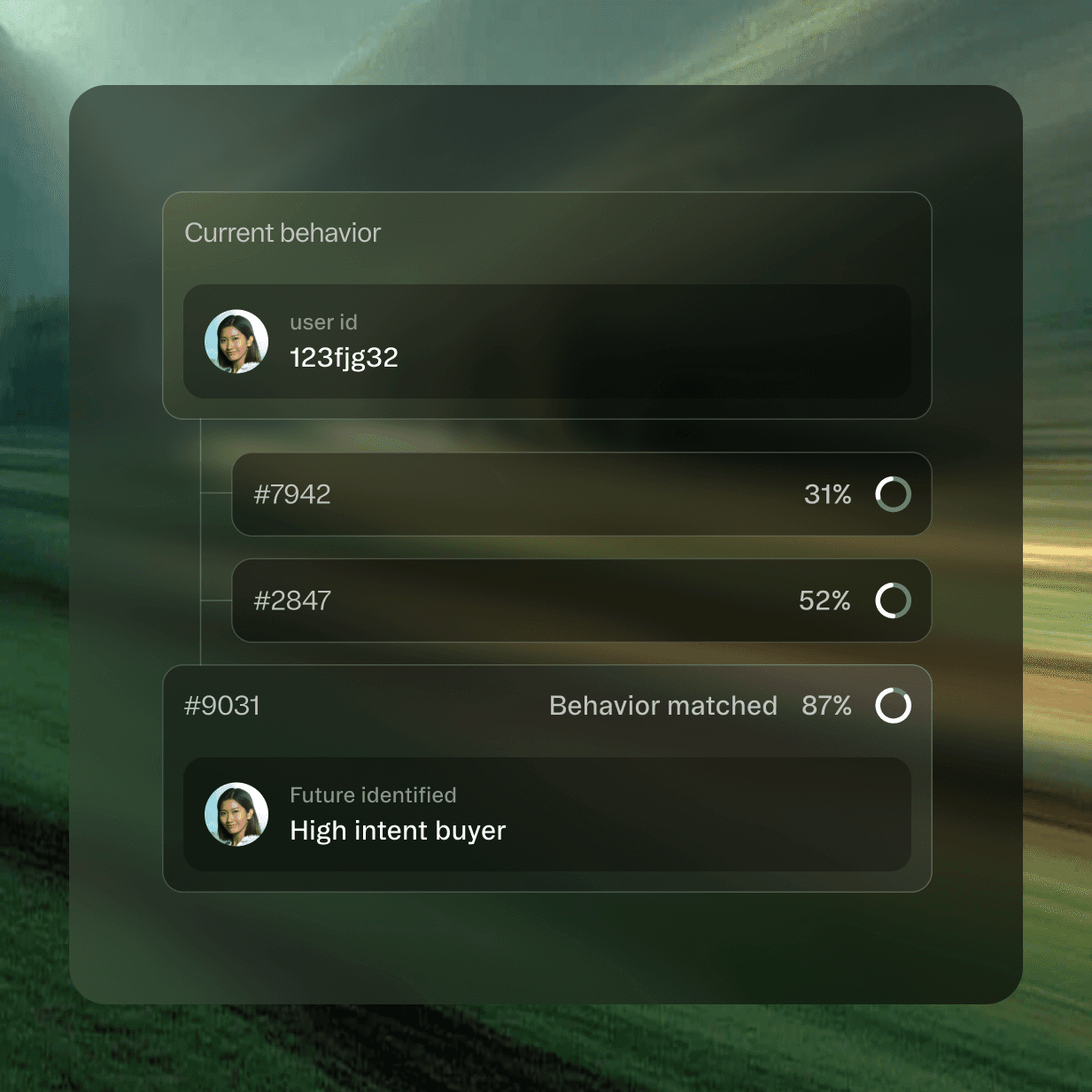
Generic "500 people bought this" popups don't move the needle anymore. In this age of AI and automation, specialized tools do something smarter. Markopolo’s behavioral vectorization engine creates a unique fingerprint for every customer. It then scans past buyers to find someone whose browsing pattern closely matches the current visitor.
The system looks for buyers with the same hesitation points, same comparison habits, or perhaps the same scroll depth. Then the AI generates a beautiful email, like,
"People who browsed exactly like you ended up loving this product. Here's what convinced them." |
|---|
This isn't demographic targeting. It's behavioral twin matching powered by ecommerce AI agents, and it makes social proof feel genuinely relevant to each individual shopper.
3. Intervene before cart abandonment actually happens
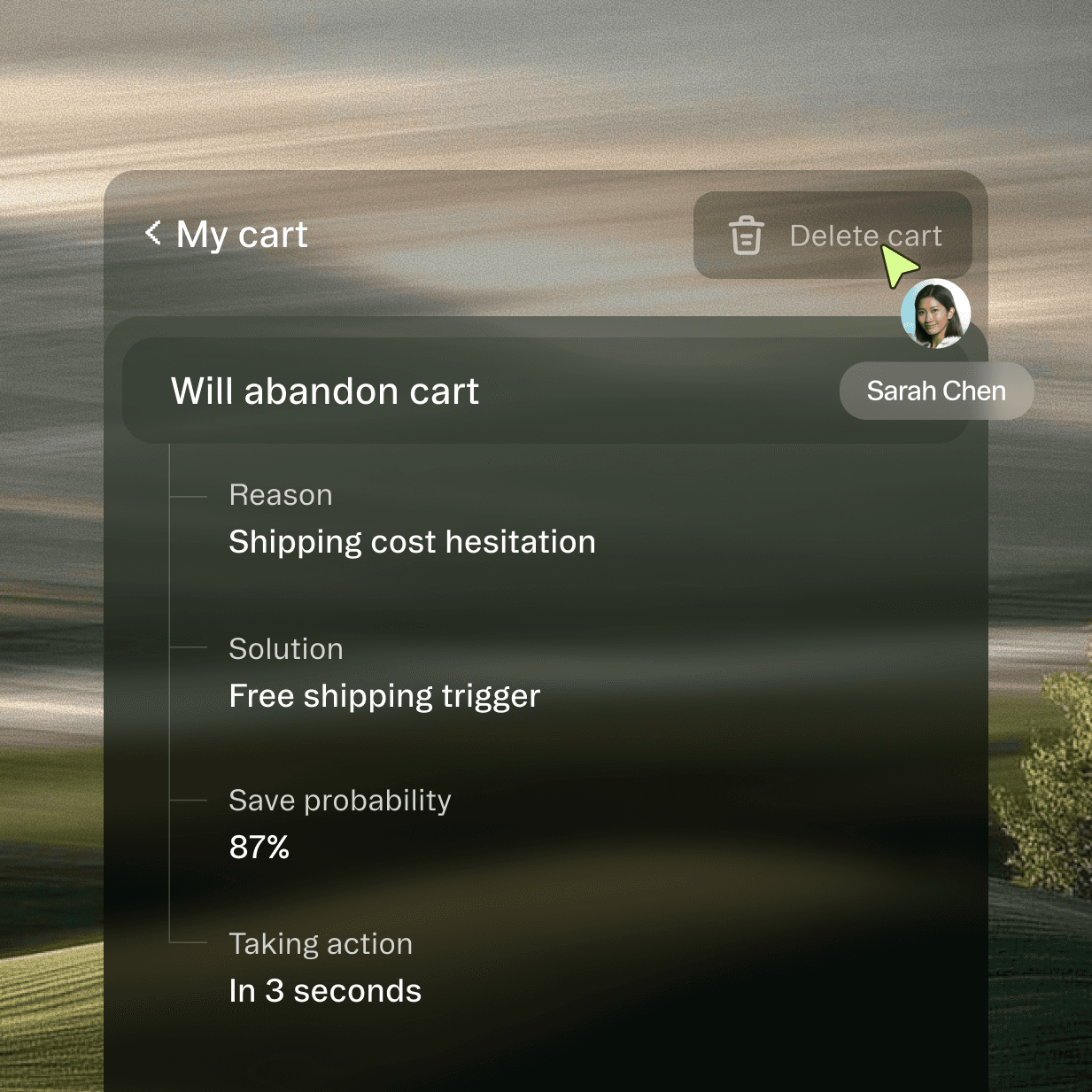
A real-time customer engagement platform does not wait for abandonment to happen and then react. It continuously tracks "behavioral momentum," which is basically the speed at which a visitor is moving toward checkout. The moment that momentum drops (say, someone who was rapidly adding items suddenly stalls on the shipping page), the AI jumps in with a contextual push notification. For example:
📦💨Free express shipping unlocked for the next 30 mins |
|---|
The whole point is to act on deceleration, not abandonment. You solve the friction before the customer ever hits the exit button.
4. Quietly optimize their cart while they keep browsing
Here's a subtle one. After a customer adds something to their cart, they usually keep browsing. Most online stores ignore that window. But tapping that opportunity would recover a lot of lost revenue. Stores can use AI agents to analyze the visitor's full behavior in the background and, about an hour later, send a single SMS with a "cart upgrade" suggestion.
It recommends a complementary product the visitor never even saw but that aligns with their inferred interests. So if predictive intelligence reveals outdoor-enthusiast patterns, the suggestion might come from a completely different category. The cart becomes a living, intelligent recommendation engine that keeps working even when the customer isn't looking at it.
5. Turn user frustration into a personal rescue moment
Things like rage-clicking, rapid back-button taps, and abandoning forms mid-way are all signs your visitor is getting frustrated and about to drop off. MarkTag (Markopolo AI’s composable CDP) captures all of them in real time. Instead of pushing a promotional message into that negative experience, Markopolo's AI pivots the entire engagement strategy on the spot.
If the visitor’s past behavior suggests they prefer voice calls, the platform can trigger an AI call within minutes. It can use a friendly customer-care persona that says,
“Hello Liah, it seems you may have run into an issue. Want me to help you finish your order over the phone?” |
|---|
This converts a moment of friction into a high-touch, human-feeling interaction. You turn potential churn into unexpected loyalty.
6. Map each buyer's peak purchase window
People shop in patterns they don't even notice. One person researches during lunch, thinks about it on the commute home, and buys on Saturday morning. Another person does everything in a single late-night session. Real-time customer engagement tools can build a temporal behavior profile over multiple sessions, essentially mapping each visitor's biological shopping rhythm. The AI then uses this to decide not just when to send a message, but what kind. A morning touchpoint might be a quick product image on WhatsApp. An evening one might be a detailed comparison email. Channel, content depth, and tone all adapt to the individual's time-based behavioral patterns.
7. Counter comparison shopping without being pushy
When a visitor starts toggling between product pages, copying product names, or spending extra time on pricing sections, those are clear comparison shopping signals. The worst response is to panic and throw a discount at them. A smarter real-time engagement strategy is to build a value positioning message based on what the visitor actually cares about. If they spent the most time reading warranty details, your message should lead with warranty. If they studied material specs, lead with quality.
The idea is to reverse-engineer what the comparison is really about by reading behavioral patterns, and then address that specific concern directly. No desperation discounts. Just relevant, well-timed persuasion that meets the shopper where their head already is.
8. Prevent returns before buyer's remorse kicks in
Returns are expensive, and most of them start with a feeling, not a product defect. The key is identifying buyers whose checkout patterns correlate with high return probability. Think rushed checkout flows, minimal time spent on the product page, or late-night impulse purchase signals. Once you spot those patterns, you can proactively send a "confidence builder" sequence within 24 hours of purchase. That could be an unboxing video, a styling guide, or a quick "here's how other customers use this" message on WhatsApp. You reinforce the purchase decision before doubt ever creeps in.
Platforms like Markopolo AI use behavioral vectorization to flag these at-risk orders automatically. But the core principle works for any business paying attention to post-purchase signals.
9. Resume the customer journey exactly where they left off
When a visitor comes back to a store days later, most ecommerce businesses treat them like a complete stranger. That's a huge missed opportunity. If you have a lifetime attribution model tracking each visitor's journey, you can pick up right where things left off. Not just the product page they visited, but the cognitive stage they were in.
A returning visitor should get a message like,
"You were comparing the blue and grey versions last Tuesday. The grey just came back in stock in your size." |
|---|
That level of continuity creates a feeling of being genuinely remembered. It dramatically reduces the mental effort needed to re-engage, which means faster paths to conversion and a customer experience that feels effortless rather than repetitive.
10. Serve social proof at the exact conversion tipping point
Timing social proof is everything. Show a customer review too early and people scroll right past it. Show it too late and they've already decided. The real strategy is identifying the precise inflection point in each visitor's journey where they shift from passive browsing to active buying intent. For visitors who show a high dependency on social validation before purchasing, you deliver a customer review video or user-generated content right at that tipping point.
The content should also match the visitor's profile, so a young urban shopper sees reviews from similar buyers, not random testimonials from a completely different demographic. Tools like Markopolo AI can automate this detection and delivery at scale.
Even when you apply it manually, the principle stays the same. Social proof creates the strongest impact when you present it at the exact moment a buyer is most receptive. If you show it too early, it feels irrelevant. If you show it too late, the doubt has already taken over. Timing determines effectiveness.
11. Personalize urgency messaging based on shopper behavior
"Only 3 left in stock!" |
|---|
This works on some people but annoys others. The difference comes down to understanding who you're talking to. A methodical, research-heavy shopper responds better to factual framing:
"This item has sold 847 units this month. Four remain in your size." |
|---|
Someone with impulse-leaning browsing patterns responds to emotional framing:
"This is flying off the shelves. Grab yours before it's gone." |
|---|
Same inventory data, completely different storytelling. The channel matters too. Some people act on SMS urgency, others need it in an email where they can process it alongside product details. When you match the scarcity narrative to the individual's behavioral profile and deliver it on their preferred channel at the right time, urgency feels helpful instead of manipulative. That's the difference between a tactic and a strategy.
12. Build micro-conversions before asking for the sale
Not everyone is ready to buy on the first interaction, and pushing them too hard too early just drives them away. A better approach is building a micro-commitment ladder unique to each visitor. A low-confidence shopper might first receive a simple poll asking, "Which color do you like better?" Then a size guide. Then a styling recommendation. Then a checkout link. Each small "yes" builds psychological investment toward the final purchase. The length of that ladder should depend on the individual's decision-making patterns.
Some visitors need five gentle steps across multiple channels before they feel ready. Confident, fast-moving buyers just need a single direct nudge. The point is to read the room and match the pace of your engagement to the pace of the customer's comfort level.
13. Reduce churn by re-engaging dormant users with relevant offers
For visitors who haven't come back in 30 or more days, the last thing you want to send is a generic "We miss you" email. That's lazy re-engagement and most people see right through it.
A much stronger approach is pulling up the visitor's historical browsing behavior, cross-referencing it with your current inventory, seasonal trends, and new arrivals, and then crafting a reactivation message that connects past intent with something fresh.
Something like, "Last month you were browsing minimalist home decor. We just launched a new collection that fits that style." You treat lapsed visitors as individuals with persistent preferences, not expired contacts on a blast list. Some platforms automate this by storing long-term behavioral profiles for each user. If you don’t want to use that level of automation, it’s okay, because the same strategy can also be used: relevance matters far more than frequency.
14. Fight decision fatigue with AI-curated recommendations
Too many options kill conversions. When a visitor starts bouncing between four or more products, adding and removing items from the cart, revisiting the same category pages with long dwell times but zero progress, that's decision fatigue in action. The smartest real-time engagement move here is to step in with a curator-style message that narrows the field.
You can nudge them with, "Based on everything you've been looking at, here are the two best options for you, and here's why each one works."
You send that on SMS or email, whichever channel your visitors engage with most. By reducing cognitive overload at the exact moment it peaks, you convert indecision into action. You simplify the path to purchase instead of adding more noise, which is what most retargeting campaigns accidentally do.
15. Trigger proactive outreach before customers even start searching
This is where real-time customer engagement evolves into something closer to predictive commerce. After an individual's behavior, patterns start to emerge. Replenishment cycles, seasonal preferences, life-stage purchase windows. If your system can forecast these moments with reasonable accuracy, you can send a perfectly timed message days before the customer even opens your website. They check their phone and find exactly what they were about to search for. That level of anticipatory personalization is what separates reactive marketing from proactive relationship building. Tools like Markopolo achieve this through compound intelligence that gets sharper with every interaction, but the underlying idea applies broadly: the best engagement doesn't respond to intent. It arrives just before intent forms.
What are the benefits of real-time customer engagement for ecommerce businesses?
1. Recovers lost revenue
Every ecommerce store loses revenue to hesitation, abandoned carts, and unfinished checkouts. Real-time customer engagement steps in at the exact moment a shopper starts to drift. Instead of sending a delayed email after the session ends, you respond while the buying intent is still high.
When a visitor pauses on the cart page, compares products for too long, or struggles at checkout, real-time engagement delivers a timely prompt, reassurance, or offer. You remove doubt before it turns into an exit. Those small saves compound quickly. Across thousands of sessions, real-time customer engagement turns missed opportunities into completed orders and measurable revenue growth.
2. Reduces customer acquisition costs
Most ecommerce brands spend heavily to bring traffic through paid ads, SEO, and social campaigns. Yet many of those visitors leave without converting. Real-time customer engagement improves how your existing traffic performs.
When you respond to shopper behavior as it happens, you increase conversion rates without increasing ad spend. You capture more value from the same number of visitors. That efficiency lowers your cost per acquisition because you rely less on constantly replacing lost traffic. Real-time engagement strengthens the return on every marketing dollar you already invest.
3. Builds lasting customer loyalty
Customers notice when a brand responds at the right moment. Real-time customer engagement creates that feeling of being understood. When you guide someone to the right size, answer a concern instantly, or remind them about a product they were considering, you make the experience feel personal and relevant.
That consistency builds trust. Trust builds repeat purchases. Loyalty does not come from discounts alone. It grows when customers feel that your brand pays attention to their behavior and needs. Real-time engagement allows ecommerce businesses to deliver that level of relevance at scale.
4. Shortens the path to purchase
Every delay between product discovery and checkout increases the chance of abandonment. Confusion about shipping, uncertainty about fit, and too many choices all slow the decision process. Real-time customer engagement removes those obstacles as soon as they appear.
If a shopper hesitates on shipping costs, you clarify delivery timelines. If they struggle with product selection, you recommend the best option based on behavior. If they need social proof, you surface reviews at the right moment. Each action reduces friction and speeds up decision making. A shorter purchase path leads to higher conversion rates and a smoother ecommerce experience.
5. Increases customer lifetime value
The long-term value of real-time customer engagement extends beyond a single sale. Each interaction captures behavioral data about preferences, timing, product interest, and communication patterns. Your system learns from every click, scroll, and purchase.
That insight improves future engagement. Messages become more relevant. Offers become better timed. Experiences feel more tailored. Customers who feel consistently understood buy more often and stay longer. Over time, real-time customer engagement transforms one-time buyers into repeat customers with higher lifetime value and stronger brand affinity.
Use Markopolo AI as your real-time customer engagement solution
Markopolo AI uses behavioral intelligence and predictive intelligence to orchestrate unique journeys for each individual customer in real time. The platform operates across the entire conversion funnel and engages with customers in real time when it detects intent signals or friction. This includes cart abandonment, checkout friction, or churn risk.