Imagine sending messages to your customers at the exact moment they're most likely to engage with your brand. This is the power of triggered marketing. It uses automated messaging to respond to customer actions, milestones, or behaviors in real-time.
Triggered communication leverages data to make messages relevant to the people receiving them. This drives better engagement and ultimately, more conversions. By activating messaging based on specific customer triggers, businesses can create a more personalized experience.
Key Takeaways
Triggered marketing allows for real-time customer engagement.
Automated messaging is activated by customer actions or milestones.
Triggered communication drives better customer engagement.
Personalization is key to successful triggered marketing.
Data is used to make messages more relevant to customers.
Trigger-Based vs. Blast Campaigns
The success of a marketing campaign hinges on its ability to reach customers at the optimal time. Today, marketers employ two main strategies: trigger-based campaigns and blast campaigns. Blast campaigns send a large number of messages to a broad audience simultaneously. On the other hand, trigger-based campaigns are more tailored, sending messages based on specific customer actions or behaviors.
Triggered emails, for example, are 59% more likely to be opened. Action-based push notifications see an even more impressive rate, being 480% more likely to be opened than time-based ones. This stark contrast in engagement rates highlights the critical role of timing in marketing.
Why Timing Beats Volume
Trigger-based campaigns outperform blast campaigns because they respond to customer behavior individually. By using behavioral triggers, marketers can ensure their messages are both timely and relevant to the customer's current needs or interests.
Trigger-based campaigns offer several advantages:
They boast higher engagement rates due to their personalized nature.
They enhance the customer experience by tailoring messages to individual actions or behaviors.
They lead to better conversion rates, as messages are more relevant and timely.
In contrast, blast campaigns are often viewed as intrusive or spammy. This can result in lower engagement rates and a negative perception of the brand. By adopting a trigger-based approach, marketers can sidestep these issues and create a more engaging experience for their customers.
Types of Marketing Triggers
Marketing triggers are crucial for effective trigger-based campaigns, enabling personalized interactions with customers. By understanding and using various marketing triggers, businesses can craft campaigns that deeply connect with their audience.
Behavioral Triggers
Behavioral triggers focus on the actions or behaviors customers show when interacting with a brand. Examples include:
Abandoned cart reminders
Product browsing history
Purchase behavior
These triggers enable businesses to respond promptly to customer actions. This enhances the customer experience and encourages the desired behaviors.
Transactional Triggers
Transactional triggers are linked to specific transactions or interactions, such as:
Welcome messages upon subscription or signup
Order confirmations and shipping updates
Payment reminders or failed payment notifications
These triggers foster a continuous and engaging dialogue with customers at every stage of their journey.
Time-Based and Milestone Triggers
Time-based and milestone triggers are set off by specific dates or milestones, including:
Anniversaries of customer subscriptions or purchases
Birthdays or other significant personal dates
Renewal reminders for subscriptions or services
These triggers allow businesses to demonstrate their care for customers' milestones. They show a commitment to long-term satisfaction.
Inactivity Triggers
Inactivity triggers target customers who have shown little to no engagement with the brand over time. Examples include:
Re-engagement campaigns for dormant customers
Special offers to rekindle interest
Surveys to understand reasons for inactivity
By focusing on inactive customers, businesses can try to reconnect. This might help regain lost customers.
Best Practices for Trigger Campaigns
Trigger-based marketing thrives on understanding and applying best practices. It enables businesses to send messages that are highly relevant to customers at the perfect time. This approach boosts engagement and conversion rates significantly.
Setting Effective Trigger Conditions
Establishing the right trigger conditions is paramount. It requires a deep understanding of customer behavior and pinpointing the actions or events that should prompt a message. Effective trigger conditions must resonate with the customer's current needs or interests.
Identify key customer behaviors that signal a readiness to engage or convert.
Utilize data and analytics to fine-tune trigger conditions based on customer feedback.
Frequency Capping and Trigger Prioritization
To prevent customer overload, implementing frequency capping and prioritizing triggers is crucial. This strategy ensures messages are delivered at a comfortable pace. It also ensures that the most impactful triggers take precedence.
Establish the ideal message frequency based on customer tolerance and preferences.
Rank triggers according to their potential to enhance customer engagement and conversion.
Testing Trigger Performance
Continuous testing and optimization are essential for trigger campaign success. By examining performance data, marketers can refine their tactics to achieve better results.
Key areas to test include trigger conditions, message content, and timing. Data-driven insights are crucial for adjusting campaigns to enhance performance.
High-Performing Trigger Campaign Examples
Trigger-based campaigns are key to personalized customer interactions, essential in today's marketing. They use behavioral triggers to boost engagement and conversions. This makes them a vital part of any marketing strategy.
Industry-Specific Applications
Trigger campaigns work across many industries. For example, e-commerce sites send abandoned cart reminders to recover lost sales. Service providers use welcome series to educate new customers.
E-commerce: Abandoned cart reminders and product recommendations based on browsing history.
Financial Services: Transactional alerts and account update notifications.
Education: Course enrollment confirmations and study material updates.
Performance Benchmarks
Marketers should track KPIs like open rates, click-through rates, and conversion rates to gauge success. A high open rate and click-through rate in a welcome series shows effective onboarding.
Open Rate: The percentage of recipients who open the email.
Click-Through Rate (CTR): The percentage of recipients who click on a link within the email.
Conversion Rate: The percentage of recipients who complete a desired action.
By analyzing these metrics, businesses can enhance their campaigns. A/B testing different subject lines or content can reveal the most effective strategies.
Building Trigger Campaigns with Markopolo
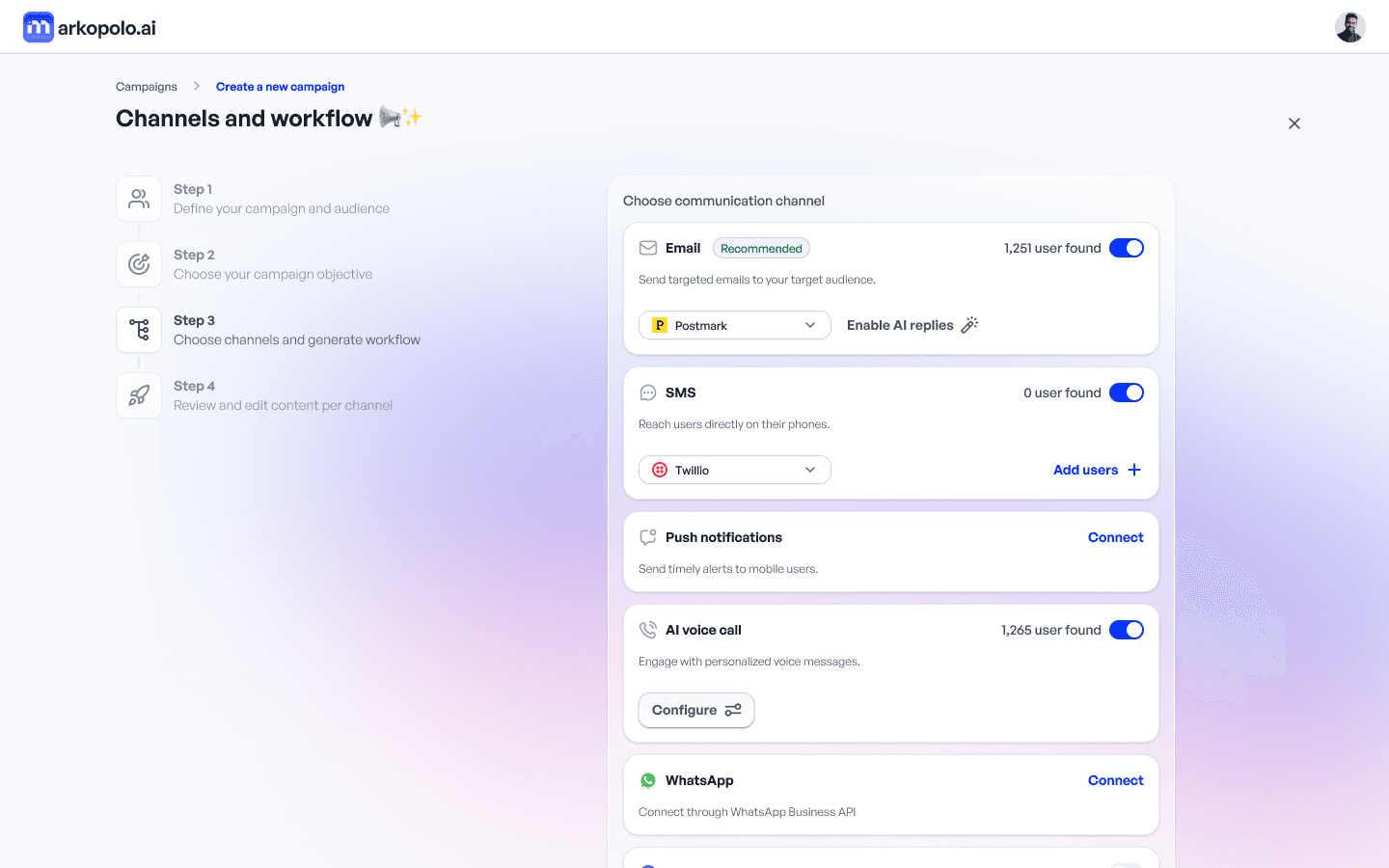
Marketers can use platforms like Markopolo to automate trigger campaigns, boosting their triggered marketing. These tools help define triggers, personalize content, and set delivery times. The platform allows users to craft detailed trigger campaigns that boost engagement and conversion. By setting up specific triggers and tailoring content, marketers can send targeted messages at the perfect time, which maximizes the effectiveness of their campaigns.
Markopolo's features help streamline trigger campaign management. This leads to more efficient and effective triggered marketing strategies. Businesses can quickly respond to customer interactions, creating a more dynamic and responsive marketing approach.
FAQ
What are some common types of marketing triggers?
Common marketing triggers include behavioral triggers like website visits or purchases. There are also transactional triggers, such as order confirmations. Time-based and milestone triggers, like birthdays, and inactivity triggers, like abandoned carts, are also used.
How can I create effective trigger conditions for my campaigns?
To create effective trigger conditions, understand your customers' behaviors and preferences. Use data and analytics to identify patterns. Then, set triggers that respond to these behaviors. Continuously test and optimize your triggers to keep them effective.
How do I measure the effectiveness of my trigger-based campaigns?
To measure your campaigns' effectiveness, track metrics like open rates and conversion rates. Compare these to your traditional blast campaigns. This helps determine which approach is more effective.