
March 16, 2026 – Tasfia Tasbin | Founder & CEO, Markopolo AI
Today, we're introducing ATHENA — a 709M parameter behavioral foundation model, trained across 603 independent businesses, running entirely on the edge. Our first cohort of merchants saw conversion rates exceed 10%, with some reaching 30%+, against an industry average of 3%. ATHENA is now deployed across 1,500+ businesses globally.
How? Not by tracking more. By understanding more.
TikTok, Netflix, and Instagram don't just recommend, they anticipate. They process billions of behavioral sequences to understand not what you said you wanted, but what you're about to do. The scroll that slows. The hover that lingers. The comparison loop that signals intent. These platforms read the grammar of human behavior better than anyone.
But here's what everyone overlooks: they do it inside walled gardens. Google's models understand Google users. Meta's models understand Meta users. Amazon's models understand Amazon shoppers. The moment you step outside their walls, you're back to a blank slate.
We asked: what if behavioral intelligence could transfer?
A foundation model for human intent
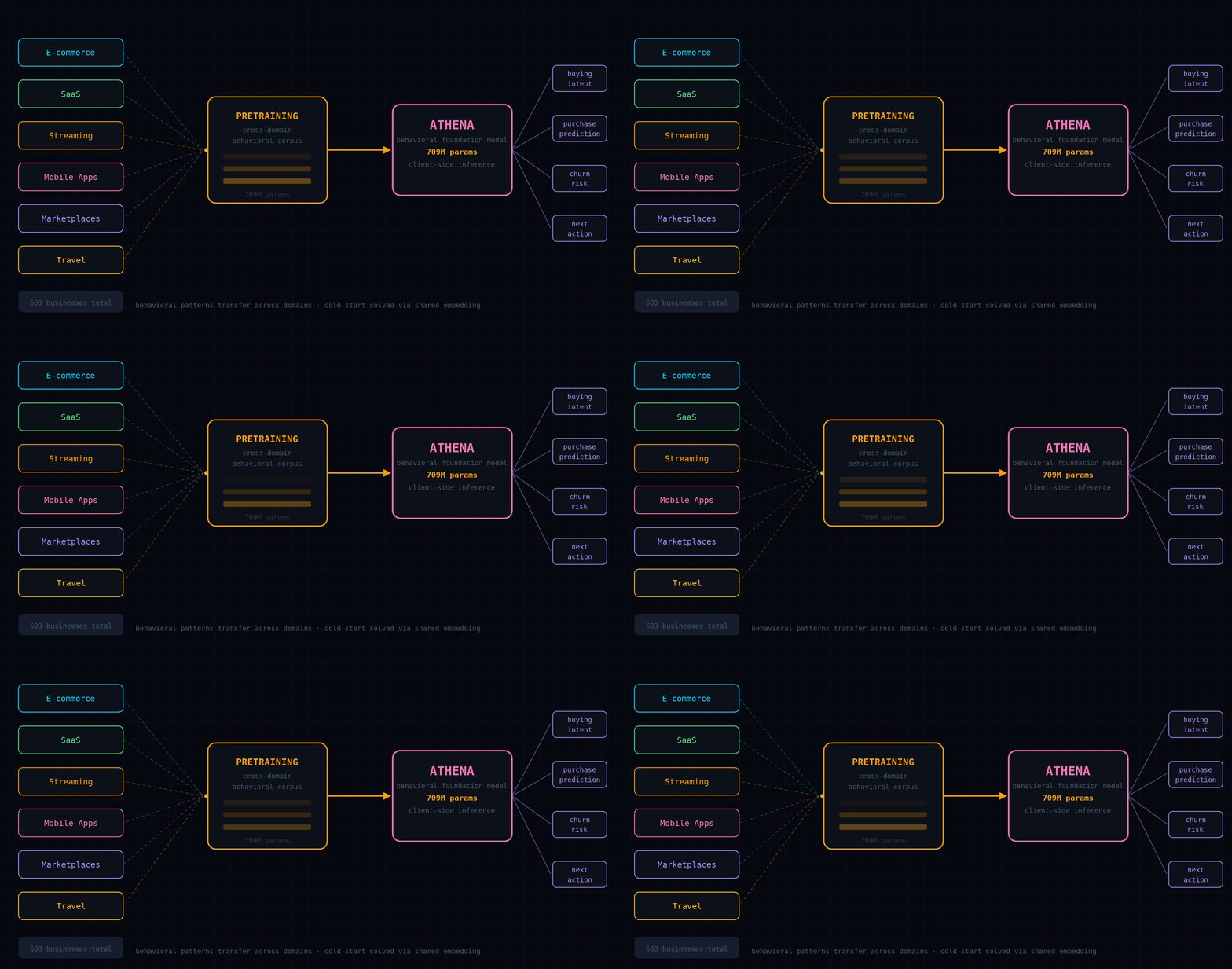
ATHENA is the answer - a foundation model trained not within one platform, but across 603 independent businesses e-commerce, SaaS, streaming, mobile apps, marketplaces. The result is a Universal Behavioral Vocabulary of 90 semantic event types that captures intent no matter where it happens.
An Add to Cart on Shopify, a Subscribe on a SaaS product, a Bookmark on a publisher site: different actions, but the same behavioral grammar.
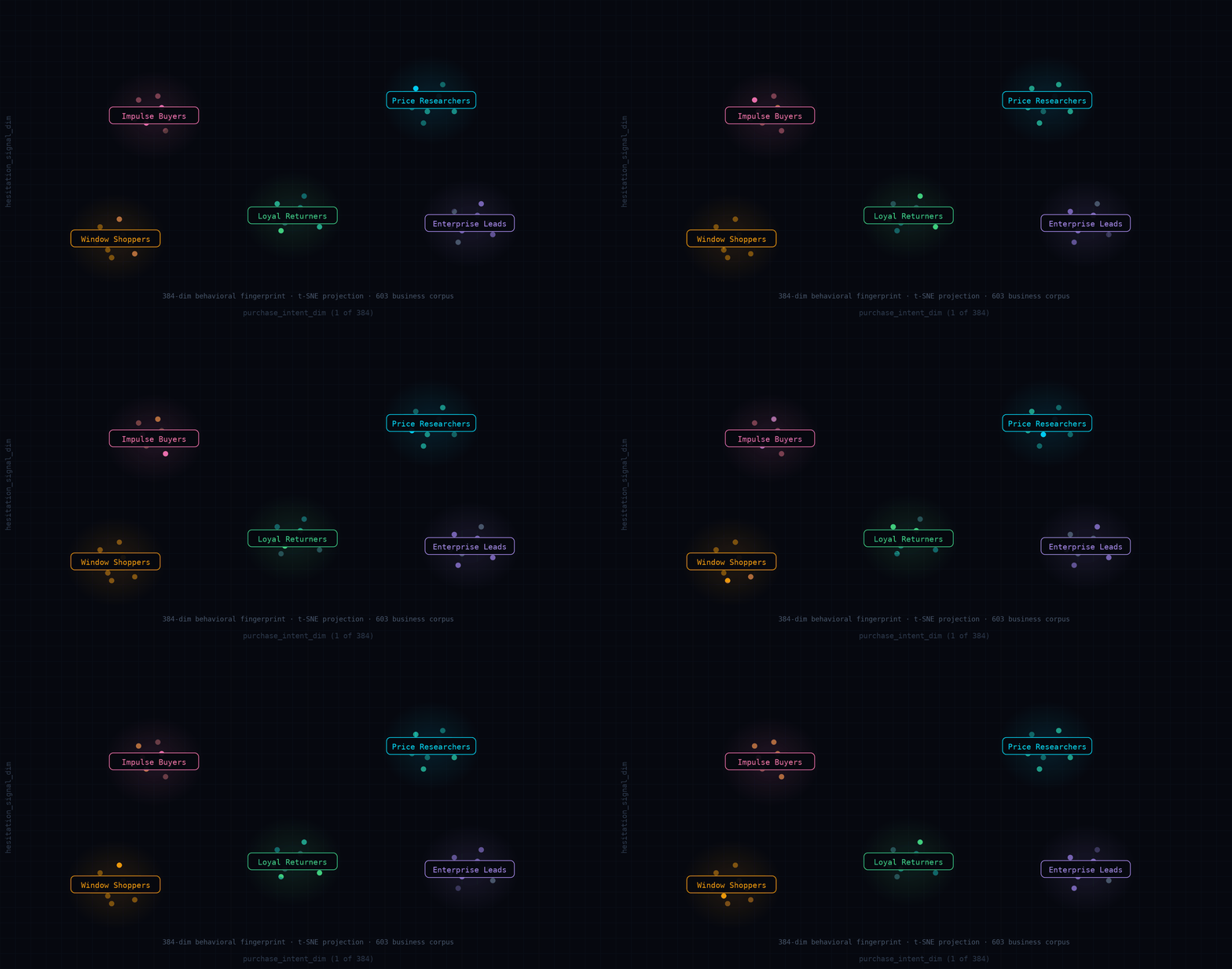
What emerged surprised even us - a user evaluating pullover hoodies exhibits the same micro-behaviors as someone evaluating enterprise software: the comparison loops, the hesitation signals, the trust-seeking patterns. The domain is different; decision architecture is identical.
Just as Large Language Models learned the grammar of language by training across the entire internet, ATHENA learned the grammar of human intention by training across the open commerce web.
The way GPT predicts the next word in a sentence, ATHENA predicts the next action in a behavioral sequence, except our sequences aren't words. They're clicks, scrolls, hovers, hesitations, and decisions.
Infrastructure-grade performance
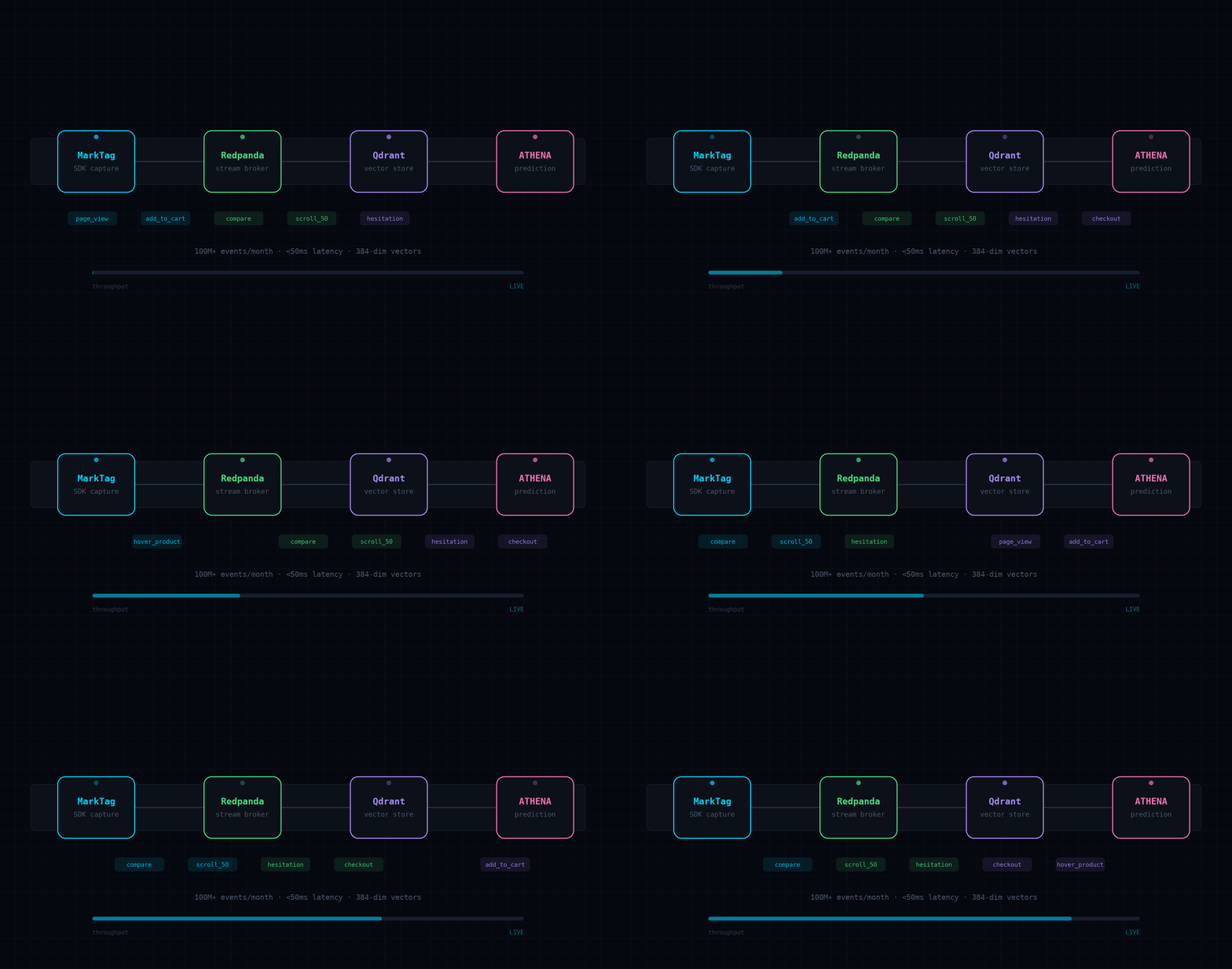
We tested ATHENA across 116 different user action types. It correctly predicted the very next action 73% of the time on its first guess. Widened to the top five likely actions, accuracy climbs to 94%+. In practical terms: we almost always know what a user is about to do before they do it.
Calibration matters as much as accuracy. When ATHENA says it's 80% confident, it's right roughly 80% of the time. Across our most important behavior categories, the model achieves a 0.97 AUC-ROC score, separating real intent from background noise with exceptional precision.
That's why it works in messy, real-world environments rather than just controlled demos.
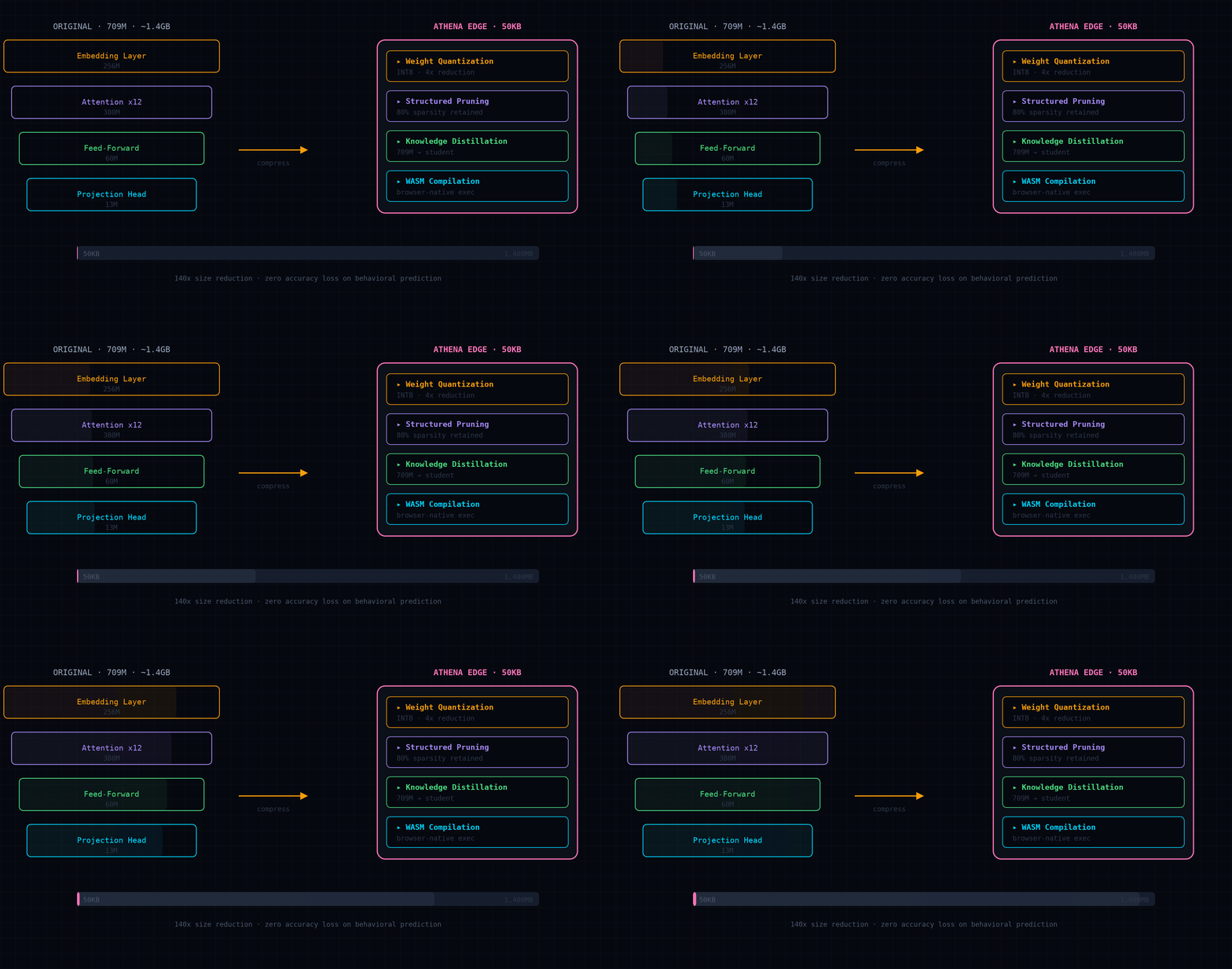
Each prediction takes around 0.01 milliseconds, enabling over 100,000 predictions per second.
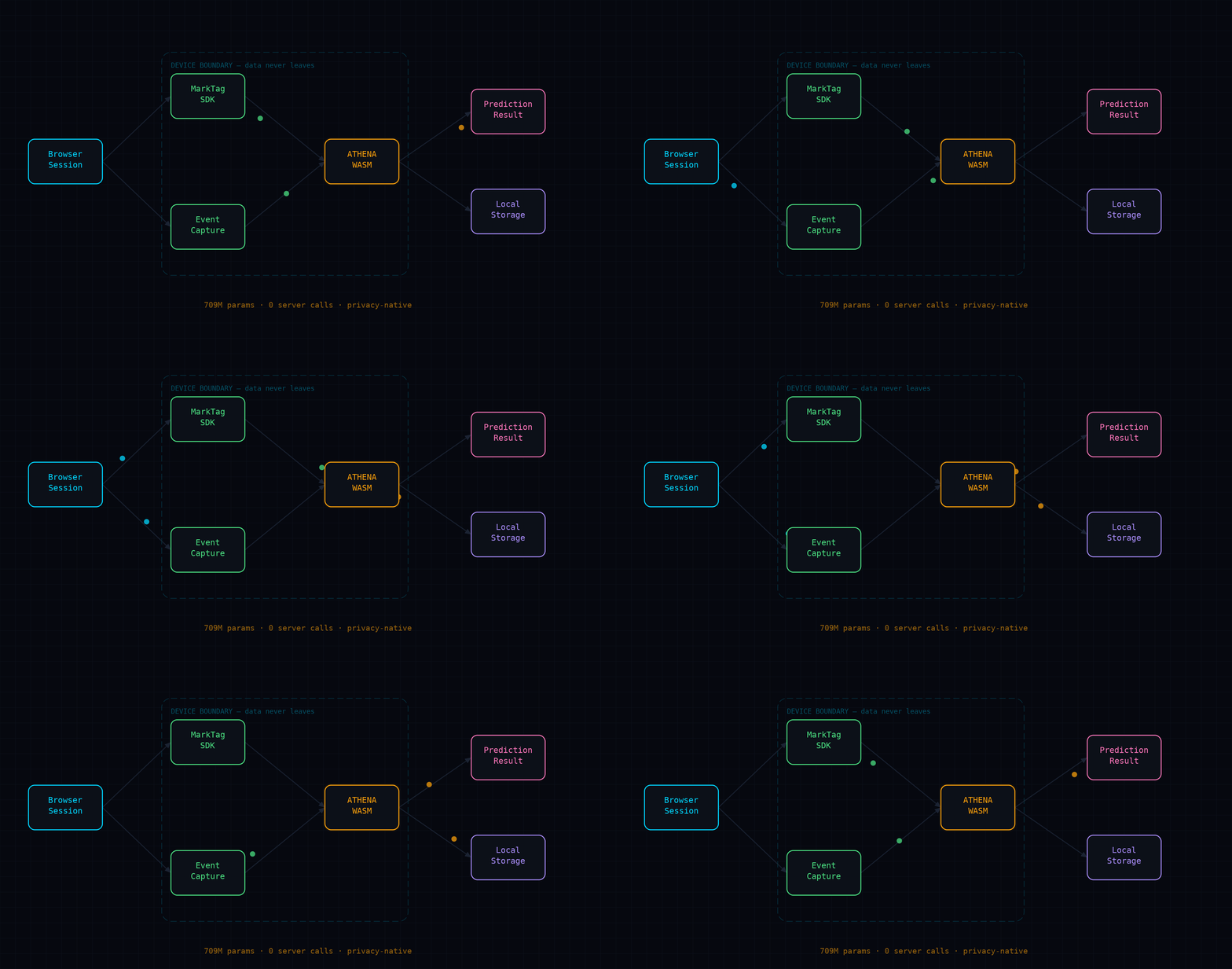
This isn't research-grade AI. It's infrastructure-grade, built privacy-first from the ground up. The future of real-time prediction will not rely on centralized tracking. It will rely on fast privacy-conscious inference closer to the user. Edge AI and browser-level standards like Microsoft’s WebNN make that possible.Beyond prediction: Reading friction
This is not personalization. Personalization is a rear-view mirror, it tells you what a user did last week, what segment they belong to. ATHENA is a windshield. It tells you what the user will do in the next ten seconds.
ATHENA also captures what most systems miss entirely: friction. Repeated clicks on unresponsive elements. Aggressive scrolling when content isn't landing. Hesitation patterns that appear right before abandonment. These are the behavioral equivalents of tone in natural language, they tell you not just what the user did, but how they felt doing it. The difference between a confident add-to-cart and one that precedes abandonment. Same event. Different behavioral context. Different outcome.
The missing layer for agentic commerce
Here's where timing becomes critical. Google, Shopify, Walmart, Target, Etsy, and Wayfair have launched the Universal Commerce Protocol, an open standard for AI agents to communicate across shopping journeys. Google Cloud deployed Gemini Enterprise for CX at NRF, with shopping agents already live at Home Depot, Kroger, Lowe's, Gap Inc., and Estée Lauder.
The agentic commerce opportunity is no longer theoretical. It's already a reality.
UCP solved coordination. It gave agents a way to talk to each other. But it did not solve anticipation or help agents predict what a user is likely to do next. That is the missing layer which ATHENA fills. ATHENA is the behavioral prediction infrastructure that turns reactive agents into anticipatory ones.
A network effect for intelligence
603 independent businesses generating cross-domain behavioral sequences that exist nowhere else. Every new business that joins makes the model smarter for everyone.
This is a network effect, but for intelligence. Each deployment across our 1,400+ global businesses strengthens ATHENA's understanding of behavioral universals that transcend any single platform or product category.
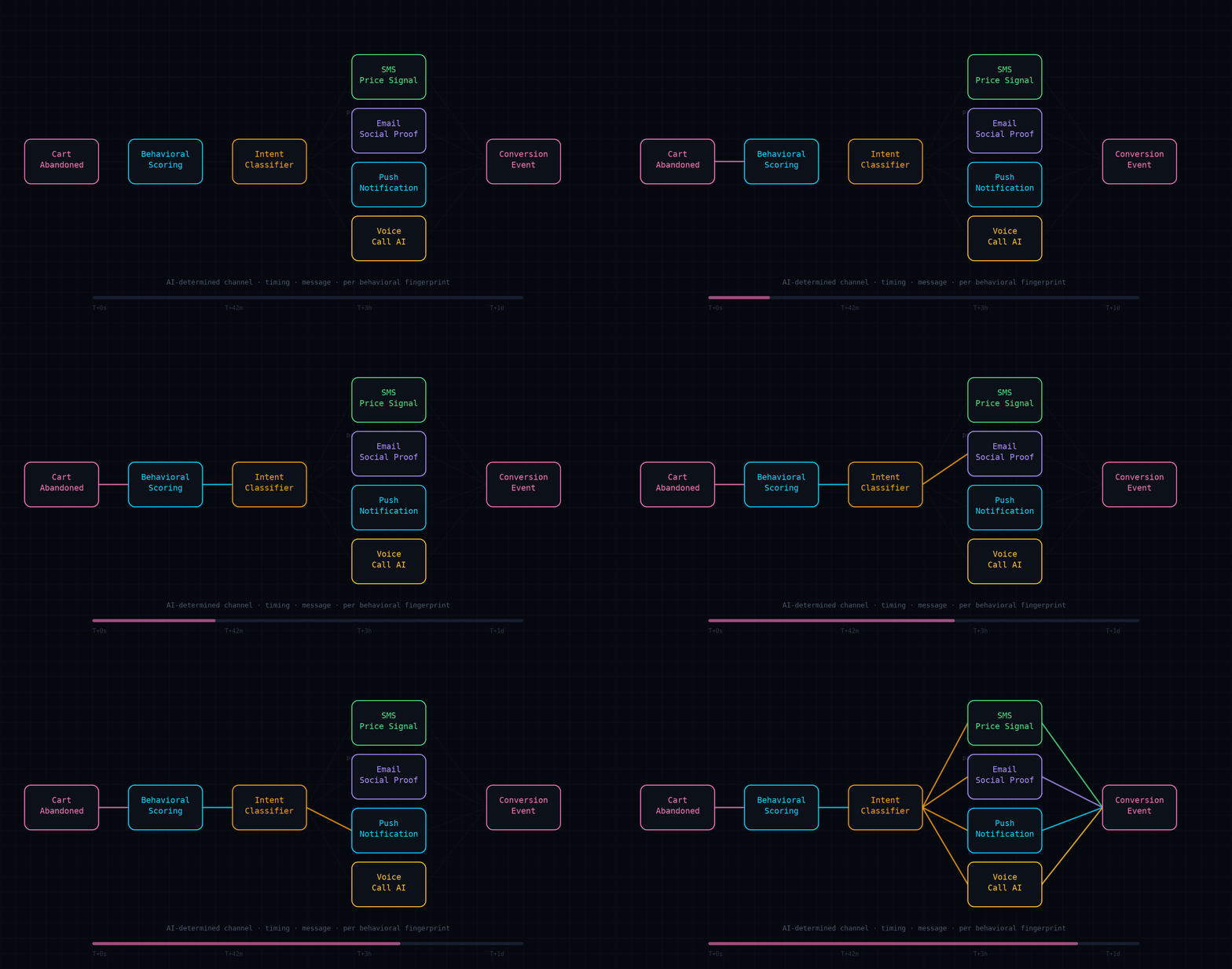
Build on ATHENA
Today, we're also opening ATHENA's behavioral prediction layer to builders. ATHENA is the prediction layer that helps you build agents that actually understand what people are trying to do. It works for teams building audience intelligence tools, teams designing conversion agents, and teams creating performance-driven commerce experiences.
The use cases are as broad as commerce itself: customer experience agents that anticipate friction before it causes drop-off, product recommendation agents that respond to live behavioral signals rather than historical segments, support agents that detect confusion and intervene proactively, and revenue agents that identify high-intent moments and act on them in real time. Across verticals, across platforms, without cold-start problems and without compromising user privacy.
For agent builders who want to move beyond reacting, ATHENA is the missing prediction layer that helps your system anticipate what users will do next.
In the years ahead, we believe every digital interaction will be behavior-predicted. Every agent will need a prediction layer. Every commerce experience will shift from reactive to anticipatory. For Markopolo users, that future is already here.
We invite forward-thinking businesses, merchants, platforms, creators, marketers, affiliates, and agent builders to join us in building the behavioral intelligence layer for the agentic economy.
The foundation is laid. Let's build on it together.
Lots to show you
Let us show you how true AI-powered marketing looks in action. You’ll know in minutes if it’s a fit.