15 best email marketing solutions for teams in 2026
Sirazum Monir Osmani
The options available to businesses when choosing email software are abundant. But not every email software is suitable for marketing. Some are great for transactional emails that confirm orders. Others excel at sending support emails for complaint resolution.
Email marketing tools, however, target prospects and customers with intentional campaigns built around persuasion, retention, and revenue. They bring together segmentation and automation to move people through a buying journey. So, choosing the right platform makes all the difference between campaigns that get ignored and ones that actually drive growth.
In this guide, we have presented 15 email marketing platforms that cater to different types of teams and businesses, each with distinct specialties.
Our selection criteria
We included email tools that are great for marketing campaigns.
Instead of ranking them broadly, we categorized each tool based on different features such as personalization, deliverability, cold outreach, and others.
We evaluated the core audience for each platform, such as solopreneurs, d2c brands, b2c and b2b teams, and large enterprises.
Rather than naming one platform for each category, we kept a handful of tools under every category so you can evaluate them based on your specific needs.
Top 15 email marketing tools in 2026: feature comparison, strengths, and weaknesses
Category | ICP | Platform | Best for | Key strength / weakness |
|---|---|---|---|---|
Behavior-driven email personalization platforms | Ecommerce and D2C marketers | Markopolo AI | 1:1 hyper-personalization and autonomous conversion funnel optimization | S: Achieves abandoned cart recovery rates of 30-40% W: Autonomous workflows prevent over-complication for teams that want micro-management. |
Drip | Manual workflows with deep and dynamic segmentation | S: Deep tagging combines multiple behavioral data points for precise targeting. W: Pricing scales quickly past 5,000 contacts. | ||
Attentive | Structured campaign execution | S: Tight SMS-email coordination prevents over-messaging across channels. W: Premium pricing puts it out of reach for early-stage brands. | ||
Creator and newsletter-focused email | Solopreneurs and digital publishers | MailerLite | Drag-and-drop builder and automation | S: Generous free plan includes automation and landing pages. W: Automation sequences lack conditional depth of enterprise tools. |
Kit | Automated funnels that monetize newsletters | S: Seamless path from free subscriber to paying customer in one platform. W: Email design options are intentionally minimal, limiting visual branding. | ||
Flodesk | High-aesthetic no-code marketing designs | S: Flat-rate pricing removes financial pressure as subscriber lists scale. W: No A/B testing for subject lines or content variations. | ||
Deliverability and infrastructure-led email | Enterprise and agency marketing teams | Mailercloud | Cloud-based delivery with interactive AMP | S: AMP email capability creates in-inbox interactivity competitors can't match. W: AMP rendering depends on recipient email client support. |
Amazon SES | Massive campaign scale and automated sender reputation | S: Unmatched cost efficiency at high volume (fractions of a cent per email). W: No built-in campaign builder; teams need a front-end tool or custom code. | ||
Sendgrid | Dedicated IPs and enterprise-grade deliverability | S: Dedicated IPs isolate sender reputation across separate sending environments. W: Marketing campaign features feel basic compared to full email platforms. | ||
Outbound and cold email engines | B2B outbound prospecting teams | Smartlead | Multi-inbox cold outreach with advanced deliverability control | S: Unlimited warm mailboxes + AI warmup + prospecting. W: Occasional UI glitches and complex for beginners. |
Woodpecker | If/then automation for cold email drips | S: Conditional logic creates genuinely responsive outbound sequences. W: Mailbox connection limits on lower plans restrict high-volume operations. | ||
Lemlist | Personalized cold email sequences with dynamic content | S: Built-in prospecting database eliminates the need for separate lead sourcing. W: Per-seat pricing becomes costly as outbound teams scale. | ||
CRM-centric email tools | Marketing teams aligned with sales | HubSpot Marketing Hub | Unifying the customer journey | S: Single source of truth gives marketing and sales shared pipeline visibility. W: Full feature access requires expensive Professional or Enterprise tiers. |
ActiveCampaign | Advanced automation syncing | S: Enterprise-level automation depth at a fraction of enterprise cost. W: CRM functionality is less robust than dedicated platforms like Salesforce. | ||
Brevo | Sales-aligned email automation | S: Affordable entry point for teams that need CRM and email automation together. W: Automation builder offers fewer conditional options than specialist platforms. |
Behavior-driven email personalization platforms
ICP: marketers of ecommerce and d2c brands
Generic blasts don't convert anymore. Marketers now need email platforms that react to what customers actually do. Be it browsing, buying, abandoning carts, or going quiet; behavioral targeting turns customer actions into revenue by sending the right email when it matters the most.
Markopolo AI - best of 1:1 hyper-personalization and conversion funnel optimization

Markopolo AI automatically sends 1:1 hyper-personalized emails to the right person at the right moment. The platform combines behavioral intelligence with a powerful predictive engine that tracks user activity in real-time. Ecommerce businesses can engage customers with individualized email campaigns triggered by specific events. These events can happen anywhere in the conversion funnel such as browsing a product catalog, abandoning a cart, or returning after a purchase.
The platform assigns a dedicated AI agent to each visitor that monitors their behavior. Marketers can set triggers or prompts that allow these agents to automatically create and send the most relevant email in the right time. Custom templates are also available if needed. Markopolo AI’s abandoned cart recovery rates stay around 30-40% because of its hyper-personalized, conversion-focused email campaigns.
Features
Free plan available
Automates high-quality, individually targeted emails
Helps bring back customers who leave without buying
Recovers lost revenue by reducing browse, cart, and checkout abandonment
Executes lifecycle email campaigns across conversion, retention, and loyalty
Native Shopify integrations, and easily accessible for WooCommerce, BigCommerce, and custom ecosystems
Revenue dashboards with advanced analytics to measure campaign performance in real time
Strengths
True 1:1 personalization over traditional segmentation
Behavioral intelligence and autonomous agentic AI
Well-crafted email marketing campaigns that are engaging and results-driven
If email fails, it triggers omnichannel orchestration based on the user’s preferred channel such as SMS, WhatsApp text, and AI voice calls
Achieves abandoned cart recovery rates of 30-40%
Weaknesses
Less optimal for marketers whose only priority is micro-managing workflows
Drip - best for manual workflows with deep and dynamic segmentation
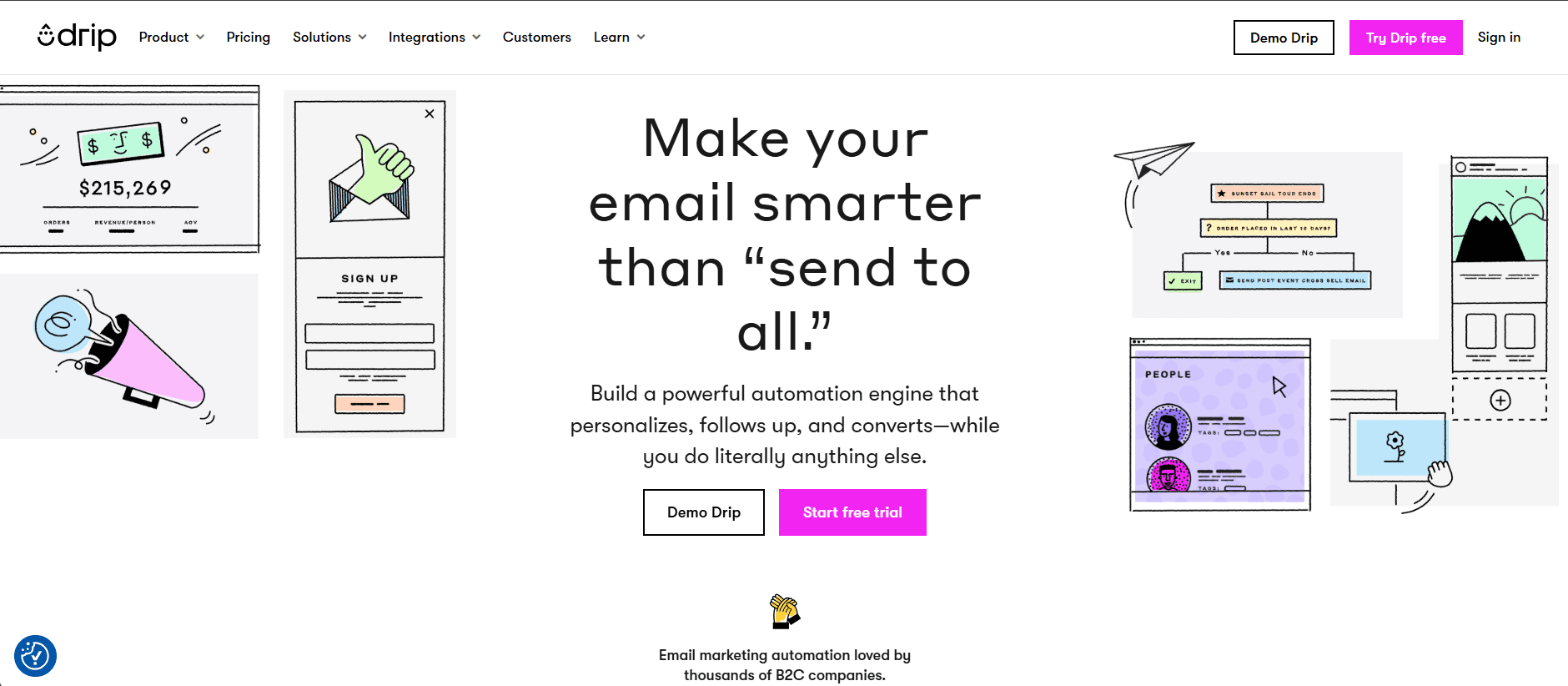
Drip gives ecommerce marketers high-level control over who sees what and when. It tracks on-site behavior like product views, cart activity, and purchase history, then lets teams build segments that update in real time. Marketers layer multiple behavioral tags such as recency, frequency, spend, etc. to create hyper-specific audiences without relying on guesswork.
D2C brands that run on Shopify or WooCommerce get the most from Drip. Its visual workflow builder lets teams map branching paths based on live customer actions, so a first-time buyer and a repeat customer never receive the same email. Revenue attribution ties every campaign back to actual sales, which makes ROI reporting straightforward.
Features
Real-time behavioral segmentation based on browse, cart, and purchase data
Visual workflow builder with conditional split logic
Pre-built ecommerce playbooks for welcome, abandoned cart, and win-back sequences
Native integrations with Shopify, WooCommerce, and BigCommerce
Revenue and engagement dashboards tied to individual campaigns
Liquid templating for dynamic product recommendations inside emails
Strengths
Deep tagging system that combines multiple behavioral data points for precise targeting
Visual automation builder that non-technical marketers can operate independently
Strong revenue attribution connecting specific emails to completed purchases
Automatic list hygiene that suppresses unengaged contacts over time
Weaknesses
Learning curve for teams new to multi-layered segmentation logic
Pricing scales quickly as the contact list grows beyond 5,000
Attentive - best for structured campaign execution
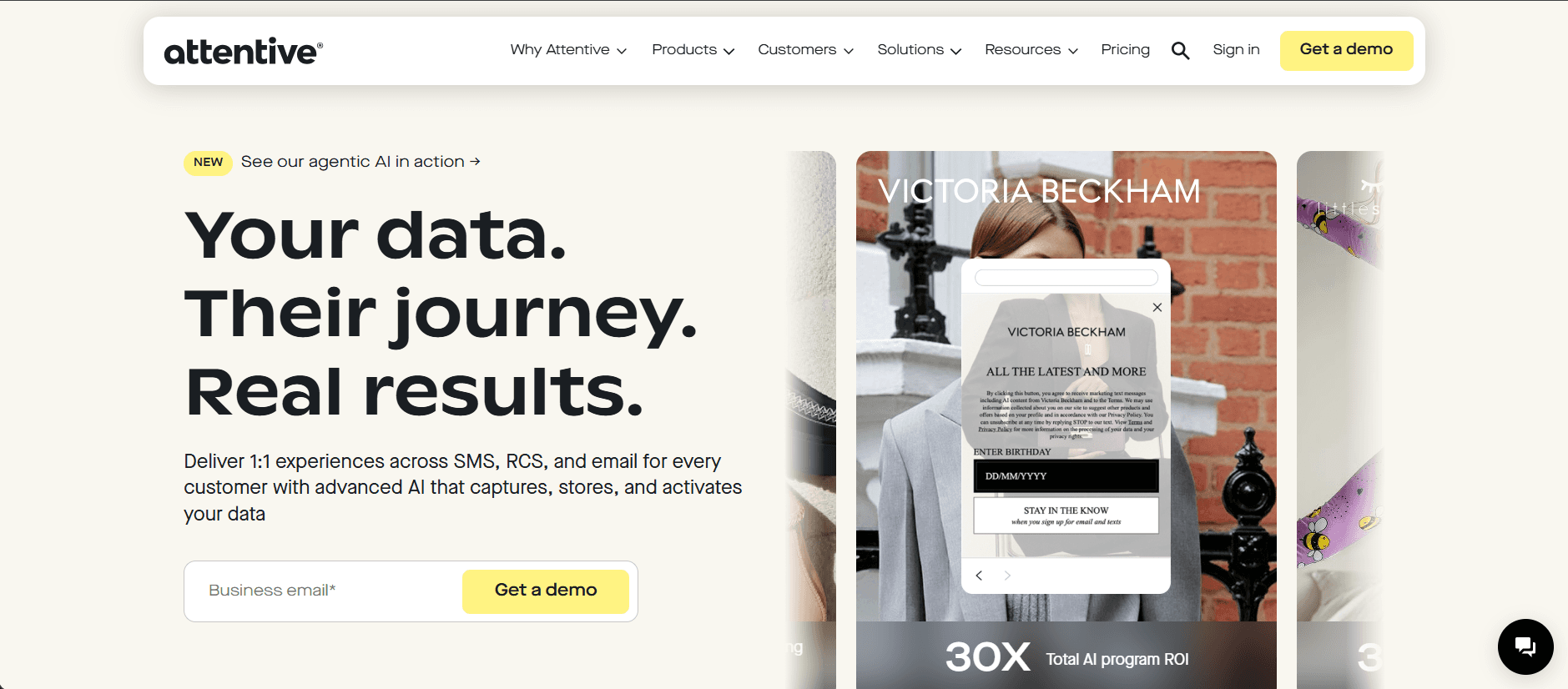
Attentive brings discipline to campaign execution by combining SMS and email into one coordinated workflow. Ecommerce teams schedule campaigns around product drops, flash sales, and seasonal pushes while the platform handles timing, frequency capping, and audience suppression automatically. Each send follows a structured cadence that prevents message fatigue.
For D2C brands running promotions across multiple channels, Attentive keeps messaging consistent. Its audience manager syncs behavioral and transactional data so every campaign reaches the right segment. A/B testing runs natively at the campaign level, letting marketers optimize subject lines, offers, and send times before scaling to the full list.
Features
Unified SMS and email campaign builder with shared audience segments
Frequency capping and smart send-time optimization
Identity resolution that merges anonymous visitors with known contacts
Two-tap sign-up units for rapid list growth on mobile
Built-in A/B testing for subject lines, creative, and send timing
Strengths
Tight SMS-email coordination prevents over-messaging across channels
High opt-in conversion rates through mobile-first sign-up experiences
Campaign calendar view keeps teams organized around promotional milestones
Strong compliance management for SMS consent and opt-out handling
Robust reporting that tracks revenue per message across both channels
Weaknesses
Premium pricing puts it out of reach for early-stage brands
Onboarding requires hands-on setup with Attentive's team for full functionality
Creator and newsletter-focused email platforms
ICP: solopreneurs and digital publishers in niche communities
Newsletters are how solopreneurs and niche publishers build trust at scale. A well-designed, consistent newsletter turns casual readers into loyal subscribers and paying customers. These platforms prioritize brand identity, content presentation, and audience growth over complex automation stacks.
MailerLite - best for drag-and-drop builder and automation
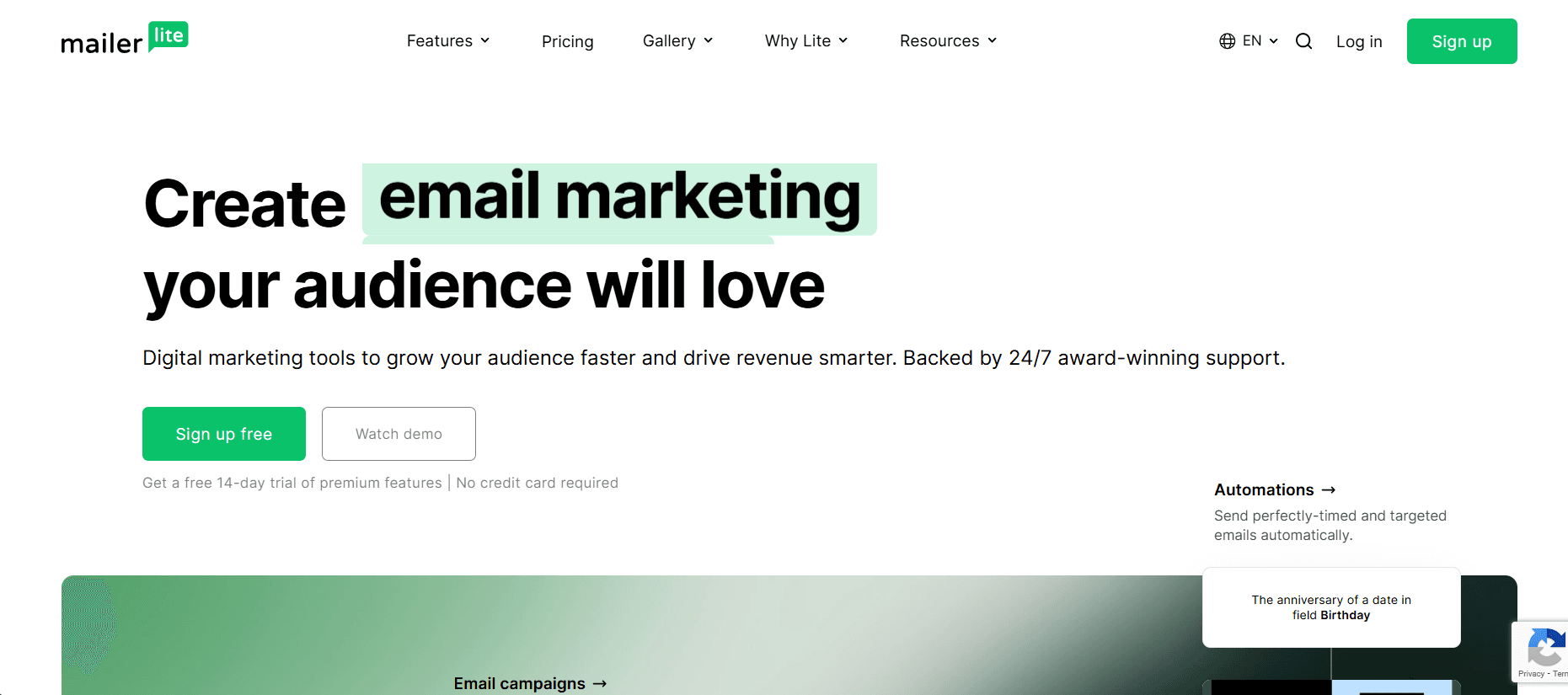
MailerLite makes building professional newsletters fast and intuitive. Its drag-and-drop editor gives solopreneurs full control over layout without touching code. Content blocks snap into place, and built-in automation handles welcome sequences, drip campaigns, and subscriber tagging in the background while creators focus on writing.
Digital publishers running paid or free newsletters benefit from MailerLite's built-in landing pages and embedded sign-up forms. The platform includes a website builder, so creators manage their entire web presence from one dashboard. Subscriber management stays simple even as lists grow, and the free tier supports up to 1,000 contacts — enough for most creators getting started.
Features
Drag-and-drop email editor with reusable content blocks
Visual automation builder for welcome, drip, and re-engagement workflows
Built-in landing page and website builder
Subscriber segmentation based on interests, activity, and custom fields
Integrated paid newsletter subscriptions via Stripe
A/B split testing for subject lines and email content
Strengths
Generous free plan that includes automation and landing pages
Clean, intuitive interface with minimal learning curve
Fast email creation using pre-designed content blocks
Solid deliverability rates for a platform at this price point
Weaknesses
Automation sequences lack the conditional depth of enterprise tools
Template design options feel limited for brands with complex visual requirements
Customer support response times can lag on the free plan
Kit - best for automated funnels that monetize newsletters
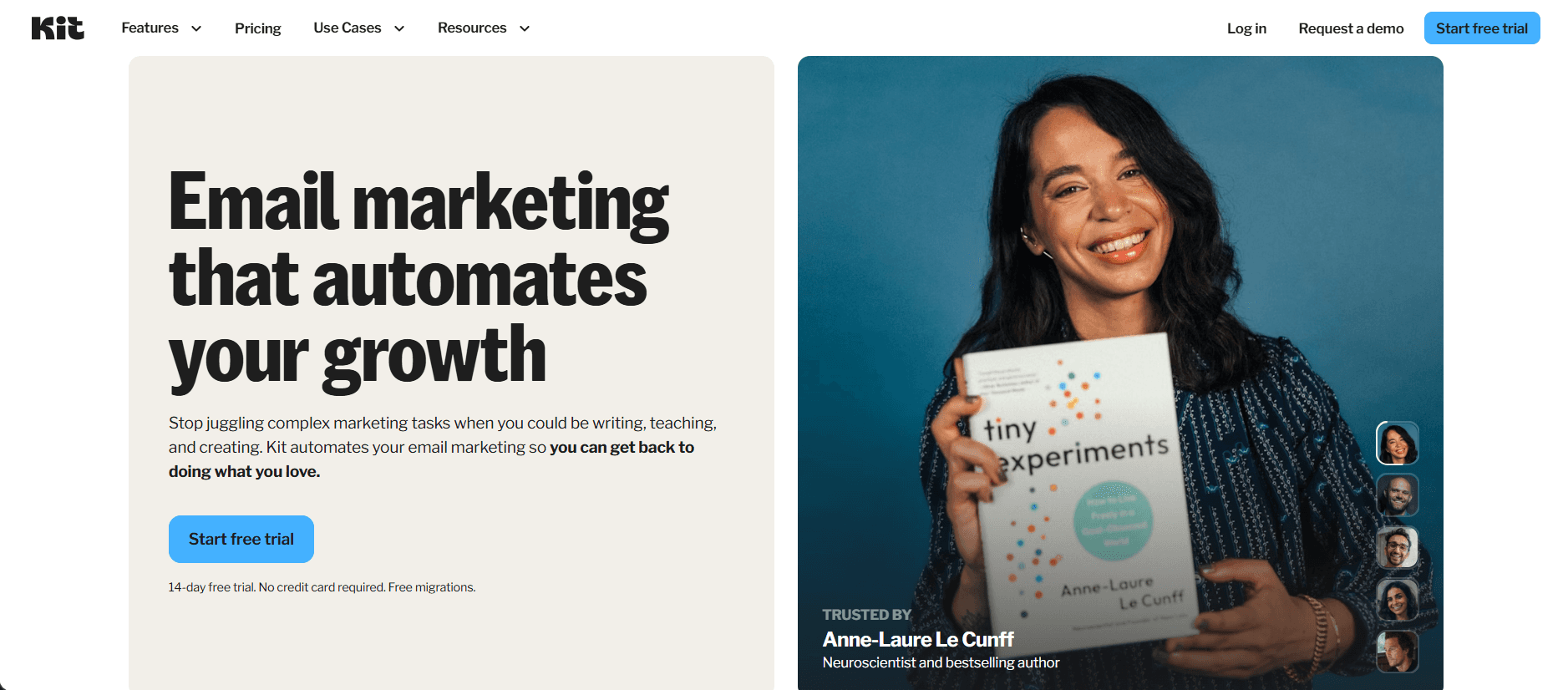
Kit turns newsletters into revenue engines. Creators set up automated funnels that tag subscribers by interest, deliver targeted sequences, and route readers toward digital products, paid tiers, or sponsorship-backed content. The platform treats every subscriber interaction as a data point that shapes what comes next.
Niche brands selling courses, ebooks, or memberships benefit a lot from Kit. Its commerce features handle product delivery and payment processing natively, so creators don't need a separate storefront. The visual automation builder maps the entire subscriber journey from opt-in to purchase, and the Creator Network helps publishers cross-promote with peers to grow their audience organically.
Features
Visual automation funnels with tagging, branching, and conditional triggers
Built-in commerce for selling digital products and paid subscriptions
Creator Network for cross-promotion and audience discovery
Customizable landing pages and embeddable sign-up forms
Subscriber scoring based on engagement and purchase behavior
Sponsor Network that connects creators with relevant advertisers
Strengths
Seamless path from free subscriber to paying customer inside one platform
Tag-based subscriber system allows flexible, behavior-driven segmentation
Creator Network drives organic list growth through peer recommendations
Plain-text email style improves inbox placement and feels personal
Weaknesses
Email design options are intentionally minimal, which limits visual branding
Pricing jumps significantly once a list surpasses 1,000 subscribers
Reporting lacks the granularity that data-focused publishers may expect
Flodesk - best for high-aesthetic no-code marketing designs
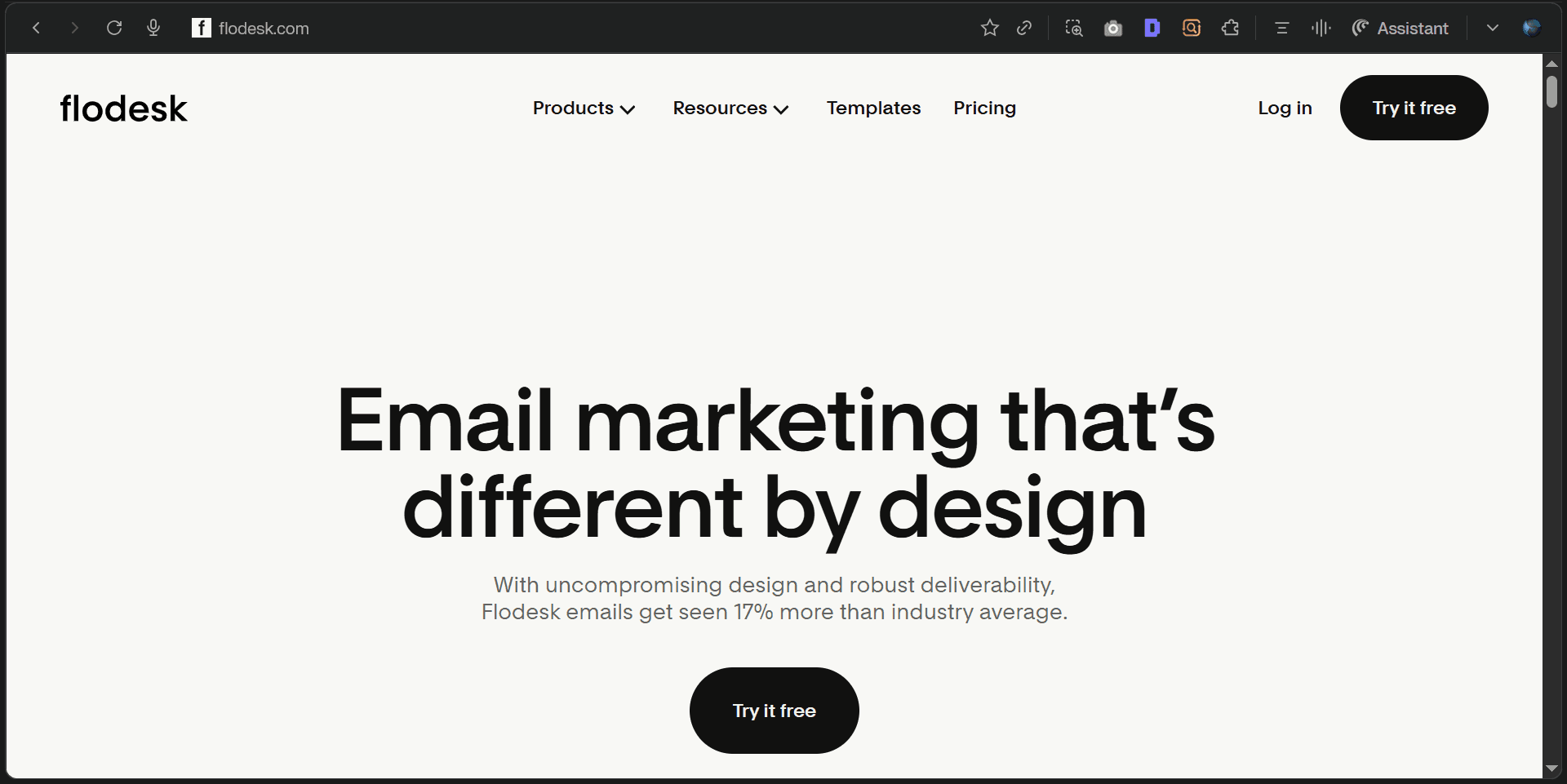
Flodesk prioritizes design above everything else. Its templates look polished out of the box, and the editor preserves visual fidelity without requiring CSS or design skills. Creators drag in brand fonts, custom colors, and imagery to produce emails that feel like curated editorial content rather than marketing blasts.
For media‑first businesses where visuals lead the story, like lifestyle brands, photographers, and design studios, Flodesk delivers. Flat-rate pricing means the cost stays the same regardless of list size. So, it removes the growth penalty that most platforms impose. Workflows automate welcome sequences and link-triggered actions while keeping the aesthetic consistent across every touchpoint.
Features
Visually rich, layout-first email templates designed for brand consistency
No-code editor with custom fonts, image galleries, and brand kit integration
Flat-rate pricing with unlimited subscribers and email sends
Workflow automation for welcome sequences and segment-based triggers
Checkout pages for selling digital products directly from emails
Link-action triggers that tag or move subscribers based on clicks
Strengths
Design quality rivals custom-built HTML emails without any coding
Flat pricing removes financial pressure as subscriber lists scale
Templates maintain visual consistency across desktop and mobile
Simple workflow builder keeps automation accessible for non-technical users
Fast onboarding with minimal setup required
Weaknesses
Limited segmentation depth compared to behavior-focused platforms
No A/B testing for subject lines or content variations
Lacks advanced reporting metrics that growth-focused publishers need
Deliverability and infrastructure-led email platforms
ICP: large-scale marketing teams at enterprises or agencies
When an enterprise sends millions of emails per month, reaching the inbox becomes an engineering problem. Deliverability failures at scale mean lost revenue and damaged sender reputation. Infrastructure-led platforms give large marketing teams and agencies the technical controls. These solutions keep inbox placement rates high through dedicated IPs, authentication protocols, and real-time monitoring.
Mailercloud - best for cloud-based delivery with interactive AMP
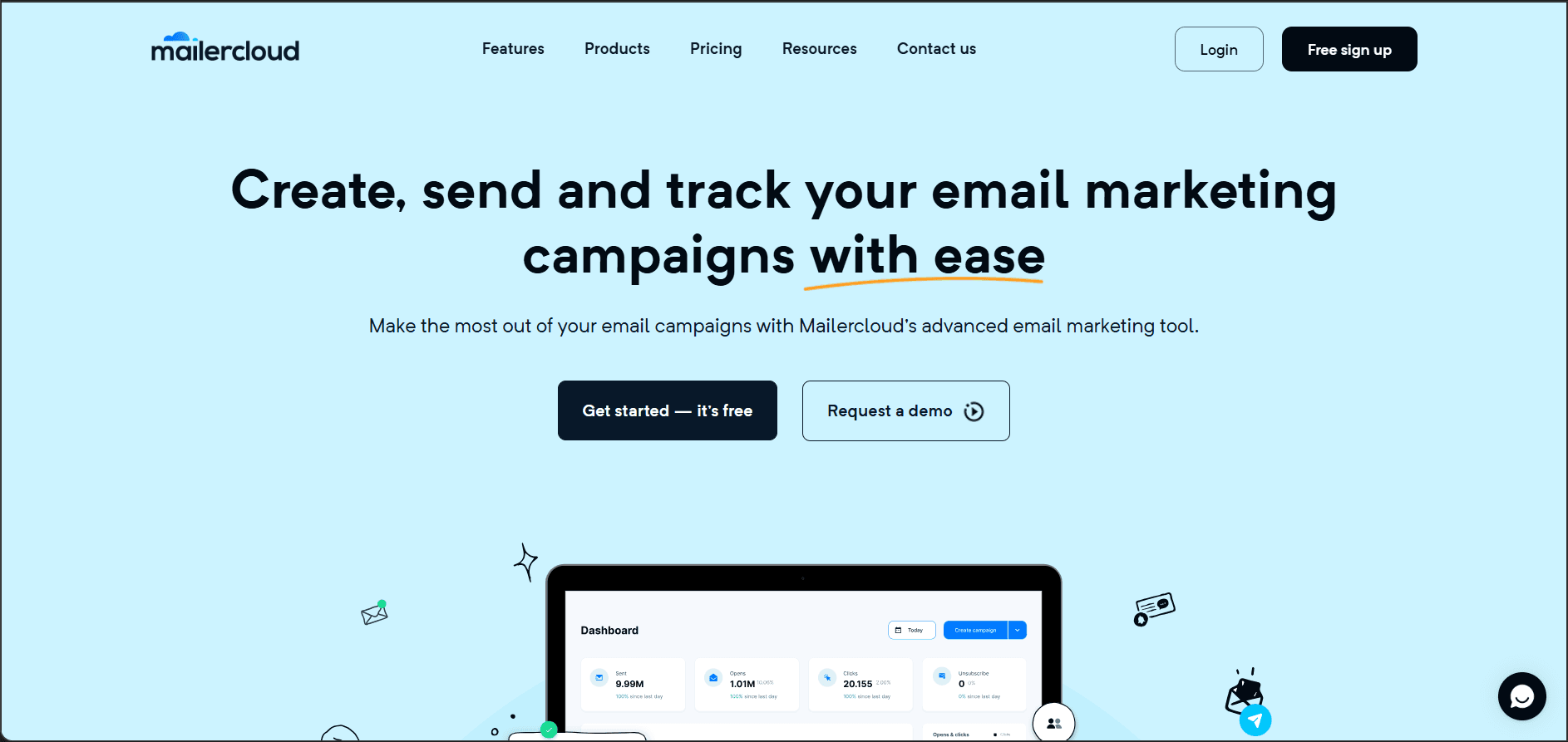
Mailercloud pairs reliable cloud delivery infrastructure with support for AMP emails — the interactive format that lets recipients take actions like filling forms, browsing carousels, or RSVPing directly inside the inbox. Marketing teams create dynamic experiences without sending subscribers to an external landing page, which shortens the conversion path.
Enterprise teams and agencies managing large contact databases benefit from Mailercloud's clean infrastructure. The platform handles list hygiene, bounce management, and engagement tracking at scale. Its drag-and-drop editor supports both traditional HTML and AMP content, so teams can run interactive campaigns alongside standard sends without switching tools.
Features
AMP email support for in-inbox interactivity like forms, accordions, and carousels
Cloud-based sending infrastructure with automatic IP warm-up
Real-time bounce and complaint tracking dashboards
Drag-and-drop editor supporting both HTML and AMP formats
Advanced list segmentation based on engagement and demographics
API access for programmatic campaign management
Strengths
AMP email capability differentiates campaigns in crowded inboxes
Built-in list cleaning reduces bounce rates before sends go out
Transparent delivery analytics with ISP-level breakdowns
Competitive pricing for high-volume senders
Weaknesses
AMP email rendering depends on recipient email client support
Smaller ecosystem of integrations compared to legacy platforms
Documentation can feel sparse for advanced API use cases
Amazon SES - best for massive campaign scale and automated sender reputation
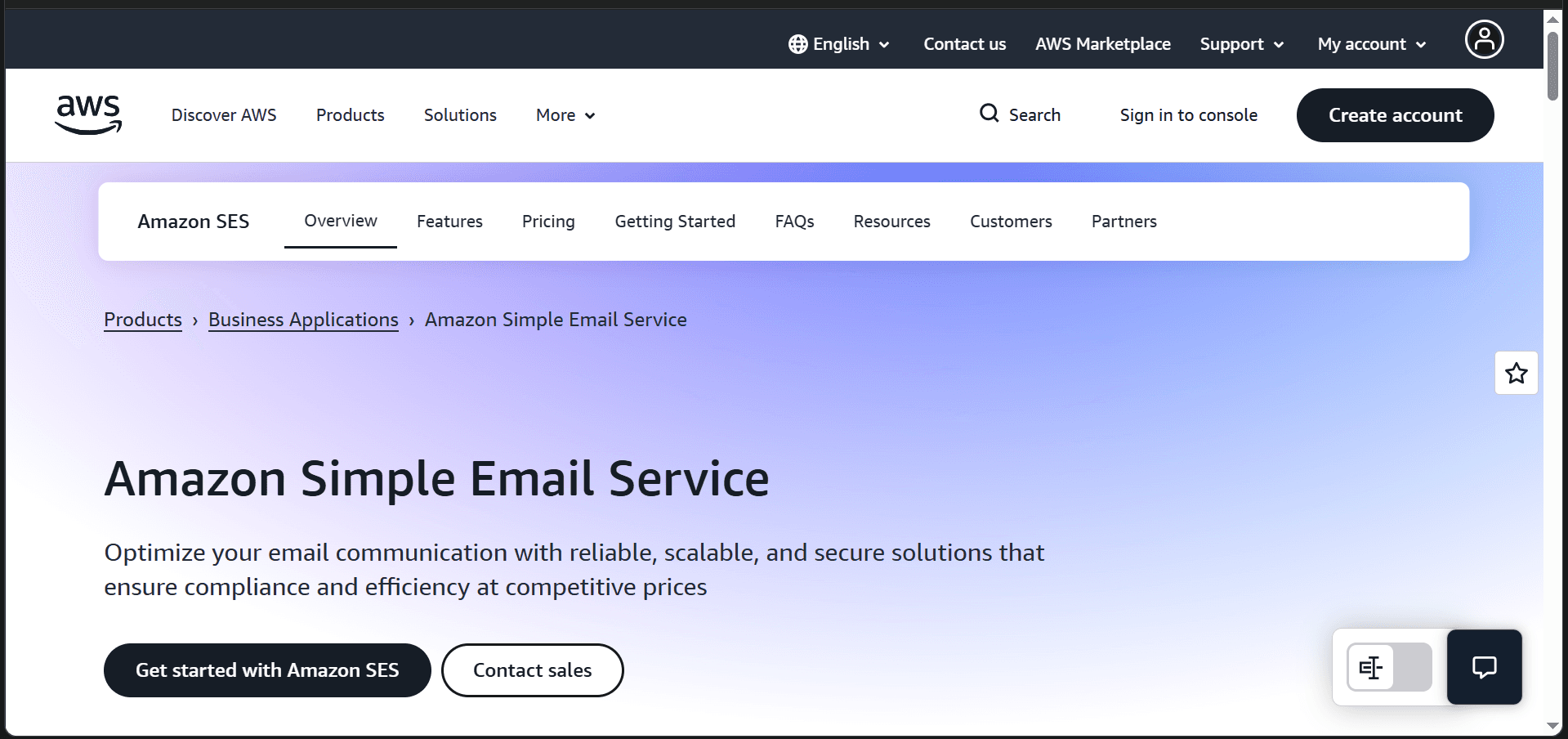
Amazon SES handles email at a scale most platforms can't match. It sends billions of messages and charges per email sent, not per contact stored. Marketing teams at enterprises and agencies plug SES into their existing AWS infrastructure and gain access to automated reputation monitoring, configurable sending policies, and dedicated IP pools — all managed through the AWS console or API.
For organizations already operating inside the AWS ecosystem, SES eliminates the need for a separate email vendor. Its Virtual Deliverability Manager tracks sender reputation metrics automatically and flags issues before they impact inbox placement. Teams control authentication (SPF, DKIM, DMARC) at a granular level, making SES the backbone for businesses that treat email delivery as a core infrastructure concern.
Features
Pay-per-send pricing with no subscriber-based fees
Virtual Deliverability Manager for automated reputation monitoring
Dedicated IP pools with configurable warm-up schedules
Full SPF, DKIM, and DMARC authentication management
Event publishing for real-time tracking of sends, bounces, and complaints
Seamless integration with AWS Lambda, S3, and CloudWatch
Strengths
Unmatched cost efficiency at high volume — fractions of a cent per email
Automated sender reputation management reduces manual deliverability work
Deep integration with the broader AWS ecosystem
Elastic scaling handles sudden traffic spikes without degradation
Enterprise-grade security and compliance certifications
Weaknesses
No built-in campaign builder — teams need a front-end tool or custom code
Steep learning curve for marketers unfamiliar with AWS infrastructure
Support tiers require paid plans for faster response times
Sendgrid - best for dedicated IPs and enterprise-grade deliverability
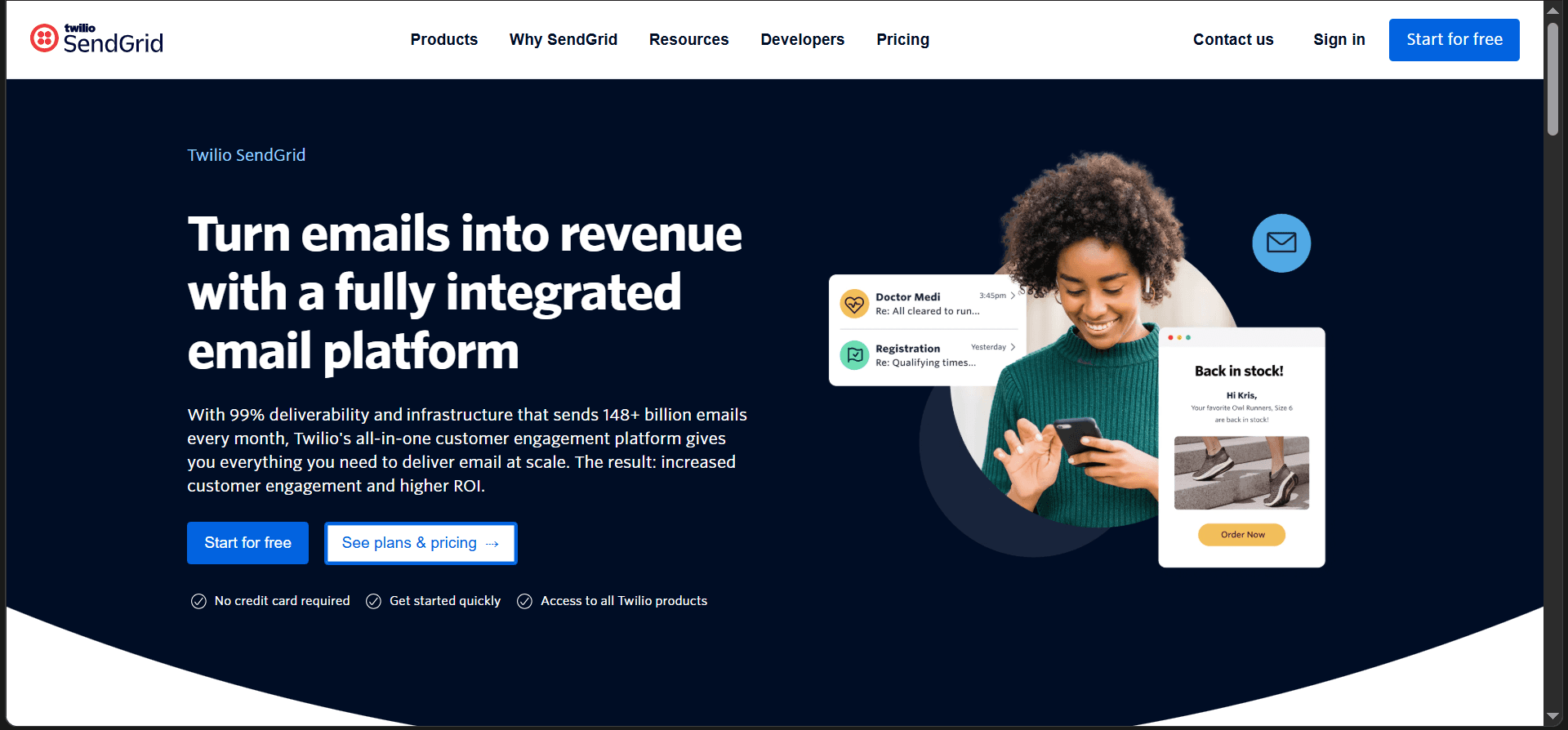
Sendgrid gives enterprise marketing teams full control over their sending reputation through dedicated IP addresses and granular authentication settings. Each brand or business unit can operate on its own IP, isolating reputation risk and improving inbox placement. Real-time analytics track delivery, engagement, and ISP-level feedback across every send.
Agencies managing email for multiple clients find Sendgrid's subuser architecture especially useful. Each client gets a separate sending environment with independent IPs, authentication, and suppression lists. The Email Validation API cleans lists before sends go out, and the Event Webhook streams delivery data into internal dashboards for real-time monitoring at scale.
Features
Dedicated IP addresses with automated warm-up scheduling
Subuser accounts for multi-client or multi-brand sending isolation
Email Validation API for pre-send list verification
Event Webhook for real-time delivery and engagement data streaming
Dynamic transactional and marketing email templates
ISP-level feedback loops and suppression management
Strengths
Dedicated IPs protect sender reputation across isolated sending environments
Subuser architecture scales cleanly for agencies managing multiple brands
Strong documentation and developer-friendly API design
Proven deliverability track record backed by Twilio infrastructure
Weaknesses
Marketing campaign features feel basic compared to full email marketing platforms
Pricing increases sharply at higher volume tiers with dedicated IP add-ons
UI can feel dated and less intuitive for non-technical marketing users
Outbound and cold email engines
ICP: b2b teams running outbound prospecting at scale
Cold outreach runs on precision, not volume alone. B2B teams need platforms that warm up inboxes and rotate sending accounts. They also need and personalize at scale now. Because a message that lands in spam generates zero pipeline. Marketing plays a central role here by crafting the messaging, defining ICPs, and building the sequences that sales teams execute daily.
Smartlead - best for multi-inbox cold outreach with advanced deliverability control

Smartlead solves the biggest bottleneck in cold outreach: deliverability at volume. It combines unlimited warm mailboxes, AI warmup, and SmartProspect prospecting to achieve 95%+ inbox placement for agencies and sales teams. The platform rotates and sends across unlimited mailboxes automatically. This lets b2b teams run thousands of daily emails across multiple accounts without tripping spam filters or burning domains.
Outbound teams scaling prospecting across territories or verticals get the most from Smartlead. Its unified inbox consolidates replies from every sending account into one view, so SDRs never miss a response. Smartlead’s campaign-level analytics track open rates, reply rates, and bounce rates per mailbox. This gives outreach teams the data to optimize their email marketing strategy and sending patterns continuously.
Features
Unlimited mailbox rotation with AI warm-up sequences
Unified master inbox aggregating replies from all sending accounts
SmartProspect trigger detection
AI-powered email categorization for positive, negative, and neutral replies
Subsequence triggers that auto-enroll leads based on reply sentiment
Multichannel sequences
Waterfall enrichment (90%+ coverage)
Spam testing and blacklist monitoring
Strengths
Exceptional deliverability at scale
Unlimited mailboxes and sending domains
SmartProspect boosts reply rates 2-3x
Unified inbox saves SDRs significant time managing multiple accounts
Transparent per-mailbox deliverability metrics support data-driven optimization
Weaknesses
Interface can feel complex during initial setup for smaller teams
Occasional UI glitches
Woodpecker - best for if/then automation when cold email drips
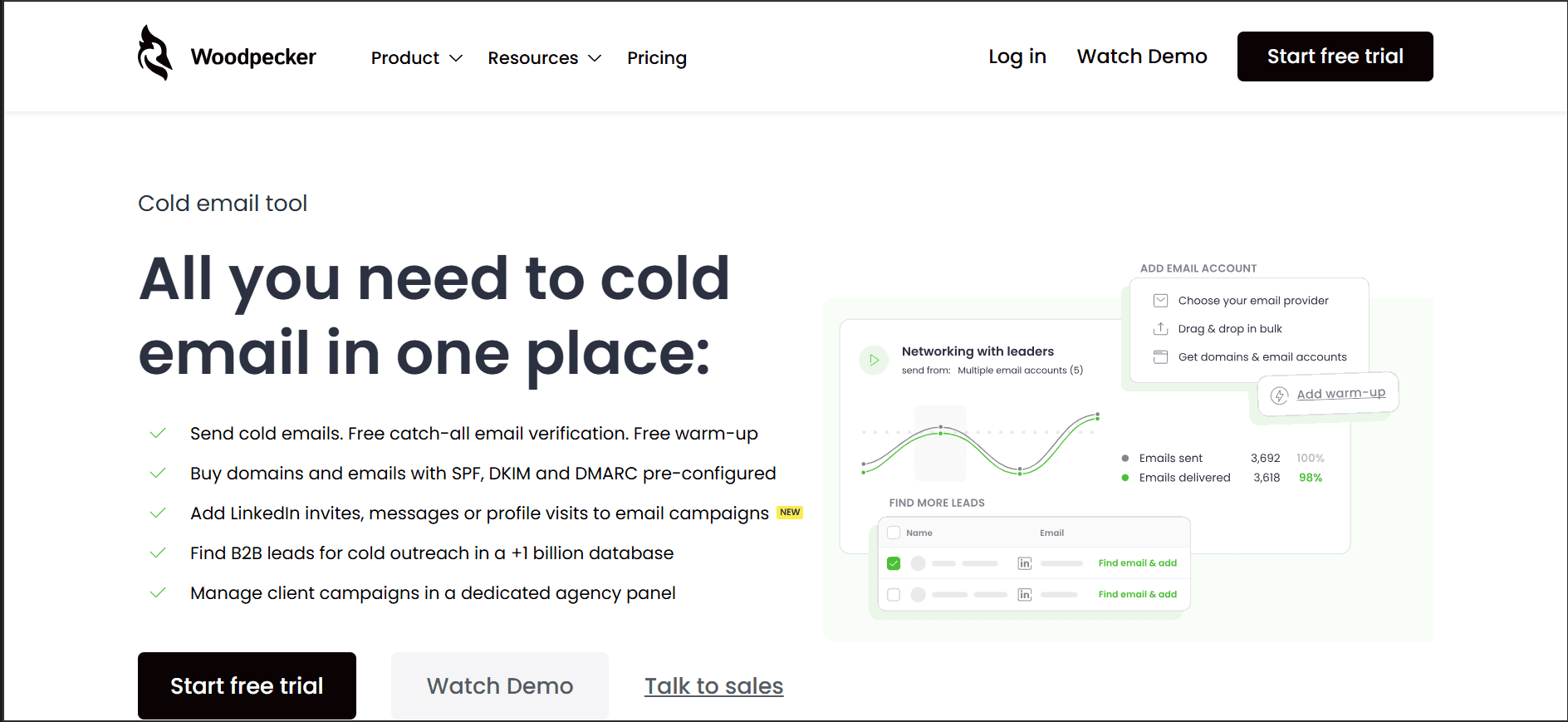
Woodpecker builds cold email sequences around conditional logic. Each follow-up adapts based on whether the prospect opened, clicked, or replied. So, the sequence path shifts automatically. B2B teams can set up branching drips that respond to prospect behavior instead of blasting the same follow-up to everyone.
Teams running multi-step outbound campaigns benefit from Woodpecker's deliverability-first design. It monitors sending limits per inbox and flags risky email addresses before they bounce. It also spaces out sends to mimic human sending patterns. The A/B testing engine runs at the sequence level, which lets marketing test different value propositions across the entire drip rather than just subject lines.
Features
Conditional follow-up sequences with if/then branching logic
Built-in email verification that flags invalid addresses pre-send
Adaptive sending that adjusts volume to match inbox provider limits
Sequence-level A/B testing for messaging and cadence optimization
Team collaboration with shared prospect lists and campaign templates
Native integrations with Pipedrive, HubSpot, and Salesforce
Strengths
Conditional logic creates genuinely responsive outbound sequences
Deliverability safeguards reduce bounce rates and protect sender reputation
Clean interface makes complex drip sequences easy to build and manage
Affordable pricing structure for small to mid-size outbound teams
Weaknesses
Mailbox connection limits on lower plans restrict high-volume operations
Lacks built-in lead sourcing or enrichment features
Reporting depth trails behind platforms built specifically for larger sales orgs
Lemlist - best for personalized cold email sequences with dynamic content
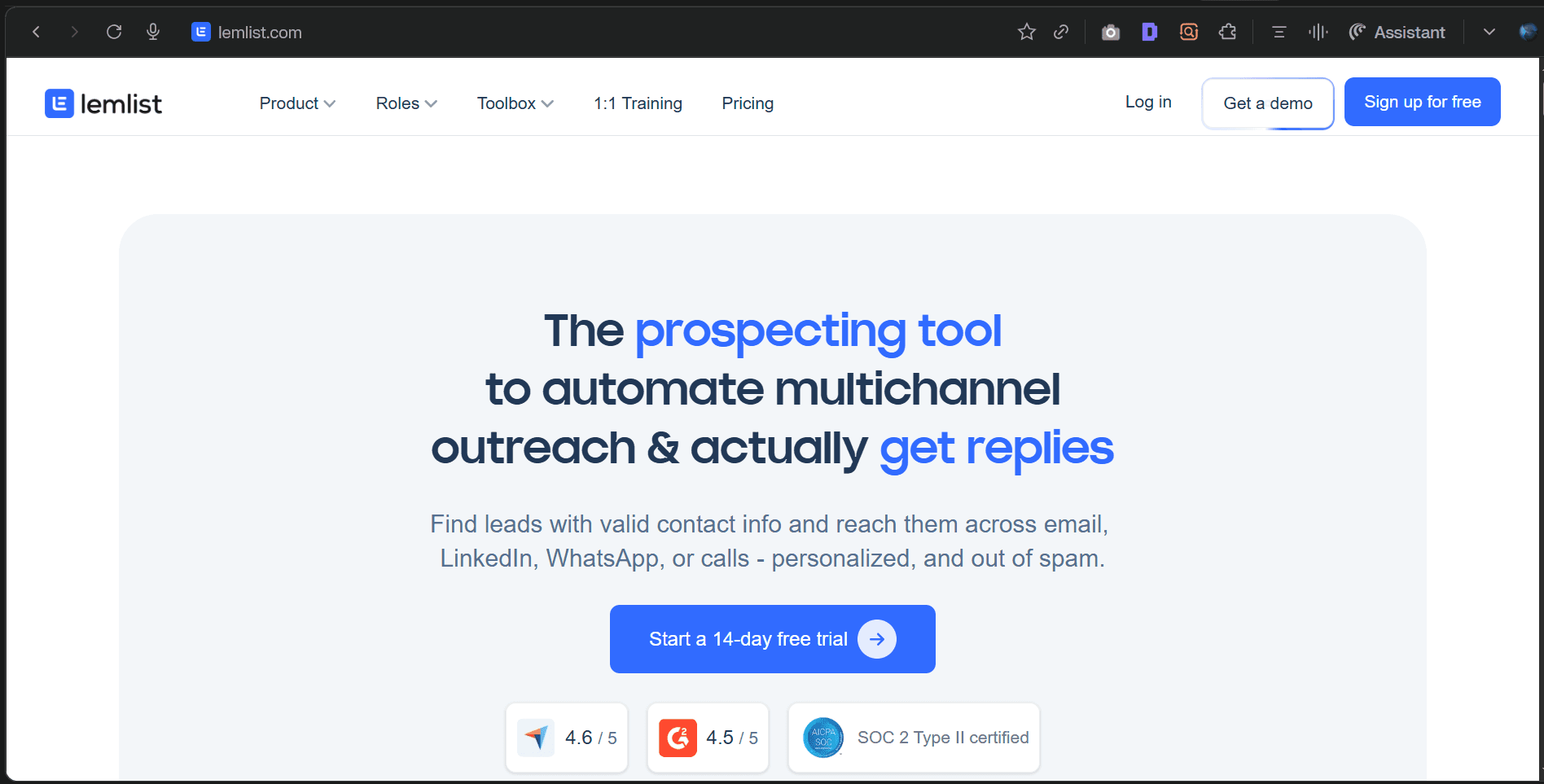
Lemlist makes cold emails feel personal at scale. Its dynamic content engine inserts custom images, personalized text variables, and even tailored landing pages into each message automatically. Prospects see emails that reference their company, role, or recent activity — not a templated blast that reads like every other cold email in their inbox.
B2B marketing teams building outbound sequences use Lemlist to differentiate in crowded inboxes. The platform includes a built-in lead database and email finder, so teams source and contact prospects without switching tools. Multichannel sequences combine email, LinkedIn touches, and manual task steps into one automated workflow, turning marketing's messaging strategy into a repeatable sales motion.
Features
Dynamic image and text personalization powered by custom variables
Built-in B2B lead database with email finder and verifier
Multichannel sequences combining email, LinkedIn, and manual tasks
Personalized landing pages generated per prospect automatically
Email warm-up tool with automated engagement simulation
Campaign performance analytics with reply and interest tracking
Strengths
Visual personalization (custom images, landing pages) drives higher reply rates
Built-in prospecting database eliminates the need for separate lead sourcing tools
Multichannel sequencing connects email outreach with LinkedIn engagement
Active user community and extensive template library accelerate onboarding
Weaknesses
Advanced personalization features require setup time to configure properly
Email warm-up tool runs on a shared network, which limits reputation control
CRM-centric email tools
ICP: marketing teams that work closely with sales teams
CRM-centric email tools embed marketing directly inside the customer record. Instead of syncing data between disconnected platforms, these tools let marketing and sales teams work from the same contact timeline. Every email, form fill, page visit, and deal update lives in one system — so campaigns respond to real pipeline activity, not stale list exports.
HubSpot Marketing Hub - best for unifying customer journey
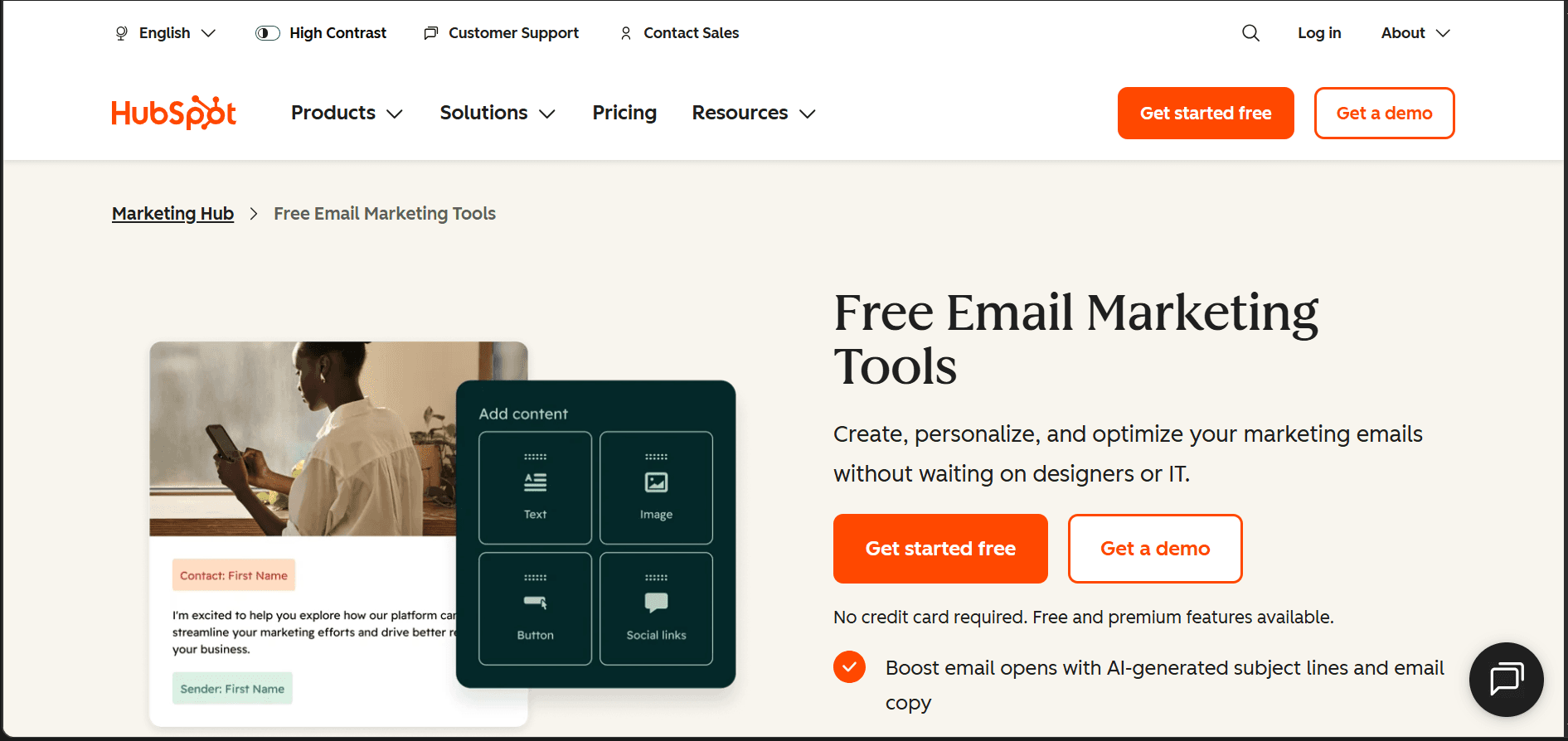
HubSpot Marketing Hub connects every marketing touchpoint to a single customer record. Email campaigns, landing pages, forms, and ad interactions all feed into the same CRM timeline. Marketing teams see exactly where each contact stands in the buyer journey and trigger emails based on lifecycle stage, deal activity, or content engagement — without exporting data or building manual integrations.
Teams that work closely with sales benefit most from HubSpot's shared visibility. When marketing sends a nurture sequence, sales sees it on the contact record. When a deal advances, marketing automation adjusts messaging automatically. This closed-loop reporting shows which campaigns actually influence revenue, giving both teams a shared definition of what's working.
Features
Native CRM with unified contact timeline across marketing, sales, and service
Visual automation workflows triggered by lifecycle stage and deal changes
Drag-and-drop email builder with smart content personalization
Built-in landing page, form, and blog creation tools
Multi-touch revenue attribution reporting
Lead scoring based on engagement, fit, and behavioral data
Strengths
True single-source-of-truth for both marketing and sales teams
Lifecycle-based automation responds to real pipeline movement
Multi-touch attribution ties campaigns directly to closed revenue
Massive integration ecosystem with 1,600+ connected apps
Comprehensive free tier for teams evaluating CRM-driven marketing
Weaknesses
Full feature access requires expensive Marketing Hub Professional or Enterprise tiers
Automation complexity increases significantly as workflows multiply
Migrating away from HubSpot's ecosystem carries high switching costs
ActiveCampaign - best for advanced automation syncing
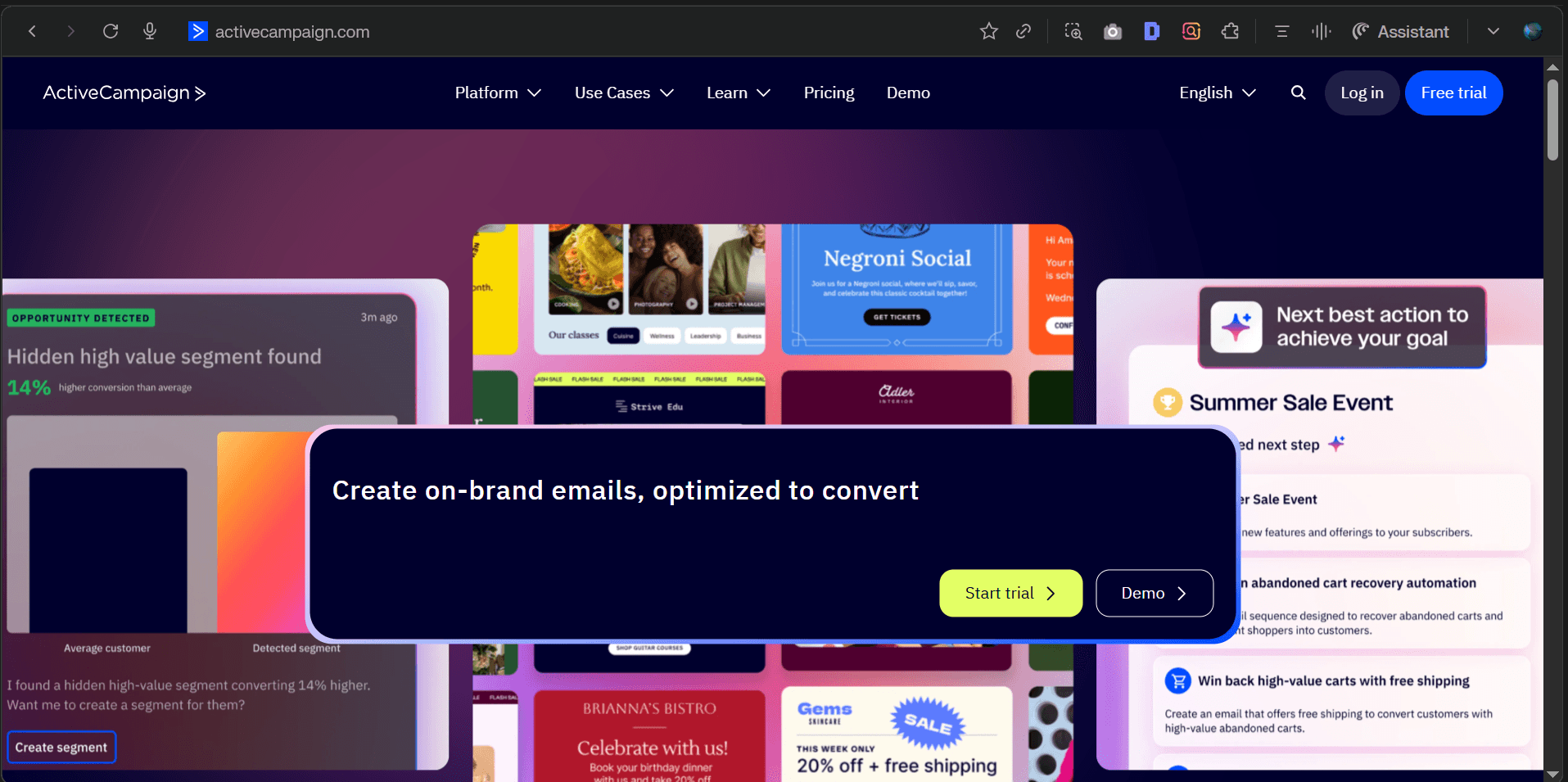
ActiveCampaign runs marketing automation and CRM updates in lockstep. When a contact opens an email, clicks a link, visits a pricing page, or submits a form, the CRM record updates instantly. This updated data fires the next automation step. Marketing teams build sequences where every action informs the next touchpoint across email, site messaging, and SMS.
For teams that need automation depth without enterprise-level pricing, ActiveCampaign is a good choice. Its conditional logic handles several branching paths. This includes wait steps, goal conditions, if/else splits. They can adapt to each contact's behavior. Sales teams benefit from ActiveCampaign because deal stages, task assignments, and pipeline notifications trigger automatically from the same automations marketing builds.
Features
Visual automation builder with conditional branching, wait steps, and goal tracking
Built-in CRM with deal pipelines, task management, and lead scoring
Site tracking that triggers automations based on page visits and events
Predictive sending that optimizes delivery time per contact
SMS and site messaging integrated into automation workflows
Split-action testing within automation sequences
Strengths
Automation depth rivals enterprise platforms at a fraction of the cost
CRM and automation sync bidirectionally without manual data pushes
Predictive sending improves open rates through machine learning
Scales from small teams to mid-market without requiring a platform switch
Strong migration support for teams moving from other email platforms
Weaknesses
CRM functionality is less robust than dedicated CRM platforms
Interface complexity grows as automation count and branching logic increase
Reporting dashboards require customization to surface actionable insights
Brevo - best for sales-aligned email automation
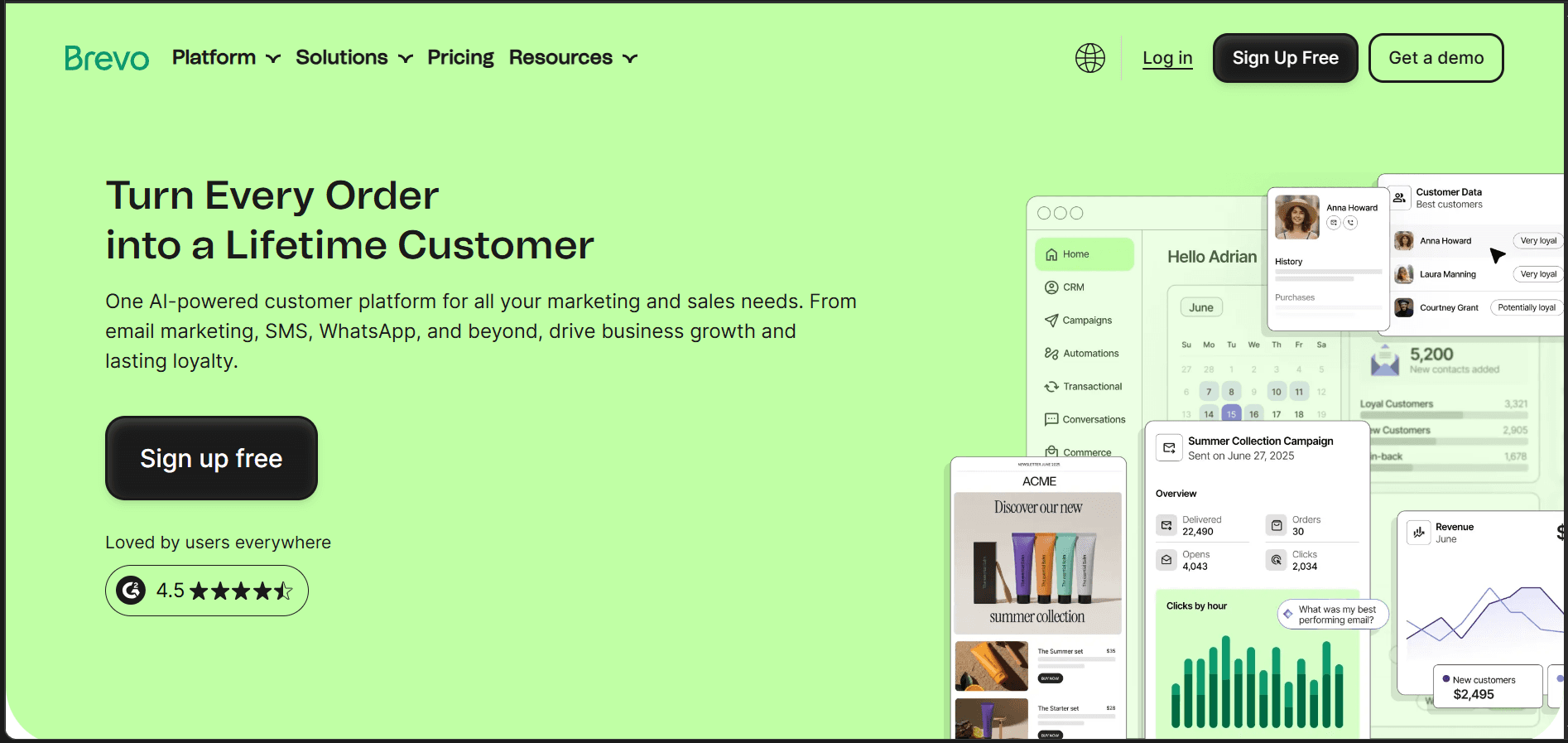
Brevo puts email marketing and sales tools under one roof at an accessible price point. Marketing teams build automated email sequences while sales reps manage deals, log calls, and track conversations in the same platform. Shared contact records mean every marketing interaction appears on the sales timeline, and every deal update can trigger a marketing response.
Teams that need CRM-aligned email without committing to enterprise budgets find Brevo practical. Its transactional email API handles order confirmations and account alerts alongside marketing campaigns, so the platform covers the full email spectrum. Built-in SMS and WhatsApp messaging extend campaigns beyond the inbox, and the pay-by-email pricing model keeps costs predictable as contact lists grow.
Features
Combined marketing automation and sales CRM in one platform
Transactional email API for order confirmations, alerts, and receipts
SMS and WhatsApp messaging integrated into campaign workflows
Shared contact timeline showing marketing, sales, and transactional touchpoints
Meeting scheduler and deal pipeline management for sales teams
Pay-by-email pricing model independent of contact list size
Strengths
Affordable entry point for teams that need CRM and email automation together
Transactional and marketing email run from the same infrastructure
Multichannel messaging (email, SMS, WhatsApp) managed in one dashboard
Contact-list-independent pricing benefits teams with large but selectively engaged databases
Weaknesses
Automation builder offers fewer conditional options than specialist platforms
CRM features are functional but lack the depth of standalone sales tools
Email template library feels limited compared to design-focused competitors
Step-by-step guide to choosing the right email marketing platform
Reviews help, but they don't replace hands-on evaluation. The best way to pick a platform is to test it against your own requirements. Here is a four-step process that narrows the field fast.
Step 1 - figure out your marketing needs
Start with the purpose. Ask yourself what the platform actually needs to do. Does it need to:
send cold outbound emails to prospects?
target or retarget website visitors based on behavior?
run a branded newsletter for subscribers?
deliver emails reliably at high volume?
The answer filters out most of the market immediately. By this point, two or three platforms from the categories above should stand out as real contenders.
Step 2 - check for business-specific suitability
Every platform best serves specific types of teams and businesses. Match the shortlist against your business model by asking whichever question applies:
Does this tool support B2B outbound workflows?
Is it built for small business owners and solopreneurs?
Can ecommerce or D2C brands run behavioral campaigns on it?
Does it handle enterprise-level sending volume and infrastructure?
This step either confirms a front-runner or cuts the list down to one. Either way, the next move is the same.
Step 3 - sign up for the free plan
Most credible platforms offer a free tier or a trial period. If a tool has neither, treat that as a red flag. It usually means the vendor knows the product needs a sales call to justify. Sign up for the free plan on each remaining option and use it for a few weeks. Build a real workflow, send actual emails, and test the features that matter to your use case.
Step 4 - buy the platform that checks every box
Go back to the two questions from earlier: (1) marketing needs and (2) business suitability. The platform that performed best across both during the trial is the right pick. Choosing based on live results, not feature comparison pages, is what separates a confident purchase from an expensive guess.
Evaluate Markopolo AI for email marketing today
Email marketing platforms need to ace two things. Craft high-converting campaigns and boost revenue. Markopolo AI was built with this in mind. Its autonomous AI agents are designed to help recover potential lost revenue and improve conversion while teams manage other operations. With behavioral intelligence and hyper-personalization features, it aims to enhance the effectiveness of email marketing activities. The platform serves businesses of all sizes with plans for small businesses, mid-sized brands, and large enterprises.