The Best WhatsApp Marketing Automation Platforms for eCommerce Businesses in 2026: Comparison, Pros, Cons, Feature Analysis, and Guide to Choosing the Right One
Sirazum Monir Osmani
Platform | Best for | Starting price | CRM integration | Behavioral intelligence |
|---|---|---|---|---|
Markopolo AI | 1:1 behavior-triggered WhatsApp personalization for eCommerce | Custom / usage-based | HubSpot, Salesforce, Zoho, Pipedrive, custom CRM sync | Yes — real-time micro-behavior tracking, AI segmentation, predictive scoring |
Klaviyo | Existing Klaviyo users running email, SMS, and lifecycle campaigns | Custom / usage-based | Native B2C CRM and eCommerce integrations | Partial — profile and event-based segmentation |
GoKwik / Kwik Engage | D2C checkout recovery, RTO reduction, and repeat purchases | Custom / demo-based | Connects with existing tools and CRM data | Partial — shopper and checkout signals |
Retner | Cart recovery, COD confirmation, repeat orders, and AI voice add-ons | $30/month | CRM inbox and custom API integrations | Partial — intent-based journeys and triggers |
Respond.io | Omnichannel WhatsApp inbox, AI agents, broadcasts, and CRM sync | $79/month annually | HubSpot, Salesforce, Zapier, Make, custom API | Partial — AI qualification, routing, and lifecycle segmentation |
Interakt | SMB WhatsApp CRM, shared inbox, campaigns, and chatbots | $19.92/month annually | Sales CRM, custom fields, APIs, webhooks | Limited — campaign triggers and CRM events |
WATI | WhatsApp inbox, broadcasts, chatbots, routing, and Shopify use cases | $39/month annually | Commerce and CRM integrations | Partial — buyer-data campaigns and retargeting |
Netcore | Enterprise customer engagement and journey orchestration | Custom / performance-linked | CDP, app integrations, campaigns, journeys | Partial — predictive segmentation and journey intelligence |
BiteSpeed | AI-led WhatsApp, support, cart recovery, and broadcasts | Custom / demo-based | eCommerce CRM for marketing, sales, and support | Partial — purchase, browsing, and engagement data |
Trengo | Support-heavy teams needing WhatsApp plus omnichannel inbox | $341/month annually | CRM and business tool integrations | Limited — routing, inbox automation, and AI replies |
Note: All platforms in this list support two-way WhatsApp conversations. WhatsApp Business API or Meta messaging charges may apply separately depending on provider, region, and message volume.
Want to use a WhatsApp automation tool to grow your eCommerce brand?
Markopolo AI integrates seamlessly with every type of eCommerce stores
No credit card needed.

For eCommerce brands, WhatsApp marketing automation platforms offer a direct way to turn customer conversations into revenue. These tools help online stores automate cart recovery, order updates, product recommendations, customer support, and post-purchase follow-ups through personalization, behavioral targeting, and audience segmentation.
The right platform can improve retention, reduce manual work, and increase sales by sending timely, relevant messages throughout the customer journey.
To help you choose the right solution, this guide compares the best WhatsApp marketing automation platforms for eCommerce based on automation features, integrations, analytics, personalization, and overall fit for growing online stores.
Top 10 WhatsApp Marketing Automation Software for eCommerce in 2026
Markopolo AI
Markopolo AI allows eCommerce businesses of all sizes to automate marketing through WhatsApp. The platform’s 1:1 hyper-personalization capabilities provide a more tailored approach than generic WhatsApp automation tools.
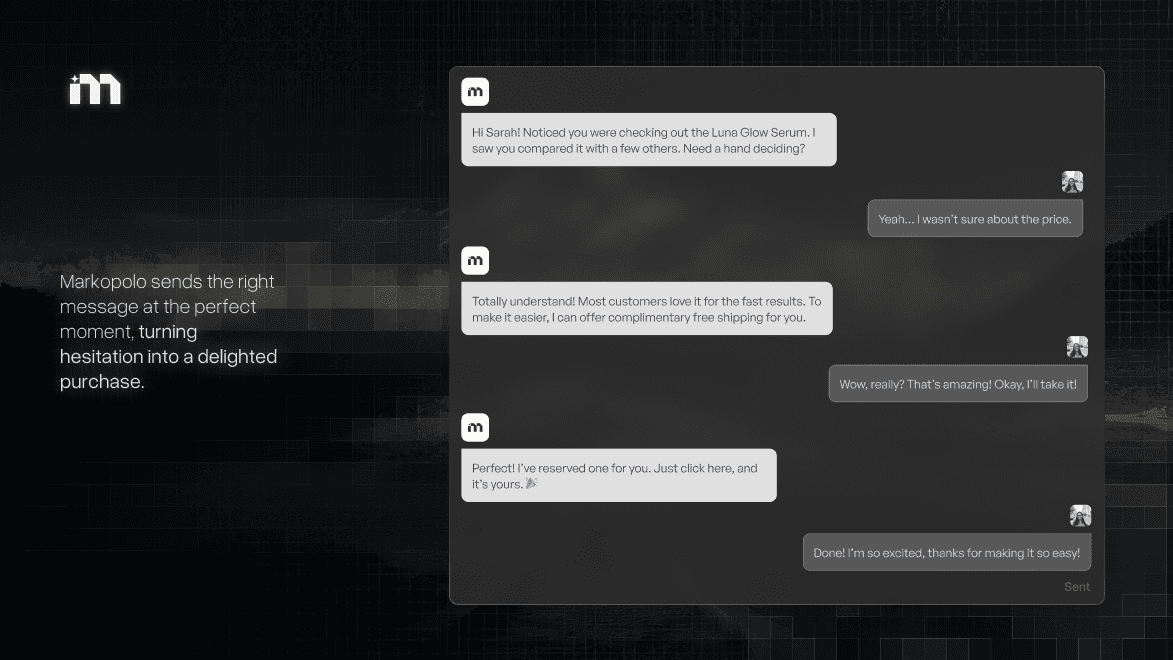
When shoppers browse your site, Markopolo AI’s proprietary behavioral intelligence reads key interactions through “behavioral vectorization,” which means it understands mouse movements, scroll patterns, clicks, and other on-site signals.
The platform tracks all events from an eCommerce store through server side, first-party, and cookieless tracking.

The platform then triggers 1:1 hyper-personalized messages to the right shopper at the right time. eCommerce businesses using Markopolo AI can improve cart recovery, browse abandonment recovery, checkout recovery, and post-purchase retention by turning customer behavior into timely, relevant WhatsApp conversations that support repeat purchases and long-term loyalty.
eCommerce marketers and store owners use Markopolo AI for WhatsApp marketing automation through both two-way conversational messaging and one-way automated campaigns.
Markopolo AI also gives you the option to integrate your CRM easily with the platform, which means you can create more custom segments and audience groups from a wider database.
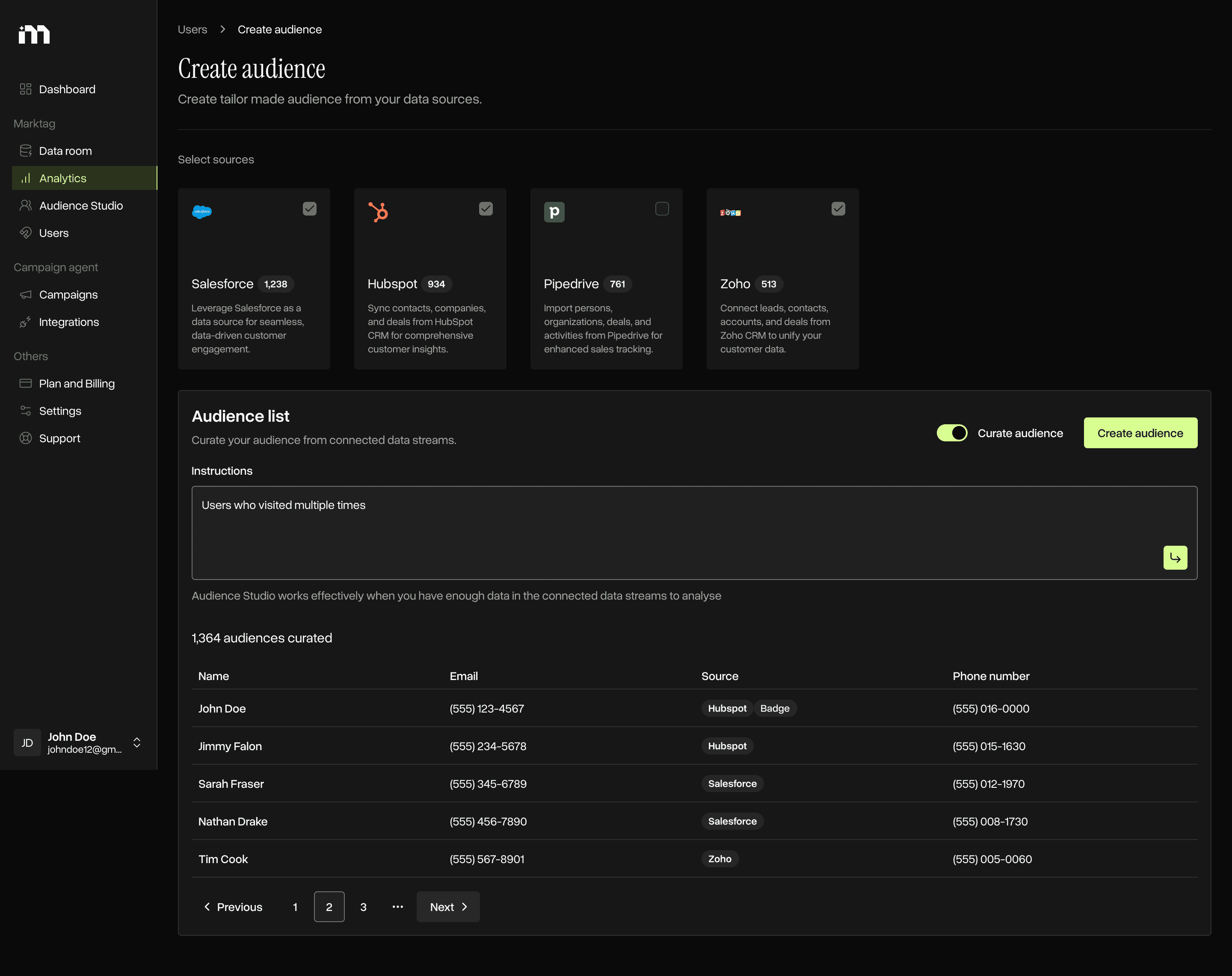
This allows eCommerce brands to engage shoppers in real time with autonomous AI, automate cart recovery and order updates, send targeted promotions, and guide customers from product discovery to repeat purchase through personalized WhatsApp interactions.
This means Markopolo AI covers the full marketing funnel and customer lifecycle marketing for online stores, including awareness in the pre-purchase stage, interest and consideration during the mid-purchase stage, and retention and loyalty after purchase. As a result, eCommerce brands can use WhatsApp automation to engage shoppers before, during, and after the buying journey.
For marketers concerned about budget and spending, Markopolo AI shows how much revenue each WhatsApp campaign generates through its revenue attribution feature. It also provides clear analytics, including open rates, CTR, and other campaign performance metrics.

Markopolo AI connects seamlessly with any online stores, including the ones that are built on Shopify, WooCommerce, Bigcommerce, and even custom ecosystems. It integrates with your WhatsApp Business API seamlessly, which makes the setup much easier and convenient.
Pros
1:1 hyper-personalization
Behavioral intelligence
Better cart recovery, browse abandonment recovery, and checkout recovery rates
Shopify, WooCommerce, BigCommerce, and any custom ecosystem integration
CRM integration
Omnichannel features (WhatsApp, email, SMS, push notifications, and AI voice calls)
Context-aware messaging, meaning it doesn’t repeat the same communication twice
Easy and quick setup
Flexible pricing with customized plans
Cons
Not ideal for batch-and-blast campaigns
Only supports AI generated content creation
Automate WhatsApp marketing for your eCommerce business
Markopolo AI connects easily with Shopify, WooCommerce, and any eCommerce stores
No credit card needed
Klaviyo
Klaviyo is a strong fit for eCommerce brands that already use email, SMS, push, and customer data inside one marketing system. Its WhatsApp support lets stores send promotional messages, product recommendations, abandoned cart reminders, order confirmations, shipping updates, and customer service replies from the same customer profile used for other channels.
For online stores, the biggest advantage is unified segmentation. You can use purchase history, browsing behavior, engagement, and consent data to decide when WhatsApp should support a flow instead of email or SMS. This makes Klaviyo useful for retention, repeat purchase campaigns, and omnichannel lifecycle automation, especially for brands already committed to its CRM-style marketing stack.
Pros
Unified customer profiles
Strong segmentation
Email, SMS, push, WhatsApp
Built-in attribution
Good lifecycle automation
Useful for existing Klaviyo users
Cons
WhatsApp marketing not supported for US numbers
Requires verified WhatsApp Business Account
Best value inside Klaviyo ecosystem
GoKwik
GoKwik is built for D2C brands that want WhatsApp to drive checkout, recovery, and retention, not just messaging. It supports automated journeys for welcome flows, abandoned carts, browse abandonment, loyalty programs, and order status updates, while also enabling conversational commerce through interactive WhatsApp flows.
For online merchants, GoKwik is most useful when WhatsApp needs to connect directly with revenue actions. Stores can use personalized product carousels, visual campaigns, ROI tracking, cart recovery analytics, revenue-influenced reporting, and AI chatbot support for pre-purchase and post-purchase queries. This makes it a practical option for brands focused on checkout completion, repeat orders, and reducing lost revenue from delayed customer responses.
Pros
Revenue-focused automation
Abandoned cart flows
Browse recovery journeys
Product carousel campaigns
Built-in ROI analytics
AI chatbot support
Cons
Best suited for D2C brands
Less useful for generic support-only teams
May depend heavily on commerce integrations
Retner
Retner is an AI-native WhatsApp marketing and retention platform designed for D2C eCommerce brands. It automates abandoned cart recovery, COD-to-prepaid conversion, repeat purchase campaigns, and customer support across WhatsApp, SMS, email, voice, Instagram, and RCS from one system.
Its strength is post-click revenue recovery. Instead of only sending campaign broadcasts, Retner focuses on cart triggers, COD confirmation, AI voice agents, lifecycle messaging, and omnichannel follow-up. This makes it useful for brands that lose sales after checkout intent, especially in markets where cash-on-delivery, failed deliveries, and repeat-order reminders have a direct effect on profitability.
Pros
D2C-specific workflows
COD-to-prepaid automation
AI voice agents
Abandoned cart recovery
Omnichannel retention stack
Repeat-order journeys
Cons
Narrower fit outside D2C
May be too specialized for simple campaigns
Strongest for COD-heavy markets
Respond.io
Respond.io is an AI-powered customer conversation platform for eCommerce teams that want WhatsApp, email, calls, Instagram, Facebook, TikTok, and other channels in one inbox. For WhatsApp commerce, it helps stores manage two-way customer chats, run targeted broadcasts, qualify leads, route conversations, automate FAQs, and keep sales or support context connected across the journey.
Its value is strongest for stores with high conversation volume. AI Agents can answer product questions, recommend products, update CRMs, route serious buyers, and support follow-ups, while workflows and analytics help teams track engagement and response performance. Respond.io also connects WhatsApp Business API with CRMs like HubSpot and Salesforce, so teams can sync contacts, messages, and lifecycle data.
Pros
Omnichannel team inbox
WhatsApp Business API support
AI Agents
Targeted broadcasts
CRM syncing
Routing automation
Cons
Requires WhatsApp Business API
Not a full CRM replacement
Less focused on deep behavioral intelligence
Interakt
Interakt is a WhatsApp-first platform for marketing, sales, and support, making it practical for eCommerce brands that want one system for campaigns, automation, CRM, and customer conversations. It supports WhatsApp Business API, WhatsApp automation, WhatsApp CRM, chat widgets, commerce, forms, notifications, and Click-to-WhatsApp ads.
For online stores, Interakt helps automate customer engagement across lead capture, catalog sharing, support queries, and conversion workflows. Its AI copilot can create campaign content, while AI chatbots handle customer support, lead qualification, and workflow automation. The platform also supports intent-based automation, AI-generated forms, ready-to-send templates, and plug-and-play integrations, which makes it useful for growing D2C brands that need faster campaign execution.
Pros
WhatsApp-first CRM
AI campaign copilot
Intent-based automation
Chatbots and forms
60+ integrations
Good for D2C engagement
Cons
Can feel broad for small teams
Advanced workflows need planning
Less focused on deep personalization
WATI
WATI is a WhatsApp-centered customer engagement platform for brands that want marketing, sales, and support conversations in one workspace. It combines WhatsApp campaigns, team inbox, no-code chatbots, Click-to-WhatsApp ads, AI agents, routing, and performance insights.
For eCommerce teams, WATI works well when WhatsApp is both a promotion channel and a support channel. Stores can run personalized campaigns, retarget customers from ads, qualify leads, manage product or order questions, route complex chats to agents, and use AI to answer common queries. It also supports Shopify sales use cases, campaign tracking, click tracking, buyer-data-based campaigns, and catalog-style conversion features on higher plans.
Pros
Easy WhatsApp setup
Team inbox
No-code chatbots
Click tracking
AI support agents
Shopify sales support
Cons
Advanced features may sit on higher plans
Less specialized than D2C-native tools
Can become support-heavy, not marketing-first
Netcore Cloud
Netcore Cloud is best suited for larger eCommerce and B2C brands that need WhatsApp inside a wider customer engagement platform. Its WhatsApp capabilities include WhatsApp Flows, chatbot orchestration, in-chat commerce journeys, AI-driven personalization, carousel recommendations, and omnichannel orchestration powered by a native CDP.
For eCommerce marketers, Netcore’s value comes from connecting WhatsApp with broader lifecycle data. Brands can use customer behavior, segments, product recommendations, abandoned cart recovery, order updates, and repeat-purchase prompts to create personalized journeys across WhatsApp and other channels. This makes it stronger for enterprise teams that need scale, data unification, and journey orchestration instead of a standalone WhatsApp inbox.
Pros
Enterprise-ready platform
Native CDP support
AI personalization
WhatsApp Flows
Product recommendations
Omnichannel orchestration
Cons
May be complex for small stores
Heavier implementation
Less plug-and-play than SMB tools
Replace the Zoko section with this:
BiteSpeed
BiteSpeed is an AI-native WhatsApp marketing, chatbots, and omnichannel helpdesk platform built for eCommerce brands. It helps stores recover abandoned carts, collect WhatsApp subscribers, send promotional broadcasts, recommend products, upsell and cross-sell, and convert cash-on-delivery orders into prepaid purchases.
For online stores, BiteSpeed works best when WhatsApp needs to support both revenue and customer service. Brands can create WhatsApp shops, run chatbot campaigns, automate support questions, manage conversations through an omnichannel inbox, and use Shopify integration to connect campaigns with customer and order data. This makes it useful for growing D2C brands that want owned-channel sales without relying only on ads.
Pros
Abandoned cart recovery
WhatsApp broadcasts
AI chatbots
COD-to-prepaid flows
Shopify integration
Omnichannel helpdesk
Cons
Best for D2C brands
May need setup support
Less ideal for non-commerce teams
Limited broader omnichannel depth
Trengo
Trengo is an omnichannel inbox and automation platform where WhatsApp sits alongside email, live chat, social media, and voice. For eCommerce brands, it is useful when customer conversations are spread across too many channels and the support team needs one place to manage, route, and automate them.
Its WhatsApp value is strongest on the service and conversion side. Online stores can use Trengo to manage WhatsApp Business conversations, automate routing, respond with AI-powered conversations, support customers in multiple languages, connect CRM or eCommerce tools, and reduce repetitive manual replies. It is a good option for brands that care more about customer experience, fast resolution, and agent productivity than deep WhatsApp-only marketing automation.
Pros
Unified omnichannel inbox
Official WhatsApp partner
AI conversations
Routing automation
CRM and eCommerce integrations
Good for support teams
Cons
Weaker for revenue attribution
Less focused on cart recovery
How to choose the right WhatsApp marketing automation platform for your eCommerce business?
Choose based on the customer journeys you want to automate, the data you need for personalization, the channels you already use, and how clearly the platform connects WhatsApp campaigns to revenue. Do not choose only by feature count.
In general, the best eCommerce marketing automation tools should help your store send the right message, to the right shopper, at the right moment.
So, the right WhatsApp marketing automation platform should match how your store sells, supports, and retains customers. It should also help you recover missed sales, reduce manual conversations, and create more relevant customer experiences without making your team depend on complex setup.
Match the platform to your main revenue goal
Start with the problem you want WhatsApp automation to solve first. If your store loses many shoppers at checkout, choose a platform with strong cart recovery, browse abandonment, and checkout recovery flows. If repeat purchases matter more, look for post-purchase automation, replenishment reminders, loyalty campaigns, and personalized product recommendations.
For example, a fashion brand may need browse abandonment messages based on viewed categories, while a skincare brand may need replenishment reminders after 30 or 45 days. When your goal is clear, it becomes easier to compare platforms by business impact instead of surface-level features.
Check personalization and behavioral targeting depth
WhatsApp works best when messages feel timely and relevant, not random. Look at how each platform uses customer behavior, purchase history, cart activity, product views, CRM data, and engagement signals. Basic segmentation can help with campaigns, but deeper behavioral intelligence can support more accurate one-to-one messaging.
This matters because shoppers respond better when the message matches their intent. A customer who viewed a product three times needs a different message than someone who bought last week. Choose a platform that can turn customer signals into useful triggers, not just send the same broadcast to everyone.
Review eCommerce and CRM integrations
Your WhatsApp automation platform should connect smoothly with your store, CRM, helpdesk, and analytics tools. For most eCommerce brands, key integrations include Shopify, WooCommerce, BigCommerce, custom storefronts, payment tools, order systems, and customer databases. Without these connections, automation becomes limited and teams may need to move data manually.
Strong integrations help you trigger messages from real events, such as cart abandonment, order confirmation, failed payment, delivery update, or repeat purchase opportunity. They also keep customer records updated, so marketing and support teams work from the same context.
Compare automation, inbox, and AI support features
Some platforms are better for marketing campaigns, while others are stronger for support conversations. The best choice depends on whether your team needs automated revenue journeys, a shared inbox, AI chatbots, agent routing, or all of these together. A small team may need AI to answer common questions, while a larger team may need assignment rules and conversation history.
For eCommerce, the platform should support both one-way automated campaigns and two-way customer conversations. This allows shoppers to ask questions, get product help, and move toward purchase inside the same WhatsApp thread.
Evaluate pricing, scalability, and revenue attribution
Pricing can vary by platform subscription, WhatsApp Business API charges, message volume, user seats, automation limits, and add-on features. Do not compare only the starting price. Check what happens as your contact list, campaigns, and conversation volume grow.
Also review revenue attribution. A platform should show how much sales value comes from cart recovery, broadcasts, lifecycle flows, and support-assisted purchases. This helps you understand whether WhatsApp is producing profitable growth or only adding another communication cost. For growing eCommerce brands, clear ROI tracking is often more useful than having extra features your team will not use.
Important features to look for when evaluating WhatsApp marketing automation tools for eCommerce
When it comes to WhatsApp marketing automation in eCommerce, the best features include more than bulk campaigns. You need automation, personalization, integrations, analytics, and two-way conversations that support the full customer journey from first visit to repeat purchase.
Behavioral triggers and customer segmentation
Behavioral triggers help you act when a shopper shows intent. Look for tools that can trigger WhatsApp messages from cart abandonment, product views, checkout drop-offs, repeat visits, past purchases, and customer engagement. This helps you avoid generic broadcasts and send messages based on what the shopper actually did.
Segmentation is equally important. Your platform should let you group customers by purchase history, browsing behavior, order value, location, loyalty status, and campaign engagement. Better segmentation leads to more relevant campaigns and fewer ignored messages.
Abandoned cart, browse, and checkout recovery
Cart recovery is one of the most important WhatsApp automation features for eCommerce. A good platform should help you recover shoppers who added products to cart but did not complete payment. Stronger tools also support browse abandonment and checkout recovery, which lets you reach customers earlier or later in the buying journey.
These flows should be customizable by timing, product, customer value, and purchase intent. For example, a high-value cart may need a different message than a first-time visitor who only viewed one product.
Two-way conversational messaging
WhatsApp is not just a broadcast channel. Customers often reply with questions about size, delivery, discounts, returns, or payment options. Your platform should support two-way conversations, so shoppers can move from interest to purchase without leaving WhatsApp.
Look for a shared inbox, agent assignment, chatbot handoff, quick replies, and conversation history. These features help marketing, sales, and support teams work from the same customer context. They also make automation feel more helpful and less robotic.
eCommerce, CRM, and WhatsApp Business API integrations
Your WhatsApp platform should connect with your eCommerce store, CRM, helpdesk, and analytics tools. Key integrations may include Shopify, WooCommerce, BigCommerce, custom storefronts, HubSpot, Salesforce, payment tools, and order management systems.
These integrations make automation more accurate. For example, your store data can trigger order updates, failed payment reminders, delivery notifications, replenishment campaigns, and personalized product recommendations. CRM integration also helps you build better audience segments and keep customer profiles updated across channels.
AI personalization and product recommendations
AI features can make WhatsApp campaigns more relevant when they use real customer data. An AI-powered WhatsApp marketing platform for eCommerce should go beyond basic personalization by using browsing behavior, purchase history, cart contents, product affinity, and engagement patterns to drive smarter decisions. This helps your store recommend the right products instead of sending the same promotion to every customer.
Good personalization should also adjust message timing and content. For example, a returning customer may receive a replenishment reminder, while a new shopper may receive help choosing a product. The goal is to make automation feel timely, useful, and specific.
Analytics, revenue attribution, and ROI tracking
A WhatsApp marketing automation tool should clearly show what is working. Basic metrics include open rates, click-through rates, replies, conversions, and opt-outs. For eCommerce, revenue attribution is even more important because it connects campaigns and automation flows to actual sales.
Look for reporting that separates revenue from cart recovery, broadcasts, post-purchase flows, and support-assisted purchases. This helps you compare performance across journeys and improve campaigns over time. Without clear analytics, WhatsApp automation can become another cost instead of a measurable growth channel.
FAQs
Can Markopolo AI be used as a dedicated WhatsApp marketing tool for ecommerce?
Yes. Markopolo AI supports WhatsApp marketing for eCommerce, including broadcasts, automation, behavioral targeting, abandoned cart recovery, and personalized customer journeys.
Does Markopolo AI support WhatsApp marketing automation for ecommerce brands?
Yes. It automates WhatsApp campaigns using first-party customer behavior, AI segmentation, and event-based triggers to send timely, personalized messages.
Can ecommerce businesses use Markopolo AI for WhatsApp campaigns only?
Yes. You can use only the WhatsApp marketing features, although combining WhatsApp with email, SMS, and push unlocks more complete customer journeys.
Does Markopolo AI include WhatsApp broadcast messaging and automation?
Yes. Markopolo AI supports WhatsApp broadcasts alongside automated lifecycle campaigns such as cart recovery, browse abandonment, win-back, and post-purchase messaging.
Is Markopolo AI a good alternative to WhatsApp marketing tools like Interakt and Zoko?
Yes, especially for brands that want AI-driven personalization and behavioral targeting for lifecycle marketing. Unlike WhatsApp-only tools, Markopolo AI combines WhatsApp with email, SMS, push notifications, customer data, and AI optimization.