15 Best Omnichannel Customer Engagement Platforms in 2026: Comparison, Analysis, Pros and Cons
Sirazum Monir Osmani
The right omnichannel customer engagement platform recovers lost revenue, converts hesitant buyers, and orchestrates seamless experiences across every touchpoint. This comprehensive comparison examines 15 leading platforms that unify customer data, automate personalized journeys, and drive measurable results for e-commerce, B2C, and D2C businesses in 2026.
Quick Comparison: Top 15 Omnichannel Customer Engagement Platforms
Platform | Best For | Pricing Model | Key Differentiator |
|---|---|---|---|
Markopolo AI | E-commerce cart recovery, customer lifecycle marketing, omnichannel journey orchestration | Usage-based + revenue share (starts from 49 USD/month) | Autonomous AI agents, voice calls, real-time and hyper-personalization capabilities |
Bloomreach | Product discovery | Subscription tiers | AI-powered product recommendations |
Braze | Enterprise lifecycle marketing | Custom enterprise | Cross-channel journey orchestration |
Insider One | Growth marketing | Subscription | Predictive customer segmentation |
Iterable | B2C brands | Tiered subscriptions | Workflow automation studio |
CleverTap | Mobile-first engagement | Usage-based | Mobile analytics integration |
MoEngage | Retention campaigns | Tiered subscriptions | Tiered subscriptions AI-optimized send times |
NetCore | Email-centric campaigns | Volume-based | Email deliverability focus |
Salesforce Marketing Cloud | Enterprise marketing automation | Enterprise custom | Deep Salesforce CRM integration |
Adobe Experience Cloud | Digital experience management | Enterprise custom | Content management integration |
Voyado | Retail loyalty | Subscription | Loyalty program integration |
Twilio Engage | Developer-friendly | Usage-based | Programmable communications API |
SAP Emarsys | Mid-market B2C | Tiered subscriptions | Predictive analytics engine |
Kustomer | Customer service teams | Per-agent pricing | Service-first CRM approach |
Userpilot | SaaS product adoption | Tiered subscriptions | In-app experience layers |
What is an Omnichannel Customer Engagement Platform?
An omnichannel customer engagement platform unifies customer data across touchpoints and orchestrates personalized interactions through multiple channels simultaneously. It captures behavioral signals in real-time, transforms actions into predictive intelligence, and autonomously executes individualized journeys across channels. Such as email, SMS, push notifications, WhatsApp, and voice calls.
Instead of applying static workflows to broad segments, these platforms create millions of unique strategies based on each customer's hesitation patterns, comparison behaviors, and conversion momentum.
What Makes a Customer Engagement Platform Omnichannel vs Multichannel
Multichannel platforms send messages across separate channels without unified context. Whereas, omnichannel platforms connect every touchpoint into a single customer view, preserve context across channels, and coordinate timing based on individual behavior patterns. A customer who abandons a cart on mobile receives a perfectly timed SMS, followed by WhatsApp social proof, then a voice call—each interaction informed by the previous response.
Complete List of Top 15 Omnichannel Customer Engagement Platforms: Comparison, Pros, Cons, and Analysis
Markopolo AI
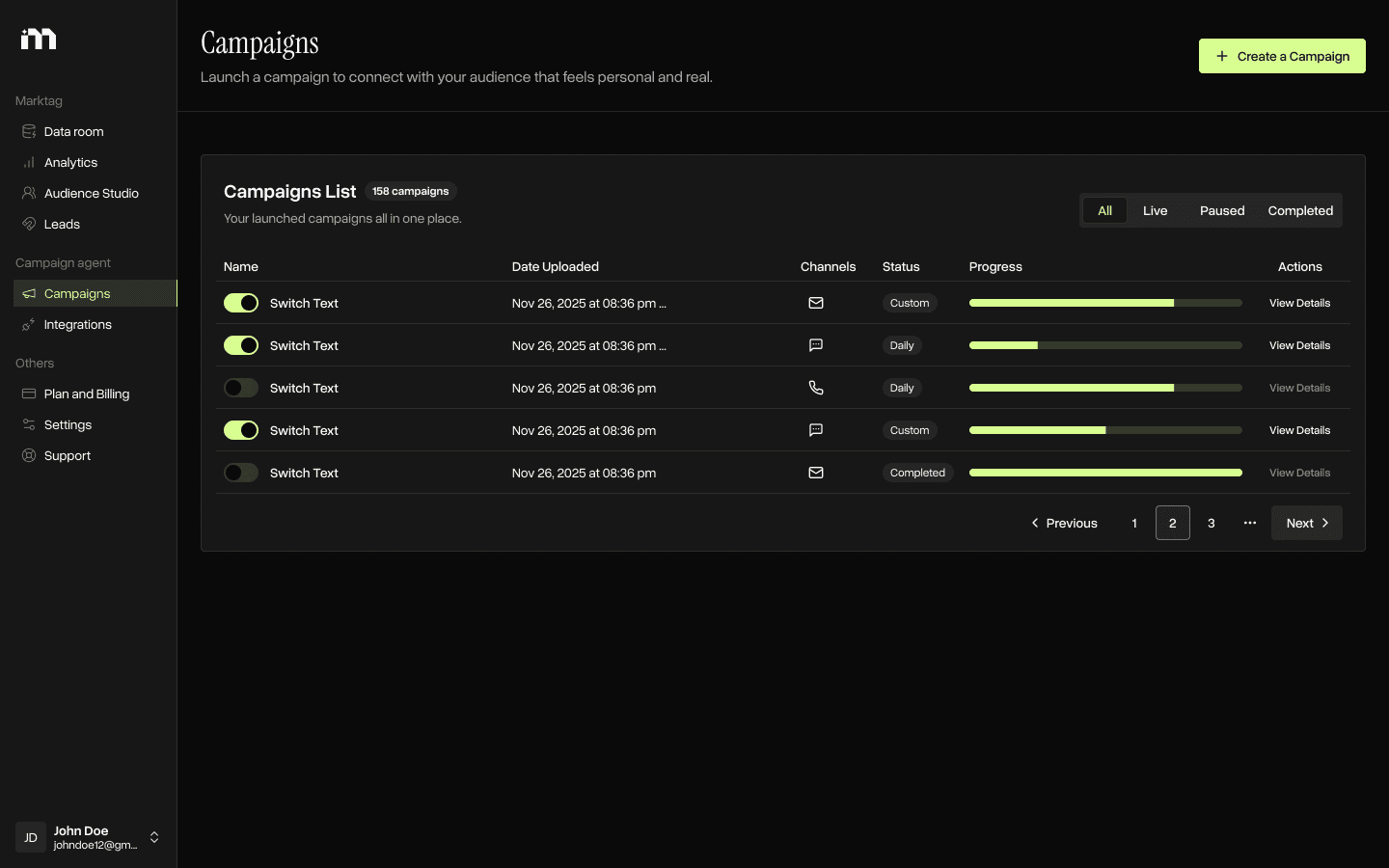
Markopolo is the best AI-native omnichannel customer engagement platform that delivers a hyper-personalized experience to each individual customer in real-time. The platform unifies the entire customer journey across every touchpoint: email, SMS, WhatsApp, push notifications, and AI voice calls—creating a truly seamless omnichannel experience.
Why is Markopolo AI Best for Omnichannel Engagement
Other omnichannel CEPs like Kustomer, Voyado, Bloomreach, and Insider scatter customer interactions across disconnected channels, Markopolo maintains context awareness throughout the entire journey. The platform remembers what customers browsed on your website, what they clicked in an email, and how they responded to a text message, then uses this unified understanding to orchestrate the next interaction across any channel.

Markopolo has the right intelligence to differentiate high-intent leads from casual browsers. The platform's omnichannel outreach is optimized to give customers the best experience rather than appearing intrusive. It replaces campaign-based automation with autonomous sales agents powered by behavioral intelligence that work seamlessly across all channels.
Markopolo trained its AI ATHENA across 603 independent businesses, spanning e-commerce, streaming, SaaS, and mobile applications. This training on diverse engagement patterns represents 120x more domain diversity than any prior approach.
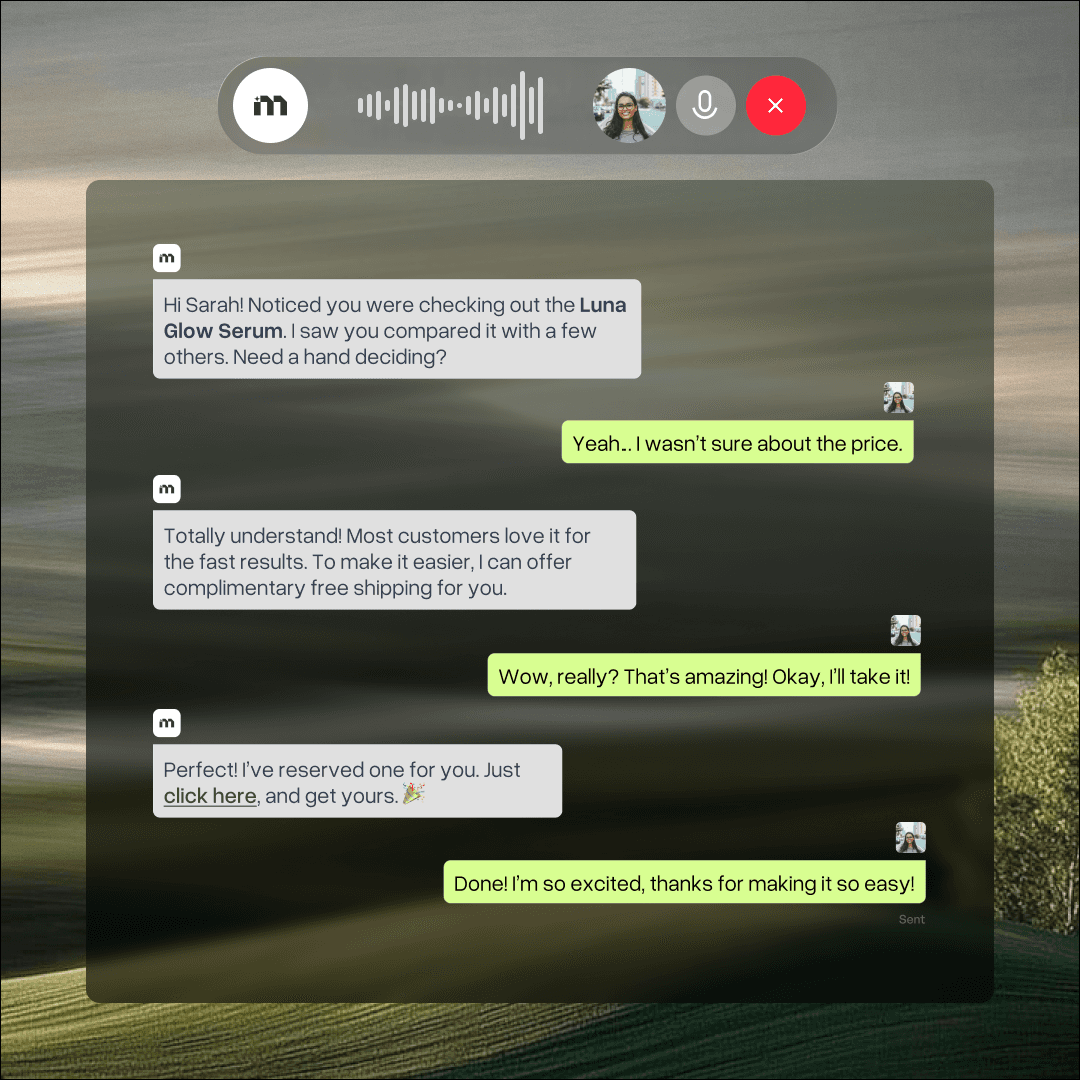
Traditional tools force marketers to build static workflows for broad segments, often siloing communications by channel. But Markopolo assigns every visitor a personal AI agent that observes behavior across all platforms, understands intent using vector intelligence, and orchestrates a unique engagement strategy. The platform ensures customers receive a consistent, context-aware experience whether they interact through your website, mobile app, email, or voice call.
This creates millions of personalized omnichannel strategies simultaneously, making it the first truly autonomous omnichannel customer engagement platform for B2C and D2C brands.
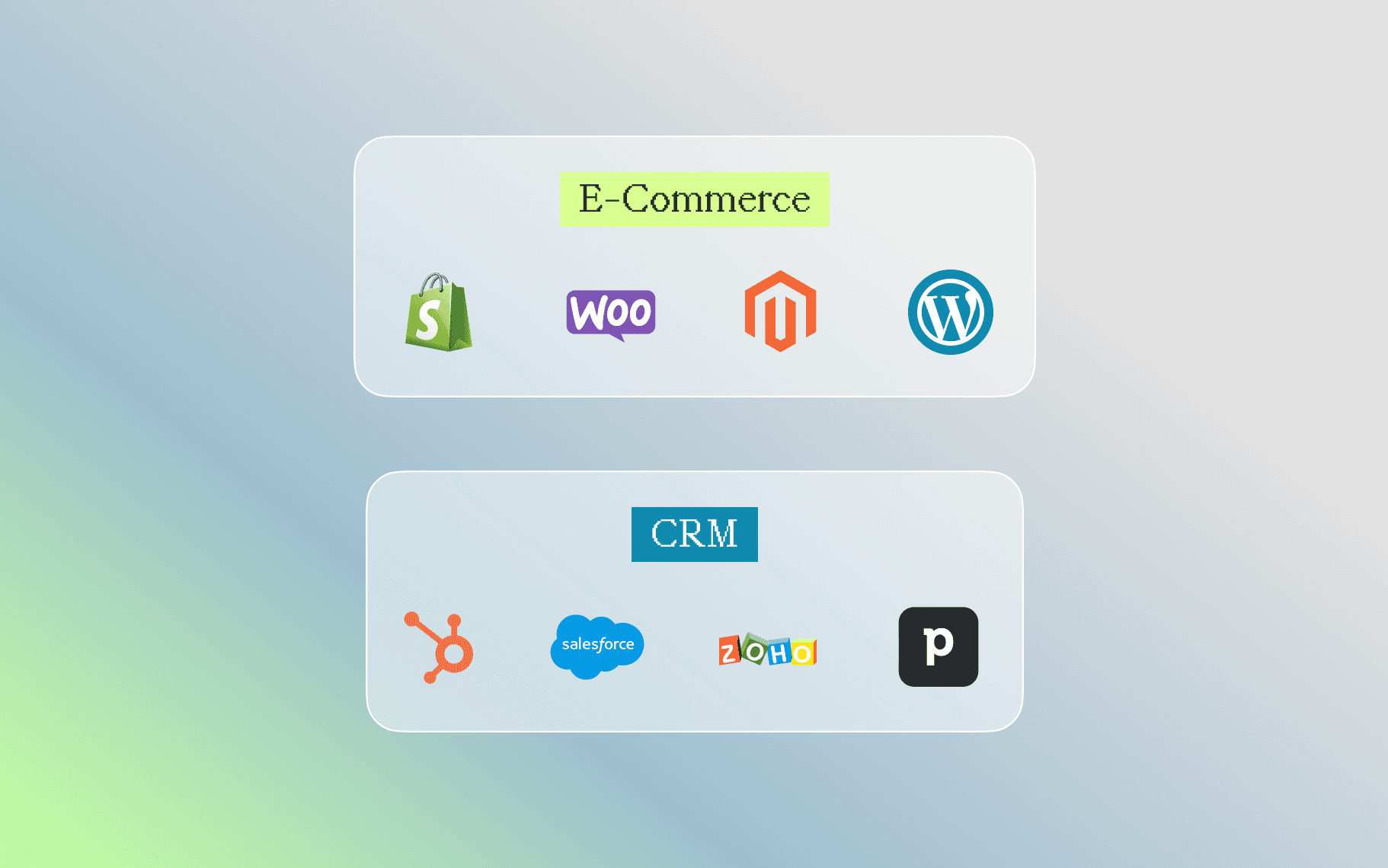
Markopolo is available for Shopify, WooCommerce, WordPress-based merchants, as well as native ecosystems. The platform integrates Twilio, Sengrind, AutoSend, many more. It also connects to CRMs like HubSpot, Zoho, and others, pulling customer data from every source to maintain a unified view across all channels.
Pros
Autonomous AI agents create millions of individual strategies without human intervention
Industry-first AI voice call integration with contextual conversation capabilities
Real-time behavioral vectorization processes intent in under 50ms
Lifetime attribution model captures causal relationships across the entire journey
Multi-channel orchestration coordinates perfect timing across email, SMS, WhatsApp, push, and voice
30-40% cart recovery rates versus industry standard 10-15%
Value-based pricing aligns platform success with merchant revenue outcomes
Cons
Compared to established enterprise platforms, these include more recent innovations.
Traditional marketers might face a steep learning curve with the sophisticated AI features.
Best For
E-commerce brands, D2C businesses, and online retailers seeking autonomous revenue recovery through hyper-personalized, behavior-driven engagement across all channels including voice.
Pricing
Usage-based model starting at $49/month plus revenue share (3% starter, 2.5% growth, 2% scale). Enterprise plans offer custom infrastructure with 1-1.5% revenue share, aligning platform ROI directly with recovered revenue.
Bloomreach
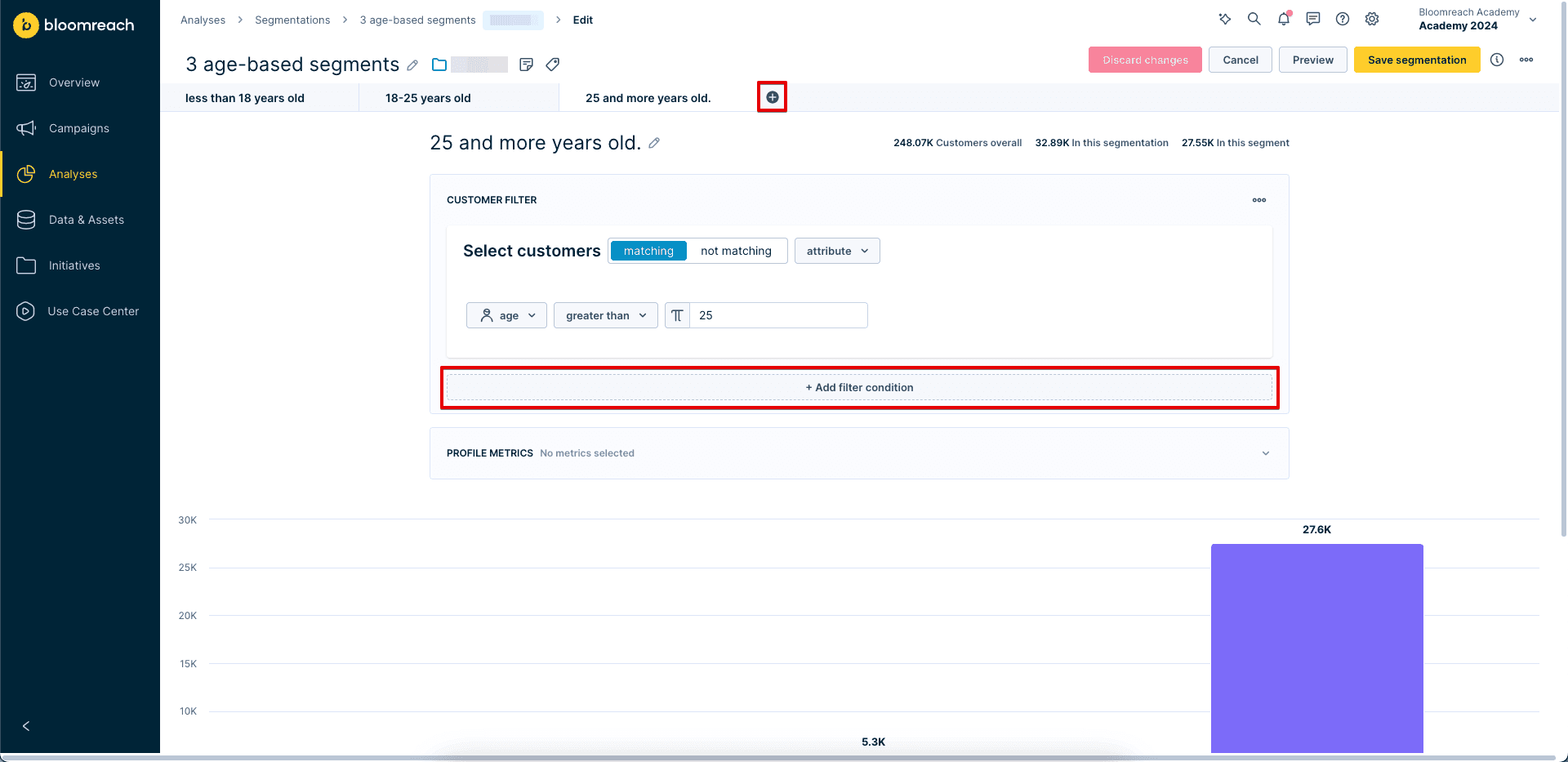
Image source: Bloomreach
Bloomreach combines commerce experience with customer data and AI-powered product discovery. The platform emphasizes product recommendations and search optimization alongside engagement capabilities.
How Effective is Bloomreach for Omnichannel Engagement
Bloomreach excels at product discovery through its Loomi AI engine, which analyzes browsing patterns and purchase history to surface relevant products. The platform unifies content, commerce data, and customer information into a single customer view. Marketing teams build campaigns across email, SMS, and web channels with product-focused personalization. The search and merchandising capabilities help e-commerce teams optimize product visibility, which indirectly supports engagement strategies. However, the platform's strength lies more in product discovery than in behavioral intelligence or cross-channel orchestration depth.
Pros
Strong AI-powered product recommendation engine
Unified commerce and content data for product-focused personalization
Search and merchandising optimization integrated with marketing
Reasonable learning curve for marketing teams
Pre-built e-commerce templates and workflows
Cons
Limited behavioral vectorization compared to AI-first platforms
No native voice call capabilities
Product discovery focus means less depth in journey orchestration
Complex pricing structure for full platform capabilities
Implementation requires technical resources for optimal setup
Best For
E-commerce brands prioritizing product discovery and search optimization alongside basic omnichannel marketing campaigns.
Comparing Bloomreach vs Markopolo AI
Bloomreach does a solid job with product recommendations and search optimization, but it's fundamentally built for a different purpose than Markopolo AI. Where Bloomreach helps customers find products through better search results, Markopolo AI prevents them from leaving in the first place by understanding exactly why they're hesitating and intervening with the right message at the right moment.
The real difference shows up in how they handle personalization. Bloomreach segments customers into groups and serves them relevant product suggestions. Markopolo creates a complete behavioral fingerprint for every single visitor and orchestrates unique engagement strategies across email, SMS, WhatsApp, push, web, and voice calls. If you're losing revenue to cart abandonment and need genuinely personalized recovery strategies that actually work, Markopolo AI's behavioral intelligence delivers conversion rates Bloomreach simply can't match.
Braze
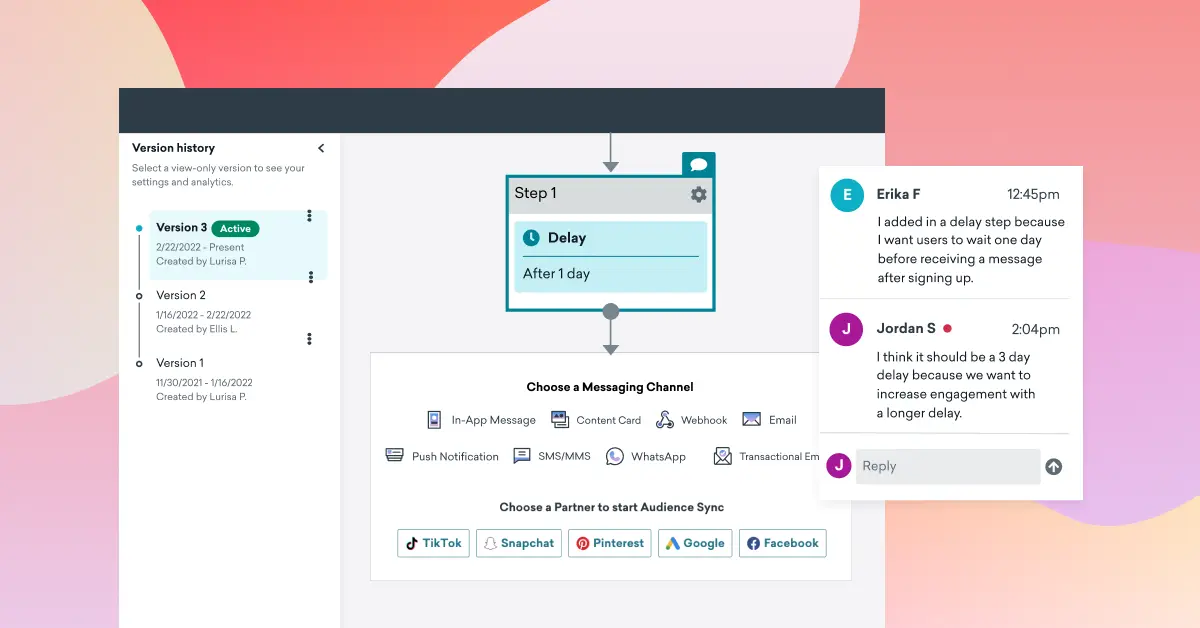
Image source: Braze
Braze provides enterprise-grade customer engagement with sophisticated journey orchestration across channels. The platform serves large B2C brands with complex, multi-step lifecycle campaigns.
How Effective is Braze for Omnichannel Engagement
Braze offers robust cross-channel journey building through its Canvas feature, allowing marketers to design complex, branching campaigns across email, push, in-app messages, SMS, and webhooks. The platform processes customer events in real-time and triggers campaigns based on behaviors and attributes. Braze's strength emerges in enterprise environments where marketing teams need granular control over journey logic and extensive integration capabilities. The platform requires significant setup and ongoing management from experienced marketers. Personalization relies on predefined attributes and segments rather than autonomous AI decision-making.
Pros
Sophisticated journey orchestration with visual Canvas builder
Real-time event processing and campaign triggering
Extensive integration ecosystem with data warehouses and tools
Strong security and compliance features for enterprise requirements
Comprehensive analytics and reporting dashboards
Cons
Requires dedicated marketing operations team for management
Static workflow approach without autonomous AI optimization
No behavioral vectorization or predictive intelligence layer
No native voice call capabilities
Enterprise-only pricing excludes smaller businesses
Best For
Large B2C brands and enterprises with dedicated marketing operations teams managing complex, multi-step lifecycle campaigns.
Comparing Braze vs Markopolo AI
Braze is powerful if you have a team of marketing experts who love building complex workflows. Markopolo flips this entire model. Instead of you building one workflow that thousands of people go through, it builds thousands of unique strategies—one for each person. The AI looks at someone's behavioral vector, understands their hesitation patterns and channel preferences, then generates a completely unique approach.
Braze works brilliantly when you have experienced marketers who want granular control. Markopolo AI works better when you want results without the workflow maintenance. And with 30-40% cart recovery rates versus the typical 10-15% that even sophisticated Braze workflows achieve, the autonomous intelligence approach simply converts better.
Insider One
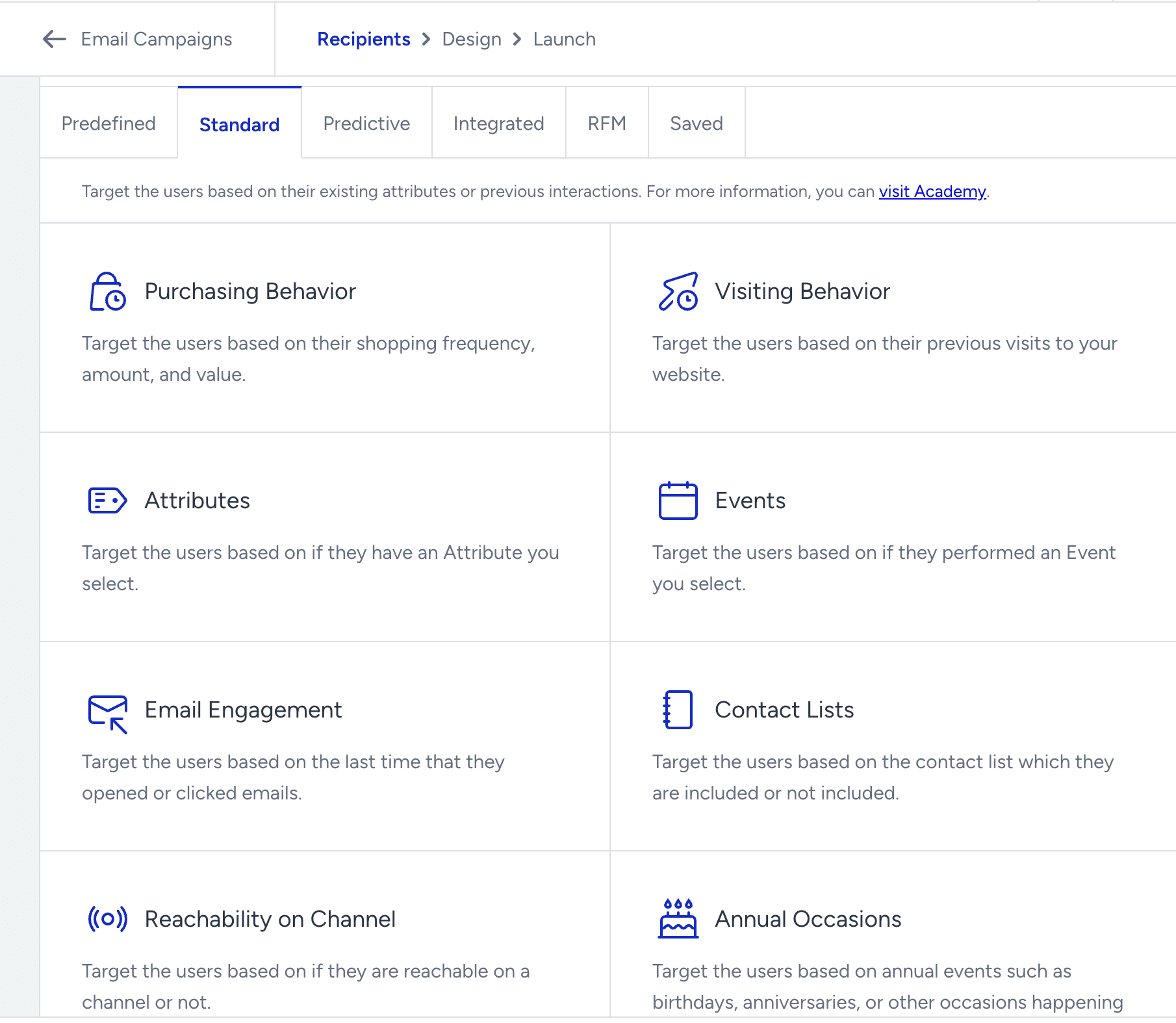
Image source: Insider Academy
Insider One combines customer data, predictive segmentation, and channel orchestration into a unified growth marketing platform. The system emphasizes predictive analytics and personalization.
How Effective is Insider One for Omnichannel Engagement
Insider One creates unified customer profiles and applies predictive algorithms to identify high-intent segments. The platform offers email, SMS, push, WhatsApp, and on-site personalization capabilities. Marketers build journeys using templates or custom logic, with AI suggesting optimal send times and content variations. The InStory feature brings social-media-style stories to websites and apps. Insider's strength lies in its predictive segmentation models that identify likely converters, at-risk customers, and high-value prospects. However, the platform still applies segment-based logic rather than creating truly individual strategies for each customer.
Pros
Predictive segmentation identifies high-value customer groups
Strong on-site personalization and recommendation engine
WhatsApp Business API integration for direct messaging
Social-proof overlays and urgency triggers for conversion optimization
Unified customer profiles across channels
Cons
Segment-based approach rather than individual-level intelligence
No behavioral vectorization or lifetime attribution modeling
Limited autonomous decision-making capabilities
No voice call orchestration
Pricing complexity with multiple feature tiers
Best For
Growth-focused e-commerce and D2C brands seeking predictive segmentation and on-site personalization alongside channel campaigns.
Comparing Insider One vs Markopolo AI
Insider One takes the predictive approach. It looks at your customer base and identifies segments like "high-value prospects" or "at-risk customers" using AI-powered analytics. That's useful for understanding your audience at a macro level. But when it comes to actual engagement, you're still building campaigns for these segments. Everyone in the "high-intent" group gets the same treatment.
On the other hand, Markopolo doesn't predict which segment someone belongs to. It understands them as a complete individual. The platform knows exactly where they are in their buying journey, what's making them hesitate, which channels they actually engage with, and the precise moment to reach out. Two people might both be "high-intent" in Insider One's view, but Markopolo AI recognizes that one needs pricing transparency while the other needs product validation. So, for actual revenue recovery through genuinely personalized engagement, Markopolo AI's individual-level intelligence works better.
Iterable
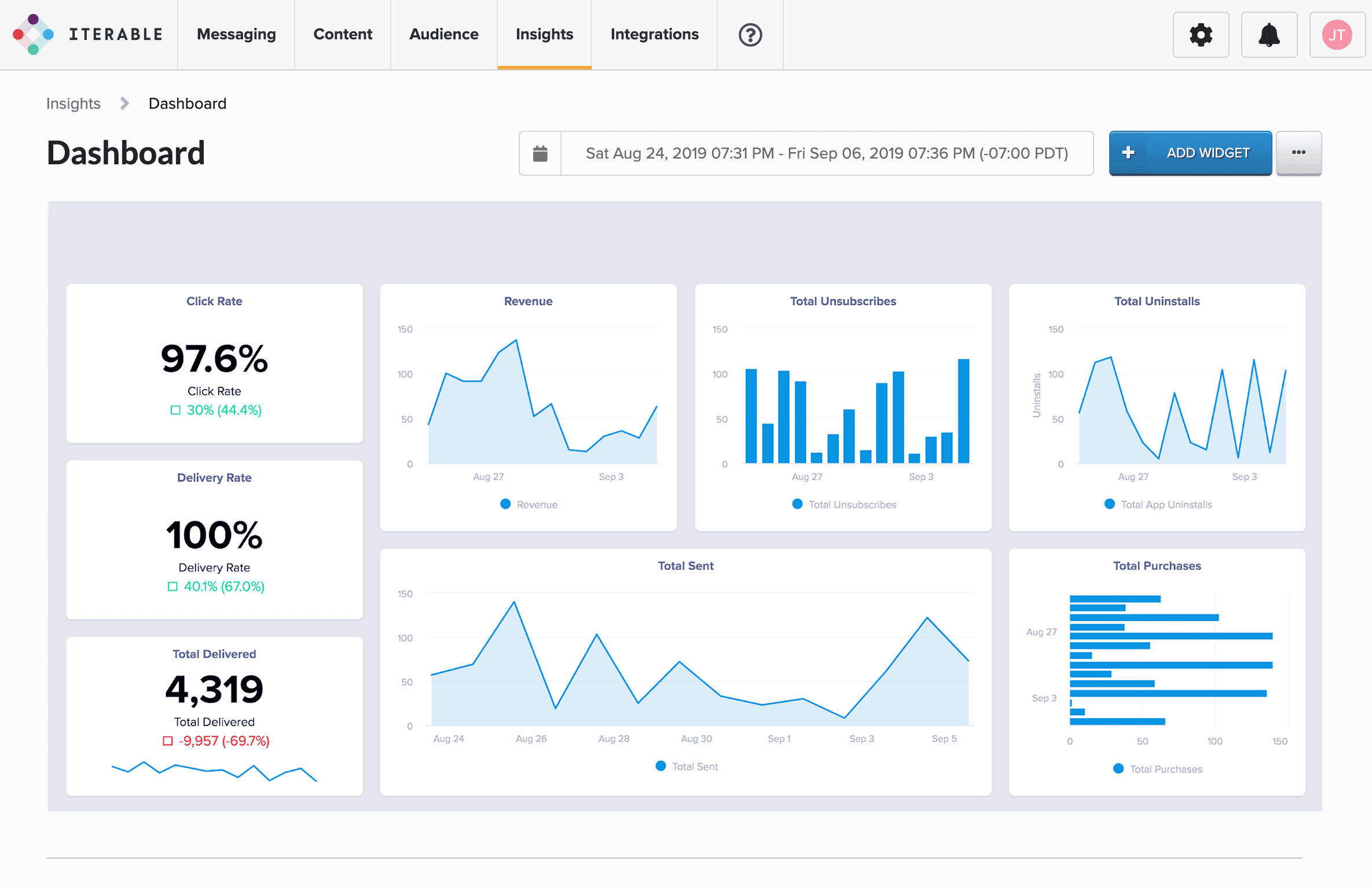
Image source: Iterable
Iterable positions itself as a growth marketing platform with workflow automation and cross-channel campaign management for B2C brands.
How Effective is Iterable for Omnichannel Engagement
Iterable provides a workflow automation studio where marketers design journeys across email, SMS, push, in-app, and direct mail. The platform ingests customer events and triggers campaigns based on conditions and filters. Iterable's Catalog feature stores product and content data for dynamic message personalization. The experimentation framework enables A/B testing across workflows. Iterable appeals to mid-market B2C companies that need more sophistication than basic email service providers but want less complexity than enterprise solutions. The platform requires marketers to design workflows manually, with limited AI-driven optimization beyond send-time recommendations.
Pros
Intuitive workflow builder with drag-and-drop interface
Dynamic content personalization using Catalog data
Built-in experimentation and A/B testing capabilities
Reasonable pricing for mid-market businesses
Responsive customer support and implementation assistance
Cons
Manual workflow creation without autonomous AI orchestration
Limited behavioral intelligence and predictive capabilities
No voice call channel support
Basic segmentation compared to AI-driven platforms
Requires ongoing workflow optimization by marketing teams
Best For
Mid-market B2C brands and subscription businesses seeking approachable workflow automation across standard digital channels.
Comparing Iterable vs Markopolo AI
Iterable gives you a clean, intuitive interface for building workflows. It’s easier to use than enterprise platforms like Braze. If you enjoy designing customer journeys and seeing them come to life visually, Iterable makes that process smooth.
Markopolo AI removes you from that equation entirely. The system observes customer engagement, vectorizes it into predictive intelligence, and generates strategies automatically. You don't build a "cart abandonment workflow" that everyone goes through. Instead, the AI creates thousands of different recovery approaches based on individual behavioral patterns.
Plus, Markopolo includes voice calls, letting AI agents have actual conversations with customers. Iterable doesn't have this. If you want creative control, Iterable gives you that. If you want better conversion rates without the workflow management overhead, Markopolo AI delivers.
CleverTap
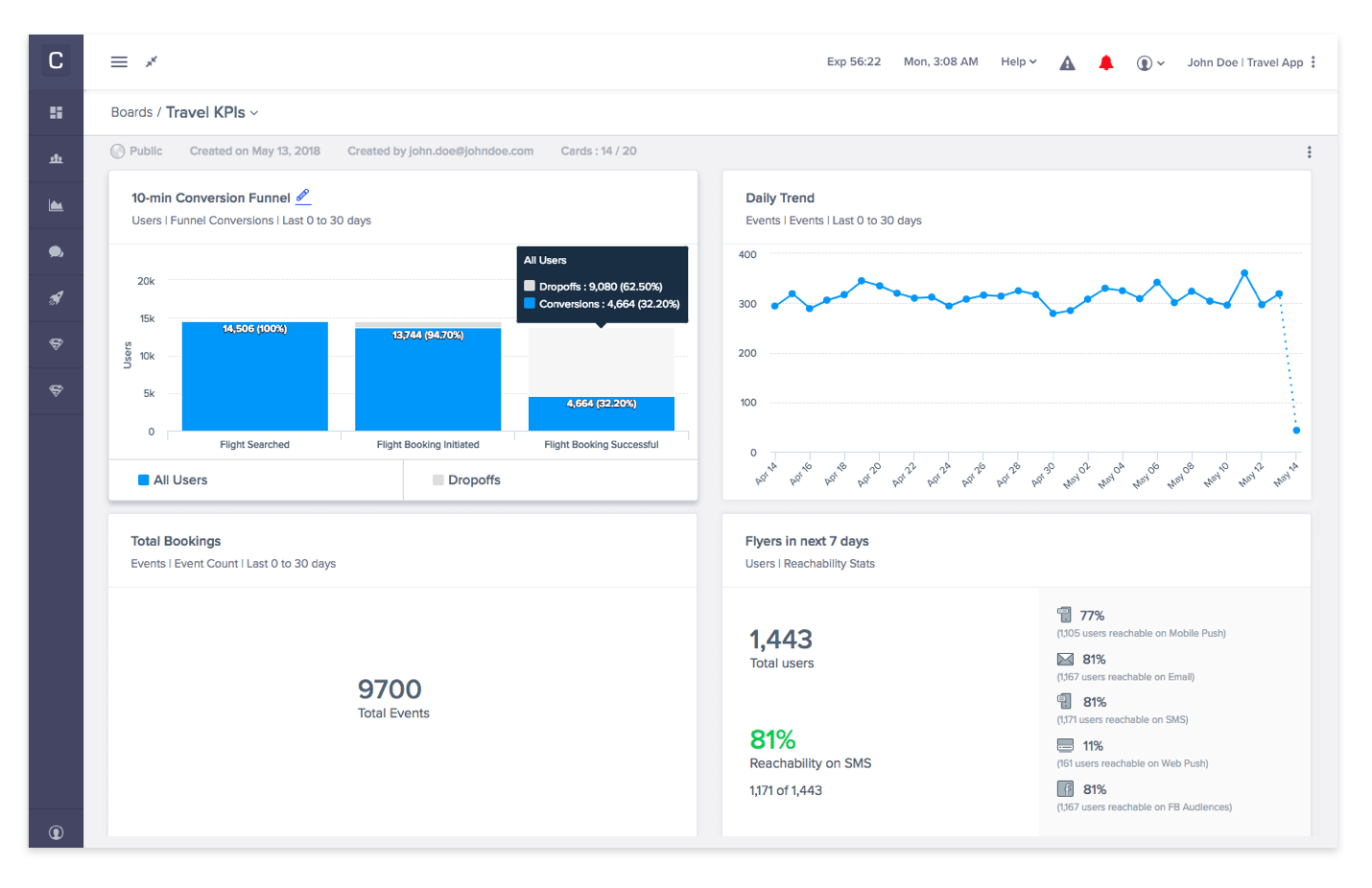
Image source: CleverTap
CleverTap focuses on mobile-first customer engagement with analytics-driven campaign capabilities for app-centric businesses.
How Effective is CleverTap for Omnichannel Engagement
CleverTap combines mobile analytics with engagement capabilities, helping app developers and mobile-first businesses understand user behavior and run retention campaigns. The platform captures in-app events, user properties, and session data to build customer profiles. Marketers create campaigns across push notifications, in-app messages, email, SMS, WhatsApp, and web push. CleverTap's strength emerges in mobile app environments where understanding user flows, screen navigation, and feature adoption drives engagement strategies. The RFM (recency, frequency, monetary) segmentation helps identify valuable users. However, the platform's mobile-centric design means less sophistication for web-based commerce journeys.
Pros
Strong mobile analytics integration with engagement
Comprehensive in-app messaging and push notification capabilities
RFM segmentation for identifying high-value users
Geofencing and location-based campaign triggers
Affordable pricing for mobile app startups
Cons
Mobile-app-centric design limits web commerce capabilities
Segment-based campaigns rather than individual intelligence
No behavioral vectorization or predictive modeling
No voice call orchestration
Less sophisticated for pure e-commerce websites
Best For
Mobile app developers, gaming companies, and app-first businesses prioritizing in-app engagement and push notification campaigns.
Comparing CleverTap vs Markopolo AI
CleverTap is excellent if you're running a mobile app and need deep analytics. The RFM segmentation (recency, frequency, monetary value) helps you identify your most valuable app users, and the push notification capabilities are robust for mobile engagement.
Markopolo AI works across web and mobile seamlessly, capturing behavioral signals from wherever customers interact with your brand. More importantly, CleverTap segments users by RFM scores and sends them campaign flows. Markopolo AI treats every person as an individual with a complete behavioral fingerprint.
CleverTap focuses on push notifications and in-app messages because that's what mobile apps need. But Markopolo orchestrates omnichannel engagement by covering every touchpoint. Clearly, Markopolo AI's omnichannel intelligence and autonomous agents deliver better results.
MoEngage
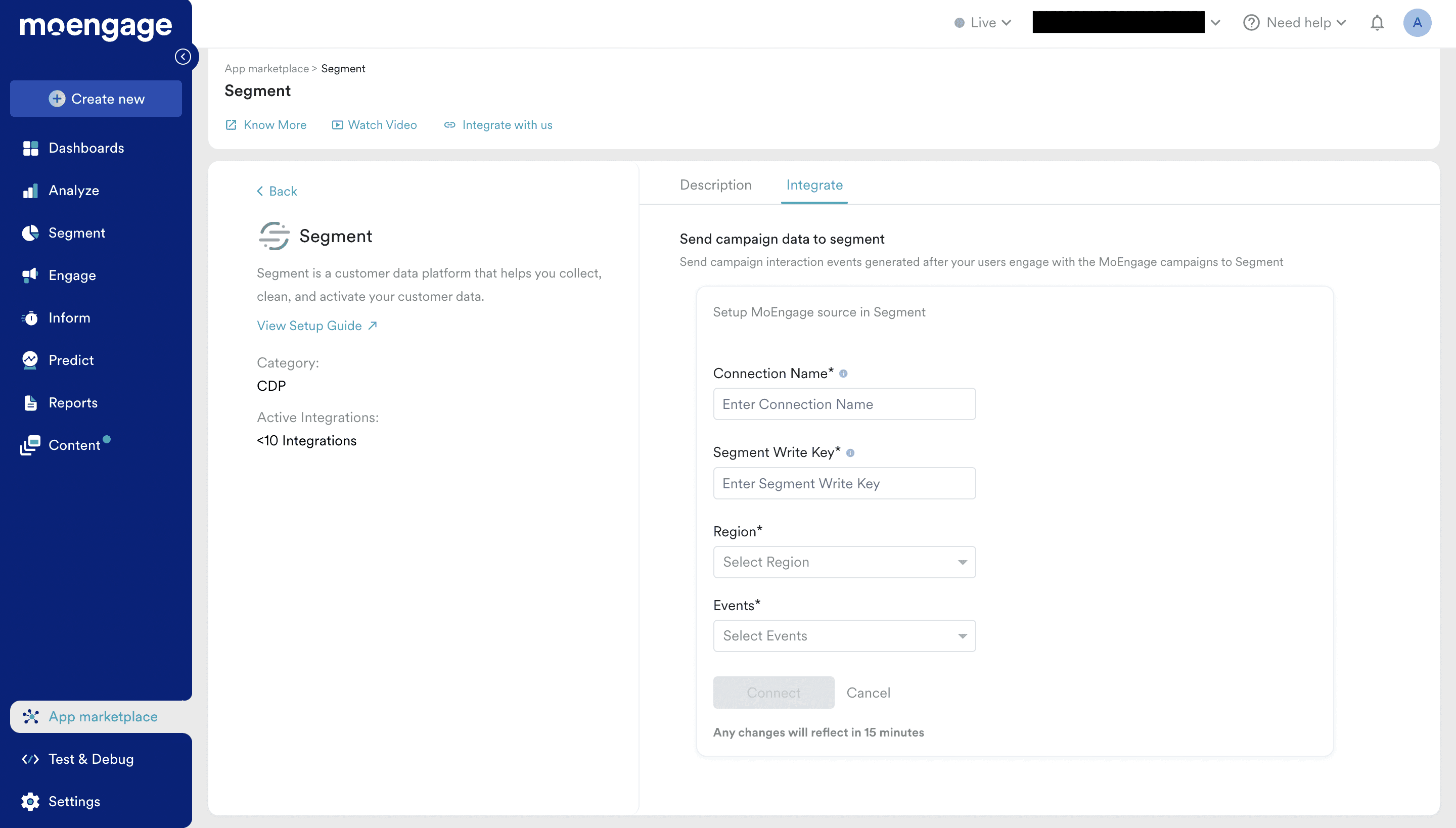
Image source: MoEngage
MoEngage offers customer engagement automation with AI-optimized timing and cross-channel campaign management for consumer brands.
How Effective is MoEngage for Omnichannel Engagement
MoEngage provides campaign orchestration across email, SMS, push, in-app, web push, and WhatsApp with AI-powered send-time optimization. The platform's Sherpa AI analyzes historical engagement data to recommend optimal delivery windows for each channel. Marketers build flows using a visual canvas and apply dynamic personalization using customer attributes. MoEngage emphasizes ease of use for marketing teams without deep technical expertise. The platform offers pre-built templates for common use cases like cart abandonment and re-engagement. However, the AI capabilities focus primarily on timing optimization rather than strategy generation or behavioral intelligence.
Pros
AI-optimized send times improve engagement rates
User-friendly interface with visual flow builder
Pre-built templates for common marketing scenarios
Comprehensive channel coverage including WhatsApp
Reasonable pricing tiers for growing businesses
Cons
AI limited to send-time optimization, not strategy creation
Segment-based targeting rather than individual intelligence
No behavioral vectorization capabilities
No voice call channel integration
Manual workflow creation and optimization required
Best For
Consumer brands and e-commerce businesses seeking user-friendly campaign automation with AI-optimized delivery timing.
Comparing MoEngage vs Markopolo AI
MoEngage's Sherpa AI is good about timing. It figures out when each customer typically engages and schedules messages accordingly. Markopolo’s AI ATHENA is superior at not only identifying the right timing, but also the right channel, and the right communication.
But MoEngage still requires you to design the campaigns that get sent at those optimized times. You're choosing the content, the offers, the segments, and the logic. The AI helps with "when," but you're handling everything else manually.
Markopolo AI handles the entire strategy autonomously.MoEngage covers the standard channels adequately. Markopolo adds voice calls to the mix, letting AI agents have actual conversations with customers who need that deeper engagement. This is how Markopolo delivers higher conversion rates.
NetCore Cloud
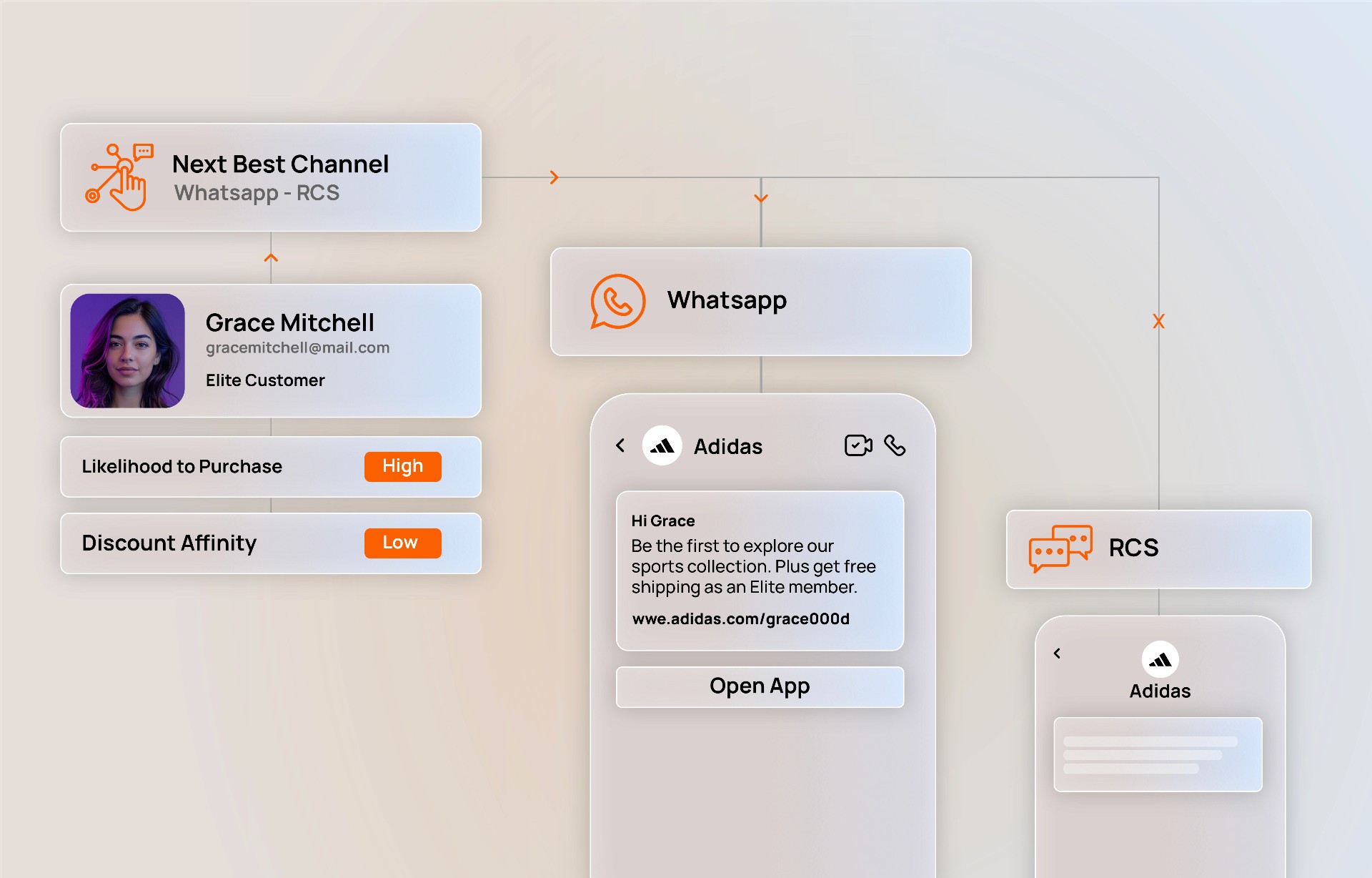
Image source: Netcore
NetCore positions itself as a customer engagement and retention platform with strong email deliverability and marketing automation capabilities.
How Effective is NetCore for Omnichannel Engagement
NetCore offers email, SMS, push, in-app, WhatsApp, and web push channels with workflow automation and personalization features. The platform emphasizes email deliverability through dedicated IP management and inbox placement optimization. Marketers build customer journeys using a visual editor with conditional logic and wait steps. NetCore's AI engine provides product recommendations and content optimization for email campaigns. The platform serves businesses that prioritize email marketing alongside supplementary channels. However, the email-centric heritage means less sophistication in cross-channel orchestration compared to AI-first platforms.
Pros
Strong email deliverability and inbox placement rates
Comprehensive channel coverage including WhatsApp
Product recommendation engine for e-commerce
Affordable pricing for email-focused campaigns
RFM segmentation and customer scoring
Cons
Email-centric platform with less sophisticated cross-channel orchestration
Segment-based targeting without individual behavioral intelligence
No behavioral vectorization or lifetime attribution
No voice call capabilities
Limited autonomous AI decision-making
Best For
E-commerce businesses prioritizing email marketing with supplementary SMS and push campaigns alongside strong deliverability requirements.
Comparing NetCore vs Markopolo AI
NetCore has built a strong reputation around email deliverability. If your emails aren't reaching inboxes, nothing else matters. Markopolo integrates AutoSend, so your mails deliver to the user’s inbox, not in the spam or promotion tab.
But strong deliverability doesn't mean strong engagement. Markopolo AI approaches the problem from a completely different angle. It creates unique engagement strategies for each person across six channels. It personalizes the entire approach including channel selection, timing, tone, and offer strategy.
NetCore works if email is your primary channel and deliverability is your main challenge. Markopolo AI works better if revenue recovery is your goal and you want genuinely personalized, omnichannel engagement that adapts to how each individual actually behaves—not just what segment they fit into.
Salesforce Marketing Cloud
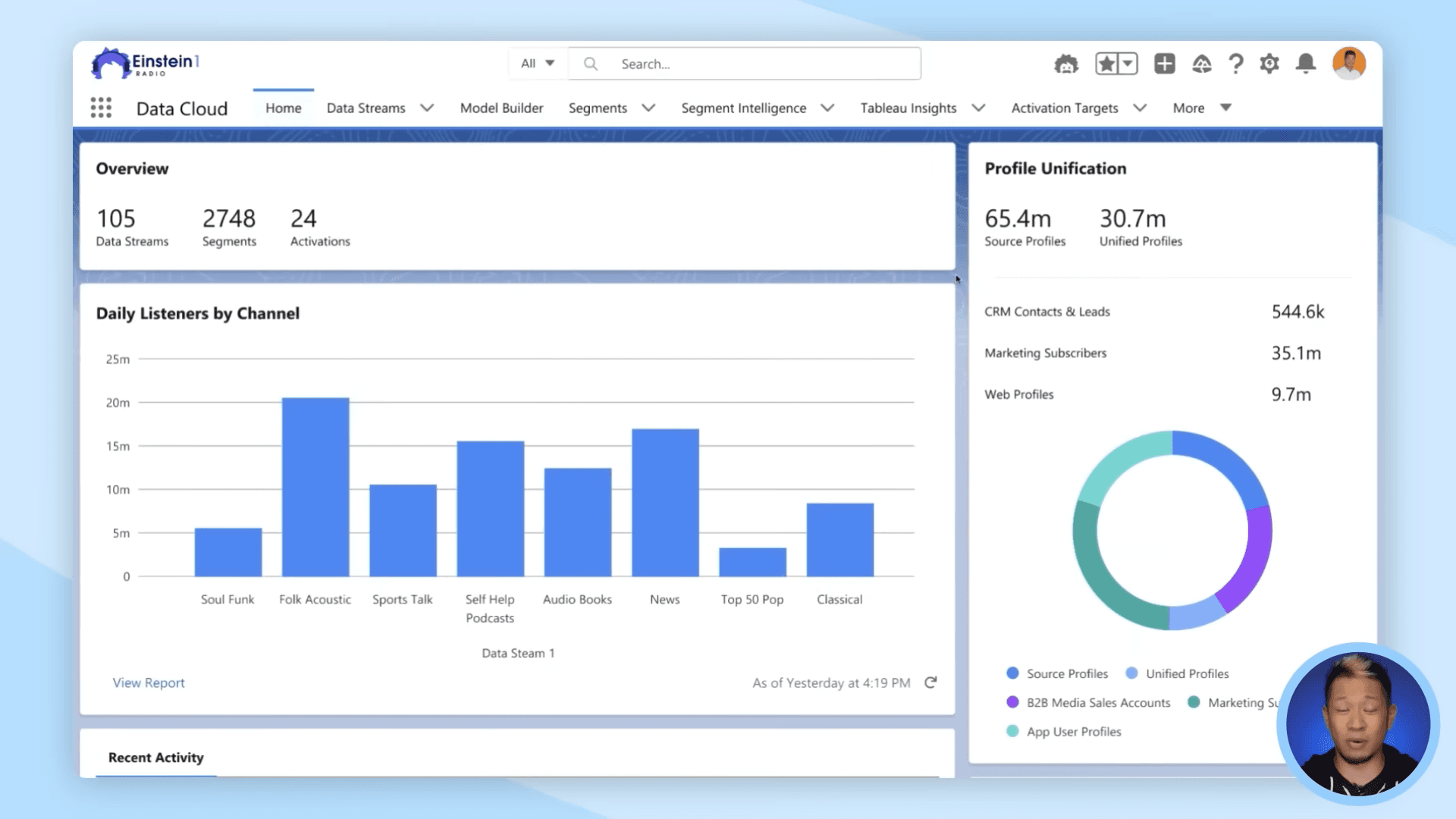
Image source: Salesforce YouTube Channel
Salesforce Marketing Cloud delivers enterprise marketing automation deeply integrated with Salesforce CRM, serving large organizations with complex customer data requirements.
How Effective is Salesforce Marketing Cloud for Omnichannel Engagement
Salesforce Marketing Cloud provides comprehensive marketing automation across email, mobile, social, ads, and web with deep CRM integration. Journey Builder enables complex, multi-step campaigns with branching logic and wait conditions. Einstein AI offers predictive scoring, send-time optimization, and content recommendations. The platform excels in enterprise environments where Salesforce CRM serves as the system of record and marketing teams require sophisticated capabilities. However, implementation complexity, long deployment timelines, and enterprise pricing exclude smaller businesses. The platform requires dedicated Salesforce administrators and consultants for optimal use.
Pros
Deep integration with Salesforce CRM ecosystem
Comprehensive enterprise marketing capabilities
Einstein AI for predictive analytics and optimization
Extensive customization for complex requirements
Strong security and compliance features
Cons
Complex implementation requiring specialized expertise
Enterprise-only pricing excludes mid-market and SMBs
Steep learning curve for marketing teams
No behavioral vectorization or individual-level intelligence
No voice call orchestration capabilities
Best For
Large enterprises already using Salesforce CRM that need enterprise-grade marketing automation with deep CRM integration.
Comparing Salesforce Marketing Cloud vs Markopolo AI
If you're already deep in the Salesforce ecosystem and have a team of Salesforce administrators, Marketing Cloud makes sense. But implementation takes months and requires certified consultants.
Markopolo AI deploys instantly rather than months and doesn't require specialized expertise to manage. More importantly, it doesn't ask humans to build workflows at all. The autonomous agents create individual strategies automatically based on behavioral intelligence. You don't need a Salesforce administrator—you need to define your business goals and let the AI handle execution.
The cost structure differs fundamentally too. Salesforce charges enterprise rates regardless of results. Markopolo AI's revenue-share model means you pay based on recovered revenue. For businesses that want fast deployment, revenue recovery, and autonomous omnichannel orchestration, Markopolo AI delivers better ROI.
Adobe Experience Cloud
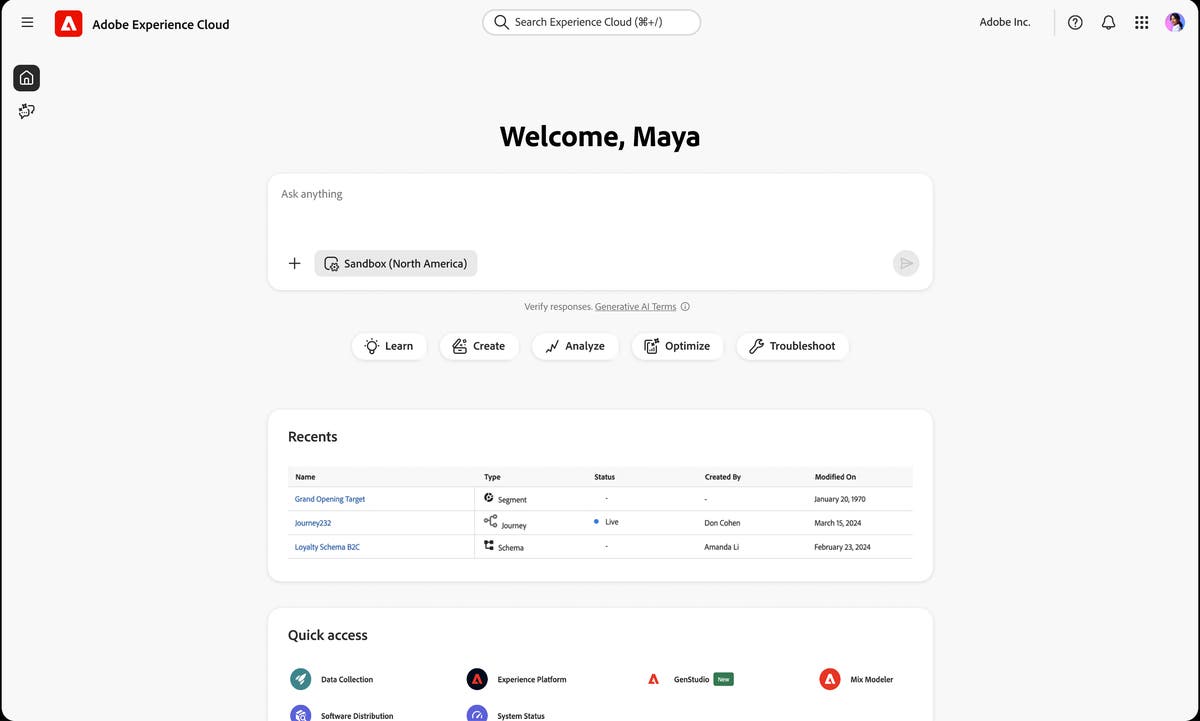
Image source: Adobe Experience Cloud
Adobe Experience Cloud combines content management, commerce, marketing automation, and analytics in an enterprise digital experience platform.
How Effective is Adobe Experience Cloud for Omnichannel Engagement
Adobe Experience Cloud offers marketing automation through Adobe Campaign alongside broader digital experience capabilities including content management, analytics, and commerce. The platform serves enterprises managing complex digital ecosystems where content, commerce, and marketing intersect. Adobe Sensei AI powers personalization, predictive analytics, and content optimization. However, the platform's breadth creates complexity—implementation requires significant resources, and the full suite pricing remains accessible only to large enterprises. Marketing automation represents one component of a broader digital experience strategy rather than a focused engagement platform.
Pros
Comprehensive digital experience platform beyond marketing
Adobe Sensei AI for content and experience optimization
Strong content management and digital asset integration
Enterprise-grade analytics and reporting
Extensive customization capabilities
Cons
Complexity requires specialized implementation partners
Enterprise-only pricing excludes most businesses
Marketing automation secondary to broader platform strategy
No behavioral vectorization or individual intelligence focus
No voice call orchestration
Best For
Large enterprises seeking comprehensive digital experience management including content, commerce, analytics, and marketing in a unified Adobe ecosystem.
Comparing Adobe Experience Cloud vs Markopolo AI
Adobe Experience Cloud is a comprehensive digital experience platform that happens to include marketing automation. But that breadth creates complexity that most B2C and D2C e-commerce businesses don't need. You're implementing and paying for an entire digital experience platform when what you actually need is intelligent customer engagement. Implementation requires Adobe partners and takes many months.
Markopolo AI focuses purely on what drives revenue: understanding customer behavior and autonomously engaging them across channels. The platform deploys and starts its outreach campaign quickly through behavioral intelligence. If you need hyper-personalized engagement with your customers that recovers abandoned revenue, Markopolo AI's focused approach works better.
Voyado
GIF source: Voyado
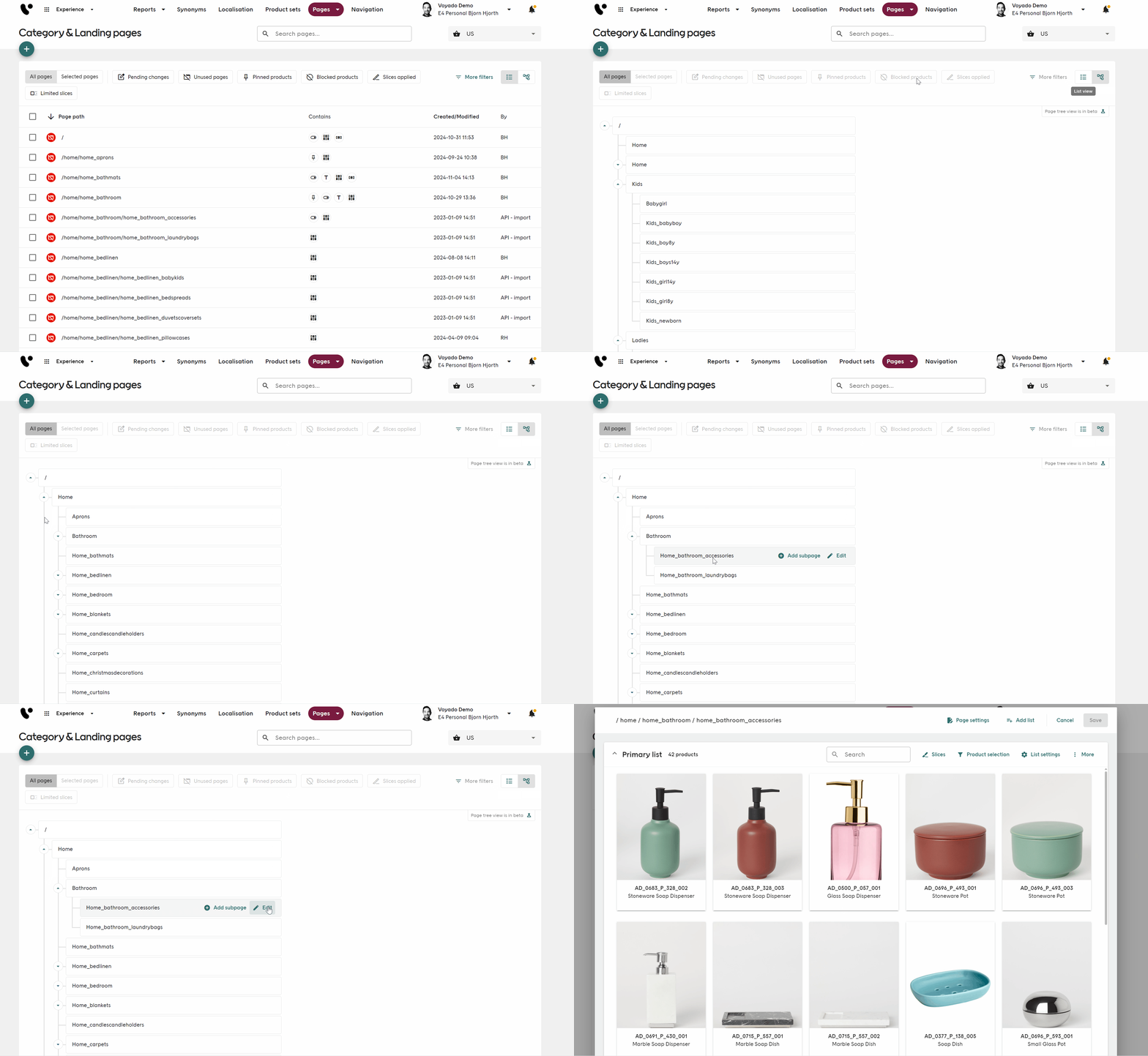
Voyado provides customer loyalty and marketing automation for retail and e-commerce businesses, emphasizing loyalty program integration.
How Effective is Voyado for Omnichannel Engagement
Voyado combines customer data management with marketing automation and loyalty program capabilities for retail businesses. The platform unifies online and offline customer data, enabling retailers to run email, SMS, and mobile campaigns informed by purchase history and loyalty status. Marketers build automated flows for customer lifecycle stages and loyalty tiers. Voyado's strength lies in its loyalty program integration, allowing retailers to incorporate points, rewards, and member benefits into engagement strategies. However, the loyalty-centric design means less sophistication in behavioral intelligence and autonomous orchestration compared to AI-first platforms.
Pros
Strong loyalty program integration and management
Unified online and offline customer data for retail
User-friendly interface for retail marketing teams
Pre-built automation for retail scenarios
Reasonable pricing for mid-market retailers
Cons
Loyalty-centric design limits broader engagement capabilities
Segment-based campaigns without individual intelligence
No behavioral vectorization or predictive modeling
Limited channel coverage compared to comprehensive platforms
No voice call capabilities
Best For
Retail and e-commerce businesses prioritizing loyalty program management alongside email and SMS campaigns.
Comparing Voyado vs Markopolo AI
Voyado does loyalty programs well. But they apply campaigns based on loyalty status. Gold members get one flow, silver members get another. That's useful for rewards-based marketing, but it doesn't address why specific customers abandon carts or what would actually bring them back.
Markopolo AI doesn't care about loyalty tiers. It cares about behavioral signals. Someone might be a gold member but show price-sensitive browsing behavior today, requiring a completely different engagement approach than their usual pattern suggests.
Voyado's channel coverage focuses on email and SMS with retail-specific features. Markopolo orchestrates across email, SMS, WhatsApp, push notifications, and voice calls—with the intelligence to know which channel each person actually responds to. Considering everything, for better omnichannel engagement and conversion rates, Markopolo AI wins.
Twilio Engage
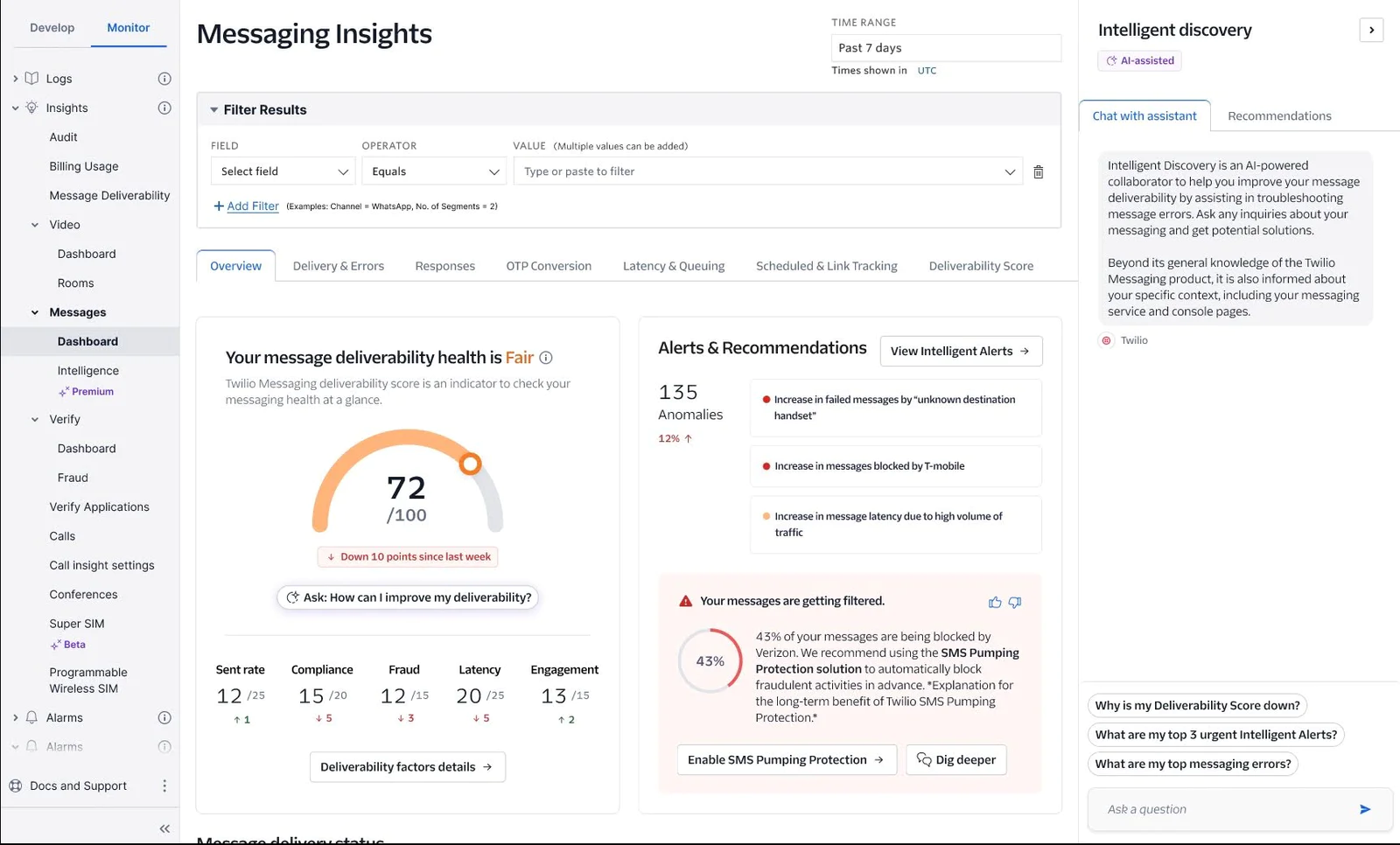
Image source: Twilio
Twilio (formerly Segment Engage) combines customer data infrastructure with marketing automation capabilities, built on Twilio's communications platform.
How Effective is Twilio Engage for Omnichannel Engagement
Twilio Engage leverages Segment's customer data platform foundation to create unified profiles, then activates them through marketing campaigns across email, SMS, and programmable communications channels. The platform appeals to developer-focused teams that value API-first architecture and custom integration capabilities. Marketers build journeys using Engage's visual builder while developers extend functionality through Twilio's communications APIs. The platform's strength lies in data infrastructure and programmable flexibility rather than out-of-box marketing features. Teams comfortable with code can build sophisticated, custom engagement experiences.
Pros
Strong customer data platform foundation (Segment)
Developer-friendly with extensive API capabilities
Programmable communications through Twilio
Unified customer profiles across sources
Flexible architecture for custom requirements
Cons
Requires developer resources for optimal implementation
Marketing features less comprehensive than dedicated platforms
No autonomous AI orchestration or behavioral intelligence
Complex pricing across Segment and Twilio components
Steeper learning curve for non-technical marketers
Best For
Developer-focused teams and businesses prioritizing data infrastructure flexibility alongside basic marketing automation capabilities.
Comparing Twilio Engage vs Markopolo AI
Twilio Engage offers API-first architecture, programmable communications, and Segment's solid customer data platform foundation. If you have a technical team that likes building custom solutions and wants maximum flexibility, Twilio lets you create it.
But that flexibility comes at a cost: you're building everything yourself. The data infrastructure is strong through Segment, and the communications capabilities are powerful through Twilio's APIs, but the actual marketing intelligence?
Markopolo AI provides the intelligence layer out-of-box. You're not building behavioral vectorization algorithms or autonomous orchestration systems—they already exist and start working immediately. No API development needed. No custom integration projects. The autonomous agents understand behavior and create strategies automatically without your team writing code.
Both support multiple channels, but Markopolo AI's behavioral intelligence and autonomous voice orchestration come ready to use. For developer-led teams with resources to build custom engagement systems, Twilio offers flexibility. For immediate customer acquisition and brand loyalty, Markopolo AI eliminates the build phase entirely.
The good thing is Twilio is available as an integration in Markopolo’s platform. You can choose Twilio as your SMS sender from the Markopolo platform, or use the native MarkSMS solution.
SAP Emarsys
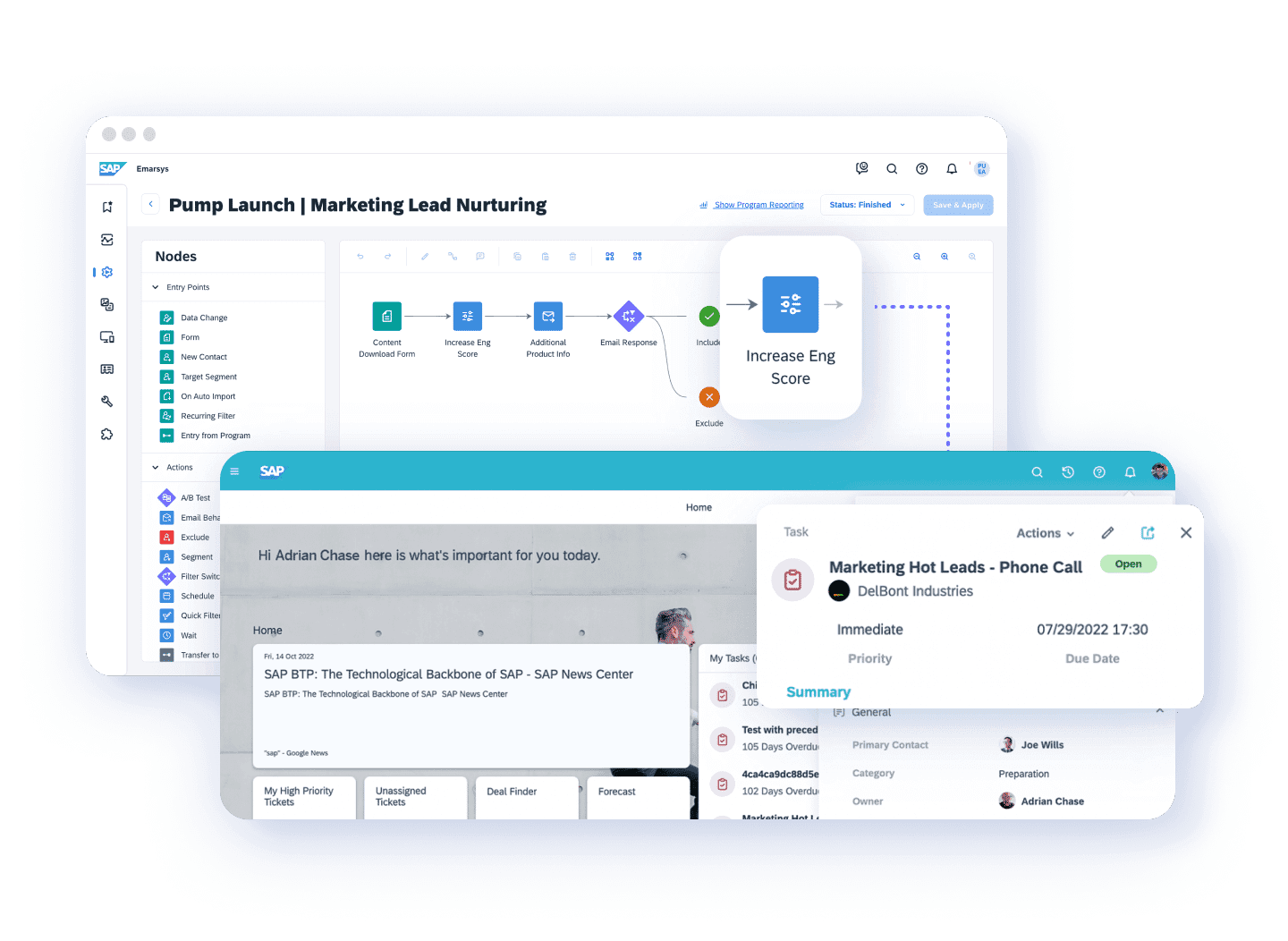
Image source: SAP
SAP Emarsys provides AI-powered marketing automation and personalization for mid-market B2C brands, emphasizing predictive analytics.
How Effective is SAP Emarsys for Omnichannel Engagement
SAP Emarsys offers cross-channel marketing automation across email, SMS, mobile push, web, and social channels with predictive AI capabilities. The platform's AI engine forecasts customer behavior, predicts purchase likelihood, and recommends next-best actions. Marketers build programs using a visual interface with drag-and-drop automation. Emarsys emphasizes ease of use for mid-market businesses that need AI capabilities without enterprise complexity. Pre-built tactics address common scenarios like cart abandonment and browse recovery. However, the platform applies predictive insights to segments rather than creating truly individual strategies for each customer.
Pros
Predictive AI for customer behavior forecasting
User-friendly interface for mid-market marketing teams
Pre-built tactics for common e-commerce scenarios
Comprehensive channel coverage
Reasonable implementation timeline
Cons
Predictive insights applied to segments, not individuals
No behavioral vectorization or lifetime attribution modeling
Limited autonomous decision-making capabilities
No voice call channel integration
SAP integration complexity for non-SAP customers
Best For
Mid-market B2C brands and e-commerce businesses seeking AI-powered marketing automation without enterprise platform complexity.
Comparing SAP Emarsys vs Markopolo AI
SAP Emarsys positions itself as AI-powered marketing automation for mid-market businesses. Its predictive AI forecasts customer behavior and recommends next actions. The pre-built tactics for cart abandonment and browse recovery give you starting points rather than blank canvases.
But recommended actions still require human execution. Markopolo AI takes them autonomously. The behavioral intelligence doesn't just predict what might work for a segment; it generates complete strategies for individuals and executes them automatically. Two customers with the same predicted purchase likelihood might receive completely different engagement approaches because Markopolo AI understands their unique behavioral contexts.
Emarsys covers standard channels adequately. Markopolo AI adds voice call orchestration that Emarsys can't match. Markopolo AI's behavioral intelligence delivers measurably higher conversion rates by autonomously managing context-aware, unified campaigns across channels.
Kustomer
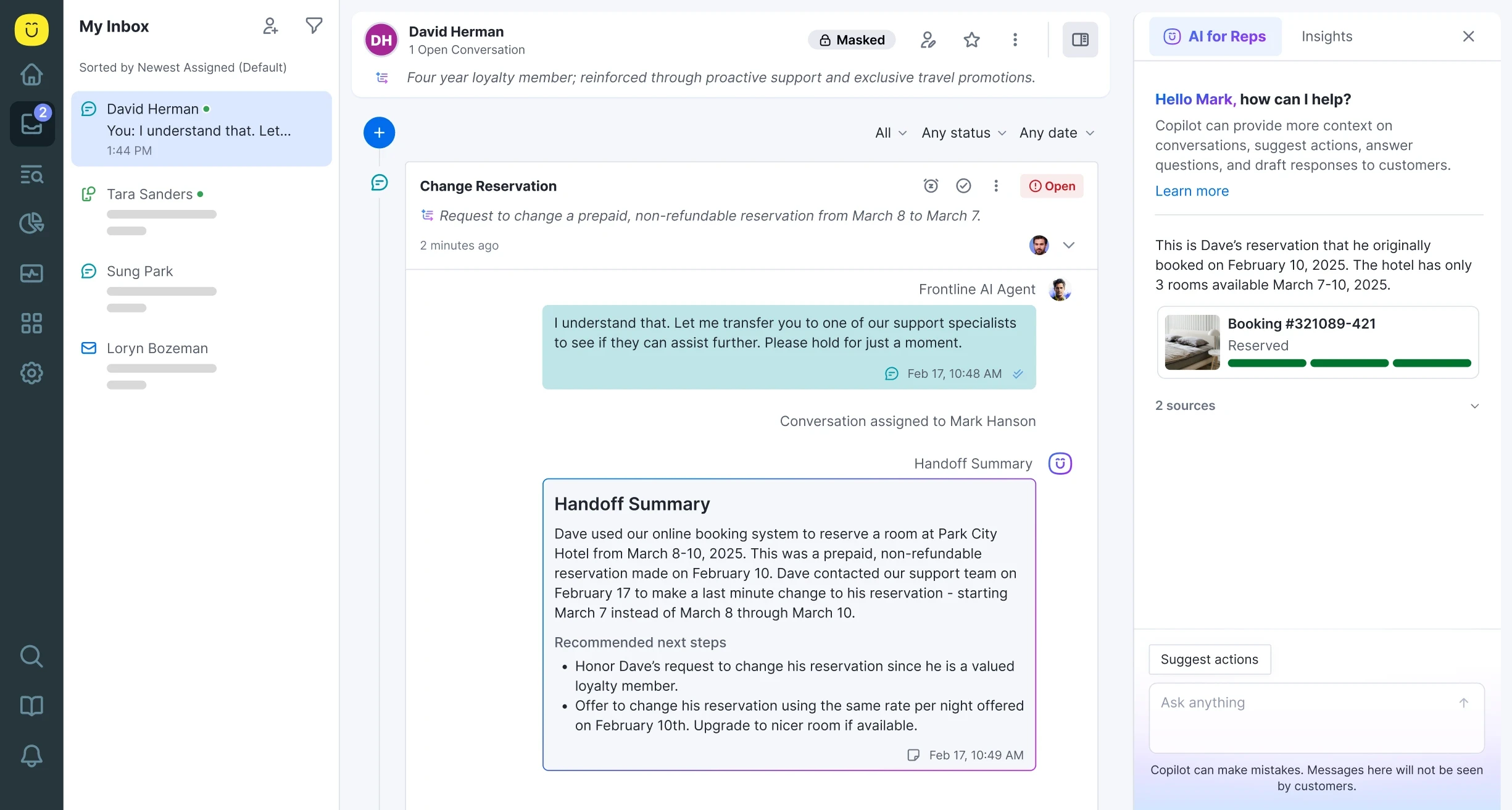
Image source: Kustomer
Kustomer provides customer service CRM with omnichannel engagement capabilities, emphasizing support and service workflows.
How Effective is Kustomer for Omnichannel Engagement
Kustomer approaches customer engagement through a service-first lens, unifying support conversations across email, chat, SMS, WhatsApp, and social media into a single timeline view. The platform serves customer service teams managing inquiries across channels with context preservation. Kustomer's strength lies in support workflow automation, intelligent routing, and agent productivity tools. However, the service-centric design means limited marketing automation capabilities. The platform excels at reactive engagement (responding to customer-initiated contact) rather than proactive orchestration (initiating behavioral-triggered campaigns).
Pros
Unified timeline view preserves conversation context across channels
Strong customer service workflow automation
Intelligent routing and case management
Integration with support tools and knowledge bases
Visual workflow builder for service processes
Cons
Service-first design limits marketing automation capabilities
Reactive engagement focus rather than proactive orchestration
No behavioral intelligence or predictive modeling for marketing
Limited campaign automation compared to dedicated platforms
No autonomous AI agents or voice call orchestration
Best For
Customer service teams and support organizations seeking omnichannel conversation management and service workflow automation.
Comparing Kustomer vs Markopolo AI
Kustomer excels at customer service. The timeline view that shows every customer interaction across channels—email, chat, SMS, social media—helps support teams provide consistent, context-aware service.
But customer service and revenue-focused marketing engagement are fundamentally different problems. Kustomer responds to customers who reach out with questions or issues. Markopolo AI proactively engages customers to prevent abandonment and drive conversion. Kustomer's reactive by design, it waits for customers to initiate contact. Markopolo AI's proactive, it identifies hesitation and intervenes before customers leave. As a result, Markopolo helps your business convert more customers through intelligent engagement.
Userpilot
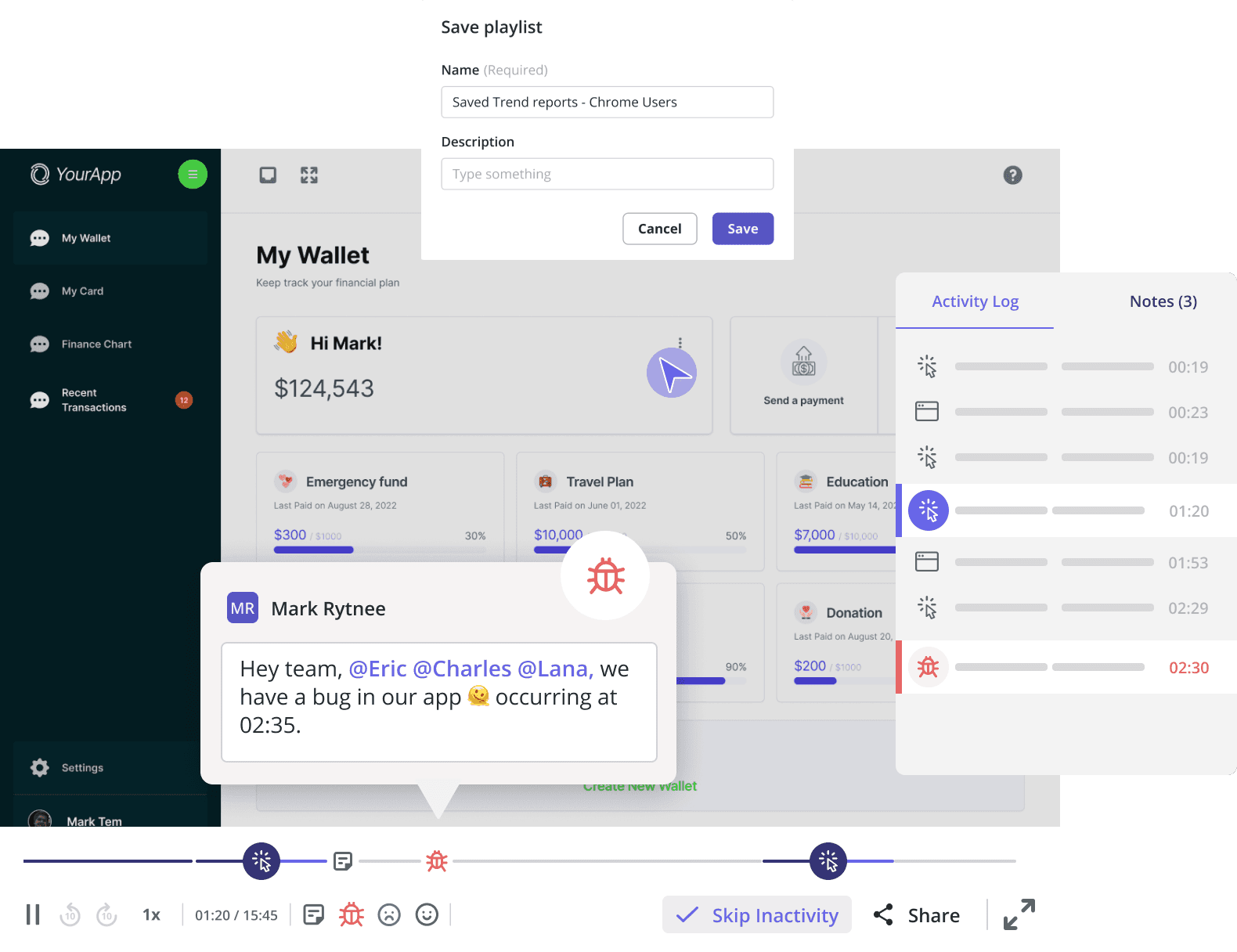
Image source: Userpilot
Userpilot focuses on product adoption and in-app engagement for SaaS businesses, emphasizing user onboarding and feature adoption.
How Effective is Userpilot for Omnichannel Engagement
Userpilot provides in-app experience layers including tooltips, modals, slideouts, and checklists to guide users through product adoption. The platform serves SaaS product teams seeking to improve onboarding completion and feature discovery. Marketers create in-app experiences using a visual builder without code, triggered by user behavior and attributes. Userpilot excels at in-product engagement but offers limited capabilities for channels beyond the application interface. The platform complements rather than replaces comprehensive engagement solutions, focusing specifically on product adoption workflows.
Pros
Strong in-app experience builder without code requirements
User behavior tracking and analytics for product adoption
Segmentation based on product usage patterns
Onboarding checklist and progress tracking
Reasonable pricing for SaaS startups
Cons
Limited to in-app engagement only
No email, SMS, or other channel capabilities
No behavioral vectorization or omnichannel orchestration
Product-adoption-specific rather than comprehensive engagement
Not suitable for e-commerce or non-SaaS businesses
Best For
SaaS product teams and growth marketers focusing specifically on in-app onboarding and feature adoption improvements.
Comparing Userpilot vs Markopolo AI
Userpilot serves a very specific purpose: helping SaaS companies onboard new users and drive feature adoption through in-app tooltips, walkthroughs, and checklists.
But in-app product adoption and omnichannel customer engagement are completely different domains. Userpilot operates inside your application interface—it can't send emails, SMS, or WhatsApp messages. It guides users through features but doesn't orchestrate omnichannel marketing campaigns. It serves product teams, not marketing teams.
Markopolo AI focuses on e-commerce and D2C revenue recovery across channels. So, if you're an e-commerce business losing revenue to cart abandonment and need intelligent, omnichannel engagement including voice calls, Markopolo AI provides what Userpilot wasn't designed to offer.
Must-Have Features in Omnichannel Customer Engagement Platforms
Unified Customer Data Platform (CDP)
A comprehensive CDP consolidates data from every touchpoint into a single customer view. The platform must capture website interactions, purchase history, email engagement, mobile app behavior, and support conversations into unified profiles. Without this foundation, personalization remains superficial and channel coordination impossible. Research from Forrester indicates that businesses using unified customer data see 2.4x higher revenue growth to those operating with data silos.
Cross-Channel Journey Orchestration
The platform must coordinate messaging across all channels with unified logic and timing. When a customer receives an email, the system should pause SMS campaigns to prevent message fatigue. When they engage on mobile, the platform should recognize them on desktop. True orchestration means every channel knows what other channels are doing and adjusts accordingly, preventing duplicate messages and maintaining consistent experiences.
AI-Powered Personalization
AI should move beyond basic token replacement and segment targeting to individual-level intelligence. The platform must analyze behavioral signals, predict intent, and generate unique strategies for each customer. Personalization extends beyond inserting names—it encompasses content selection, offer optimization, channel preference, tone adaptation, and timing calculation based on individual patterns rather than group averages.
Real-Time Analytics and Insights
Real-time dashboards must surface actionable intelligence about customer behavior, campaign performance, and revenue impact immediately. Delayed reporting means missed intervention opportunities. The platform should identify abandonment patterns as they emerge, flag underperforming campaigns instantly, and surface revenue attribution across the entire customer journey. Analytics must connect actions to outcomes with clear causality.
Behavioral Trigger Automation
The platform must respond to customer actions automatically without human intervention. Cart additions trigger consideration sequences. Hesitation patterns activate social proof delivery. Price comparison behaviors prompt value messaging. Behavioral triggers move beyond simple event tracking to understand context—a customer adding items to cart while actively comparing prices requires different engagement than someone adding during an impulse browsing session.
Multi-Channel Support (Email, SMS, Push, WhatsApp, Social)
Comprehensive channel coverage ensures customers receive messages where they prefer to engage. Email serves detailed product information. SMS delivers time-sensitive urgency. WhatsApp enables conversational interactions. Push notifications capture mobile attention. Voice calls provide human-like conversations at scale. The platform must orchestrate all channels as equals rather than treating email as primary with others as supplementary.
Integration Capabilities
The platform must connect seamlessly with existing technology stacks including e-commerce platforms, CRMs, analytics tools, and payment processors. Pre-built integrations reduce implementation time while APIs enable custom connections. Data flows bidirectionally—customer behavior updates engagement strategies while campaign results inform analytics dashboards. Integration depth determines whether the platform operates as the intelligence layer or remains siloed.
Compliance and Data Privacy Tools
Built-in compliance capabilities ensure adherence to GDPR, CCPA, and regional privacy regulations. The platform must handle consent management, data deletion requests, and preference centers automatically. Customers control their data and communication preferences through self-service interfaces. Compliance features protect businesses from regulatory risk while building customer trust through transparent data practices.
How to Choose the Right Omnichannel Customer Engagement Platform
Define Your Business Goals
Start by identifying specific revenue challenges the platform must solve. E-commerce businesses often prioritize cart abandonment recovery, browse abandonment conversion, and repeat purchase stimulation. Calculate current revenue leakage from abandoned sessions—if 70% of carts abandon and the platform recovers even 20% of those, the revenue impact justifies investment. Define success metrics before evaluation: cart recovery rate, customer lifetime value increase, revenue attributed to engagement campaigns. Clear goals prevent feature-focused comparisons that miss business impact.
Assess Your Channel Requirements
List every channel where customers engage with your business. E-commerce brands typically need email, SMS, WhatsApp, push notifications, and web personalization at minimum. Mobile-first businesses add in-app messaging. Consider emerging channels like voice calls that competitors haven't adopted—platforms like Markopolo AI that include autonomous voice orchestration provide competitive advantages. Verify that the platform treats all channels as equals in its orchestration logic rather than email-first with supplementary capabilities.
Evaluate Integration Needs and Scalability
Document your existing technology stack and required integrations. E-commerce platforms (Shopify, WooCommerce), analytics tools (Google Analytics), CRMs, and payment processors must connect seamlessly. Small businesses need platforms that scale affordably as volume grows. Mid-market companies require capacity for millions of events without performance degradation. Enterprises demand dedicated infrastructure and service level agreements. Platforms like Markopolo AI serve all business sizes through flexible pricing that aligns costs with results rather than fixed tiers that penalize growth.
Review AI and Real-Time Automation Capabilities
Distinguish between platforms that optimize human-created workflows and those that autonomously generate strategies. Basic platforms offer send-time optimization. Advanced platforms predict customer behavior. Autonomous platforms like Markopolo AI create unique strategies for every individual without human workflow design. Evaluate whether the AI understands behavioral context or merely analyzes historical data. Real-time capability matters—platforms that process customer actions in under 50 milliseconds can intervene before abandonment happens rather than reacting afterward.
1:1 Personalization
Verify whether personalization operates at the individual level or segment level. Segment-based platforms apply the same journey to everyone in a group. Individual-level platforms create unique strategies for each customer. Examine personalization depth: Does the platform merely insert names and product recommendations, or does it adapt tone, timing, channel, offer type, and content strategy based on behavioral intelligence? True 1:1 personalization requires behavioral vectorization that transforms actions into predictive intelligence—capabilities like Markopolo AI's 384-dimensional behavioral fingerprints.
Check Compliance Features
Confirm that the platform handles regional privacy regulations automatically. Look for built-in consent management, preference centers, data deletion workflows, and audit trails. International businesses need multi-regional compliance capabilities. Verify that the platform updates compliance features as regulations evolve rather than requiring custom development. Compliance should be automatic, not an additional workstream.
Compare Pricing Models
Understand how pricing scales with your growth. Contact-based pricing penalizes list growth. Message-based pricing discourages experimentation. Usage-based models align costs with engagement volume. Revenue-share models (like Markopolo AI's approach) align the platform's success with your revenue outcomes—the platform only earns when it recovers revenue. Calculate total cost of ownership including setup, training, and ongoing management. Hidden costs emerge in platforms requiring dedicated administrators.
Request Demos and Trials
Evaluate platforms with real data, not generic demos. Request trials using your actual customer data to assess personalization accuracy. Test the platform's ability to detect behavioral patterns and generate relevant strategies. Verify that autonomous capabilities work without constant human adjustment. Measure implementation complexity—platforms requiring months of setup may not be worth theoretical capabilities. During trials, focus on business outcomes (conversion rates, revenue recovery) rather than feature checklists.
How Markopolo AI Overtakes All as an Omnichannel Customer Engagement Platform
Most platforms improve existing approaches. Markopolo AI replaces human workflows with autonomous AI agents that understand every visitor individually.
Real-Time Behavioral Intelligence
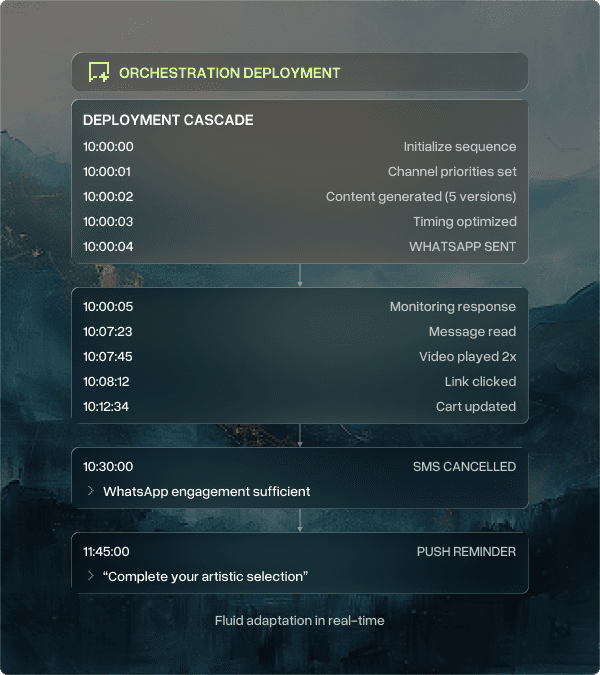
Traditional platforms process data in batches. They react hours or days later. Markopolo AI processes signals in under 50 milliseconds and acts instantly.
MarkTag captures mouse movements, rage clicks, and scroll patterns. It transforms them into 384-dimensional behavioral vectors. Each vector represents a person's intent and conversion momentum. This enables intervention before abandonment happens. Competitors analyze yesterday. Markopolo AI acts now.
1:1 Hyper-Personalization at Massive Scale
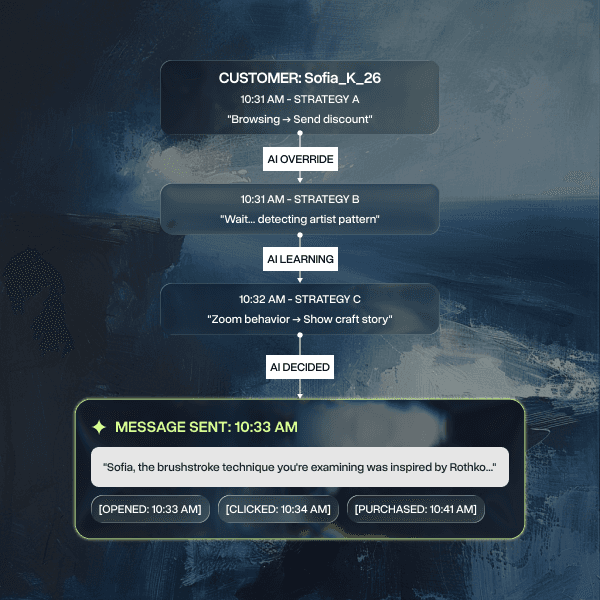
Most platforms segment customers into groups. Everyone in each segment gets the same journey. Markopolo AI creates unique strategies for every visitor.
Two people abandon identical carts. One gets pricing comparisons via email. Another gets scarcity messaging via SMS. A third receives technical specs through WhatsApp then a voice call. Each approach matches their behavioral fingerprint. Research shows this increases conversion rates by 270% versus segment-based targeting.
Voice Call Integration: The Competitive Game-Changer
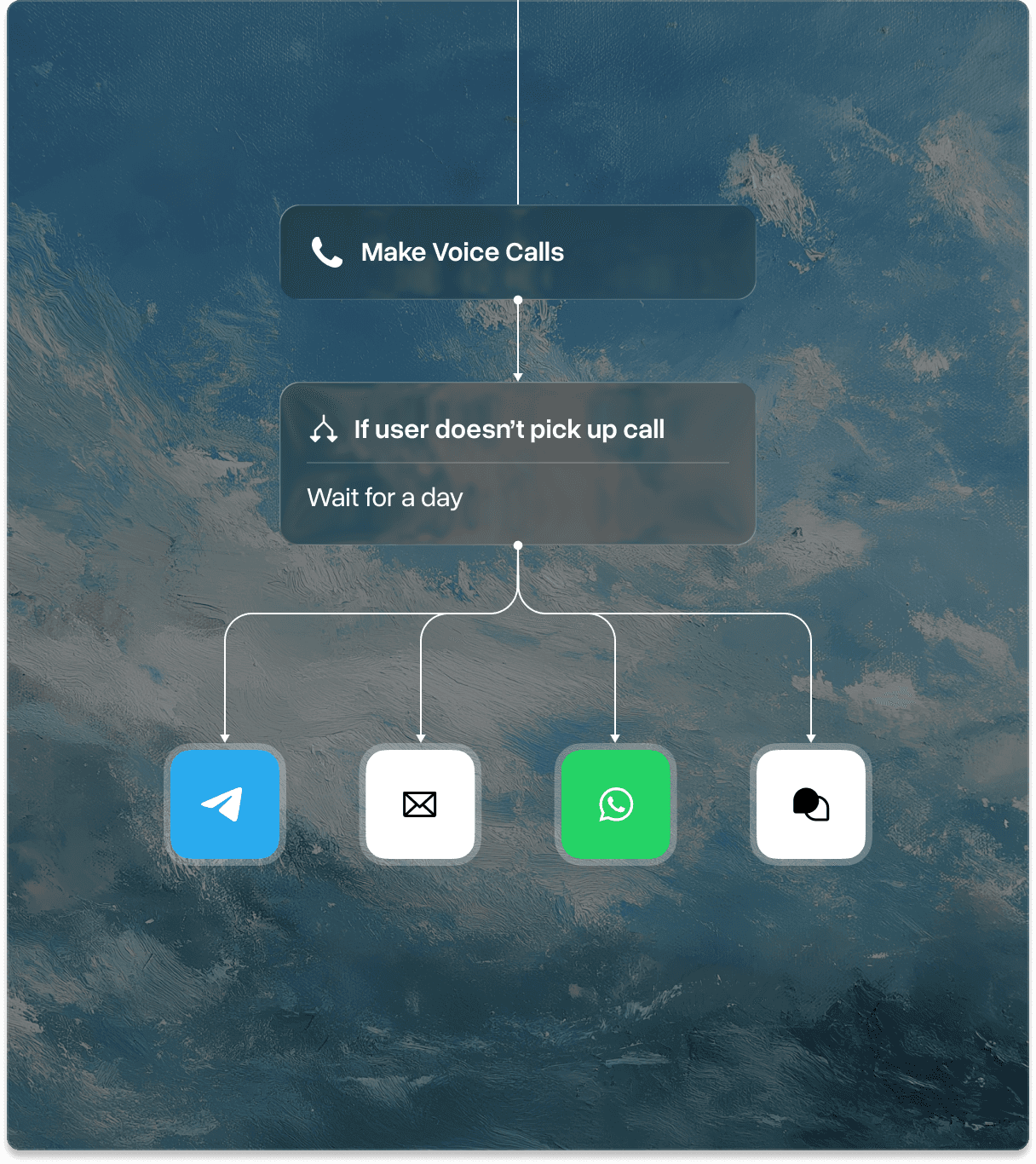
No competitor orchestrates AI voice calls. This is Markopolo's biggest advantage.
AI voice agents conduct human-like conversations. They adapt in real-time. They reference specific products viewed, and address objections with behavioral context. Research shows voice interactions boost conversion by 340% versus generic emails. The system orchestrates email, SMS, WhatsApp, push, web, and voice together. It picks the perfect channel sequence for each person.
Industry-Leading Cart Recovery Performance
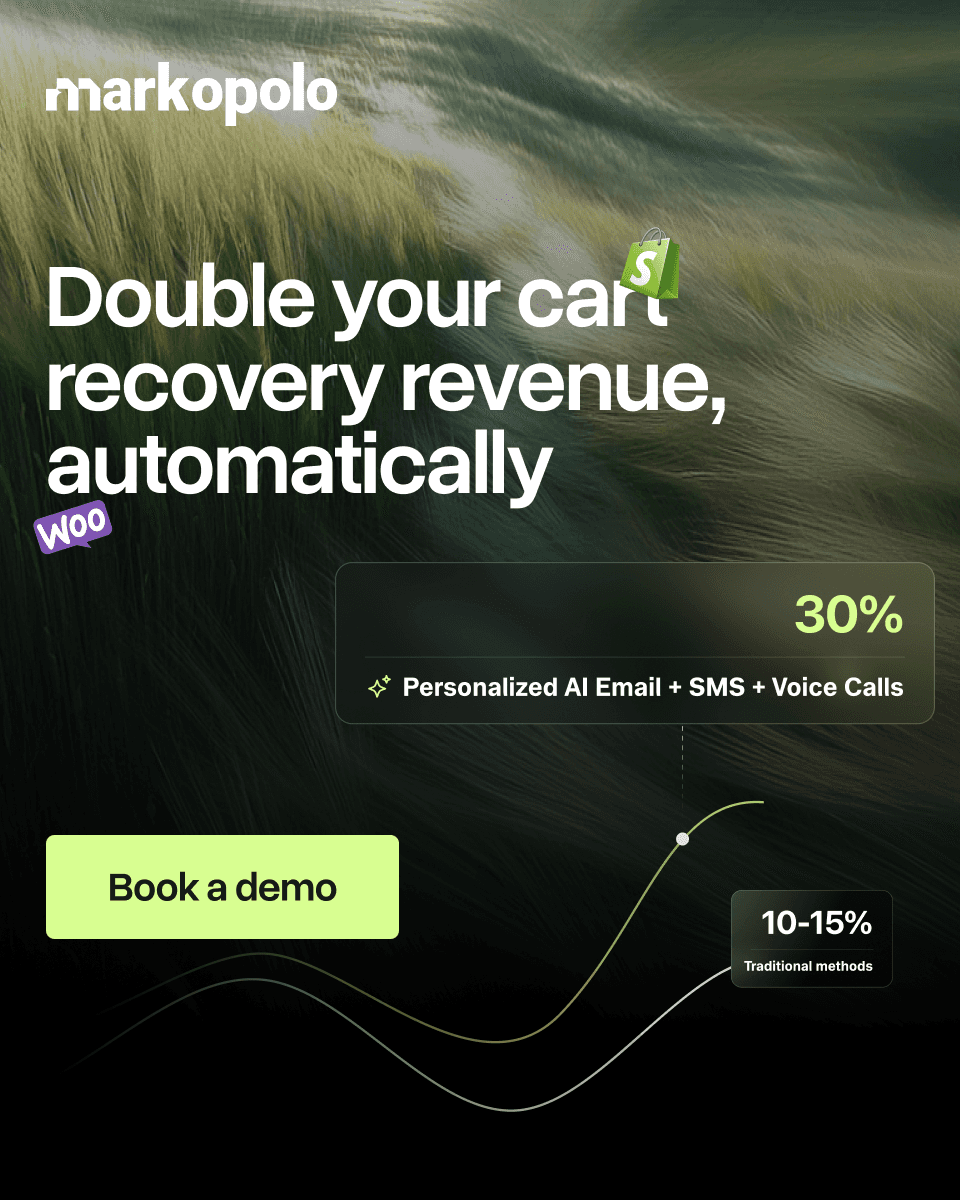
Standard cart recovery rates: 10-15%. Markopolo AI consistently achieves 30-40%. That's 2-3x better.
The AI understands why each person abandoned them. Price-conscious customers get competitor comparisons. Feature-focused customers get technical validation. Impulse buyers get urgency messaging without discounts. For businesses losing millions to abandonment, the gap between 15% and 35% recovery is transformational.
Best-in-Class Customer Experience That Builds Brand Loyalty

Automated marketing usually annoys customers. Wrong messages. Bad timing. Wrong channels. Markopolo AI understands individual preferences and respects boundaries.
It knows which customers engage with email versus SMS versus WhatsApp versus voice. It knows each person's optimal timing windows. Messages arrive when customers are receptive. Content addresses specific concerns. Channels match preferences. Customers who feel understood show 82% higher repurchase rates and 60% higher lifetime value. Voice calls create emotional connections. Competitors discount to recover transactions. Markopolo AI builds brand advocates.
Autonomous Intelligence That Eliminates Workflow Management

Competitors give marketers tools to build workflows. Markopolo AI eliminates workflows entirely.
Teams don't design journeys. They don't maintain segmentation rules. They don't write templates. They don't manage A/B tests. Autonomous agents handle everything. Marketers define objectives. AI executes. Managing 10,000 customers takes the same effort as 10 million. The AI scales automatically.
Revenue-share pricing (1-3%) aligns incentives. Markopolo AI only earns when it recovers revenue. Competitors charge fixed fees regardless of results.