Conversational AI for customer engagement: best platforms, use cases, and implementation in 2026
Sirazum Monir Osmani
Conversational AI for customer engagement delivers human-like, AI-driven interactions through voice calls, SMS, WhatsApp, email, and other channels to understand individual customers and respond in real time. The best platforms understand each customer individually instead of treating them as segments.
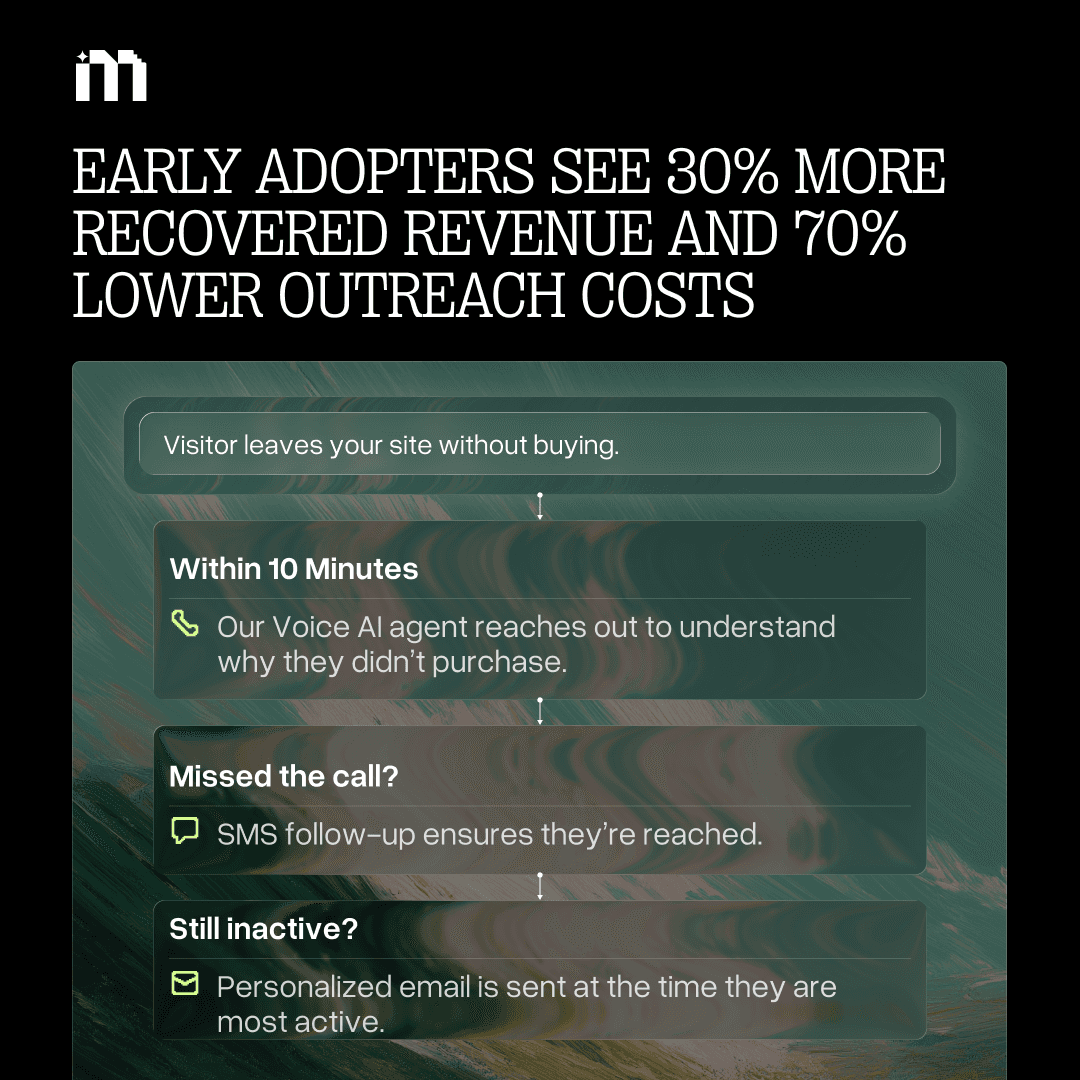
Markopolo AI's conversational capabilities deliver the best experience to each individual customer. It creates a unique AI agent for every customer. These agents understand behavior patterns and reach out at the right time through the right channel. Results speak clearly: engagement rates jump to 60-80%. Cart recovery improves from 10-15% to 30-40%.
The technology uses behavioral data to understand what customers need. Then it responds naturally. Customers get help when they need it, not when it's convenient for the business. This is how customer centric marketing should be.
How does conversational AI improve customer engagement?
Conversational AI creates unique customer engagement strategies based on what people do, not what segment they're in. Every interaction is timed perfectly and sent through the channel each person prefers. How does the platform understand that? Through behavioral intelligence and predictive analytics. In the case of Markopolo, MarkTag is the behavioral intelligence and ATHENA is the predictive engine.
Here's how it improves engagement:
Individual understanding: The system learns what each person needs. It tracks browsing patterns, hesitation points, and purchase history. No more broad categories.
Perfect timing: AI finds the best moment to reach out. It analyzes when each customer is most receptive instead of using fixed delays.
Channel preference: Some people prefer WhatsApp. Others respond to SMS or email. The system learns and adapts for each person.
Real-time decisions: AI creates strategies in under 50ms. It considers current behavior and past interactions instantly.
Emotion detection: The system reads signals like rage clicks or hesitation. It adjusts the message tone accordingly.
Continuous learning: Every interaction makes the AI smarter. It improves predictions for each customer over time.
Predictive action: AI spots abandonment before it happens. It intervenes when behavioral momentum slows down.
Natural flow: Conversations feel connected across touchpoints. No repetitive or disconnected messages.
Smart content: Technical buyers get detailed specs. Impulse buyers get short benefit messages. Each person gets what works for them.
True attribution: The system tracks what actually influences decisions. Not just last-click assumptions.
5 Best conversational AI platforms for customer support and engagement: comparison, CRM integration, pros and cons
Markopolo AI
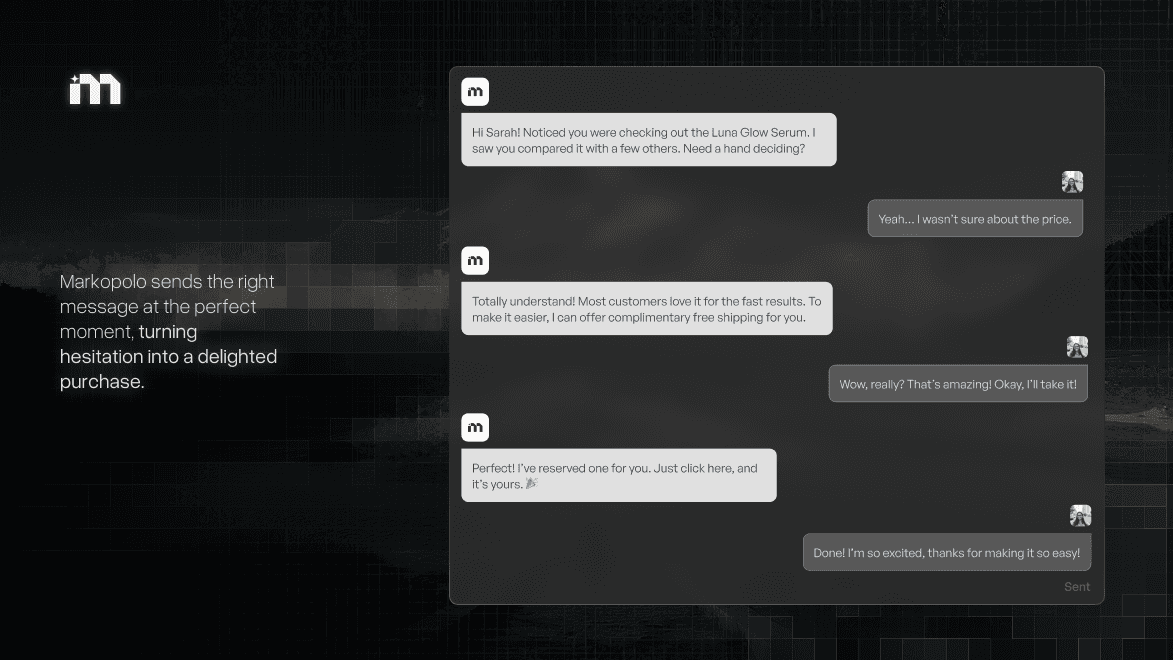
Markopolo is an AI-native customer engagement platform. It changes how businesses talk to customers. It doesn't create campaigns. Instead, Markopolo creates individual AI agents for each visitor that can converse in real-time at scale.
Each agent has complete behavioral intelligence that powers more natural customer engagement. MarkTag tracks every action and turns it into a 384-dimensional vector. This vector captures intent, context, and patterns across the entire journey. The AI uses this to understand what each person needs and how to engage them in the most relevant way.
Conversational AI features
Voice call
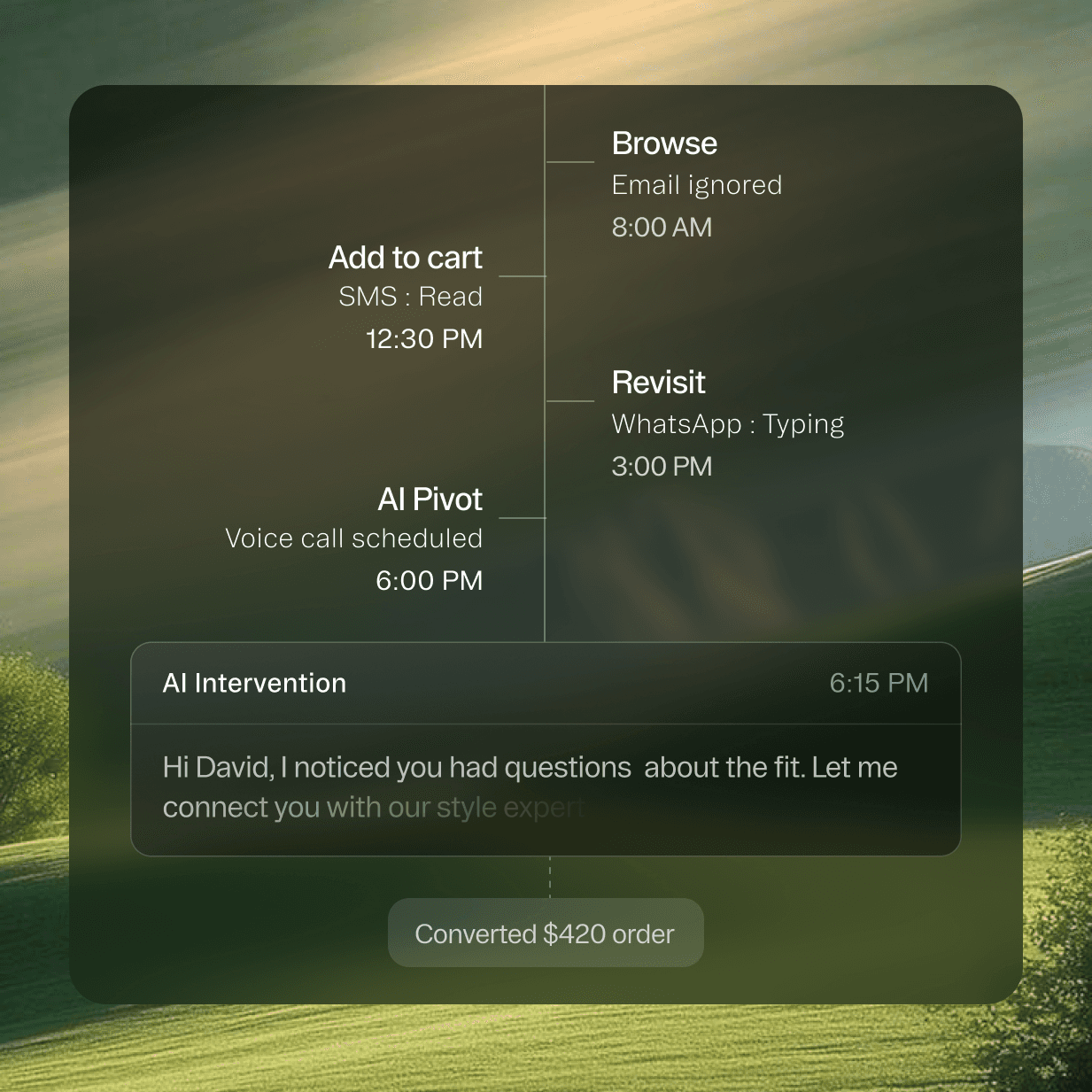
Markopolo AI makes human-like voice calls through Voice Agents that talks to customers naturally. It uses natural language understanding (NLU) and natural language processing (NLP), combined with rich behavioral data, to enable relevant, two-way conversations.
No other CEPs have this advanced feature; competitors only offer text-based channels. Voice calls run on the same advanced Generative AI intelligence that powers email and WhatsApp. Markopolo always knows what the customer browsed, when they are most receptive, and what they are likely to need next.
Markopolo AI can speak in 50 languages and adapts to regional dialects with deep cultural understanding. This lets businesses engage with their customers around the globe in a way that feels genuine.

WhatsApp text
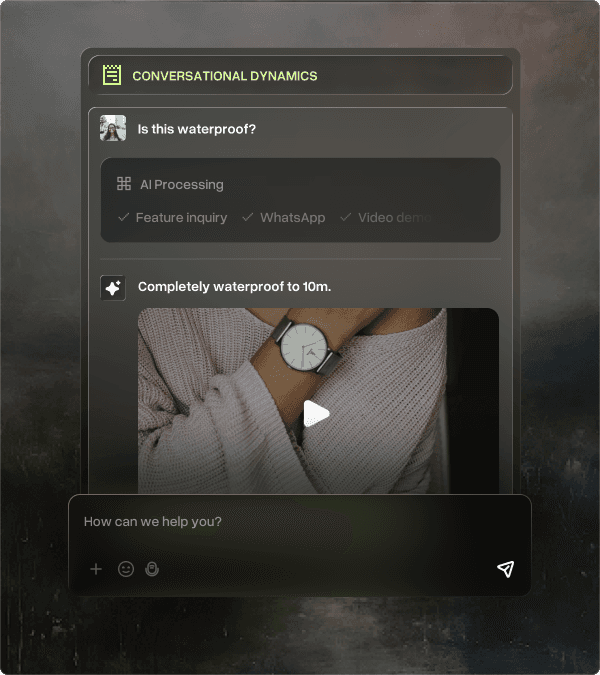
WhatsApp messages are personalized for each individual. The system doesn't use templates. It creates messages based on what each person did on the website.
Timing matters too. The AI sends messages when each person usually responds best. A customer who engages at 7 PM gets messages then, not at noon.
SMS

SMS works as part of the bigger strategy. The AI knows when SMS is the best channel for someone. It sends the right message type too.
Impulse buyers get stock alerts. Price shoppers get value messages. Each person gets what matches their behavior.
Omnichannel and context aware
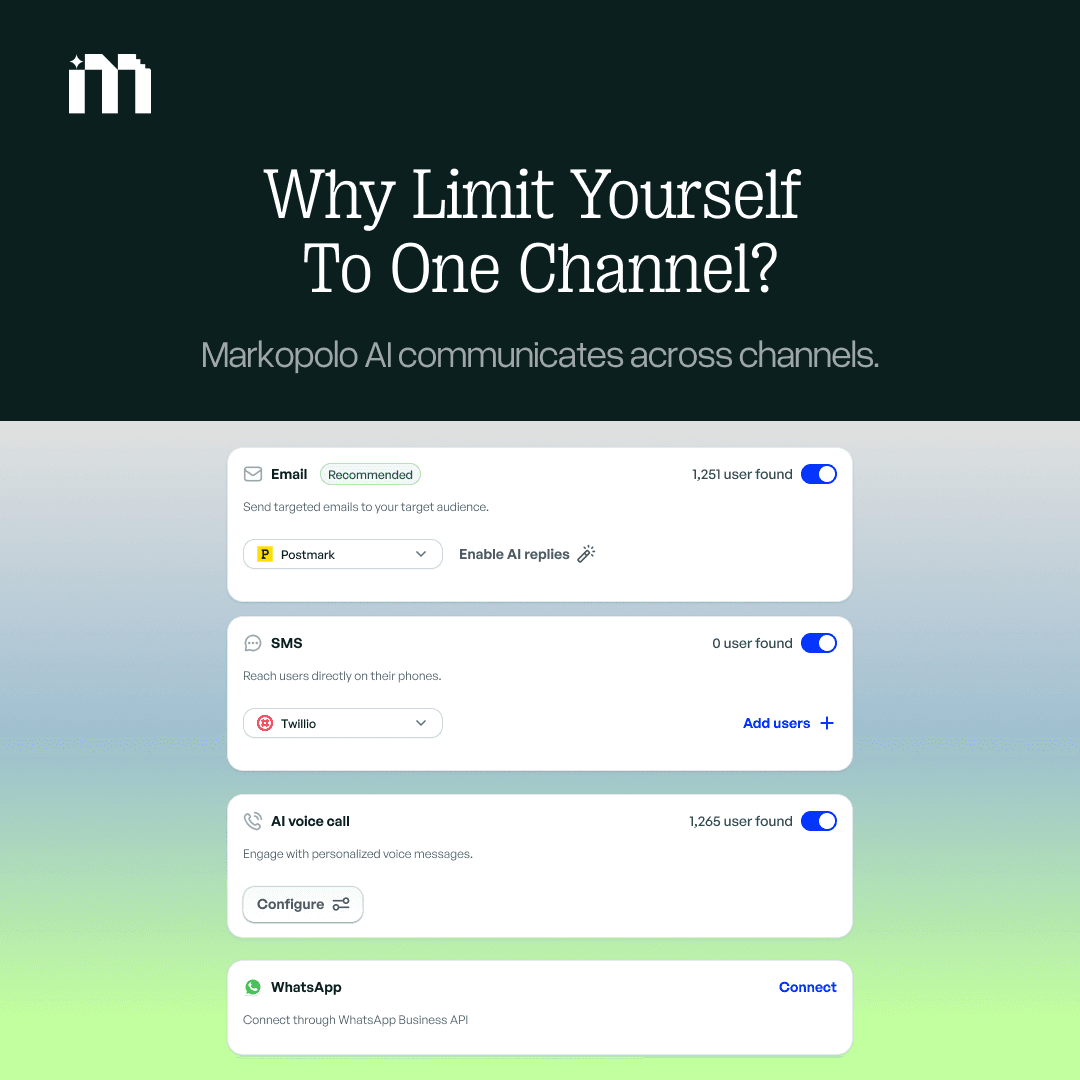
Markopolo AI orchestrates omnichannel customer engagement across email, SMS, WhatsApp, voice, and push, keeping every conversation connected and context-aware. It remembers everything. When a customer gets a WhatsApp message, it builds on the previous email. No repetition.
Context stays intact across devices and sessions. Desktop browsing connects to mobile engagement. Messages over three days form one coherent conversation.
Real-time hyper-personalized orchestration
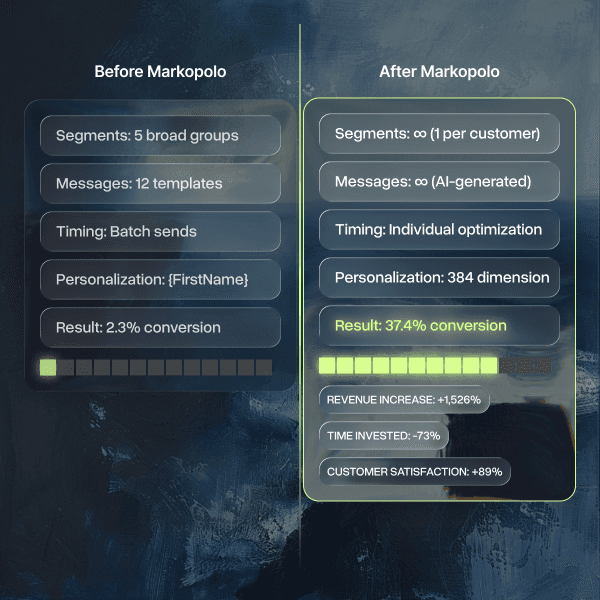
The AI creates unique strategies in under 50ms. It processes behavioral vectors instantly. Then it considers business goals, inventory, and product margins.
No pre-built workflows exist. Every strategy is generated fresh for each person. Millions of unique journeys run at the same time. This is true 1:1 personalization at scale.
Pros
Unique voice AI capability that no competitor offers
True 1:1 personalization using 384-dimensional behavioral vectors
Achieves 30-40% cart recovery rates versus industry standard 10-15%
Omnichannel orchestration across email, SMS, WhatsApp, voice, and push notifications
Real-time strategy generation in under 50ms
Context preservation across all channels and devices
Revenue-share pricing model aligns costs with results
Continuous learning improves performance automatically
Built specifically for e-commerce, B2C, and D2C businesses
Cons
Best for B2C and D2C businesses rather than B2B
Intercom
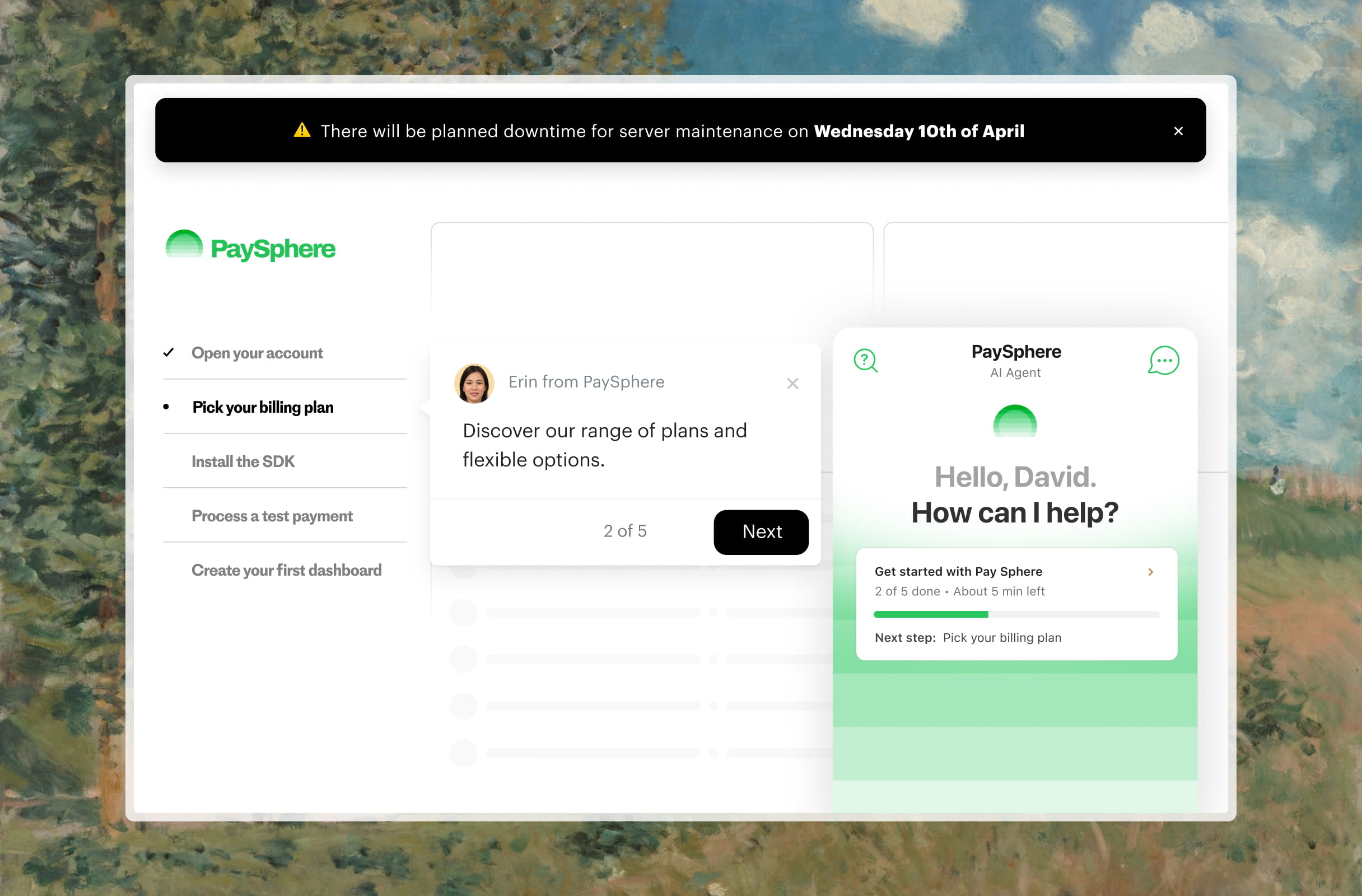
Image source: Intercom
Intercom focuses on conversational support through chatbots and live chat interfaces. The platform helps businesses handle inbound customer queries efficiently.
Conversational AI features
Intercom provides chatbot automation for common support questions. It uses Natural Language Understanding (NLU). Workflow builders help create conversation paths. The Fin AI bot handles routine queries and routes complex ones to humans.
Pros
Strong integration with support ticketing systems
Maintains conversation history across channels
Team inbox blends bot and human responses smoothly
Pre-built templates speed up launch
Good for reactive customer support scenarios
Cons
Uses rule-based logic instead of behavioral intelligence
Personalization limited to basic user data and segments
No voice channel support
Focuses on reactive support, not proactive revenue generation
Cannot create individual strategies at scale
Intercom and Markopolo AI comparison
Intercom handles inbound support queries through chat. Markopolo AI orchestrates proactive conversations across multiple channels including voice. Intercom applies the same bot to all segment members. Markopolo creates unique strategies using 384-dimensional behavioral vectors.
The approaches differ fundamentally. Intercom helps customers who reach out. Markopolo finds optimal moments to engage proactively. For e-commerce businesses focused on revenue, Markopolo's behavioral intelligence delivers better results.
Drift

Image source: Drift
Drift (by Salesloft) specializes in conversational marketing for B2B sales teams. The platform prioritizes lead qualification and meeting scheduling through website chat.
Conversational AI features
Drift focuses on conversational marketing and sales. Chatbots qualify leads through interactive conversations. The platform targets accounts and automates meeting scheduling. Playbooks exist for different visitor segments.
Pros
Excellent integration with sales CRMs and marketing platforms
Strong lead qualification capabilities
Meeting scheduling automation works well
Real-time visitor identification for high-value accounts
Good for B2B sales teams
Cons
Works mainly through website chat only
No comprehensive channel orchestration
Personalization uses firmographic data and segments, not individual behavior
Missing voice AI capabilities
Focuses on top-of-funnel, not post-purchase or cart recovery
Drift and Markopolo AI comparison
Drift serves B2B sales teams for lead qualification. Markopolo AI handles the full customer lifecycle for e-commerce and D2C. Drift's playbooks apply the same logic to visitor groups. Markopolo generates unique strategies from behavioral vectors.
Markopolo works across email, SMS, WhatsApp, and voice. Drift stays website-focused. For online retailers and consumer brands, Markopolo's behavioral focus drives higher conversion rates.
Zendesk

Image source: Zendesk
Zendesk provides automation for customer support tickets and help desk operations. The platform reduces support workload through answer bots and smart routing.
Conversational AI features
Zendesk provides answer bots for common customer questions. Its achine learning trains on support ticket history. The system suggests help articles and hands off to agents when needed. Zendesk's Automation extends to ticket routing and sentiment analysis.
Pros
Comprehensive support infrastructure integration
Handles high support volumes efficiently
Analytics track bot performance and customer satisfaction
Multi-language support for global operations
Strong for traditional customer support
Cons
Focuses only on reactive support, not proactive engagement
No behavioral vectorization capabilities
Treats all similar situations identically
Voice calling limited to traditional call center functions
Not designed for revenue generation
Zendesk AI and Markopolo AI comparison
Zendesk AI automates support responses. Markopolo AI drives revenue through proactive engagement. Zendesk waits for ticket submissions. But Markopolo identifies intervention points before issues arise.
Different objectives exist. Zendesk reduces support costs. Markopolo increases revenue. For businesses prioritizing customer value and conversions, Markopolo's orchestration delivers superior results.
ADA
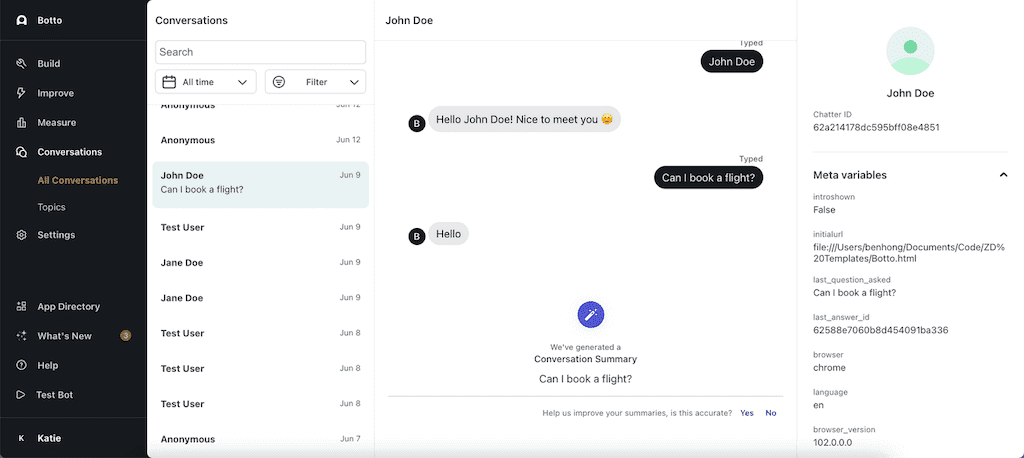
Image via SMB Guide
ADA offers no-code chatbot building for customer support and engagement. The platform empowers marketing teams to create conversational experiences without technical expertise.
Conversational AI features
ADA has visual workflow designers. It's natural language processing understands customer intent. ADA Responses personalize based on user attributes. Its integration connects to CRMs, knowledge bases, and APIs.
Pros
No-code interface lets marketing teams build without developers
Pre-built industry templates accelerate deployment
Analytics dashboards track conversation metrics
Easy to identify optimization opportunities
User-friendly for non-technical teams
Cons
Operates mainly through website chat and messaging apps
No comprehensive channel orchestration
Uses segment-based personalization, not individual intelligence
Voice AI capabilities are absent
Focuses on support rather than revenue-focused strategies
Ada and Markopolo AI comparison
ADA empowers teams to deploy chatbots quickly. Markopolo AI provides deep behavioral intelligence and orchestration across channels. ADA applies workflows to segments. But Markopolo creates millions of unique strategies.
Markopolo includes voice AI plus email, SMS, and WhatsApp. ADA focuses on chat. For e-commerce businesses, Markopolo's vectorization delivers 30-40% cart recovery versus 10-15% from segment approaches.
Conversational AI use cases and examples for customer engagement
Cart abandonment recovery with behavioral context
Traditional tools send the same email to everyone. Conversational AI understands why each person abandoned, price sensitivity, comparison shopping, technical questions, impulse browsing, and more. Each reason needs a different approach.
Markopolo AI analyzes behavioral vectors. Let's say, Sarah abandons in session two. The system knows she researches across three sessions before buying. It waits until 7 PM when she usually engages. Then it sends WhatsApp with customer testimonials. No discount. Her social proof need is 0.9. Her price sensitivity is only 0.3.
Product recommendation through conversation
Generic "customers also bought" suggestions don't work well. Conversational AI understands individual browsing patterns. It sees category interests and lifestyle signals. Then it recommends relevant products through natural conversations.
A customer browses premium categories with fast navigation. Markopolo AI sends WhatsApp exclusive early access to a new collection. No discount offered. The timing matches their typical browsing windows. The tone matches their preferences.
Post-purchase engagement and loyalty building
Conversational AI maintains relationships after purchase. It identifies the right moments for re-engagement. Product usage cycles matter. So do browsing behaviors and purchase patterns.
Markopolo tracks when customers become receptive to new offerings. No automated follow-ups on fixed schedules. The platform spots genuine interest signals. Then it engages through preferred channels. Messages are contextually relevant. This builds long-term relationships.
Technical support and guided troubleshooting
Conversational AI handles technical questions intelligently. It understands customer expertise levels. It knows product usage patterns. It remembers previous support interactions.
A customer engages deeply with specification pages. Markopolo AI sends detailed comparison information via email. Or it schedules a voice call with a technical specialist persona. For frustrated customers showing rage clicks, the system adjusts. It provides simplified guidance through their preferred channel.
Implementing and integrating conversational AI solutions
Data infrastructure and behavioral tracking
Success starts with comprehensive behavioral tracking. Modern customer engagement analytics need to capture micro-interactions. These include mouse movements, scroll patterns. hesitation signals, comparison behaviors, contextual data like device type, referral source, etc.
Markopolo's MarkTag transforms these signals into 384-dimensional vectors. This vectorization creates a semantic understanding of intent. AI can comprehend patterns that rule-based systems miss. Like research phase progression or emotional state.
CRM and data source integration
Conversational AI needs connections to existing customer data. Purchase history. Support tickets. Email engagement. Inventory systems. Good integration determines whether AI has enough context for smart decisions.
Markopolo AI unifies data from MarkTag, CRM systems, e-commerce platforms, and content sources. This creates complete customer profiles. Real-time synchronization keeps everything current. Inventory changes and customer actions immediately influence decisions.
Channel connection and orchestration setup
Implementation requires connecting communication channels. Email service providers. SMS gateways. WhatsApp Business API. Voice calling infrastructure. The platform must handle message delivery and response tracking across all channels.
Markopolo simplifies multi-channel setup with built-in integrations. The orchestration engine coordinates automatically. Messages build on previous conversations regardless of channel. Context stays preserved. No redundant or contradictory messaging.
AI training and optimization
Conversational AI improves through continuous learning. Implementation includes defining success metrics and KPIS for customer engagement, and establishing feedback loops. AI models need time to learn individual customer patterns.
Markopolo's intelligence improves continuously. Performance gets better as the system processes more data. Initial deployment establishes baselines within weeks. Accuracy keeps improving over months. The AI develops a deeper understanding of individual customers.
5 Benefits of AI-powered customer support automation
Scalable personalization without human limits

AI creates unique strategies for millions of customers simultaneously. Each person gets personalized interactions. No need for proportional staff increases.
Markopolo AI generates unique journeys in real-time. It processes behavioral vectors through AI models. This determines optimal messaging, timing, and channels. Small teams deliver experiences like dedicated account managers for everyone.
24/7 availability across time zones
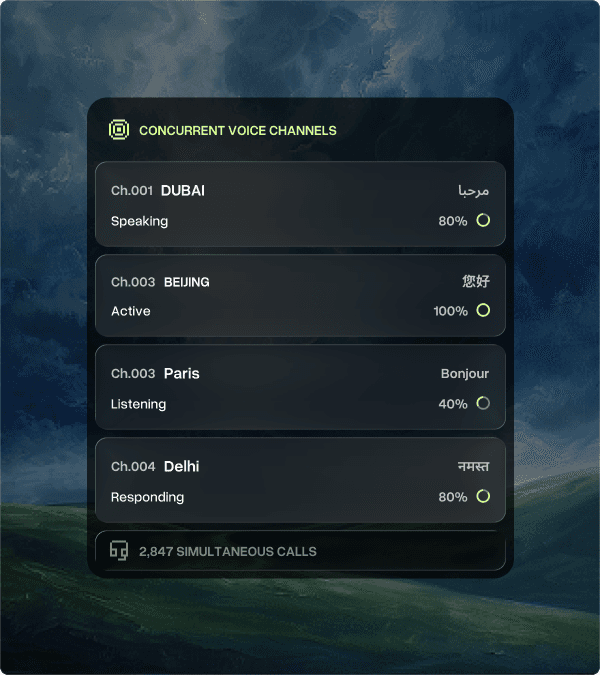
Conversational AI operates continuously. No fatigue. Customers get engaged at their optimal moments. Business hours don't matter. Time zones don't matter.
The platform adapts to customer patterns automatically. WhatsApp at 7 PM for evening browsers. SMS at lunch for midday shoppers. This temporal optimization significantly improves engagement rates.
Consistent brand voice and messaging
AI maintains consistent communication quality. No variability from multiple human agents. Brand guidelines apply uniformly. Content still personalizes based on individual context.
Markopolo AI generates messages reflecting brand voice. Tone adjusts based on customer profiles. Technical validators get detailed specs. Impulse buyers get concise benefits. Brand identity stays consistent.
Data-driven continuous improvement
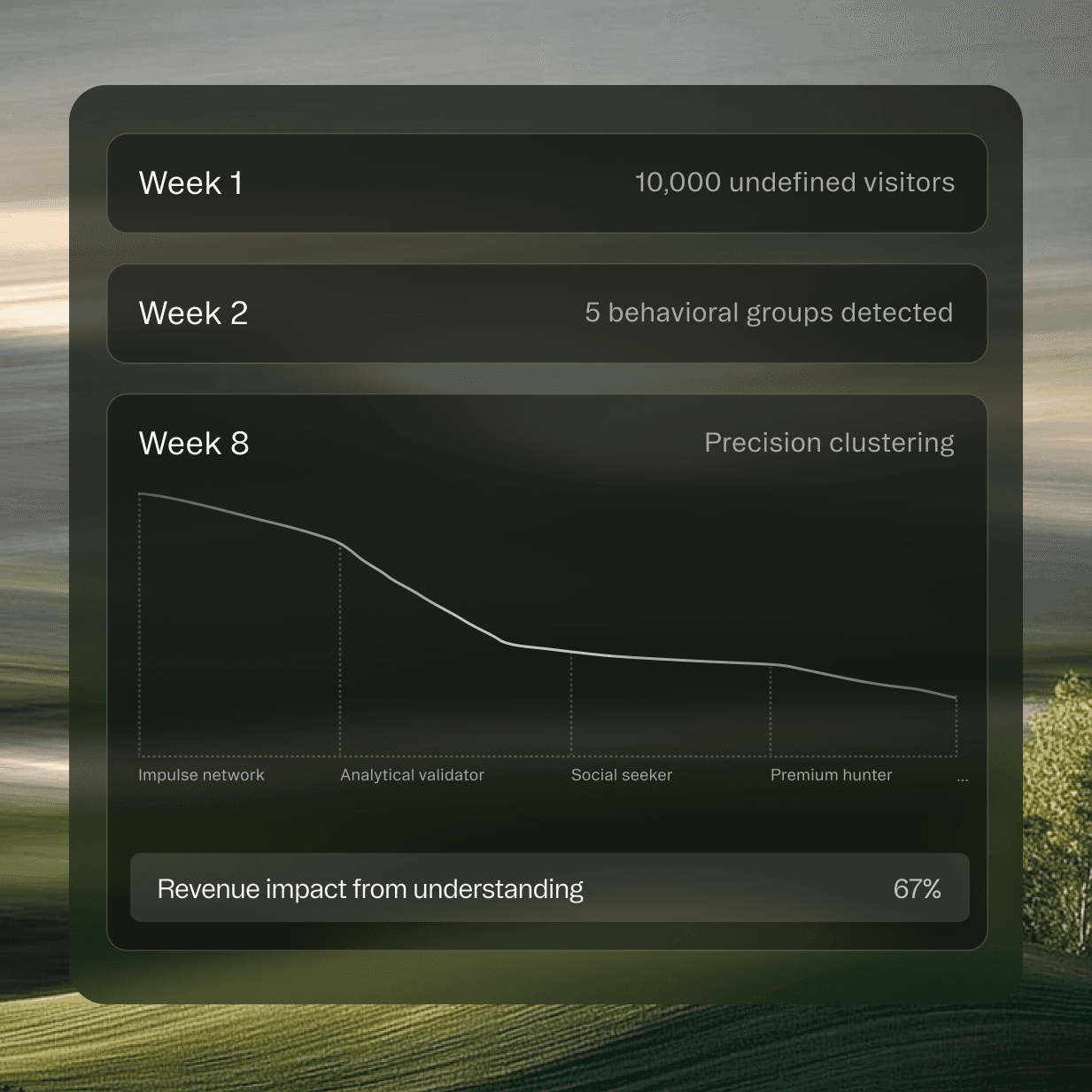
Every interaction creates learning opportunities. AI identifies what works for different behavioral profiles. Approach optimizes over time. No manual intervention needed.
Markopolo's learning layer refines understanding continuously. The platform tracks causal relationships between strategies and outcomes. Price-sensitive researchers respond to comparison guides. Premium buyers prefer exclusive access messaging.
Cost efficiency with revenue focus
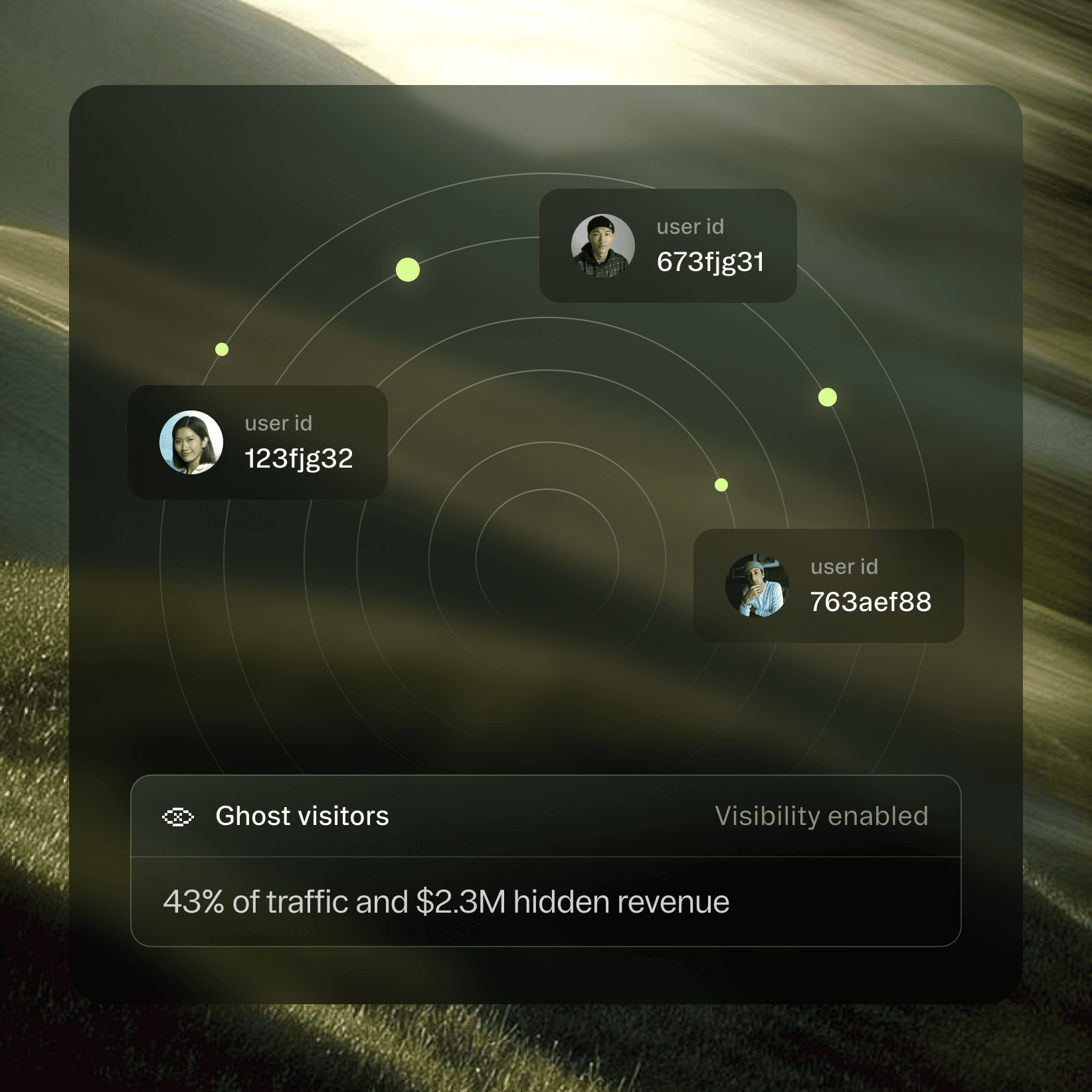
AI delivers superior results while reducing operational costs. No need for large support or sales teams. Businesses recover more revenue from existing traffic instead of spending on acquisition.
Markopolo typically recovers 30-40% of abandoned revenue. Traditional tools get 10-15%. This generates significant ROI. Revenue-share pricing aligns costs with results. Businesses benefit immediately.
AI chatbots and virtual assistants for customer interaction
Conversational interfaces for complex queries
Modern AI chatbots handle nuanced customer questions. They understand context, intent, and emotional state. No keyword matching to canned responses. These systems comprehend what customers actually need.
Advanced platforms like Markopolo AI go further. They proactively identify when customers need help. Browsing patterns show confusion or comparison shopping. The system initiates conversations through preferred channels with appropriate guidance.
Natural language understanding (NLU) and processing (NLP)
Conversational AI processes customer messages using natural language models. It understands phrasing variations, slang, abbreviations, and intent. Response generation creates human-like messages. Natural, not robotic. Accurate and on-brand.
Markopolo uses behavioral context for conversation content and tone. Not generic responses. Messages address specific hesitations from browsing patterns. A customer checking shipping policies repeatedly gets delivery reliability reassurance. Someone comparing prices sees value-focused messaging.
Handoff to human agents when needed
Effective conversational AI recognizes its limits. It transfers complex or sensitive issues to human agents smoothly. Full conversation context goes with the transfer. This hybrid approach combines AI efficiency with human expertise.
Markopolo's Voice Agent handles most conversations autonomously. It identifies situations needing human intervention. The system provides agents with complete behavioral history. Seamless handoffs happen. Customers don't repeat information.
How does Markopolo use conversational AI to improve both engagement and customer experience for brands
Omnichannel orchestration with unified context
Markopolo maintains complete conversation context across all channels. Email, SMS, WhatsApp, voice calls, and push notifications. Everything connects. A customer gets an email about abandoned items. Later comes a WhatsApp message. The content builds on the previous email. No repetition.
The platform tracks every interaction across channels and devices. Mobile browsing during lunch connects to desktop cart activity from the previous evening. Context stays intact. Messages acknowledge this history. The relationship moves forward naturally.
Individual need identification through behavioral intelligence
MarkTag's vectorization engine transforms every micro-interaction into semantic understanding. Customer intent. Preferences. Current state. The system detects research phase progression, price sensitivity levels, and social proof requirements. It finds optimal engagement windows for each individual.
This intelligence enables precise identification. Customer A needs testimonial validation. Customer B responds to scarcity signals. No segment averages. The platform determines specific needs for each person. Then it orchestrates appropriate strategies. Messages address actual hesitations and interests. Not generic promotions. The experience feels natural.
Right time, right channel engagement
Markopolo analyzes historical patterns. When is each customer most receptive? Which channels do they prefer? Some respond to WhatsApp in the evenings. Others engage with SMS during lunch. Certain segments prefer email or voice calls.
The platform identifies these preferences automatically through observed behavior. Messages orchestrate accordingly. No campaigns sent when convenient for the business. Markopolo reaches customers at optimal moments through preferred channels. This timing precision improves engagement rates significantly. Messages arrive when people are receptive, not intrusive.
Natural, non-intrusive interaction design
Markopolo's conversational AI creates helpful experiences, not pushy ones. The system understands behavioral momentum. It respects customer journeys. Active research gets relevant information. Decision-making time gets space.
Messages reflect specific actions and context. Not generic promotions. A premium product browser receives communications about quality and exclusivity. A price comparer sees value-focused messaging. Tone, timing, and content align with demonstrated preferences. Interactions feel personalized and relevant. Not automated and intrusive. This builds trust and improves brand perception while driving better conversions.