Retailers using AI for customer engagement achieve 30-40% cart recovery rates while most others plateau at 10-15%. The difference? They treat customers as individuals with unique behaviors, not segments in a spreadsheet.
Customer engagement covers every interaction from the first website visit to post-purchase follow-ups. As retail shifted online, these interactions became both more complex and more measurable. Smart retailers now track micro-behaviors—hesitation patterns, comparison shopping habits, channel preferences—to create experiences that actually feel personal.
5 benefits of customer engagement for retail businesses
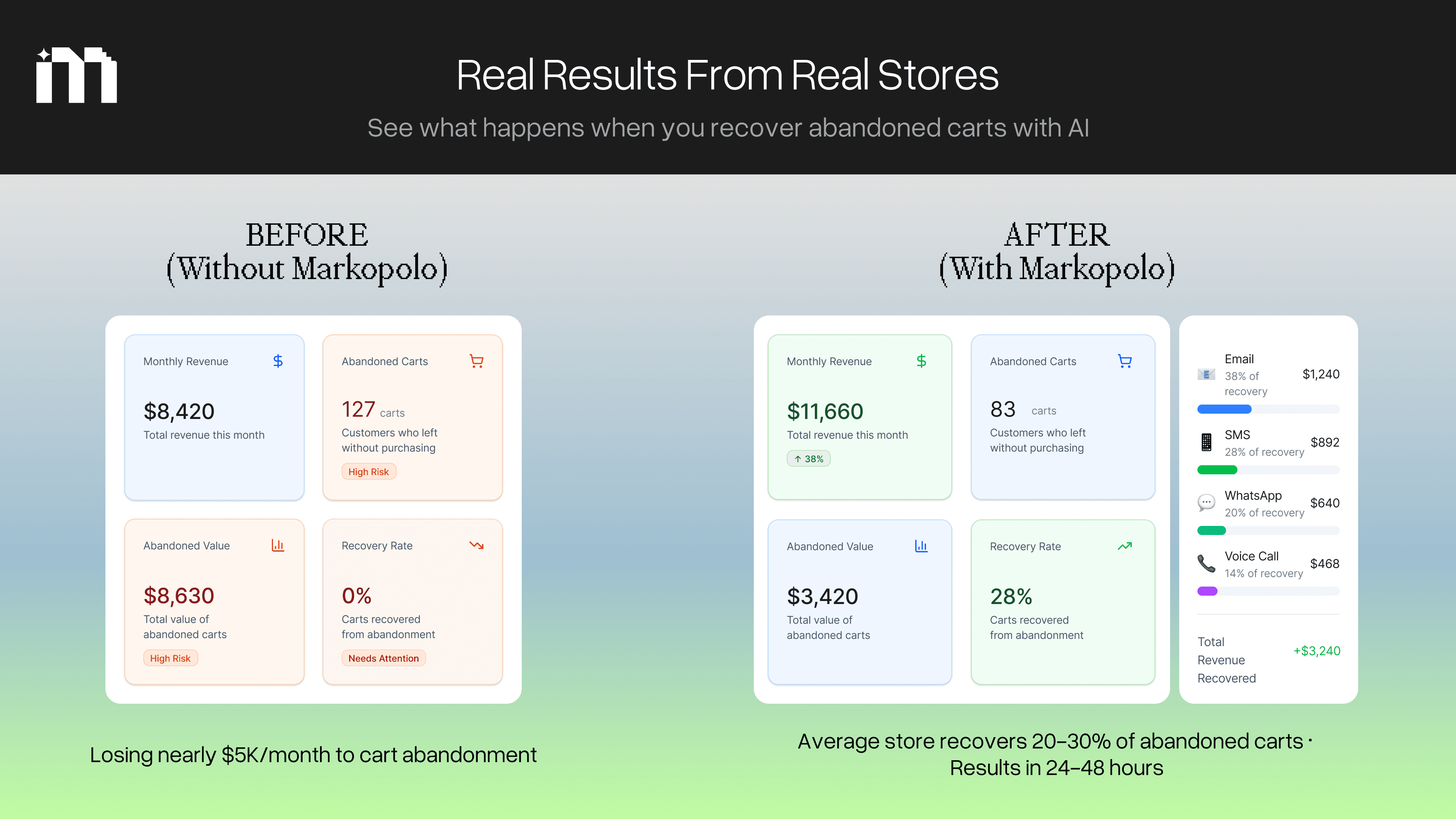
Customer engagement directly impacts your bottom line through measurable improvements across acquisition, conversion, and retention.
Increased conversion rates through behavioral understanding
When you analyze customer behavior patterns and respond accordingly, conversion rates jump 20-35%. A shopper browsing premium products needs different messaging than someone price-comparing across five tabs. Platforms that capture these signals let you intervene at the right moment with validation or social proof instead of generic discounts.
Reduced customer acquisition costs
Engaged customers become advocates who bring in new buyers through referrals and social sharing. This organic growth costs far less than paid ads and converts better. Retailers focusing on engagement see acquisition costs drop 30-45%. Each satisfied customer potentially brings 3-5 new ones through authentic recommendations.
Higher average order values and lifetime value
Personalization increases basket sizes by 15-25% because customers discover products that actually match their needs. When you understand shopping patterns, you can recommend complementary items at the right time. Engaged customers make 40-60% more purchases over their lifetime compared to unengaged shoppers.
Improved customer retention and repeat purchases
Consistent, relevant engagement improves retention rates by 25-40%. When shoppers receive timely recommendations, helpful content, and personalized offers, they develop loyalty that transcends price wars. Retaining existing customers costs 5-7 times less than acquiring new ones.
Better brand differentiation in competitive markets
Exceptional engagement creates competitive advantages that pricing can't match. When customers feel understood as individuals, they develop emotional connections that resist competitor offers. Brands report 30-50% lower churn when they deliver consistently personalized experiences.
7 Retail customer engagement strategies and best practices
Effective engagement combines technology, data intelligence, and customer psychology. These strategies work whether you're running an ecommerce store, D2C brand, or omnichannel retail operation.
Behavioral intelligence for individual understanding
Move beyond demographics to behavioral analysis that captures intent, preferences, and micro-patterns. This transforms raw interaction data into actionable insights about each customer's journey. Markopolo AI uses behavioral vectorization to create 384-dimensional fingerprints of customer intent, predicting conversion probability with 85-91% accuracy.
Real-time engagement triggers based on customer actions
Automation that responds to behaviors in real-time drives engagement rates 40-60% higher than scheduled campaigns. When a customer abandons their cart, the response should match their behavioral profile. Price-sensitive shoppers get strategic discount timing. Premium buyers get limited stock alerts without discounts.
Multi-channel orchestration for seamless experiences
Customers interact across email, SMS, WhatsApp, push notifications, social media, and voice call. Omnichannel customer engagement coordinates these channels based on individual preferences, not broadcast schedules. AI-powered platforms determine which channel each customer prefers and when—some respond to WhatsApp at 7 PM while others engage with SMS during lunch.
Personalization beyond name insertion
True personalization understands context, intent, and timing. A customer browsing technical specifications needs detailed comparisons. An impulse buyer needs limited-time offers and scarcity signals. Platforms creating millions of unique journeys achieve 3-4x higher engagement than those applying templates to segments.
Predictive analytics for proactive engagement
Machine learning models predict customer needs before explicit signals appear. These systems identify customers likely to churn within 30 days, prospects with high conversion probability, and moments when intervention prevents abandonment. Predictive engagement reduces cart abandonment by 35-45%.
Voice engagement for high-value interactions
AI-powered voice calls handle complex interactions at scale while maintaining human-like quality. These calls address technical questions, offer personalized guidance, and close sales with conversion rates 40-60% higher than text channels. Voice works particularly well for high-ticket items and late-stage consideration.
Continuous optimization through feedback loops
Platforms that measure every interaction outcome and adjust strategies accordingly achieve compound performance gains. This means engagement effectiveness increases month-over-month as AI models learn which approaches work for specific customer profiles.
Top 5 retail customer engagement platforms and software
Retailers choose platforms based on specific capabilities. They need personalized experiences at scale. They want actionable analytics, and seamless omnichannel orchestration.
Markopolo AI
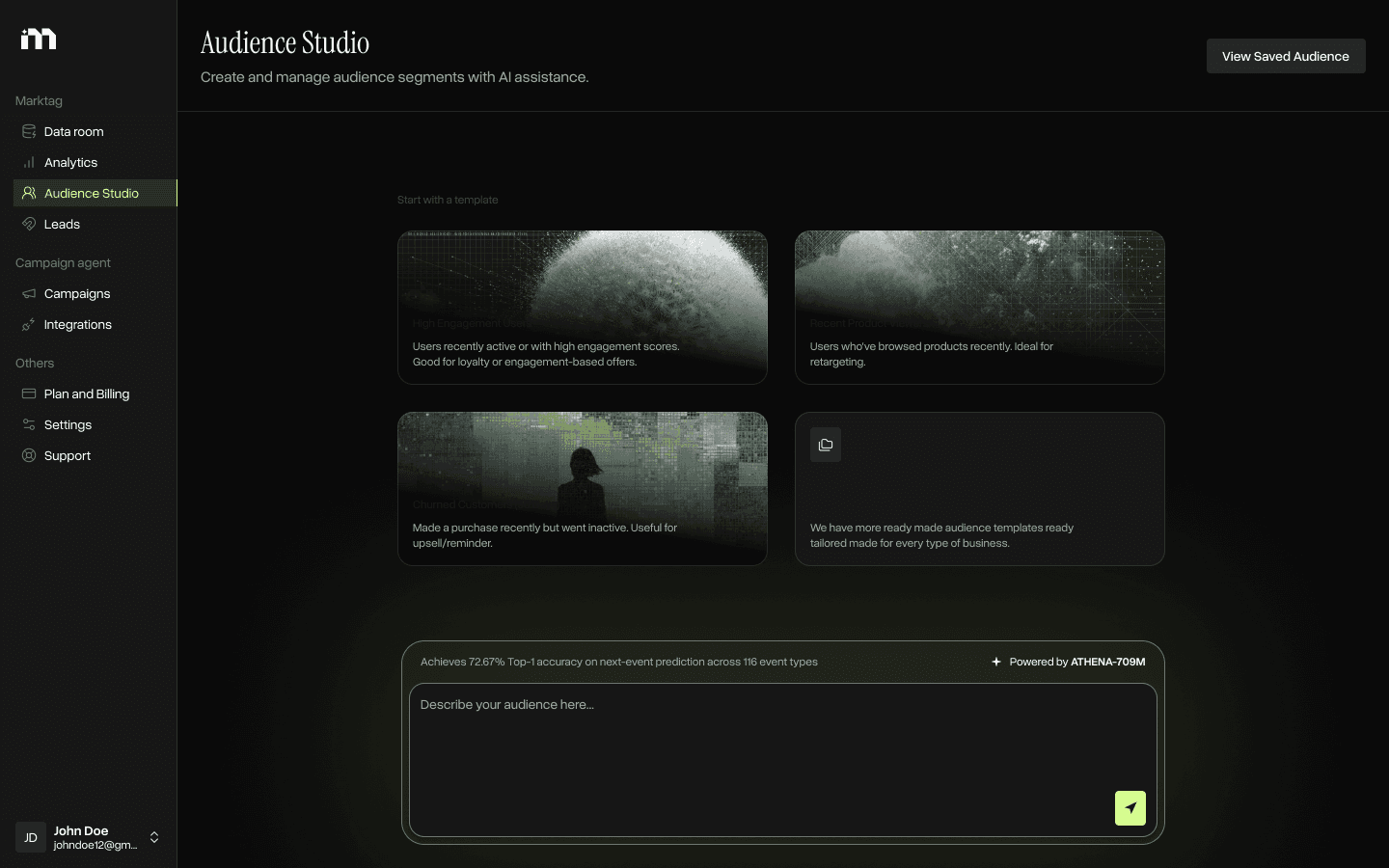
Markopolo is a customer engagement platform with AI in its core for B2C, D2C ecommerce retail brands. It is the first platform built specifically for AI-driven revenue orchestration. Markopolo AI treats every visitor as a unique individual. It doesn't use segment-based approaches. The platform's MarkTag behavioral intelligence system captures complete customer journeys. It tracks all touchpoints. It transforms them into 384-dimensional behavioral vectors. Then, AI models use these vectors to generate personalized engagement strategies via autonomous omnichannel outreach campaigns.
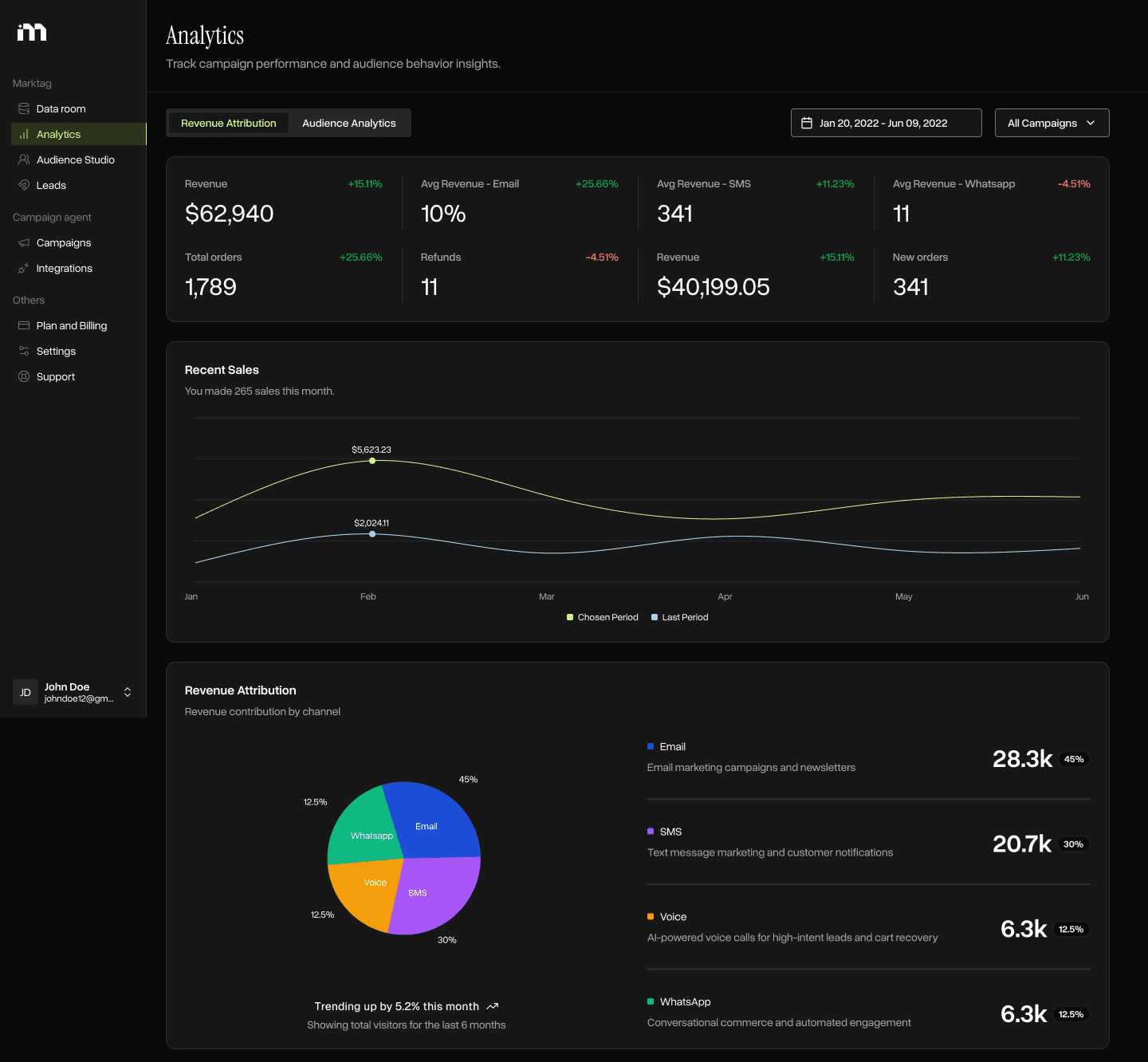
When customers browse an online store from their browser or app, Markopolo tracks their touchpoints. If the analysis finds out the customer is a high-intent buyer but abandoned the cart before checkout, Markopolo AI then reaches out to them with a hyper-personalized message. It also understands the user preference and the right time, so the AI intervention feels natural and not intrusive.
The platform can reach out to customers through email, SMS, WhatsApp text, push notifications, and AI voice calls. It integrates to all major CRM solutions, such as HubSpot, Salesforce, Zoho, custom CSV files, etc.
Markopolo AI is available for Shopify, WooCommerce, BigCommerce, WordPress merchants, as well as native ecommerce solutions.
Pros:
Real-time behavioral vectorization that predicts customer intent with 91% accuracy
Achieves 30-40% cart recovery rates versus 10-15% industry averages
Autonomous AI agents that create millions of unique customer journeys
Native voice AI integration for human-like conversations at scale
Complete attribution modeling that reveals true customer journey causality
Multi-channel orchestration across email, SMS, WhatsApp, push, and voice
Cons:
Requires integration setup for full behavioral tracking capabilities
Advanced features may need onboarding support for smaller teams
Klaviyo
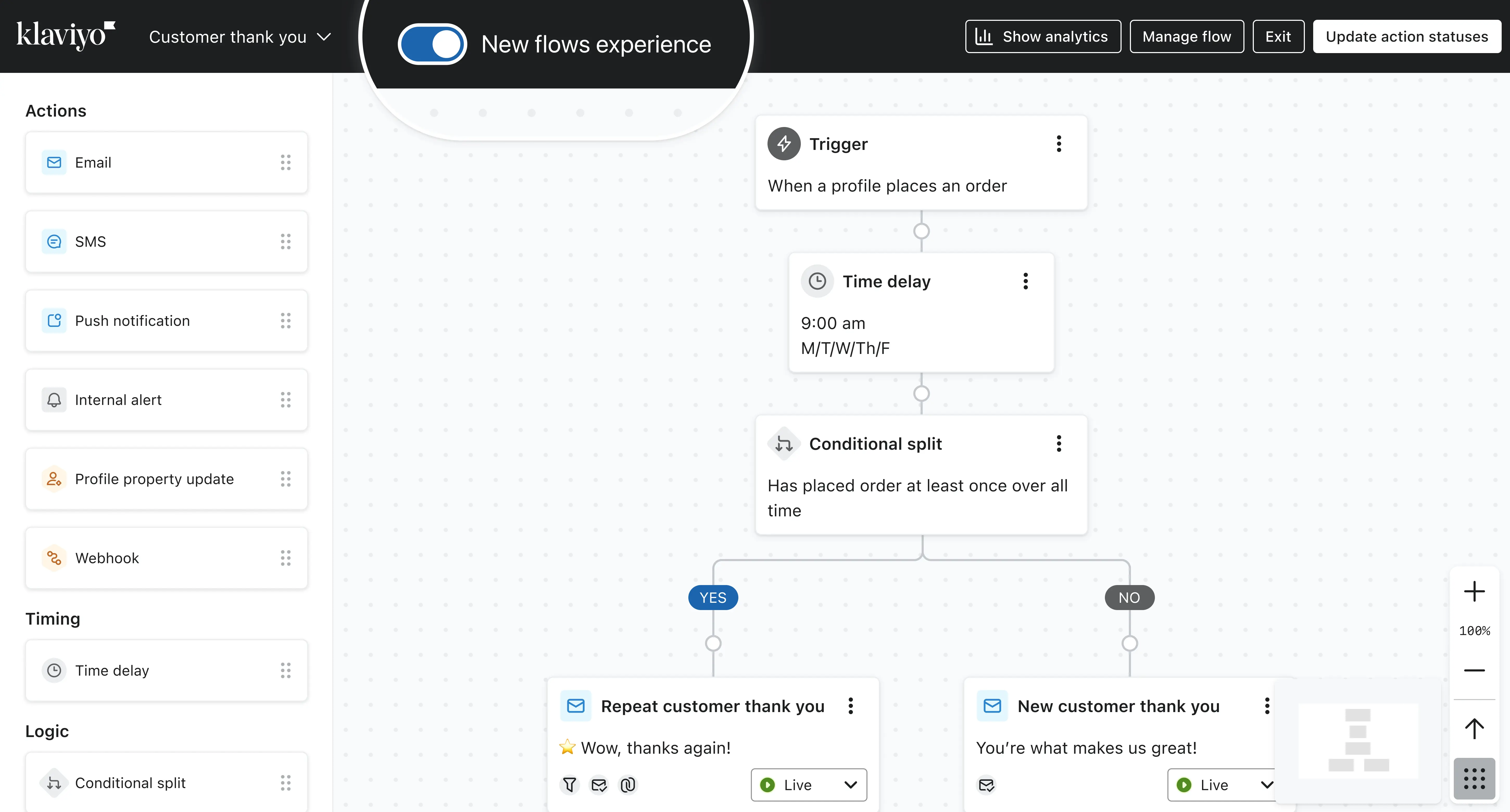
Image source: Klaviyo
Klaviyo offers email and SMS marketing with pre-built workflows for e-commerce scenarios.
How is Klaviyo for customer engagement in retail businesses
Klaviyo works well for small to mid-sized e-commerce brands that need straightforward email and SMS automation. The platform shines when you're looking for a quick setup with pre-built templates and don't need advanced behavioral intelligence. It integrates smoothly with Shopify, WooCommerce, and other major e-commerce platforms, making it a popular choice for retailers who want to get campaigns running fast.
Pros
User-friendly drag-and-drop interface that non-technical marketers can navigate easily
Extensive library of pre-built templates for abandoned carts, welcome series, and post-purchase flows
Strong email deliverability rates with good inbox placement
Solid segmentation based on purchase history and basic behavioral triggers
Affordable entry-level pricing for smaller contact lists
Quick integration with major e-commerce platforms
Cons
Segment-based approach fundamentally limits true 1:1 personalization
No behavioral AI to predict customer intent or understand individual patterns
Cart recovery rates consistently plateau at 10-15% industry average
No native voice channel support for high-value interactions
Limited real-time responsiveness—workflows follow pre-set rules
Pricing scales quickly as contact list grows
No lifetime attribution modeling to understand complete customer journeys
Klaviyo vs Markopolo AI comparison for retail brands
Klaviyo builds workflows that apply the same sequence to customer segments. If 1,000 people abandon carts, they all get the same three-email sequence regardless of individual context. Markopolo AI creates 1,000 unique strategies based on each person's behavioral fingerprint.
When Klaviyo sends everyone a 10% discount at hour 1, Markopolo knows that Customer A is price-sensitive and gets strategic discount timing, Customer B is a premium buyer who responds to scarcity not discounts, and Customer C needs social proof through WhatsApp at 7 PM. This is why Markopolo achieves 30-40% cart recovery while Klaviyo plateaus at 10-15%.
Klaviyo lacks the behavioral vectorization that lets Markopolo predict with 91% accuracy whether someone will convert, when they'll be most receptive, and which channel they prefer. For retailers serious about maximizing revenue from every visitor, Markopolo's AI-native approach delivers 2-3x better results across conversion, engagement, and customer lifetime value.
Braze
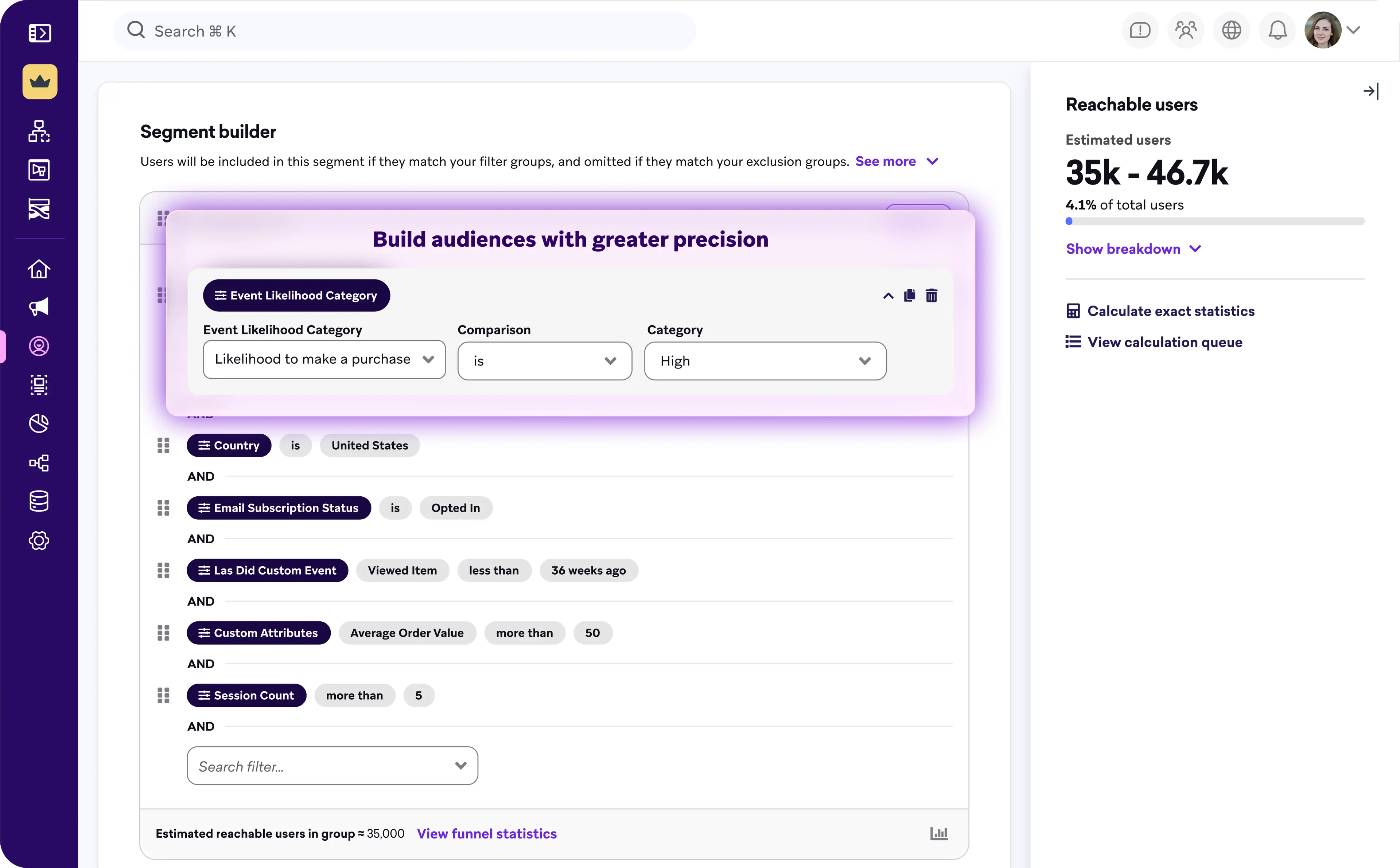
Image source: Braze
Braze provides enterprise-grade cross-channel messaging with sophisticated segmentation.
How is Braze for customer engagement in retail businesses
Braze targets large enterprise retailers with complex customer databases spanning multiple product lines and regions. It's built for brands that need to send millions of messages daily with sophisticated audience segmentation. The platform appeals to retailers with dedicated technical teams who can leverage the robust API and customize integrations. It works best when you have substantial resources for implementation and ongoing optimization.
Pros
Enterprise-grade infrastructure handles millions of messages with high reliability
Robust API enables deep custom integrations with existing tech stacks
Advanced audience segmentation with multiple data point combinations
Real-time messaging triggers respond to customer actions immediately
Strong Canvas journey builder for complex multi-step campaigns
Comprehensive analytics dashboard tracking engagement across channels
Reliable uptime and performance at scale
Cons
Requires significant technical resources and developer time to implement properly
Complex pricing structure with hidden costs that escalate quickly
Still relies on segment logic rather than individual AI agents
No behavioral vectorization for deep customer intent understanding
Steep learning curve requires dedicated personnel for management
Manual workflow building doesn't leverage autonomous AI strategy generation
Missing voice channel integration for complex customer interactions
Braze vs Markopolo AI comparison for retail brands
Braze gives you powerful tools to segment customers into increasingly granular buckets—but they're still buckets. You might create 50 sophisticated segments based on purchase history, engagement level, and product preferences. That's 50 different journeys for potentially millions of customers.
Markopolo treats each of those millions as individuals with dedicated AI agents. While Braze requires humans to design rules like "if abandoned cart value > $100 AND last purchase < 30 days, send flow X," Markopolo's AI autonomously generates unique strategies based on 384-dimensional behavioral vectors.
The fundamental difference: Braze optimizes segment-based campaigns, Markopolo creates individual strategies. When a customer shows hesitation patterns that Braze can't detect because they're not in the segment rules, Markopolo's behavioral intelligence catches it and adjusts in real-time. This is why Markopolo achieves significantly higher engagement and conversion rates—it understands complete behavioral context that segment logic misses, no matter how sophisticated the segmentation.
Attentive
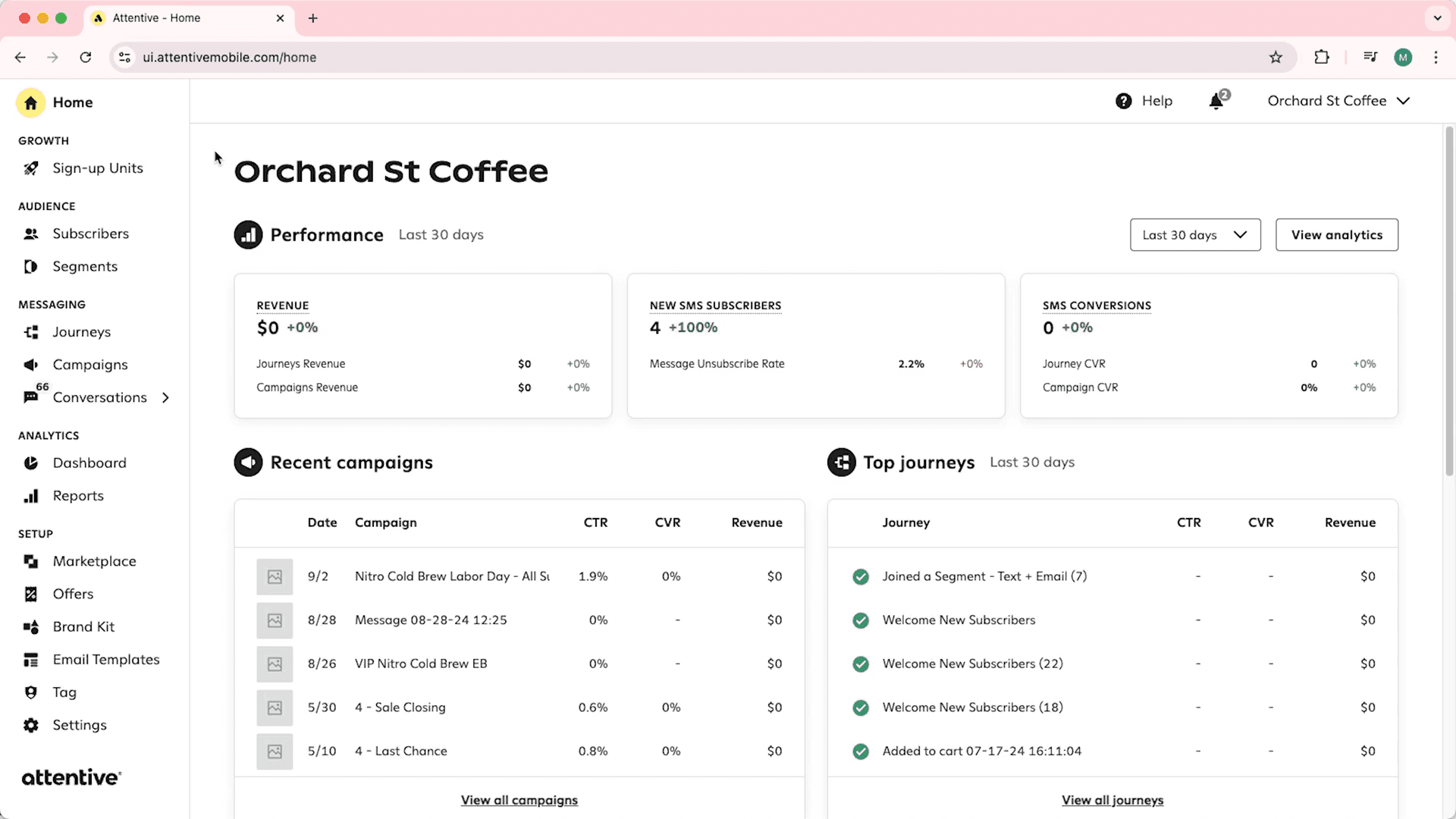
Image source: Attentive
Attentive specializes in SMS and messaging compliance for mobile-focused campaigns.
How is Attentive for customer engagement in retail businesses
Attentive excels for retailers prioritizing mobile-first engagement strategies centered on SMS marketing. The platform handles compliance complexities around text messaging regulations, making it straightforward to launch SMS campaigns without legal headaches. It works particularly well for fashion and lifestyle brands where customers respond strongly to text messages. The interactive two-way messaging features enable quick customer conversations that feel more personal than email.
Pros
SMS-first platform with consistently high deliverability rates
Built-in compliance tools automatically handle TCPA and messaging regulations
Interactive two-way messaging enables real conversations with customers
Easy subscriber list growth through various opt-in methods
Strong performance analytics specific to SMS engagement
Quick campaign creation with mobile-optimized templates
Seamless integration with major e-commerce platforms
Cons
Limited exclusively to SMS and MMS channels—no email, voice, or push
Basic personalization that doesn't go beyond first name and product mentions
No voice channel for handling complex technical questions or high-value sales
Lacks true behavioral intelligence for predicting customer intent
No cross-channel orchestration capabilities
Can't create unique journeys based on individual behavioral patterns
Missing predictive analytics to identify churn risk or conversion probability
Attentive vs Markopolo AI comparison for retail brands
Attentive delivers SMS messages reliably and handles compliance well—but that's where the intelligence ends. When someone abandons a cart, Attentive sends a text with a discount code. It might time it well based on your settings, but it sends essentially the same message to everyone.
Markopolo first determines if SMS is even this customer's preferred channel. Maybe they ignore texts but engage with WhatsApp at 7 PM or respond to voice calls during lunch. Markopolo's behavioral intelligence knows this. Then it crafts the message based on what this specific person needs—not a generic discount, but perhaps social proof if they're validation-seeking, or limited stock alerts if they're premium buyers.
Attentive is a single-channel tool. Markopolo is an omnichannel orchestration platform that automatically switches between SMS, WhatsApp, voice, email, and push based on individual patterns. When a customer doesn't respond to SMS within Attentive, you're stuck. With Markopolo, the AI agent tries voice next, then WhatsApp, finding the channel and message that converts. This multi-channel intelligence powered by behavioral AI is why Markopolo achieves 40-60% higher engagement rates than single-channel approaches.
Salesforce Marketing Cloud
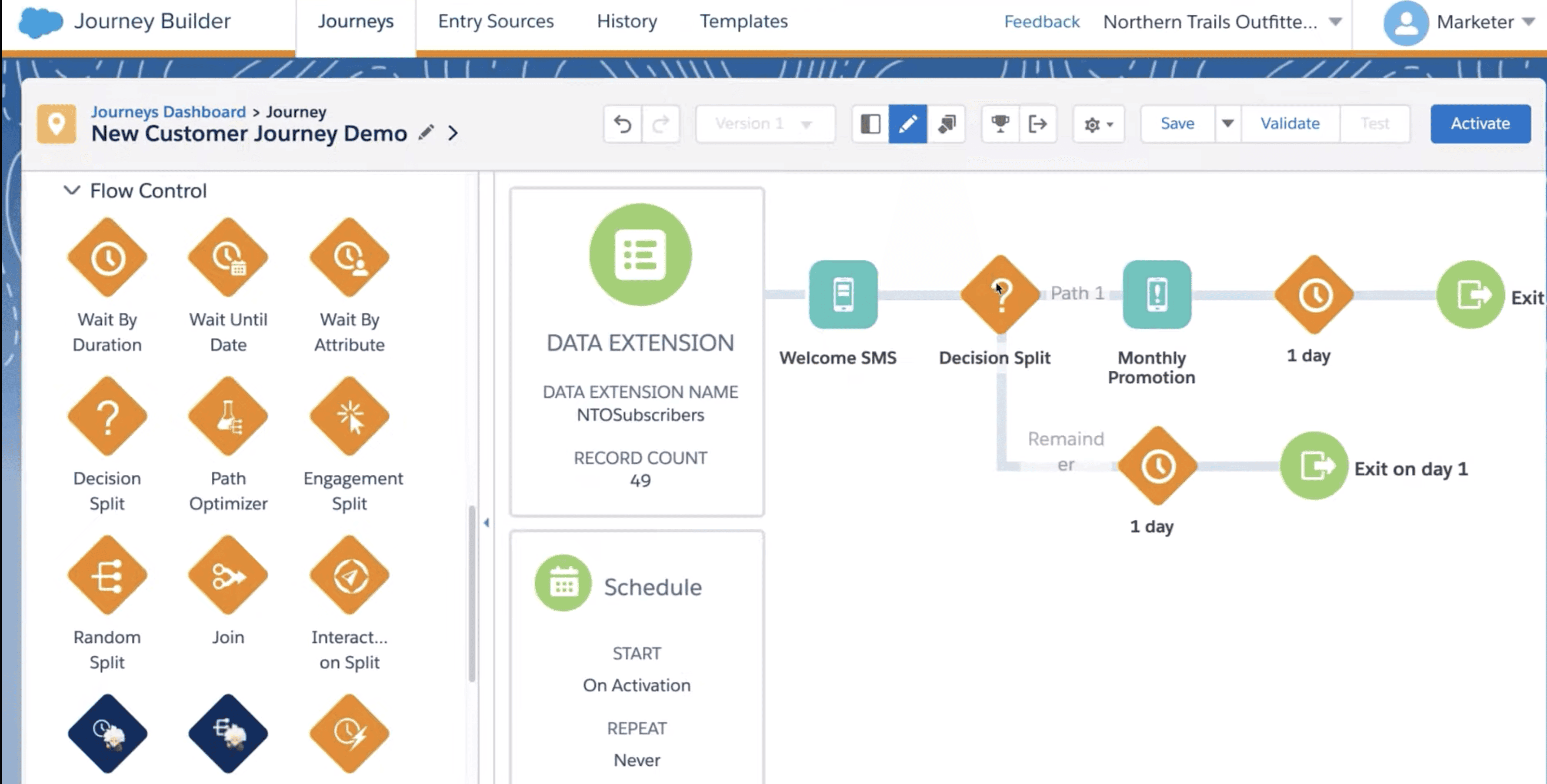
Image source: Salesforce Ben
Salesforce Marketing Cloud offers comprehensive marketing automation integrated with their CRM ecosystem.
How is Salesforce Marketing Cloud for customer engagement in retail businesses
Salesforce Marketing Cloud serves large enterprise retailers already invested in the Salesforce ecosystem. The deep CRM integration provides a unified view of customer data across sales, service, and marketing. It works best for organizations with dedicated Salesforce administrators and substantial budgets. The Journey Builder visual interface lets teams design complex multi-touch campaigns, though it requires significant training. Enterprise-level retailers appreciate the robust security, compliance features, and integration with other Salesforce products like Commerce Cloud and Service Cloud.
Pros
Deep integration with Salesforce CRM creates unified customer data platform
Enterprise-level security, compliance, and data governance features
Journey Builder provides visual workflow creation for campaign design
Comprehensive suite including email, mobile, social, advertising, and web personalization
Strong support infrastructure with dedicated account teams
Einstein AI provides some predictive capabilities for send time optimization
Extensive partner ecosystem for specialized integrations
Cons
Expensive licensing with per-contact pricing that scales aggressively
Steep learning curve requiring certified Salesforce administrators
Journey Builder relies on rule-based logic, not AI-generated individual strategies
No real-time behavioral analysis for understanding individual customer intent
Complex implementation requiring months of setup and configuration
Manual workflow building without autonomous AI optimization
Lacks behavioral vectorization technology for deep customer understanding
Missing native voice AI for complex customer interactions
Salesforce vs Markopolo AI comparison for retail brands
Salesforce Marketing Cloud requires humans to design every journey rule in Journey Builder. A marketer builds a workflow: IF cart value > $100, THEN wait 2 hours, SEND email template A. IF not opened after 24 hours, SEND email template B with 10% discount. This same journey applies to everyone meeting those criteria.
Markopolo AI autonomously generates unique strategies for each customer. It doesn't need humans to design IF/THEN rules because the AI understands behavioral context. When Sarah abandons a $100 cart, Markopolo knows she's in research phase 2, responds to social proof not discounts, prefers WhatsApp at 7 PM, and needs validation. When John abandons the same cart, Markopolo knows he's price-sensitive, compares competitors, and will convert with strategic discount timing via SMS at noon.
Salesforce requires constant human optimization—running A/B tests, analyzing results, updating workflows. Markopolo learns from every interaction automatically, continuously improving without manual intervention. This is why Markopolo achieves 3-4x better results: it treats each customer as a unique individual with autonomous AI strategy generation, while Salesforce applies human-designed rules to customer segments, no matter how sophisticated those rules become.
Omnichannel retail customer journey and experience mapping
Modern customers move fluidly between channels and devices throughout their purchase journey. Effective engagement requires understanding these complex paths and maintaining context across touchpoints.
Understanding the holistic customer experience
Customers rarely follow linear paths—they research on mobile, compare on desktop, and purchase on whatever device is handy. Platforms maintaining unified customer profiles across devices deliver 35-50% higher conversion rates by preserving context and progress.
Cross-channel personalization strategies
A customer who abandons a cart on desktop should receive mobile-optimized follow-up on their preferred channel. Markopolo AI's behavioral tracking maintains complete context across channels, enabling seamless conversation continuation regardless of where customers engage. This unified approach increases conversion rates by 25-40% compared to channel-siloed strategies.
In-store and e-commerce integration
Successful omnichannel retailers blur physical and digital lines. Customers who browse online but purchase in-store (or vice versa) should receive consistent engagement. This requires unified customer data platforms tracking behaviors across all environments. Integrated approaches report 30-45% higher customer lifetime values.
Technology requirements for omnichannel execution
Omnichannel execution demands real-time data synchronization, behavioral intelligence systems, and orchestration engines coordinating multiple channels simultaneously. Traditional platforms struggle because they were designed for single-channel campaigns. AI-native platforms like Markopolo handle this by maintaining complete behavioral context and generating channel-specific strategies in real-time.
Measuring retail customer satisfaction and engagement metrics
Cart abandonment and recovery rates
Cart abandonment averages 69-75% across e-commerce, making recovery crucial. High-performers achieve 30-40% recovery using behavioral intelligence and multi-channel orchestration, compared to 10-15% with generic email sequences.
Customer lifetime value (CLV)
Engaged customers demonstrate 40-60% higher CLV through repeat purchases and cross-sell responsiveness. Track CLV by cohort to measure how engagement strategies impact long-term value.
Net Promoter Score (NPS)
Retailers with strong engagement report NPS scores 25-40 points higher than competitors. Monitor trends to identify when engagement effectiveness increases or declines.
Engagement rate by channel
Measure open rates, click-throughs, and conversions for each channel. Expect 40-60% variation as customers demonstrate strong preferences. Track patterns individually rather than averaging across audiences.
Customer satisfaction (CSAT) scores
High CSAT scores correlate strongly with retention and lifetime value. Aim for scores above 80%, with top performers exceeding 90%. Link CSAT to engagement patterns to identify what drives satisfaction.
Repeat purchase rate
Rates above 30% indicate strong engagement while below 20% signals problems. Analyze which strategies convert one-time buyers into repeat customers and scale those approaches.
Time to conversion
Effective engagement shortens timelines by 30-50% by addressing hesitations proactively and providing timely information. Track by customer segment to understand different journey velocities.
Customer effort score (CES)
Lower effort scores predict higher loyalty. Engagement strategies should reduce customer effort by providing relevant information at the right moments and removing purchase friction.
Building retail customer loyalty and retention program
Loyalty program design principles
Effective programs reward behaviors driving business value while feeling generous. Tiered structures motivate progression. Personalized rewards based on individual preferences increase redemption rates by 35-50%. Reward engagement behaviors like reviews and referrals, not just purchases.
Personalized retention campaigns
Generic "we miss you" emails achieve 5-8% reactivation. Campaigns based on behavioral intelligence achieve 25-35% by addressing specific disengagement reasons. AI-powered platforms analyze past behaviors to determine which offers, messages, and timing will re-engage lapsed customers.
Win-back strategies for lapsed customers
Customers who haven't purchased in 90-180 days need strategic re-engagement. Effective campaigns segment by previous patterns, engagement levels, and predicted reactivation probability. Multi-channel approaches using email, SMS, and voice achieve 40-60% higher reactivation than single-channel efforts.
Customer education and value delivery
Engaged customers receive ongoing value beyond purchases—educational content, exclusive insights, helpful tools. This builds relationships transcending transactions. Retailers providing regular value-added content report 35-50% higher retention as customers develop habits around brand interactions.
Community building and user-generated content
Fostering customer communities creates loyalty through social connection and shared identity. User-generated content like reviews and photos provides social proof while deepening engagement. Customers who contribute content demonstrate 3-5x higher lifetime values.
Why is Markopolo AI the best for retail brands seeking to boost customer acquisition and retention
Traditional marketing automation requires humans to design workflows and hope they work for diverse customers. Markopolo AI autonomously creates millions of individual strategies, making true personalization scalable.
Predictive intelligence for proactive engagement
Markopolo's behavioral vectorization predicts customer actions with 91% accuracy. The platform identifies customers likely to abandon, churn, or convert within specific timeframes, enabling proactive intervention. This prevents revenue loss by addressing hesitation before customers leave, resulting in 35-45% higher retention versus reactive approaches.
Real-time omnichannel orchestration
The platform coordinates engagement across email, SMS, WhatsApp, push notifications, and voice in real-time based on individual preferences. Each customer receives communications on their preferred channels at optimal times determined by behavioral patterns. This intelligent orchestration achieves 40-60% higher engagement than single-channel or scheduled campaigns.
AI voice calls for complex interactions
Voice AI handles sophisticated conversations at scale while maintaining human-like quality. These calls address technical questions, provide personalized guidance, and close high-value sales with conversion rates 40-60% higher than text channels. Voice extends personalization beyond digital touchpoints to create memorable experiences.
Optimal customer experience without annoyance
Markopolo's AI agents understand the right customer, right time, and right channel for every interaction. This prevents over-messaging and ensures customers feel understood rather than pestered. The platform learns from every interaction, continuously improving timing and approach to maximize engagement while minimizing fatigue. Customers report 45-60% higher satisfaction when brands use behavioral intelligence to guide engagement timing and frequency.
Retail customer engagement transforms when you move from segment-based templates to AI-powered individual strategies. Brands embracing behavioral intelligence and real-time orchestration gain competitive advantages that pricing alone can't match. The future belongs to retailers who understand each customer as an individual and orchestrate perfectly timed, personally relevant experiences across every channel.