10 cart abandonment behavior signals ecommerce teams should track
Sirazum Monir Osmani
Did you know that your ecommerce store's cart can reveal strong behavioral factors about your customers? While many see the cart as just a step before checkout, it actually serves as a valuable window into how customers think, compare, and decide. When a potential buyer adds an item to the cart, it signals interest and purchase intent, but it can also reveal hesitation or uncertainty about completing the purchase.
What do cart abandonment behavior signals mean in ecommerce?
Cart abandonment behavior signals are the patterns that appear before a shopper leaves without completing the purchase. These patterns reveal what the buyer is thinking psychologically.
By paying closer attention, you can figure out why customers are hesitant to buy. Rather than viewing abandonment as an isolated incident, you begin to view it as a series of actions. Each action is a reflection of a friction point, or a gap in reassurance. These patterns can allow you to optimize your cart recovery campaigns, tailor product descriptions, or accurately set timed interventions to assist the shopper in moving forward.
Why shoppers add products to cart before they are ready to buy
Most online stores have a Buy/Checkout button for every product. Do you remember the last time you clicked Checkout first instead of adding the product to your cart? Chances are, you added it to the cart first, even if it was the only item you intended to buy.
That’s because shoppers want to check the legitimacy of the store and the product before buying. They may see the brand’s Instagram or TikTok, or look for product reviews on YouTube. They might also want to check the shipping costs or simply leave and come back later.
This is how people use the cart as a temporary storage space while they think about the purchase. From the shopper’s point of view, the cart often works like a wish list.
Such behavior is especially common in categories where people need more time to evaluate their options. Someone buying clothes may want to compare sizes. People who want to buy electronics always check product specifications or compatibility. A person searching for beauty products, on the other hand, often looks for social proof in reviews. In each case, the cart shows interest but not certainty.
For ecommerce teams, an <abandonment_event> is valuable because it reveals buying intent earlier than checkout. When a potential customer adds a product to their cart, they have already passed several filters in the conversion funnel, including relevance, price acceptability, and product interest.
The remaining obstacles usually relate to clarity, comparison, or trust. Recognizing this difference helps you build effective strategies to recover abandoned carts that support the shopper’s decision-making rather than pushing for an immediate sale. And that’s exactly what those shoppers need.
How do behavioral signals appear before a shopper abandons checkout?
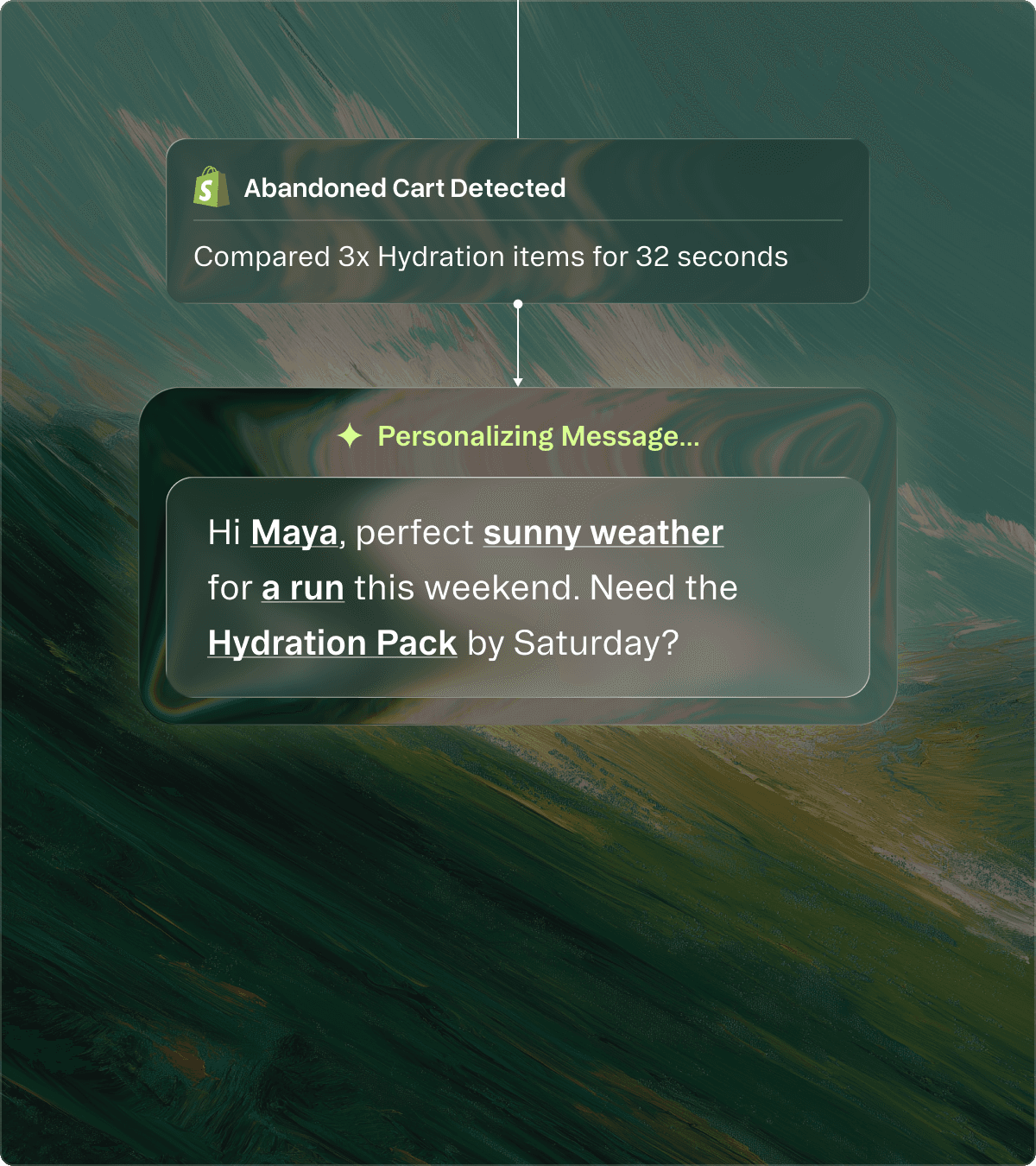
Behavioral signals behind cart abandonment appear through small actions that show hesitation inside the shopping session. Customer engagement analytics reveal these series of intent.
For example, before abandoning checkout, shoppers often revisit product pages, reopen reviews, or move back and forth between the cart and product listings. These actions indicate that the buyer has not fully resolved their decision.
Another signal appears in the form of pauses. A shopper may sit on the checkout page for an unusually long time, stop after seeing shipping costs, or open another tab to search for coupon codes. These pauses often mean the buyer is reassessing price, value, or purchase timing.
You can also see signals in navigation patterns. Some shoppers remove and re-add items, change quantities, or switch between similar products several times. Others move between devices, discovering a product on mobile and returning later on desktop to reconsider the purchase. Each of these behaviors reveals hesitation before the final step of checkout completion.
10 cart abandonment behavior signals ecommerce teams should watch
1. Repeated product comparisons before checkout
When a shopper keeps jumping between product pages and the cart, they are usually trying to justify a decision. You will often see them open two or three similar items, return to the cart, then go back again. This comparison loop signals interest, but also uncertainty about value, features, or price.
In categories like apparel, electronics, or skincare, buyers want reassurance that they are choosing the best option. If your analytics shows repeated switching between pages, the shopper is still evaluating alternatives. At this moment, clearer product comparisons, visible review summaries, or side-by-side specifications can help reduce the friction that keeps them from finishing the purchase.
2. Frequently reading FAQs, reviews, and product description
Customers seek assurance when they spend a lot of time reading reviews, FAQs, and thorough product descriptions. Something still needs to be confirmed, but they already like the product enough to think about purchasing it. Quality, durability, compatibility, size, and delivery dependability are often the reason.
Because the buyer is actively attempting to reduce risk, high engagement with informational sections is a classic pre-abandonment signal. They frequently exit the checkout process if they are unable to come up with a compelling response. Converting these research-driven consumers into buyers is possible through social proof campaigns, transparent product details, and clear answers to common objections.
3. Sudden drop-off after shipping costs are revealed
One of the most visible abandonment signals appears the moment shipping costs are displayed. A shopper who looked committed a few seconds earlier suddenly exits the checkout process. This behavior often reflects price sensitivity rather than a lack of interest in the product.
Many buyers mentally commit to the item price before they see the final total. When shipping fees increase the perceived cost of the purchase, the decision resets.
So, if you monitor this signal, you can experiment with transparent pricing, shipping thresholds, or delivery messaging earlier in the journey to reduce this moment of surprise.
4. Long idle time on the checkout page
Hesitancy typically occurs in real time when a customer remains on the checkout page for an extended period of time without making a payment. They may be figuring out the total cost of the purchase, contrasting it with other options, or wondering if the item is worth the price.
Decision friction is revealed during idle checkout sessions. Even though the buyer has reached the last stage, they are still uncertain. At this point, a minor nudge may be more important than significant discounts. Delivery guarantees, clear return policies, and visible trust signals frequently help settle the internal conflict that makes them hesitate.
5. Coupon-code searching before payment
If you have a default “Add coupon code” box at your checkout page, then a sudden pause at that stage followed by inactivity is a strong indicator that the shopper has opened another tab to search for discount codes.
They may be searching your social media pages or elsewhere for that. Many customers treat coupon searching as part of the buying process, especially when the purchase feels slightly expensive.
This behavior tells you that the buyer is interested but still sensitive to price. If they fail to find a discount, they may leave the purchase unfinished. Ecommerce teams nowadays look for this cue closely because certain strategies such as targeted offers, loyalty incentives, or transparent pricing can prevent the shopper from abandoning the cart.
6. Zooming in on product images repeatedly
When a shopper repeatedly zooms into product images, they are inspecting details that influence trust. They often check stitching quality on clothes, texture on beauty products, or a gadget’s material finish. This behavior appears when buyers want confirmation that the product will meet their expectations.
When images fail to answer their questions, their hesitation increases. High resolution images from multiple angles or contextual lifestyle photos can help resolve this uncertainty. So, strong visual cues reduce the gap between online browsing and real world product confidence.
7. Multi-device browsing during the same purchase journey
It is common for a shopper to discover a product on mobile then revisit it later on desktop. Mobile browsing often happens during casual moments such as commuting or short breaks. Desktop sessions, on the other hand, usually appear when the buyer is ready to evaluate the purchase more seriously.
When analytics shows the same user switching devices before checkout, it signals delayed decision making. The buyer has not abandoned interest, but they are moving the decision into a more focused context.
Retail brands that track cross-device behavior often use reminders, saved carts, or email follow-ups to reconnect with shoppers and guide them through the purchase journey.
8. High engagement with reviews but no checkout completion
Reviews attract buyers who want reassurance from other customers. When someone reads multiple reviews but still does not proceed to checkout, the signal usually points to trust hesitation. The shopper is searching for validation but has not yet found enough confidence to commit.
Sometimes this happens when reviews highlight product limitations or mixed experiences. Other times the issue is simply a lack of strong social proof. Highlighting verified buyer feedback, visual reviews, and summarized ratings helps shoppers quickly interpret the overall sentiment and move closer to purchase.
9. Taking screenshots and leaving
In some shopping journeys, buyers take screenshots of products before exiting the site. This behavior usually means the purchase decision has moved outside the website. They might want to ask their friends for opinions, or compare options later, or even revisit the item during another session.
This signal often appears in fashion, home decor, and lifestyle categories where social input matters. The customer is still interested but has shifted into evaluation mode. D2C brands that support easy product sharing or wishlisting often keep the product within the shopper's consideration set instead of losing them entirely.
10. Frequent cart editing and quantity changes
Repeatedly adding, removing, or swapping items in the cart shows that the shopper is actively recalculating the purchase. They might be adjusting the order to fit a budget, comparing bundle value, or deciding which items are truly necessary.
Frequent cart editing often indicates a buyer who wants the purchase to work but is struggling to finalize the combination. Clear pricing, bundle suggestions, and transparent promotions can simplify the decision. When the cart feels easier to finalize, the shopper is more likely to move forward instead of abandoning the checkout.
How ecommerce and d2c businesses can track cart abandonment behavior signals?

Understanding abandonment behavior requires an AI-driven cart recovery tool that can proactively give you insights. Our platform, Markopolo AI, combines behavioral intelligence, 1:1 hyper-personalization, and predictive engines to track these signals using cookieless and first-party data, then delivers the right campaigns for the right shopper.
Analyzing these interactions can help you identify the specific moments where hesitation appears. This turns cart abandonment from a vague problem into a measurable sequence of events. Once those events are visible, d2c and ecommerce teams can test improvements that reduce friction and support the buyer’s decision process.
These are the 3 best practices to track cart abandonment behavior signals:
Implement site-wide behavioral event tracking
Site-wide behavioral tracking records the actions shoppers perform across the entire store. This includes events such as product views, add-to-cart actions, review clicks, coupon field interactions, and checkout entry. Each event represents a behavioral signal that reveals how the buyer moves through the purchase journey.
When these events are tracked consistently, patterns start to emerge. For example, you may notice that many users repeatedly view product specifications before abandoning the cart, or that coupon searches spike before checkout exits. These patterns help ecommerce teams understand the real concerns that influence buying decisions.
Optimize the checkout funnel to identify pain points
Checkout funnel analysis focuses specifically on the steps between cart entry and payment completion. By breaking checkout into stages such as cart review, shipping information, payment selection, and order confirmation, teams can see exactly where buyers drop off.
If a large percentage of users exit after shipping costs appear, the issue likely relates to pricing transparency. If abandonment spikes during payment entry, trust or technical friction may be involved. Funnel analysis transforms checkout behavior into measurable stages so teams can identify the exact moment hesitation occurs.
Analyze session behavior to detect hesitation patterns
Session behavior analysis looks at how individual browsing sessions unfold from start to finish. Instead of focusing only on events, it examines the sequence and timing of actions. This approach reveals subtle hesitation patterns, such as repeated page revisits, long pauses, or switching between product options.