10 best WhatsApp cart recovery tools for ecommerce in 2026
Sirazum Monir Osmani
Someone adds a product to their cart, gets distracted by a text message, and never comes back. That abandoned cart joins millions of others—roughly $18 billion in lost revenue annually for ecommerce brands.
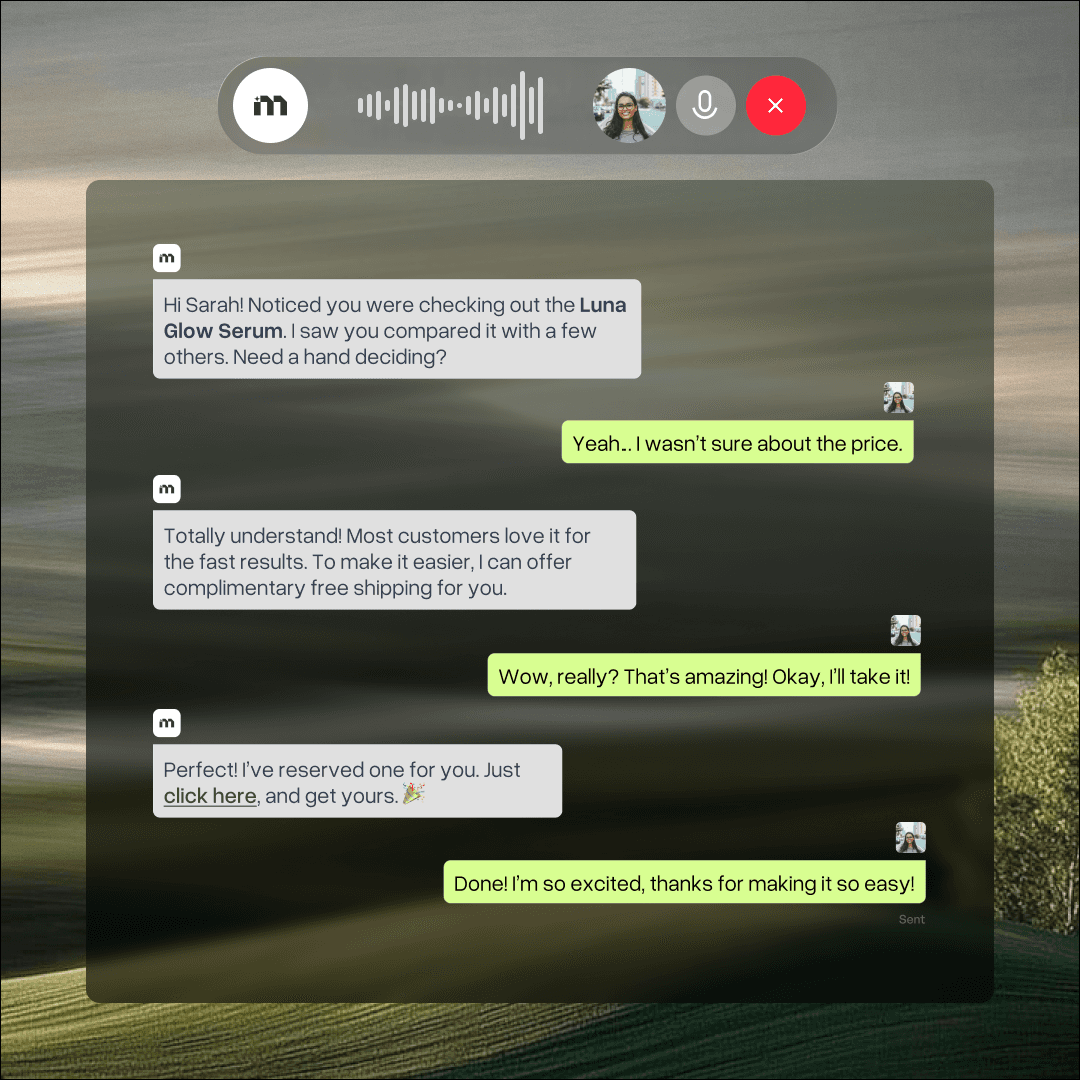
WhatsApp cart recovery tools exist to fix this. They reach customers on an app they check 23 times a day, with open rates hovering around 98%. This guide breaks down which tools actually deliver results and which ones just add another dashboard to your tech stack.
Why is WhatsApp marketing effective for recovering abandoned carts?
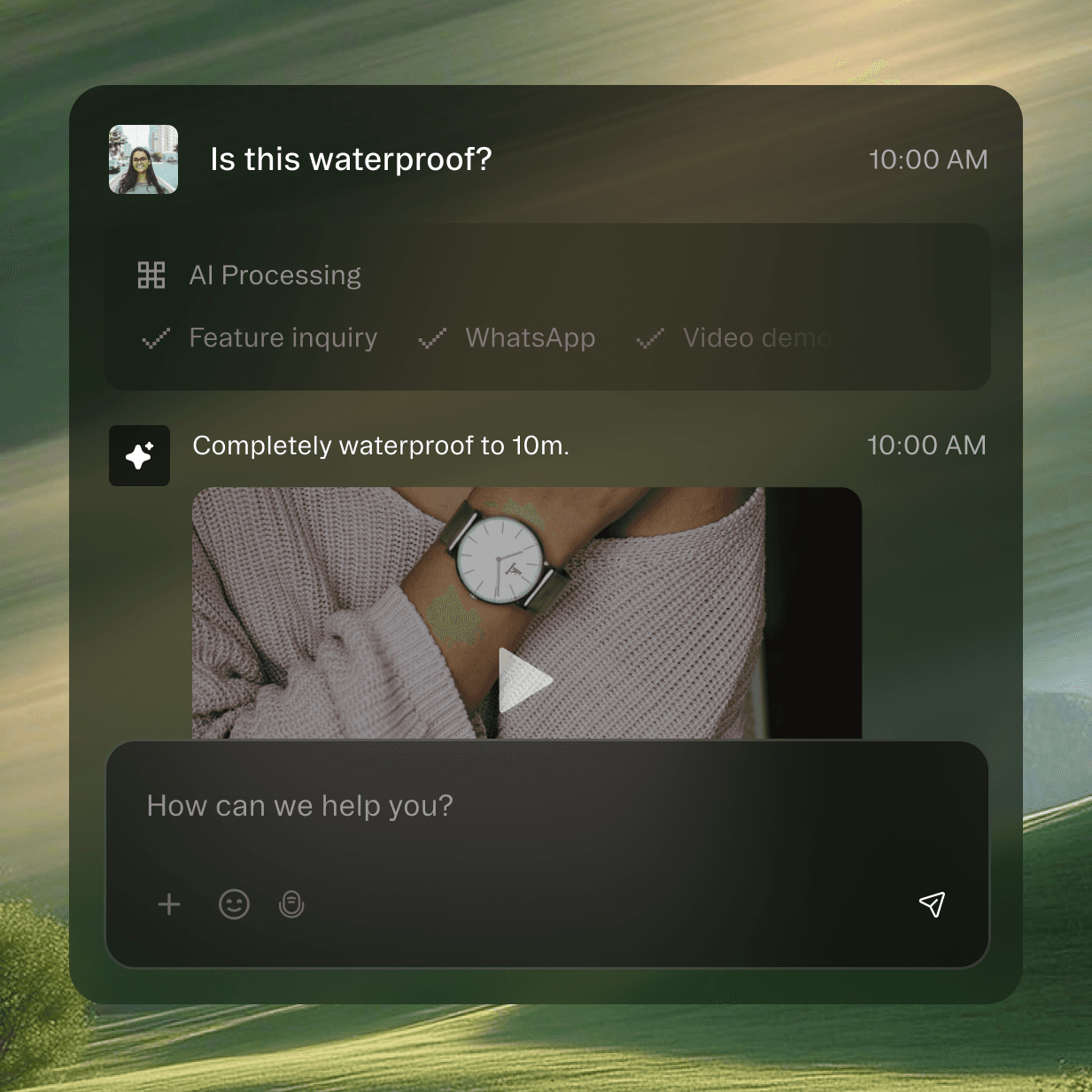
Email open rates have been declining for years. SMS feels transactional. WhatsApp sits in a different category—it's where people talk to friends and family, which means messages actually get read.
Omnichannel outreach catches customers wherever they respond
Your customer Sarah might ignore emails but reply to WhatsApp within minutes. Meanwhile, Mike never opens WhatsApp business messages but clicks every SMS link. Betting everything on one channel means losing the Mikes or the Sarahs.
The recovery platforms that perform best don't treat WhatsApp as a standalone solution. They use it as one piece of a coordinated sequence—maybe an email first, then WhatsApp four hours later, then SMS the next morning. Each touchpoint increases the odds that something lands at the right moment.
1:1 hyper-personalized communication cuts through noise
"Hey [First Name], you left something in your cart!" stopped working years ago. Customers recognize mail-merge personalization instantly, and it feels lazy.
Real personalization means knowing that this particular customer has visited your site three times, compared two specific products, and tends to buy on weekends after payday. It means sending a message about the exact item they hesitated on, mentioning the review concern they probably have, at the hour they typically browse. That level of specificity requires technology most platforms don't have.
Understanding intent determines what message actually works
Picture two customers who both abandoned $150 carts. Customer A spent 40 minutes comparing specs, reading reviews, and checking competitor prices. Customer B added items in 90 seconds, got to checkout, and bounced when they saw shipping costs.
Sending both customers the same "Complete your purchase!" message wastes an opportunity. Customer A probably needs reassurance—maybe testimonials or a comparison chart. Customer B needs free shipping or a discount code. Without understanding why someone abandoned, you're guessing.
Conversational format invites actual responses
Email is one-directional. You send, they maybe read, they maybe click. WhatsApp is a conversation. Customers reply with questions, objections, and requests. "Does this come in blue?" "Can I return it if it doesn't fit?" "Is this price final?"
These responses are gold. They tell you exactly what's blocking the purchase, and they give you a chance to address it directly. A back-and-forth that resolves a sizing concern converts far better than a discount code that ignores the real objection.
Rich media shows products in their best light
A text description of an abandoned product feels abstract. An image of that exact leather jacket, styled in an outfit, with a "Complete Purchase" button underneath—that's tangible.
WhatsApp supports product carousels, videos, PDFs, and interactive buttons. Recovery messages can feel like mini shopping experiences rather than nagging reminders. Some brands include short videos of products in use, or carousel galleries showing the item from multiple angles. Visual context brings customers back into buying mode faster than text alone.
WhatsApp marketing solutions for abandoned cart recovery
The market has dozens of options. Here are 20 platforms offering WhatsApp cart recovery in some form:
Markopolo AI
Zoko
Interakt
WATI
AiSensy
Gallabox
DelightChat
Haptik
Gupshup
Limechat
Yellow.ai
Freshchat
Trengo
Respond.io
Bitespeed
Zixflow
Brevo
MessageBird
Twilio
360dialog
Top 10 WhatsApp cart recovery tools for ecommerce: key features, comparison, pros, and cons
Platform | AI personalization | Multi-channel | Behavioral intelligence | Voice AI | Pricing model |
|---|---|---|---|---|---|
Markopolo AI | Individual AI agents per customer | Email, SMS, WhatsApp, Push, Voice | 384-dimensional behavioral vectors | Yes | Free plan available, priced plan starts at $39/month for annual plan and $49/month for monthly plan |
Zoko | Template-based | WhatsApp only | Basic tracking | No | Per-conversation |
Interakt | Rule-based | WhatsApp, email | Standard analytics | Basic | Monthly subscription |
WATI | Template personalization | WhatsApp focused | Basic segmentation | No | Per-conversation |
AiSensy | Campaign automation | WhatsApp, SMS | Basic analytics | No | Monthly subscription |
Gallabox | Chatbot flows | WhatsApp primary | Standard tracking | No | Per-conversation |
DelightChat | Basic automation | WhatsApp, email, social | Order tracking | No | Monthly subscription |
Haptik | Conversational AI | Multi-channel | Conversation analytics | Limited | Enterprise pricing |
Gupshup | Message templates | Multi-channel | Basic segmentation | No | Per-message |
Limechat | Rule-based flows | WhatsApp focused | Purchase tracking | No | Revenue share |
Markopolo AI

Markopolo AI is a leading solution for recovering abandoned carts through WhatsApp. Most cart recovery tools work like this: you build a workflow, define some segments, write a few message templates, and hope the averages work out. Maybe 10-15% of abandoned carts come back. The other 85% disappear into spreadsheet oblivion.
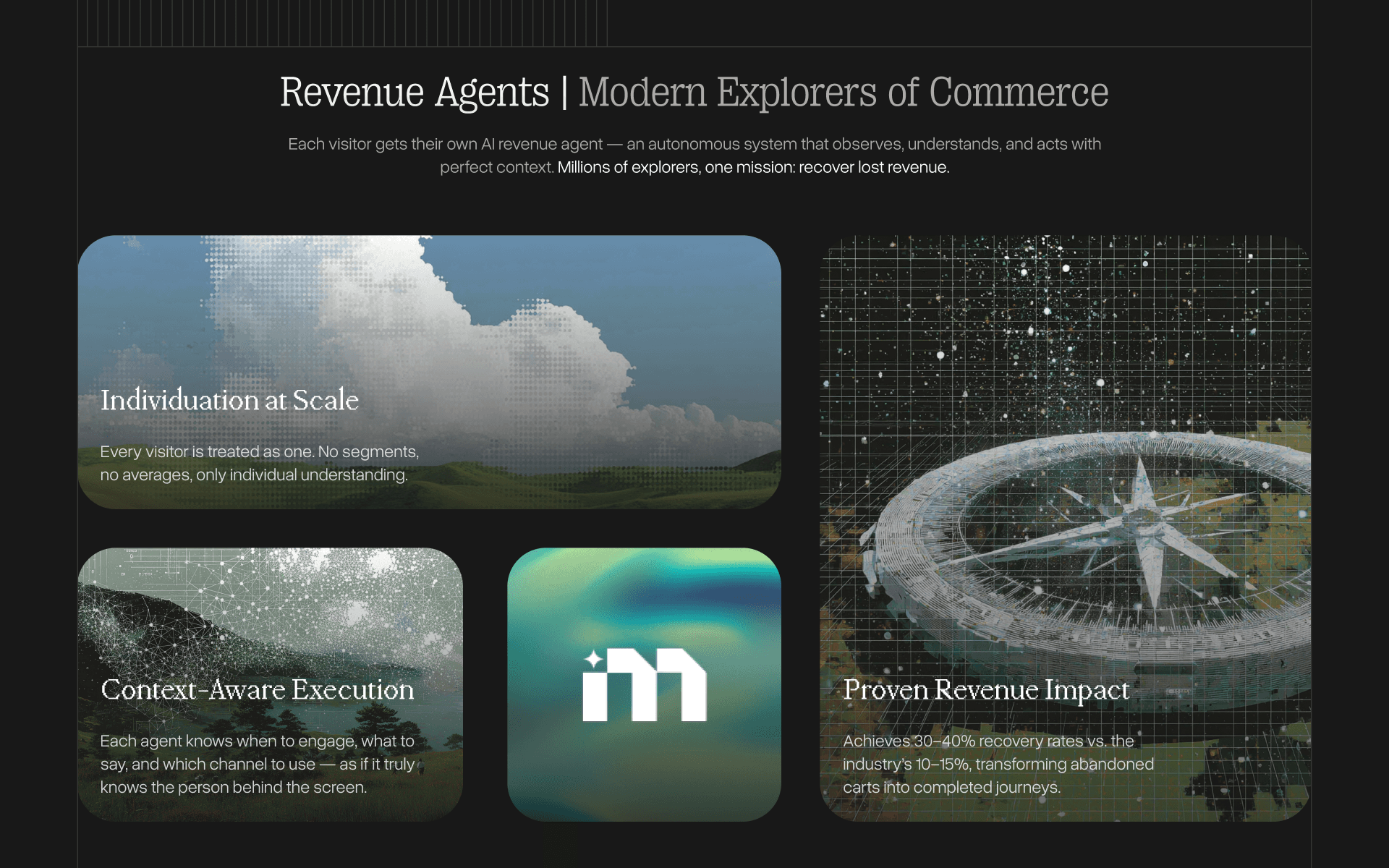
Markopolo AI doesn't rely on manual workflows or segments. It assigns a dedicated AI agent to every single visitor on your site. That agent watches behavior in real-time—not just "added to cart" and "abandoned," but the hesitation before clicking, the products compared side-by-side, the time spent on shipping info versus reviews.
When someone abandons, their agent already knows their patterns, preferences, and likely objections. The recovery message that follows isn't pulled from a template library. It's generated specifically for that person, at that moment, based on everything the agent has learned.
The technical backbone is something called MarkTag, which converts browsing behavior into 384-dimensional vectors. That sounds abstract, but here's what it means practically: the system can distinguish between a price-shopper who needs a discount, a nervous first-time buyer who needs social proof, and an impulse purchaser who just needs a stock warning. Each gets a completely different recovery approach across whatever channel they're most likely to respond to—WhatsApp, email, SMS, or even an AI voice call.
Key features of Markopolo AI for recovering abandoned carts via WhatsApp
MarkTag captures what customers actually do, not just what they click
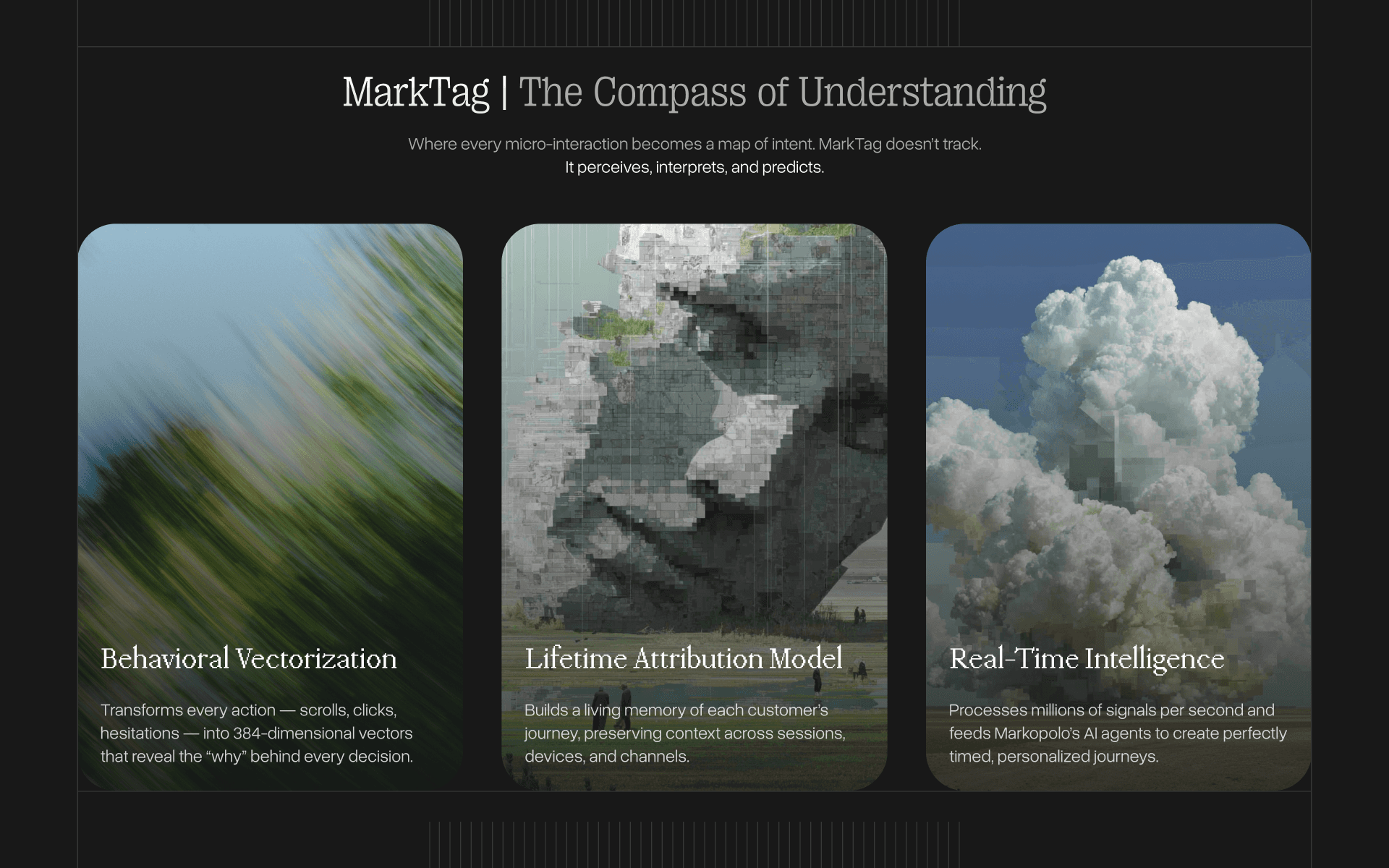
Standard analytics tell you someone viewed a product page. MarkTag tells you they scrolled past the price three times, hovered over the size chart for 12 seconds, and opened a competitor tab mid-session. These micro-behaviors reveal intent in ways pageview counts never could. When the AI crafts a recovery message, it draws on this granular understanding—maybe emphasizing the return policy for someone who lingered on that section, or highlighting a review that addresses the exact feature they seemed uncertain about.
Each customer gets their own AI agent
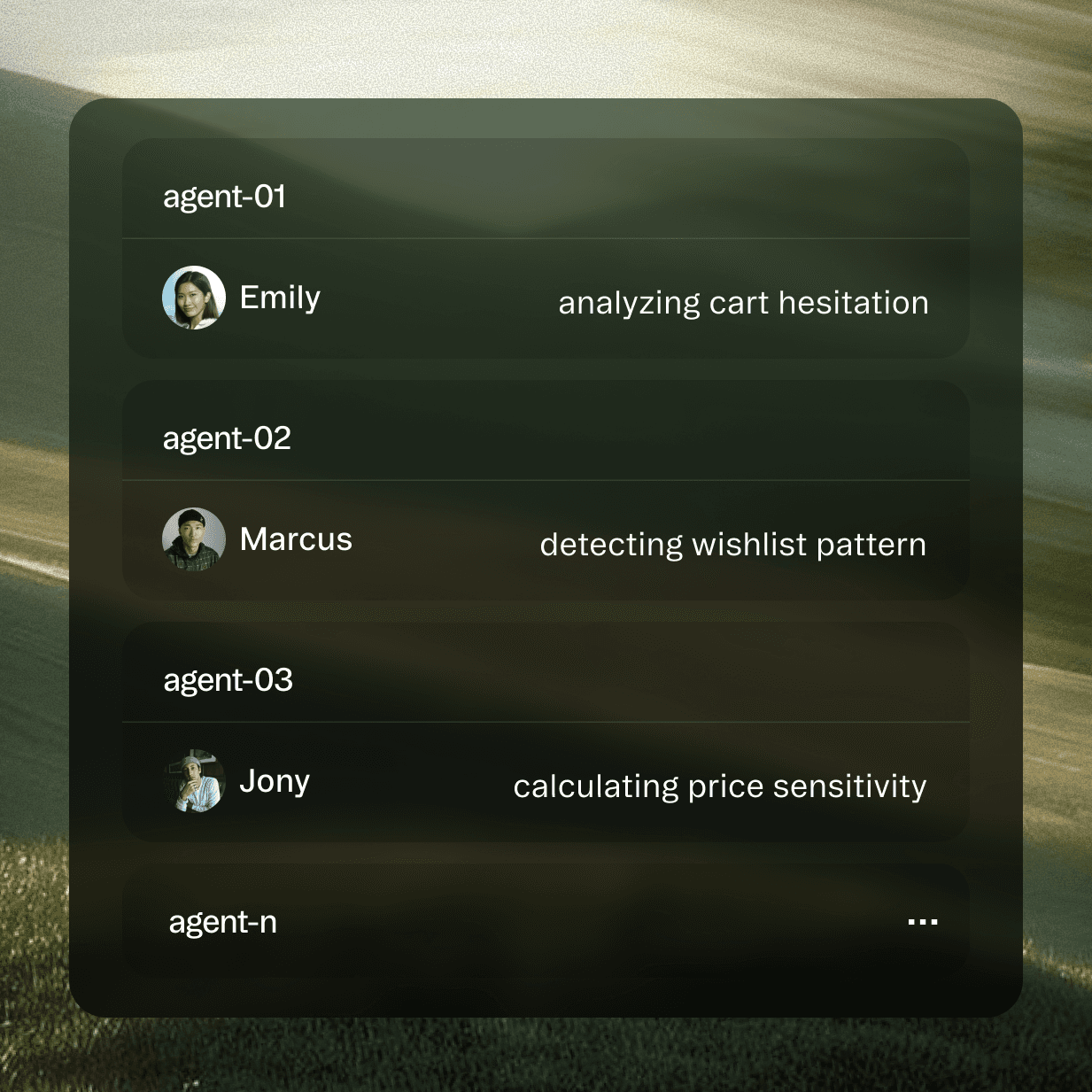
Segments are shortcuts. "Cart value over $100" or "abandoned in last 24 hours" or "viewed product X" might describe 10,000 people who have almost nothing else in common. Markopolo skips segmentation entirely. The AI agent assigned to customer #4,892 knows that specific person's browsing rhythm, channel preferences, and buying history. It doesn't matter that 500 other people also abandoned high-value carts today—#4,892 gets a recovery approach built for them alone.
Recovery strategies generate in milliseconds

Some platforms process abandonment data overnight and send recovery campaigns the next morning. By then, your customer has either bought from a competitor or forgotten why they wanted the product. Markopolo's agents generate strategies in real-time under 50 milliseconds. The moment someone abandons, the system already knows what to send, when to send it, and which channel to use. Speed matters when attention spans are measured in seconds.
WhatsApp works alongside email, SMS, push, and voice

A customer who ignores your WhatsApp message might click an email link. Someone who opens emails but never responds might pick up an AI phone call. Markopolo coordinates all these channels automatically, sequencing them based on what's worked for each individual before. The AI might determine that customer A responds best to WhatsApp at 7 PM, while customer B needs an SMS at lunch. Both get their ideal touchpoint—through a single omnichannel customer engagement platform that keeps every interaction in sync.
Attribution modeling shows what actually caused conversions
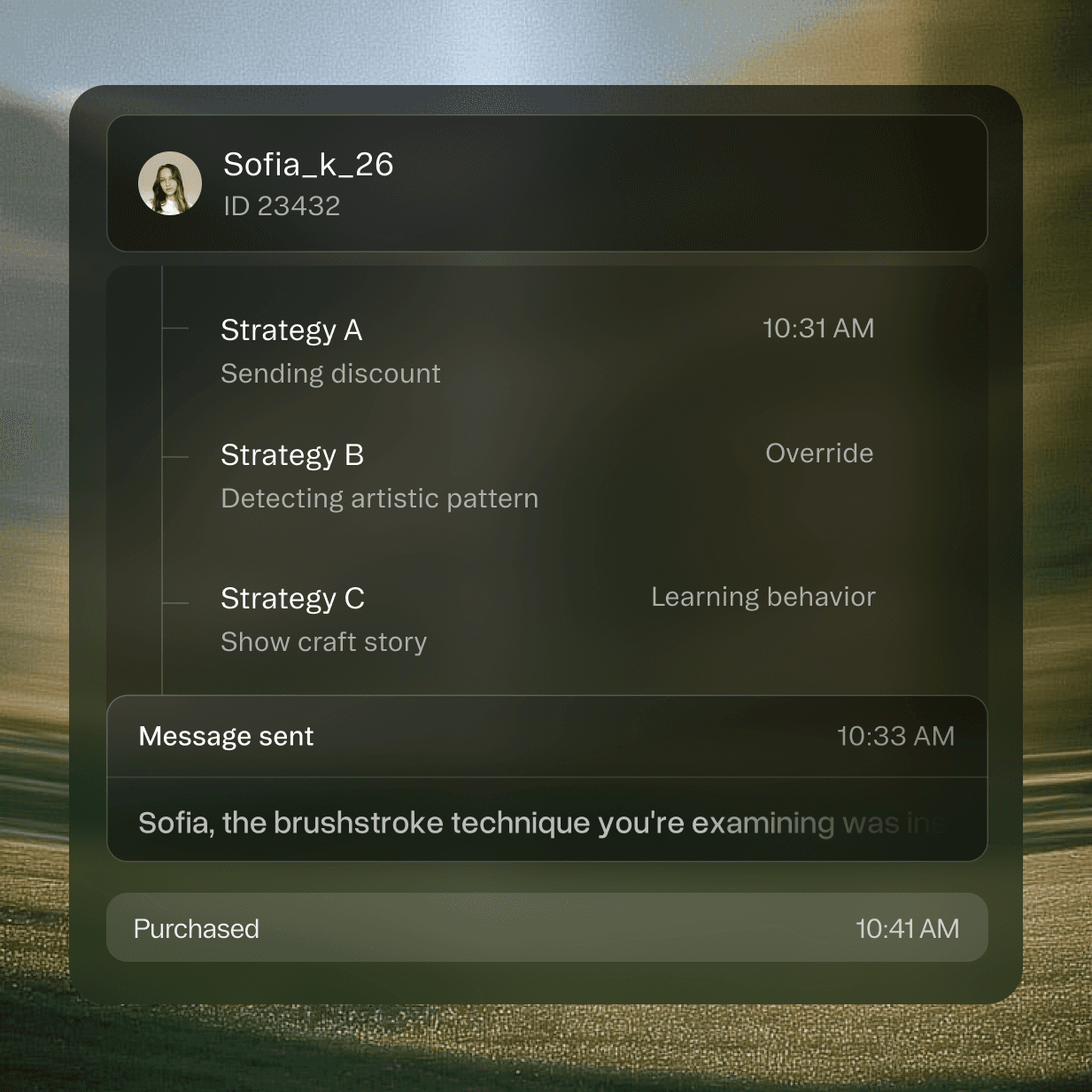
"Which message made them buy?" is surprisingly hard to answer. Was it the first email? The WhatsApp reminder? The combination? Markopolo maintains attribution tensors that map causal relationships, not just correlations. You can see that customers like Sarah typically convert after receiving social proof content on WhatsApp following an initial email—and the system uses that pattern to optimize future recoveries for similar behavioral profiles.
The AI predicts what type of message will work
Before a single message goes out, the system has already modeled probabilities. "This customer has a 73% likelihood of responding to urgency messaging, 12% to discounts, and 84% to social proof." The recovery approach leads with the highest-probability angle. If that doesn't work, follow-ups try alternative approaches. This isn't A/B testing at scale—it's individualized prediction that skips the testing phase entirely by learning from millions of prior interactions.
Campaign Agent handles setup in minutes
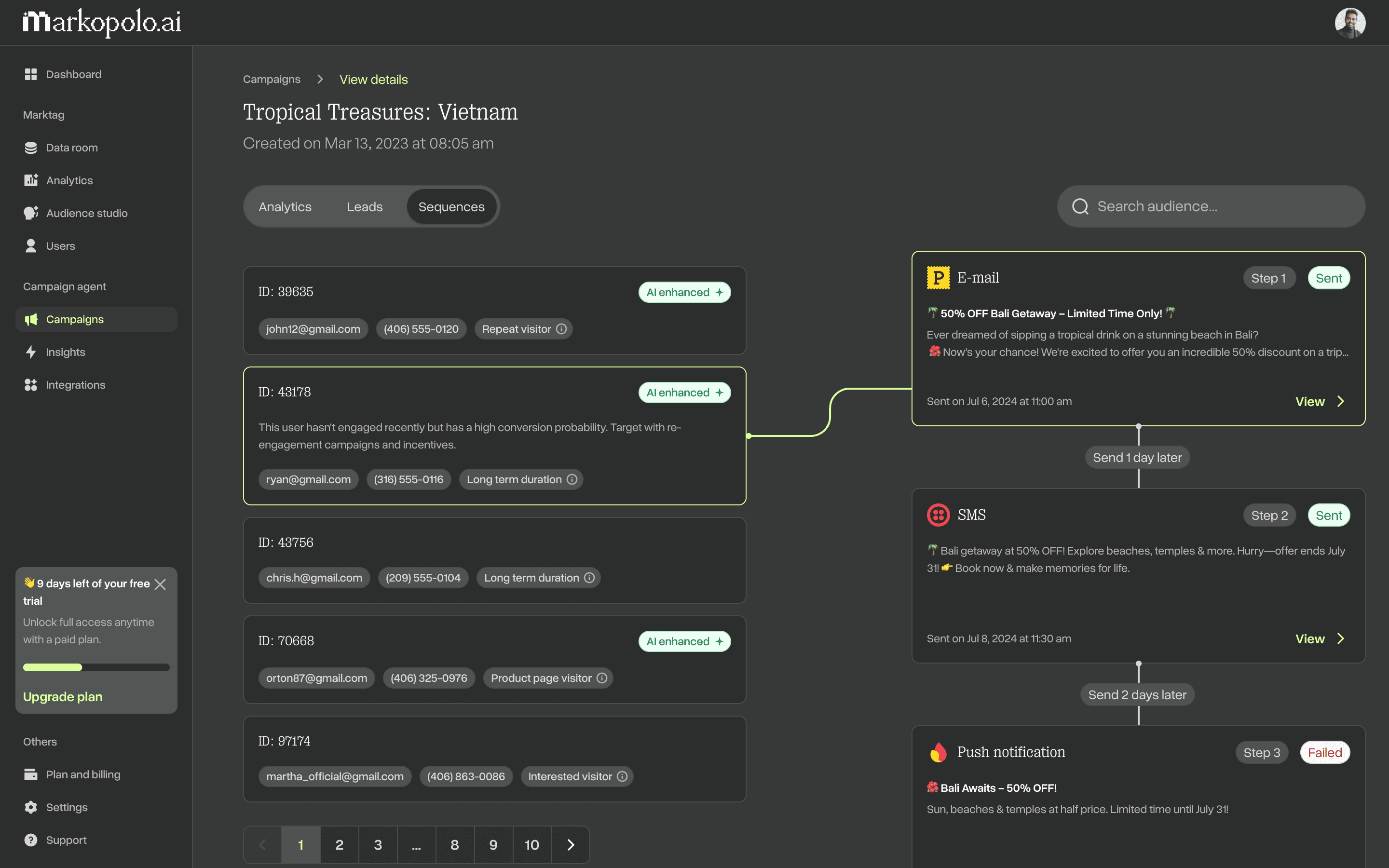
Despite all this sophistication happening underneath, launching a campaign is genuinely simple. Pick an audience (or let AI suggest one), select objectives, configure any discounts, and choose how much human oversight you want over the generated content. The platform handles message creation, channel selection, timing optimization, and performance tracking. Brands without dedicated marketing ops teams can still run recovery programs that compete with enterprise setups.
Audience Studio builds dynamic segments
Traditional segments are static snapshots—"customers who abandoned in the last 7 days" captured at the moment you create them. Audience Studio creates living cohorts that automatically add and remove customers as their behavior changes. You can define audiences using plain English prompts: "People who viewed premium products but haven't purchased in 30 days" or "High engagement score but low conversion probability." The AI translates these into dynamic filters.
Voice Agent makes phone calls that don't sound robotic
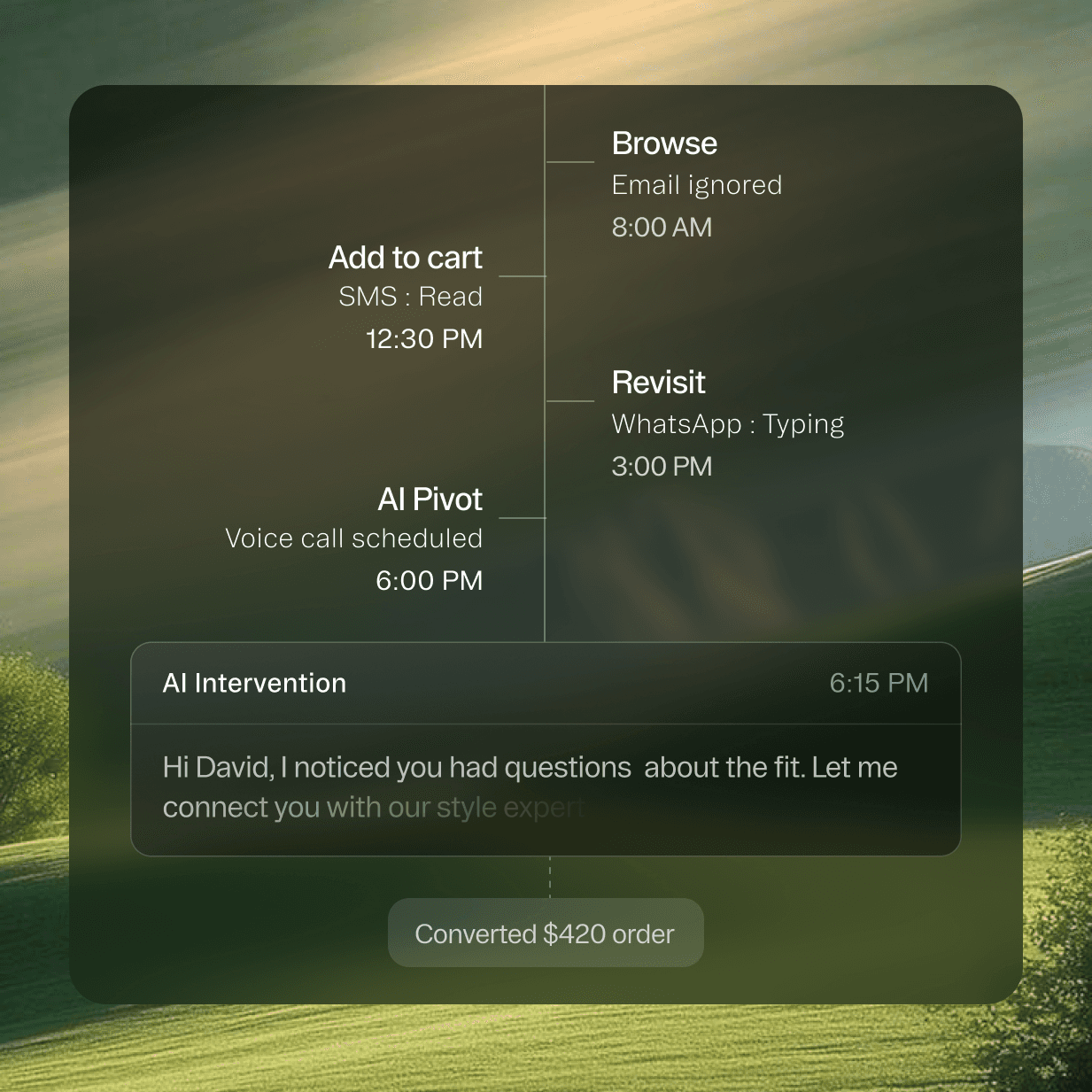
For high-value carts or customers who've ignored digital messages, sometimes a phone call breaks through. Markopolo's Voice Agent uses conversational AI for customer engagement, placing AI-powered calls that adapt to the conversation in real-time. It handles objections, answers product questions, and sounds like an actual sales rep rather than a recorded message. Transcripts and summaries appear in your dashboard afterward, so you know exactly what was discussed.
Analytics connect revenue to specific messages and channels
The dashboard doesn't just show open rates and click rates. It shows revenue attributed to each recovery touchpoint, broken down by channel, message type, and customer cohort. You can see that WhatsApp messages sent between 6-8 PM recover 40% more revenue than those sent at noon—or that customers who receive voice follow-ups convert at 3x the rate of those who don't. These insights feed back into strategy, creating a loop where performance compounds over time.
Pros
Recovery rates of 30-40% versus industry average of 10-15%
Genuinely individual personalization, not segments with dynamic fields
All channels coordinated automatically—no separate campaign management
Works immediately with existing ecommerce platforms via simple integration
Pricing tied to recovered revenue aligns incentives with results
Voice calling adds a channel most competitors can't touch
Behavioral data reveals customer insights useful beyond just recovery
Learning compounds over time—month 6 performs better than month 1
Cons
Traditional marketers may need some time to learn the platform
Zoko
Zoko built its platform for small ecommerce teams who want WhatsApp automation without complexity. Connect your Shopify store, set up a few message templates, and abandoned cart notifications start flowing. The interface is clean, the setup takes an afternoon, and pricing starts low enough that early-stage stores can afford it.
Features of Zoko
The platform covers core WhatsApp commerce needs: broadcast messaging to subscriber lists, automated responses to common questions, and triggered messages for events like cart abandonment. A visual chatbot builder lets you create conversation flows without code. Team inbox features let multiple support agents handle customer chats from one dashboard.
Pros
Shopify integration works reliably out of the box
Visual builders require zero technical skills
Pricing accessible for small and growing stores
Support team responds quickly to issues
Cons
WhatsApp-only means you're managing other channels separately
Templates limit personalization to basic merge fields
No understanding of why customers abandoned—just that they did
Analytics cover message metrics, not revenue attribution
Comparing Zoko vs Markopolo AI for cart recovery through WhatsApp
Zoko handles the basics competently. If you need simple "Hey, you left this behind" messages going to abandoned carts via WhatsApp, it works. The gap appears when you want more than basics. Zoko sends the same template to everyone who abandons a cart over $50. Markopolo sends different messages to the price-shopper versus the quality-concerned buyer versus the impulse purchaser—because it can tell them apart. For stores where an extra 20% recovery rate translates to real money, that distinction matters.
Interakt
Interakt emerged from India's booming D2C market, where WhatsApp is often the primary customer communication channel. The platform provides marketing automation, customer support tools, and commerce features tuned for markets where WhatsApp dominates over email.
Features of Interakt
You get automated cart recovery sequences, catalog sharing within WhatsApp chats, order status notifications, and even payment collection without leaving the conversation. Rule-based automation handles common scenarios: if cart abandoned, wait 2 hours, send template A. If no response, wait 24 hours, send template B. Integrations cover Shopify, WooCommerce, and several India-specific platforms.
Pros
Deep understanding of Indian and Southeast Asian markets
Payment collection within WhatsApp streamlines checkout
Pricing structured for regional cost expectations
Reliable catalog sync with ecommerce platforms
Cons
Rule-based logic means you're building "if-then" flows manually
No behavioral intelligence to inform message strategy
Personalization limited to what's in your product and customer data
Multi-channel support exists but isn't the platform's strength
Comparing Interakt vs Markopolo AI for cart recovery through WhatsApp
Interakt works well for brands primarily serving WhatsApp-dominant markets who want straightforward automation. The rule-based approach gives you control—you decide exactly what happens when. The tradeoff is that you're also guessing what should happen when. Markopolo removes the guesswork by learning what actually works for each customer type. For regional D2C brands wanting simplicity, Interakt delivers. For brands wanting maximum recovery regardless of manual optimization effort, Markopolo's intelligence layer does the heavy lifting.
WATI
WATI focuses heavily on team collaboration features for businesses where multiple people handle WhatsApp customer conversations. The shared inbox, conversation assignment, and performance tracking make it popular with support-heavy ecommerce operations.
Features of WATI
The team inbox lets agents claim conversations, leave internal notes, and transfer chats to colleagues. A no-code chatbot builder handles FAQs and basic automation. Broadcast messaging reaches opted-in customers with announcements and promotions. Cart recovery flows trigger template messages when abandonment events fire from connected ecommerce platforms.
Pros
Best-in-class team collaboration for customer support
Chatbot builder genuinely requires no technical skills
Official WhatsApp Business API partnership ensures compliance
Documentation and training resources are thorough
Cons
Cart recovery is a feature, not the platform's focus
Templates apply uniformly—no behavioral customization
WhatsApp-only limits how you reach customers who prefer other channels
Segmentation capabilities are basic compared to dedicated marketing tools
Comparing WATI vs Markopolo AI for cart recovery through WhatsApp
WATI excels at managing customer conversations across a support team. If your primary need is handling inbound WhatsApp messages efficiently, it's a strong choice. Cart recovery exists within WATI but isn't its specialty—the same template goes to every abandoner in a given condition set. Markopolo exists specifically to recover revenue, with every feature oriented toward that goal. Teams buying primarily for support might prefer WATI. Teams buying primarily for recovery will see better results from Markopolo's purpose-built approach.
AiSensy
AiSensy positions itself as a WhatsApp marketing platform with campaign management at its core. The interface centers around creating, scheduling, and analyzing broadcast campaigns and automated sequences.
Features of AiSensy
Campaign creation tools let you build drip sequences triggered by events or scheduled for specific times. Click-to-WhatsApp ad integration connects your Meta ads directly to WhatsApp conversations. Retargeting features reach people who've interacted with previous campaigns. Analytics track delivery, opens, and response rates across all campaigns.
Pros
Campaign management interface is intuitive and visual
Click-to-WhatsApp ads integration done well
Drip sequences support complex multi-message flows
Pricing competitive for high message volumes
Cons
Campaign-centric thinking treats customers as audiences, not individuals
No multi-channel orchestration—WhatsApp campaigns exist in isolation
Analytics focus on message metrics rather than revenue impact
Personalization means template variables, not behavioral understanding
Comparing AiSensy vs Markopolo AI for cart recovery through WhatsApp
AiSensy is a campaign tool. You build campaigns, target audiences, measure performance, iterate. This works—it's how marketing has operated for decades. The limitation is that campaigns treat customers as members of groups rather than individuals with distinct needs. Markopolo's agent-based approach generates millions of individual strategies rather than a handful of campaign variants. AiSensy might achieve typical recovery rates through well-optimized campaigns. Markopolo achieves atypical rates by skipping the campaign paradigm entirely.
Gallabox
Gallabox combines conversational commerce, customer support, and basic marketing automation into a single WhatsApp-focused platform. It's designed for businesses that want one tool handling all their WhatsApp interactions.
Features of Gallabox
A visual workflow builder creates automated conversation flows. Live chat features let human agents take over when bots reach their limits. Commerce capabilities include product catalogs, order tracking, and payment processing within WhatsApp. Cart recovery fits into the broader automation system as one of many possible triggered flows.
Pros
All-in-one approach reduces tool sprawl
In-chat payments smooth the path to purchase
Workflow builder handles complex conversation branching
Reasonable pricing for small business budgets
Cons
Jack-of-all-trades means master of none
Flow-based automation requires manual optimization
No behavioral signals informing recovery strategy
WhatsApp focus limits omnichannel potential
Comparing Gallabox vs Markopolo AI for cart recovery through WhatsApp
Gallabox offers convenience—one platform covering support, commerce, and marketing on WhatsApp. Cart recovery happens through predefined flows you build in their visual editor. You decide the logic: wait time, message content, follow-up conditions. This hands-on approach works if you have time to optimize and test. Markopolo automates the optimization itself. Its AI continuously learns what works, adjusting strategies without requiring you to manually update workflows. For teams with bandwidth to tinker, Gallabox provides the tools. For teams wanting results without ongoing optimization work, Markopolo handles it automatically.
DelightChat
DelightChat bills itself as the customer support platform for Shopify brands, with WhatsApp being one of several channels unified in a single inbox. The focus is helping support teams manage conversations efficiently while adding light automation.
Features of DelightChat
The unified inbox pulls in WhatsApp, email, Facebook Messenger, and Instagram DMs. Automated responses handle common questions without agent involvement. Order management integration lets agents check order status and process changes without leaving the chat. Cart recovery sends templated messages when Shopify reports abandonment events.
Pros
True omnichannel inbox consolidates conversations effectively
Shopify integration includes deep order management features
Quick to set up with sensible defaults
Social channels included alongside WhatsApp
Cons
Support-first platform with marketing as an afterthought
Cart recovery templates lack sophisticated personalization
No behavioral intelligence or customer understanding
Analytics basic compared to dedicated marketing tools
Comparing DelightChat vs Markopolo AI for cart recovery through WhatsApp
DelightChat solves the "too many tabs" problem for support teams juggling multiple channels. Cart recovery exists but isn't the platform's reason for being—it's a checkbox feature sending templates when abandonment happens. Markopolo exists specifically to recover revenue. Every feature, every data point, every AI model serves that goal. Support teams wanting consolidated conversation management should evaluate DelightChat. Revenue teams wanting maximum recovery should recognize that Markopolo's specialized focus delivers different results than a generalist platform's add-on feature.
Haptik
Haptik offers enterprise-grade conversational AI used by large companies across multiple industries. The platform handles complex chatbot implementations, voice automation, and multi-channel customer engagement at scale.
Features of Haptik
Natural language processing enables bots that understand context and handle nuanced conversations. Multi-language support covers global enterprise needs. Analytics dive deep into conversation flows, resolution rates, and customer satisfaction scores. The platform integrates with enterprise tech stacks including major CRM and support systems.
Pros
Conversational AI sophisticated enough for complex use cases
Enterprise security and compliance certifications
Multi-language support for global operations
Strong NLP handles messy real-world customer messages
Cons
Enterprise pricing and sales cycle exclude smaller businesses
Implementation requires significant resources and timeline
General-purpose AI not optimized specifically for cart recovery
Overkill for teams needing straightforward automation
Comparing Haptik vs Markopolo AI for cart recovery through WhatsApp
Haptik builds powerful conversational AI for enterprises with diverse customer engagement needs across industries. Cart recovery is one small use case within a broad platform. The AI is general-purpose, trained on conversation handling rather than revenue optimization specifically. Markopolo's AI was trained exclusively on ecommerce behavior and recovery outcomes. It knows shopping patterns in ways a general conversational AI doesn't. Large enterprises with broad engagement needs might use Haptik. Those same enterprises wanting best-in-class cart recovery specifically would see better results adding Markopolo for that focused purpose.
Gupshup
Gupshup provides messaging infrastructure—APIs, tools, and integrations that businesses use to build their own WhatsApp (and other channel) solutions. It's a platform for developers rather than a finished product for marketers.
Features of Gupshup
Robust APIs support sending and receiving messages across WhatsApp, SMS, and other channels. Bot-building tools help developers create conversational experiences. Campaign management features exist but assume technical implementation. The infrastructure handles high volumes reliably with good uptime.
Pros
Flexible APIs enable custom solutions
Reliable infrastructure at scale
Supports multiple messaging channels
Good choice for businesses with development resources
Cons
Requires developers to implement effectively
No built-in intelligence—you build that yourself
Not a turnkey solution for marketing teams
Cart recovery needs custom development work
Comparing Gupshup vs Markopolo AI for cart recovery through WhatsApp
Gupshup sells pipes. Your development team builds what flows through them. A custom cart recovery system on Gupshup can be exactly what you want—if you have engineers to build it and data scientists to make it intelligent. Markopolo sells the complete solution: behavioral intelligence, AI personalization, multi-channel orchestration, all working out of the box. Teams with strong technical resources might consider building on Gupshup. Everyone else will recover more carts faster with Markopolo's ready-made intelligence.
Limechat
Limechat targets D2C brands wanting conversational commerce on WhatsApp and Instagram. The platform combines customer support automation with marketing features aimed at driving sales through chat.
Features of Limechat
Chatbot automation handles common questions and guides customers through product selection. Product recommendations appear within chat conversations. Order tracking keeps customers informed without agent involvement. Cart recovery triggers automated WhatsApp sequences when shoppers abandon checkout.
Pros
D2C focus means features match that market's needs
Conversational commerce approach drives engagement
Revenue share pricing option available
Shopify integration works smoothly
Cons
Rule-based automation requires manual flow building
No behavioral vectorization or intent detection
Channel options limited beyond WhatsApp
Personalization constrained to available data fields
Comparing Limechat vs Markopolo AI for cart recovery through WhatsApp
Limechat serves D2C brands well with conversational commerce features that drive discovery and purchase. Cart recovery uses rule-based flows you configure—if this condition, send this message, wait this long, repeat. The approach works but hits a ceiling. Markopolo's AI determines what each individual customer needs without you specifying rules. It learns patterns you wouldn't think to program. D2C brands happy with standard recovery rates will find Limechat capable. Those wanting to maximize every recovery opportunity will see meaningfully better results from Markopolo's individualized approach.
How to pick the right platform for cart recovery
Choosing tools based on feature checklists leads to disappointment. What matters is whether a platform's approach matches your actual needs and resources. The best WhatsApp cart recovery tool should be available on Shopify, WooCommerce, WordPress, and native ecommerce systems.
Look past "AI-powered" marketing claims
Every platform claims AI these days. The term has become meaningless in marketing copy. Ask specific questions: How does the AI decide what message to send? What data informs those decisions? Can it distinguish between different types of abandoners, or does everyone get the same templates?
Markopolo's 384-dimensional behavioral vectors represent one end of the spectrum—genuine machine learning understanding customer intent. Template personalization with dynamic name fields represents the other end. Most platforms fall somewhere in between. Understanding where a platform actually sits matters more than whether they use "AI" in their headlines.
Consider whether you want to manage channels separately or together
Some teams prefer dedicated best-of-breed tools for each channel—one platform for email, another for SMS, another for WhatsApp. This gives you specialized capabilities but requires coordinating multiple systems.
Markopolo orchestrates all channels from one intelligence layer. The AI determines which channel to use for each customer, handles timing across touchpoints, and attributes revenue accurately. This integrated approach typically outperforms disconnected tools that can't see each other's activity—but it requires trusting one platform with more of your customer communication.
Evaluate how much optimization you want to do yourself
Some platforms give you maximum control: you build flows, write copy, test variants, analyze results, iterate. The upside is customization. The downside is workload.
Markopolo automates most optimization. The AI generates messages, selects channels, adjusts timing—learning continuously from outcomes. You provide constraints and review results rather than building every element manually. Teams with dedicated lifecycle marketing resources might want the control. Lean teams typically prefer automated optimization.
Check how behavioral data actually gets used
Many platforms track behavior but don't meaningfully act on it. They'll tell you someone viewed product X and abandoned—information you could get from basic analytics. Ask whether behavioral data informs message content and timing, or whether it just appears in reports.
Markopolo's MarkTag captures micro-behaviors that directly shape recovery strategies. Hesitation patterns influence message tone. Comparison behavior determines whether to emphasize value or quality. Channel and time selection come from individual engagement patterns. This closed loop from behavior to action is what produces higher recovery rates.
Calculate actual ROI, not feature cost
A $99/month tool recovering 10% of carts often costs more than a $299/month tool recovering 30%. The relevant number is net revenue gained, not subscription price.
Markopolo's revenue-based pricing makes this calculation explicit: they succeed when you recover more. This aligns incentives differently than flat monthly fees. Run the math on expected recovery rates times average cart value times abandonment volume. The platform that produces the highest net number—after paying for itself—is the right choice, regardless of sticker price.
Why B2C and D2C ecommerce brands choose Markopolo AI for WhatsApp abandoned cart recovery
Treating customers as individuals recovers more carts than treating them as segments
Every marketer knows personalization matters. Few platforms actually deliver it. Putting someone's name in a subject line isn't personalization—it's a mail merge. Grouping customers into segments based on cart value or recency improves upon that but still assumes everyone in a bucket needs the same approach.
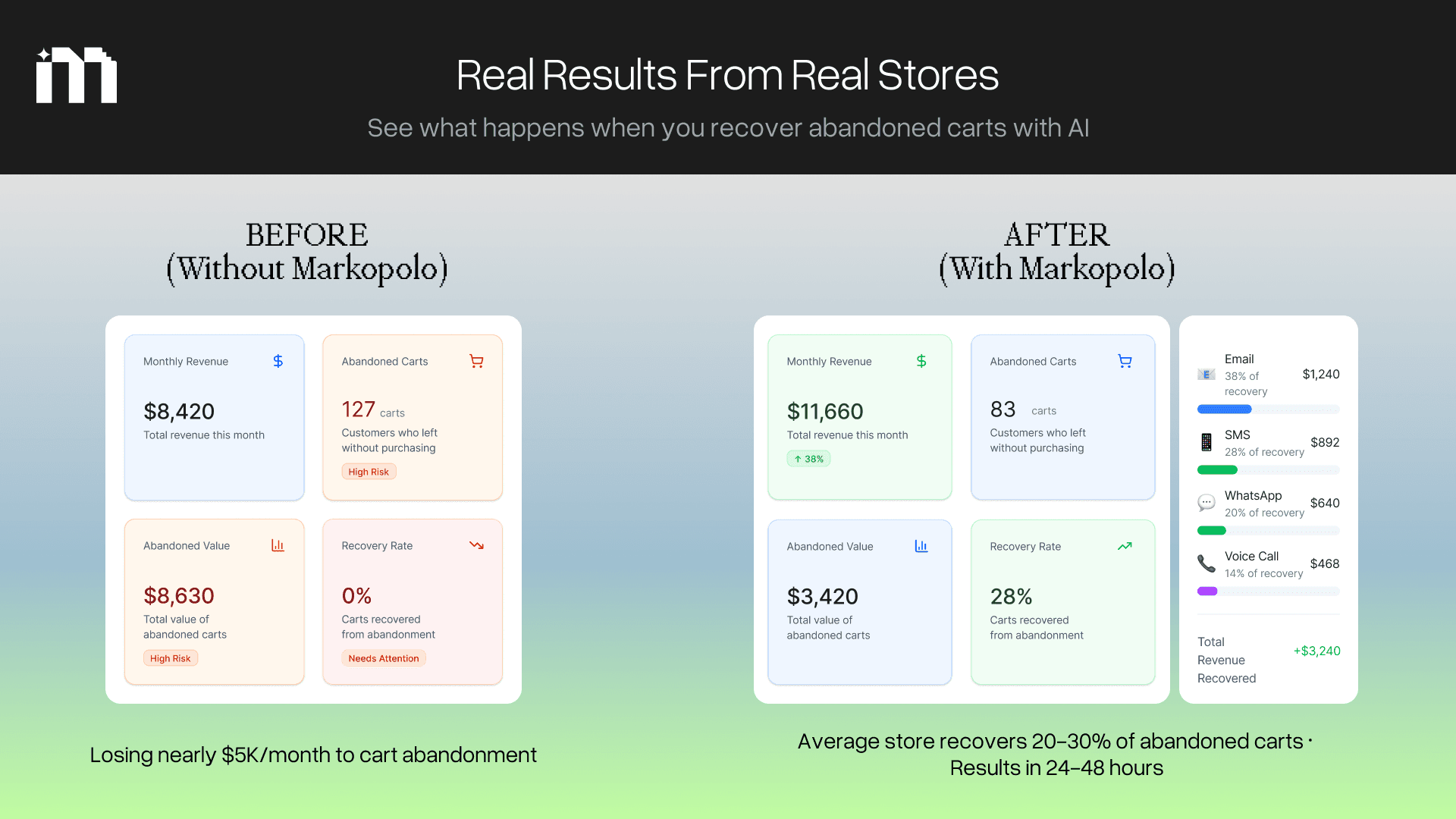
Markopolo's architecture rejects segmentation entirely. Each visitor gets an AI agent building a unique profile based on their actual behavior. When they abandon, the recovery approach reflects who they specifically are: their browsing patterns, hesitation points, channel preferences, time-of-day engagement, and what types of messages have worked for behaviorally similar customers. This isn't theoretical—it's the mechanical difference between 10-15% recovery rates and 30-40%.
Coordinated multi-channel outreach outperforms single-channel campaigns
Running separate recovery campaigns on email, SMS, and WhatsApp creates three problems: message timing conflicts, attribution confusion, and resource drain managing multiple systems. You might send an email that works, then cannibalize that success with an SMS sent too soon.
Markopolo coordinates channels from one intelligence layer. The AI knows that customer A opened your email but didn't click, so it sends a WhatsApp message with different content four hours later. Customer B ignored the email entirely, so they get SMS instead. Customer C is a high-value abandoner who's ignored three touchpoints—maybe they need a phone call. All of this happens automatically, optimized for each individual, tracked with unified attribution. Teams recover more revenue with less manual coordination.
Learning compounds over time in ways static workflows never can
Set up a cart recovery workflow today, and it performs the same on day 300 as day 1. Whatever results you're getting are whatever results you'll keep getting—unless you manually optimize.
Markopolo's AI learns continuously. Every message sent generates outcome data. Every recovery—or failed recovery—teaches the system something about what works for customers with certain behavioral profiles. Month over month, the models get sharper. Customers who would have been lost in month 1 get recovered in month 6 because the AI has learned patterns you'd never spot manually. This compounding intelligence is difficult to replicate and impossible to buy as a point-in-time feature. Brands using Markopolo build a recovery capability that improves automatically—an asset that appreciates rather than depreciates.