Netcore Cloud vs. Braze vs. Markopolo AI: Customer engagement platform comparison with features (2026)
Sirazum Monir Osmanoi
Choosing the right customer engagement platform directly impacts revenue recovery and customer retention. This comparison breaks down Netcore Cloud, Braze, and Markopolo AI across pricing, features, setup complexity, and support quality to help e-commerce, B2C, and D2C businesses make informed decisions.
Braze dominates the enterprise segment with robust mobile-first capabilities.
Netcore Cloud serves mid-market businesses with strong email automation.
Markopolo AI takes a fundamentally different approach by deploying individual AI revenue agents for each visitor rather than applying static workflows to audience segments. The platform excels at 1:1 hyper-personalized omnichannel outreach at scale across voice calls, emails, WhatsApp text, SMS, and push notifications. As a result, brands can achieve superior cart recovery results at 30-40% compared to the industry standard 10-15%.
Braze vs. Netcore Cloud vs. Markopolo AI: Pricing and cost comparison
Feature | Braze | Netcore Cloud | Markopolo AI |
|---|---|---|---|
Starting price | Custom enterprise pricing ($60,000-$200,000/year typical) | Custom pricing (75% fixed + 25% variable model) |
|
Pricing model | Monthly Active Users (MAUs) based | Value-based with performance targets | Value-based (pay for recovered revenue) |
Free trial | No (demo only) | Yes, available | Yes, available |
Free plan | No | Free tier for Email API (3,000 emails/month after trial) |
|
Setup fees | Implementation fees typically apply | Onboarding fees may apply | No setup fees |
Contract terms | Annual contracts required | Monthly or annual options | Monthly billing available |
Growth tier | Custom quote required | Custom quote required | Contact for details |
Scale tier | Custom quote required | Enterprise custom pricing | Contact for details |
Enterprise tier | $200,000+/year for large deployments | Custom with performance targets | Custom infrastructure + 1-1.5% recovered revenue |
Best value for | Large enterprises with big budgets and engineering resources | Mid-market with email focus and performance-aligned goals | Any size seeking ROI-aligned pricing without upfront risk |
Netcore Cloud vs. Braze vs. Markopolo AI: Comparing customer engagement features, user experience, and support
Key features of Netcore Cloud
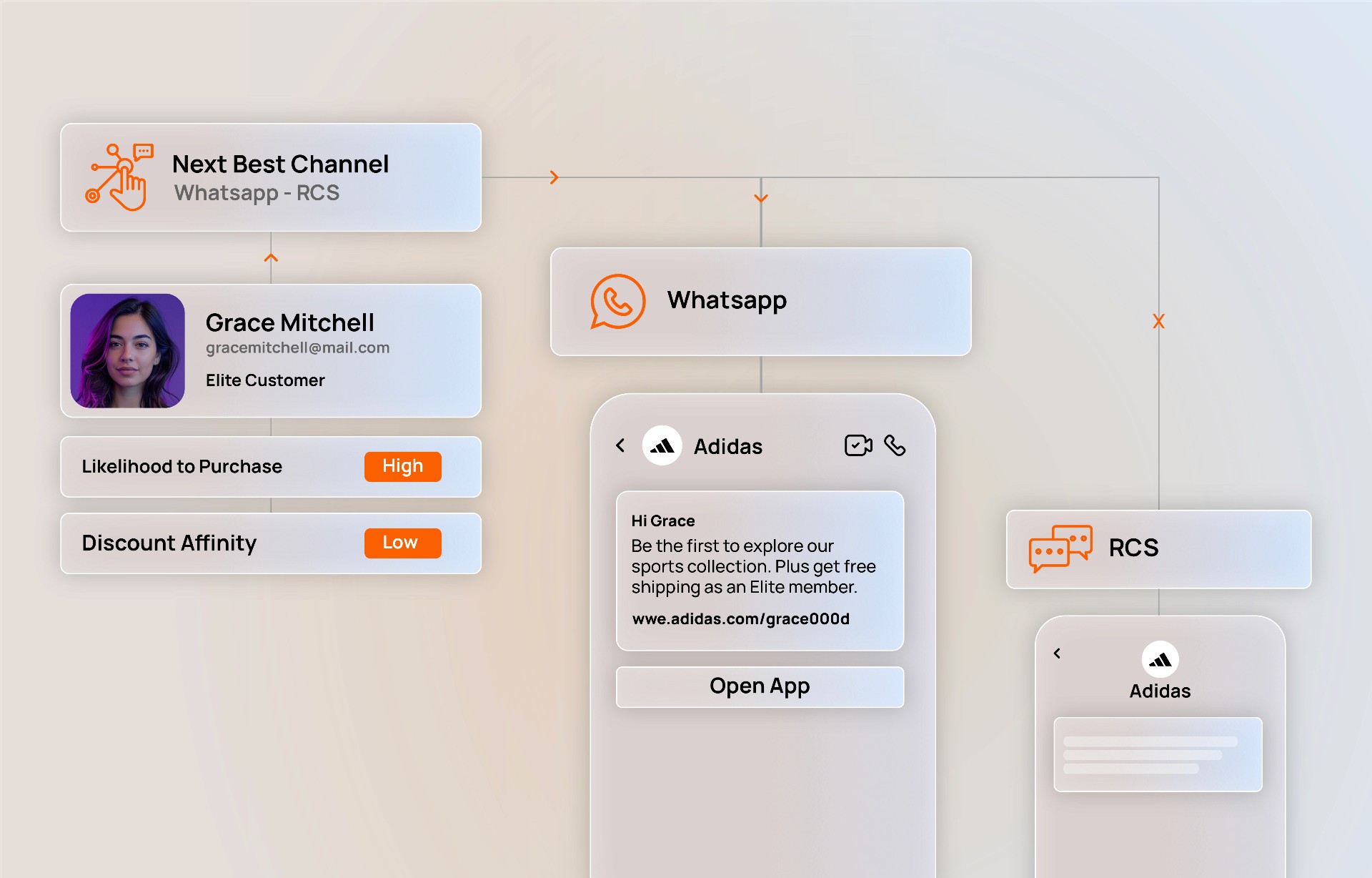
Image source: Netcore Cloud
Email marketing automation
Netcore Cloud established its position in the market through a strong focus on email marketing. The platform handles high-volume email delivery with strong inbox placement rates. Drag-and-drop editors simplify template creation. Automated sequences support welcome series, abandoned cart reminders, and re-engagement campaigns. Email remains the platform's strongest channel.
Customer data platform capabilities
Netcore unifies customer data from multiple sources into unified profiles. The CDP collects behavioral, transactional, and demographic data. Marketers can build segments based on combined attributes. The platform provides a single customer view, though it still operates on segment-based rather than individual-level personalization.
AI-powered product recommendations
The Raman AI engine powers product recommendations across email and web. Algorithms analyze purchase history and browsing behavior to suggest relevant products. Recommendations update based on recent activity. The system improves conversion rates for product-focused campaigns but applies recommendations at segment rather than individual level.
Smartech mobile engagement
Smartech handles push notifications, in-app messaging, and app analytics. The mobile module integrates with the broader Netcore ecosystem. Features include rich push notifications, deep linking, and app engagement tracking. Mobile capabilities have improved but remain secondary to email strengths.
Journey orchestration builder
The journey builder enables multi-step, omnichannel campaign creation. Visual workflows connect triggers, conditions, wait steps, and actions. Marketers can design branching paths based on customer behavior. The tool handles standard automation scenarios well but relies on predefined rules rather than AI-generated individual strategies.
How easy is it to set up Netcore Cloud
Implementation timeline expectations
Netcore implementations typically complete in 4-8 weeks for standard deployments. The process involves data integration, template setup, and journey configuration. Smaller implementations with limited channels finish faster. Teams with clear requirements and clean data move through setup more quickly.
Technical integration requirements
Setting up Netcore requires API integration for data synchronization and SDK implementation for mobile features. The platform offers pre-built connectors for common e-commerce platforms like Shopify and Magento. Technical complexity falls between Braze's enterprise demands and simpler point solutions. Most teams need some developer support.
Platform navigation and usability
Netcore's interface balances functionality with accessibility. Marketing teams can manage most tasks without technical help after initial training. The email editor and journey builder feel intuitive. Some advanced features require deeper platform knowledge. Overall usability suits mid-market teams without dedicated marketing operations staff.
Data onboarding process
Netcore supports CSV uploads, API imports, and platform integrations for data onboarding. The system handles standard customer attributes and behavioral events. Data mapping tools help align external data with platform fields. Migration complexity depends on source data quality and volume.
How does Netcore Cloud's customer support look like
Regional support presence
Netcore maintains strong support presence in Asia, Middle East, and growing presence in North America and Europe. Regional teams understand local market dynamics and time zones. Support availability varies by region and contract level. Companies in Netcore's core markets often receive more responsive service.
Onboarding and training programs
Netcore provides onboarding support including platform training, best practice guidance, and initial campaign setup assistance. Training covers platform features and email deliverability optimization. The onboarding experience helps teams become productive faster. Depth of support depends on the contract tier.
Customer success management
Dedicated customer success managers work with larger accounts on strategy and optimization. CSMs provide quarterly business reviews and performance recommendations. Smaller accounts receive more limited strategic support. The customer success program helps engaged clients improve results over time.
How Markopolo AI outperforms Netcore Cloud
Real-time behavioral intelligence vs. historical segmentation
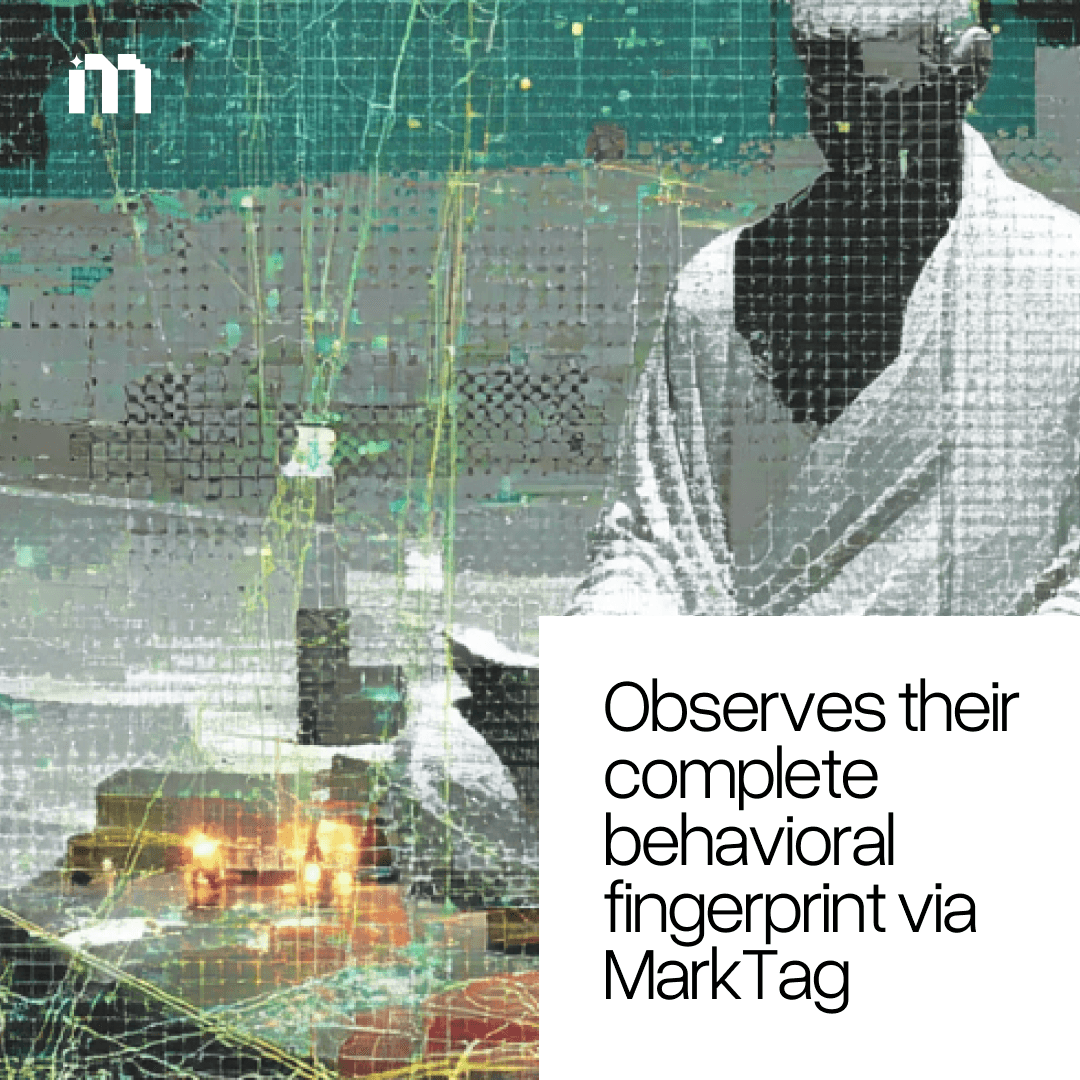
Netcore segments customers based on historical attributes and past behaviors, while Markopolo AI’s MarkTag powers real-time customer engagement by capturing live behavioral signals such as mouse movements, hesitation patterns, scroll depth, and comparison behaviors. This live intelligence enables the AI to understand customer intent as it develops, not after the fact, so the system can predict abandonment before it happens and intervene proactively.
Voice agent capabilities
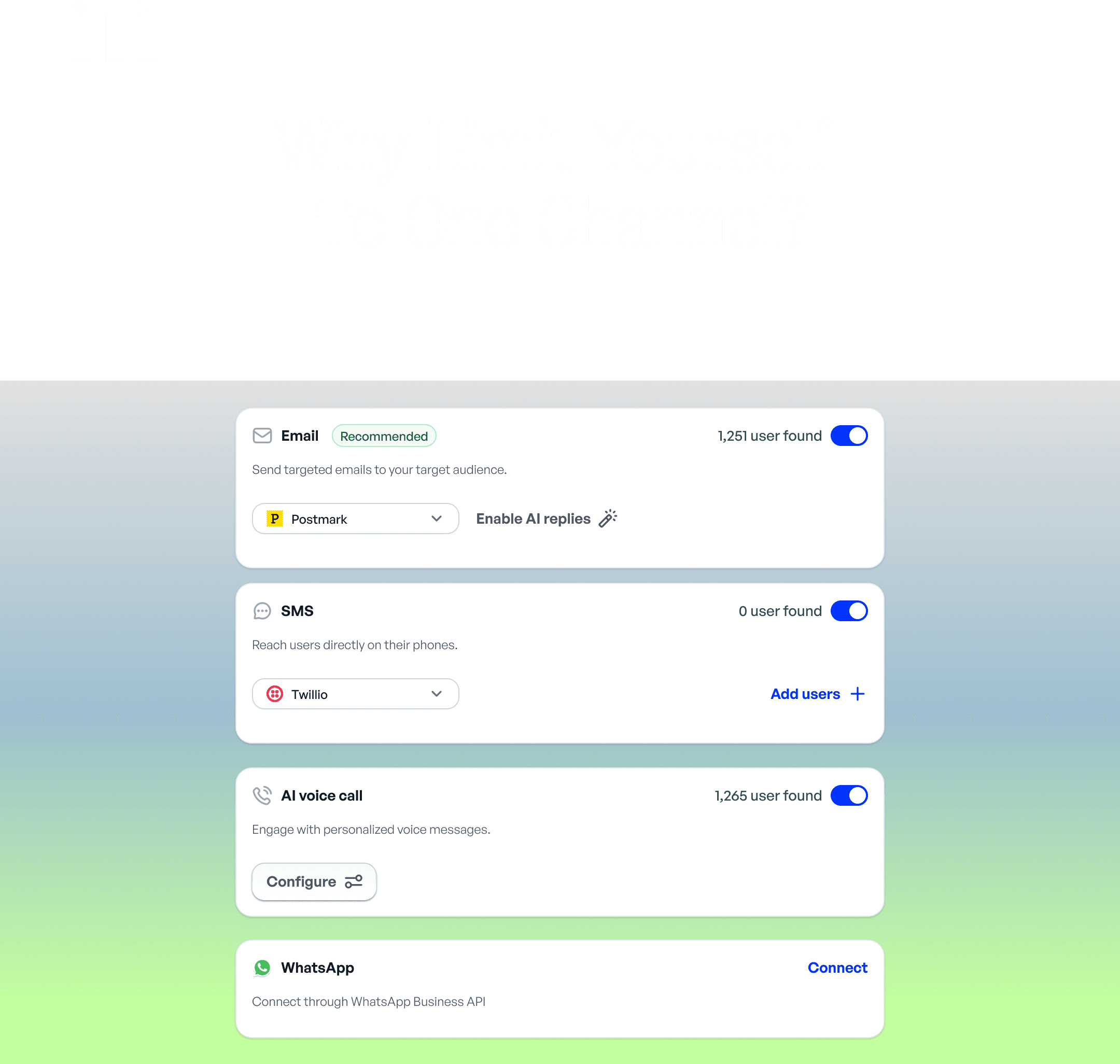
Netcore focuses primarily on email, push, and SMS channels. Markopolo AI includes a voice agent that conducts human-like phone conversations at scale. The voice agent engages leads with context-driven calls, acting like a real sales development representative. This channel extends reach to customers who prefer voice communication and enables high-touch engagement without human resource constraints.
Autonomous content generation
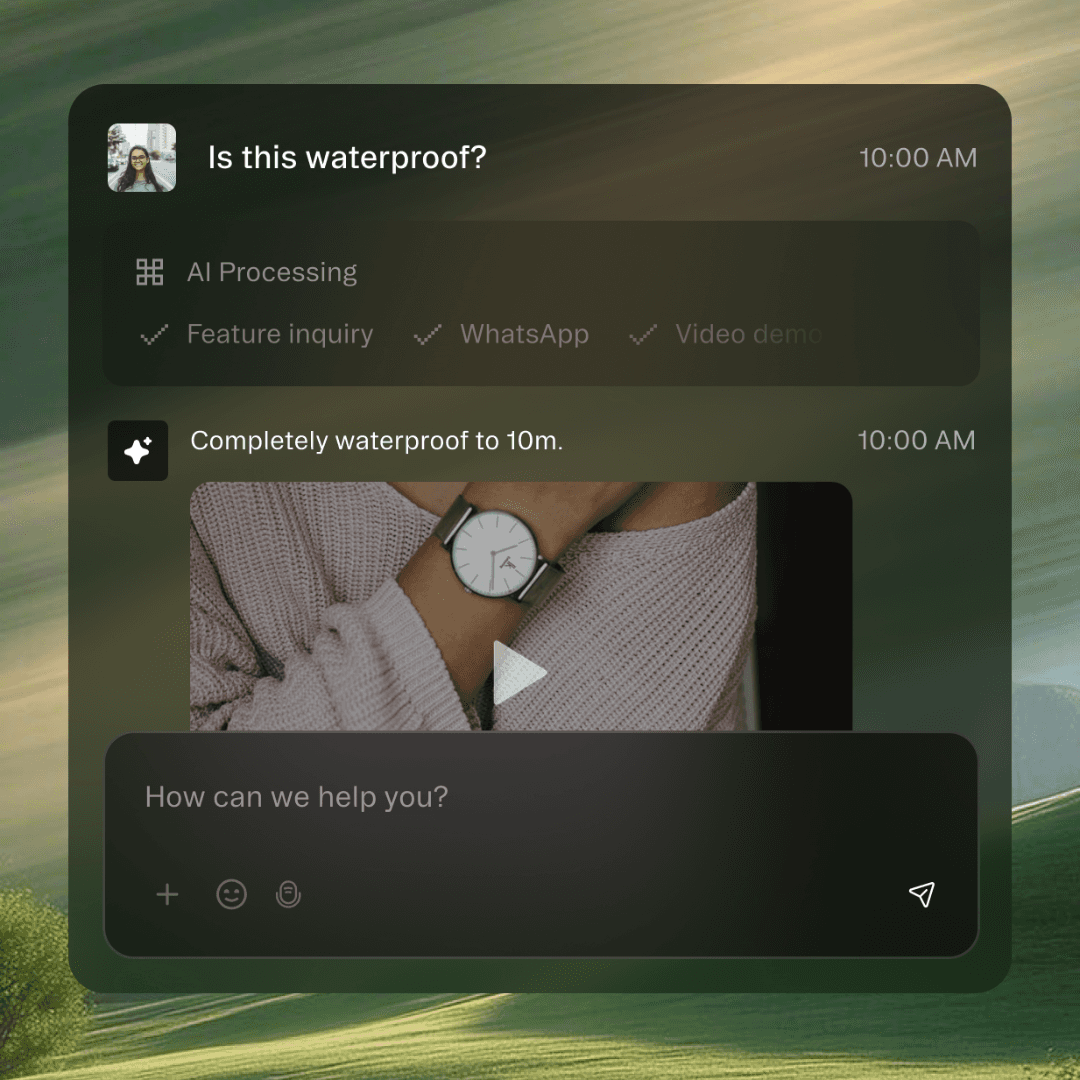
Netcore requires marketers to create and manage message templates manually. Markopolo AI's campaign agent generates personalized content autonomously using the merchant's knowledge base and audience data. The AI creates unique messages for each customer rather than selecting from pre-written templates. This automation reduces campaign creation time while improving relevance.
Key features of Braze
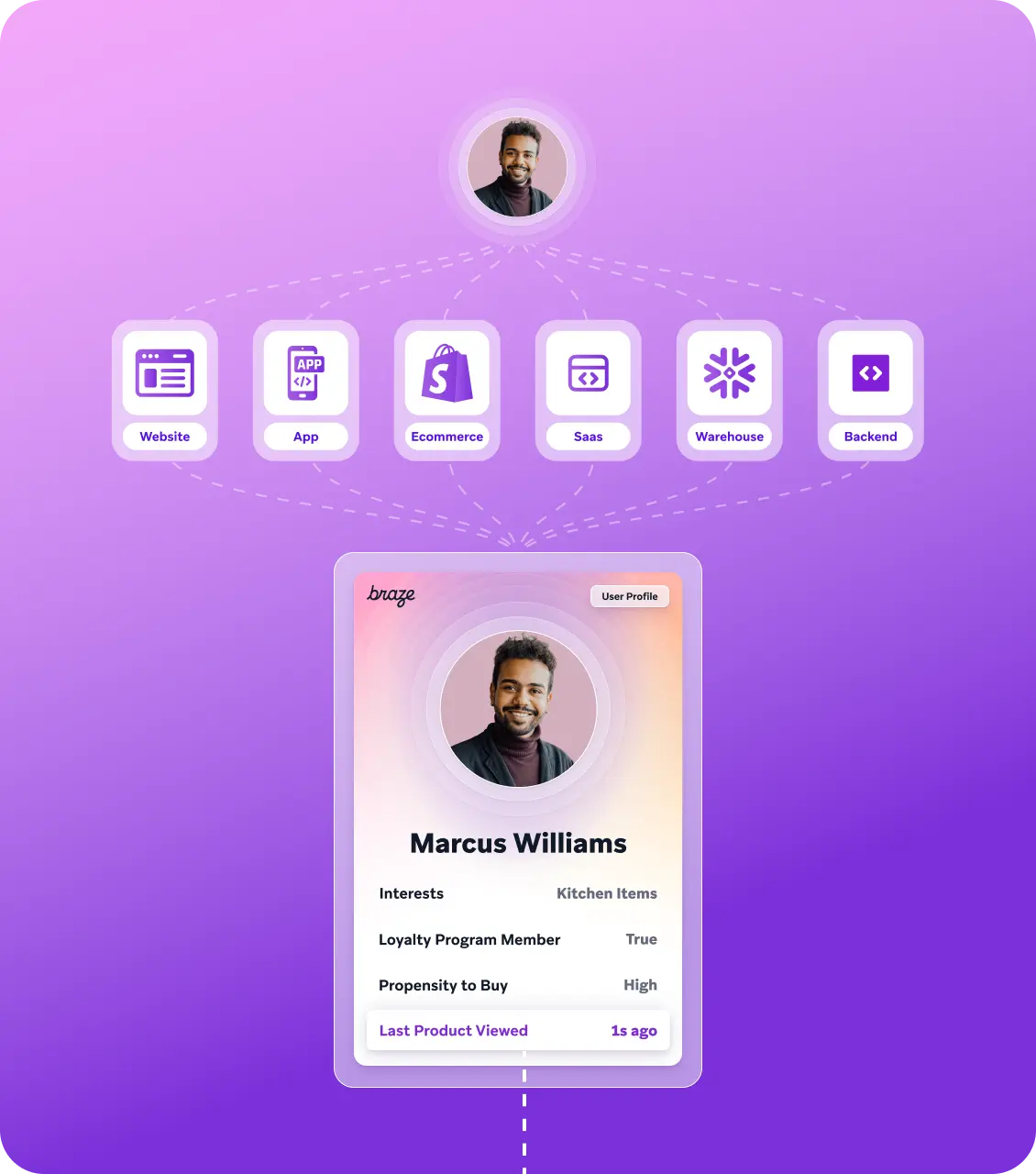
Image source: Braze
Cross-channel messaging orchestration
Braze coordinated messages across email, push notifications, SMS, in-app messaging, and web push. The Canvas Flow builder allows marketers to create branching journeys with conditional logic, A/B testing, and timing controls. Users can set up complex sequences that respond to customer actions in real time. The platform handles high message volumes reliably for enterprise-scale campaigns.
Real-time data streaming and segmentation
Braze processes customer data streams in real time, enabling immediate segmentation updates and triggered campaigns. The platform ingests behavioral events, purchase data, and attribute changes as they happen. Marketers can build segments using Boolean logic and nested conditions. However, segments still group customers rather than treating each individual uniquely.
Personalization and dynamic content
Liquid templating powers Braze's personalization capabilities. Marketers can insert dynamic content blocks, product recommendations, and conditional messaging within templates. Connected Content pulls external data into messages at send time. The system handles personalization well within the constraints of segment-based marketing but lacks true individual-level AI orchestration.
Mobile-first design and SDK
Braze started as a mobile marketing platform, and mobile remains its strength. Native SDKs for iOS and Android capture in-app behavior, enable push notifications, and support in-app messaging. The mobile experience feels polished and performs reliably. Brands with app-centric customer bases benefit most from these capabilities.
Analytics and reporting dashboard
Comprehensive analytics track campaign performance, conversion attribution, and customer lifecycle metrics. Braze provides revenue attribution, funnel analysis, and cohort comparisons. Custom report builders help teams extract specific insights. The analytics work well but require significant manual interpretation to drive optimization decisions.
How easy is it to set up Braze
Initial implementation timeline
Braze implementations typically take 8-16 weeks for enterprise deployments. The process involves SDK integration, data architecture planning, identity resolution setup, and campaign migration. Most organizations need dedicated technical resources or professional services support. Small teams without engineering bandwidth face steeper challenges.
Technical requirements and integration complexity
Setting up Braze requires developer involvement for SDK implementation, API integrations, and data pipeline configuration. Teams need familiarity with REST APIs, webhook configurations, and mobile development environments. The learning curve proves substantial for marketing teams without technical support. Integration with existing tech stacks demands careful planning.
User interface learning curve
The Braze dashboard offers extensive functionality but presents a learning curve. New users need training to navigate Canvas Flow, segment builders, and analytics modules effectively. Certification programs and documentation help, but teams typically need 4-8 weeks to reach proficiency. The interface prioritizes power over simplicity.
Data migration challenges
Moving historical customer data into Braze requires careful mapping and transformation. Teams must reconcile data formats, handle identity stitching, and validate migration accuracy. The process often surfaces data quality issues that need resolution before campaigns can run effectively. Budget additional time for data cleanup and validation.
How does Braze's customer support look like
Image: Braze support portal (source: Braze)
Support tiers and response times
Braze offers tiered support based on contract level. Enterprise customers receive dedicated customer success managers and faster response times. Standard support handles tickets within 24-48 hours. Premium support options include priority queues and phone support. Smaller customers may experience longer wait times for complex issues.
Documentation and self-service resources
Braze maintains extensive documentation, including API references, implementation guides, and best practice articles. The learning center offers courses and certifications. Community forums provide peer support. Self-service resources help teams solve common problems independently but may not address unique technical challenges.
Professional services availability
Braze offers professional services for implementation, optimization, and custom development. These services carry additional costs beyond subscription fees. Larger customers often budget for ongoing professional services support. The availability of expert help benefits organizations that need hands-on guidance but increases total cost of ownership.
How Markopolo AI outperforms Braze
Individual AI agents vs. segment-based workflows
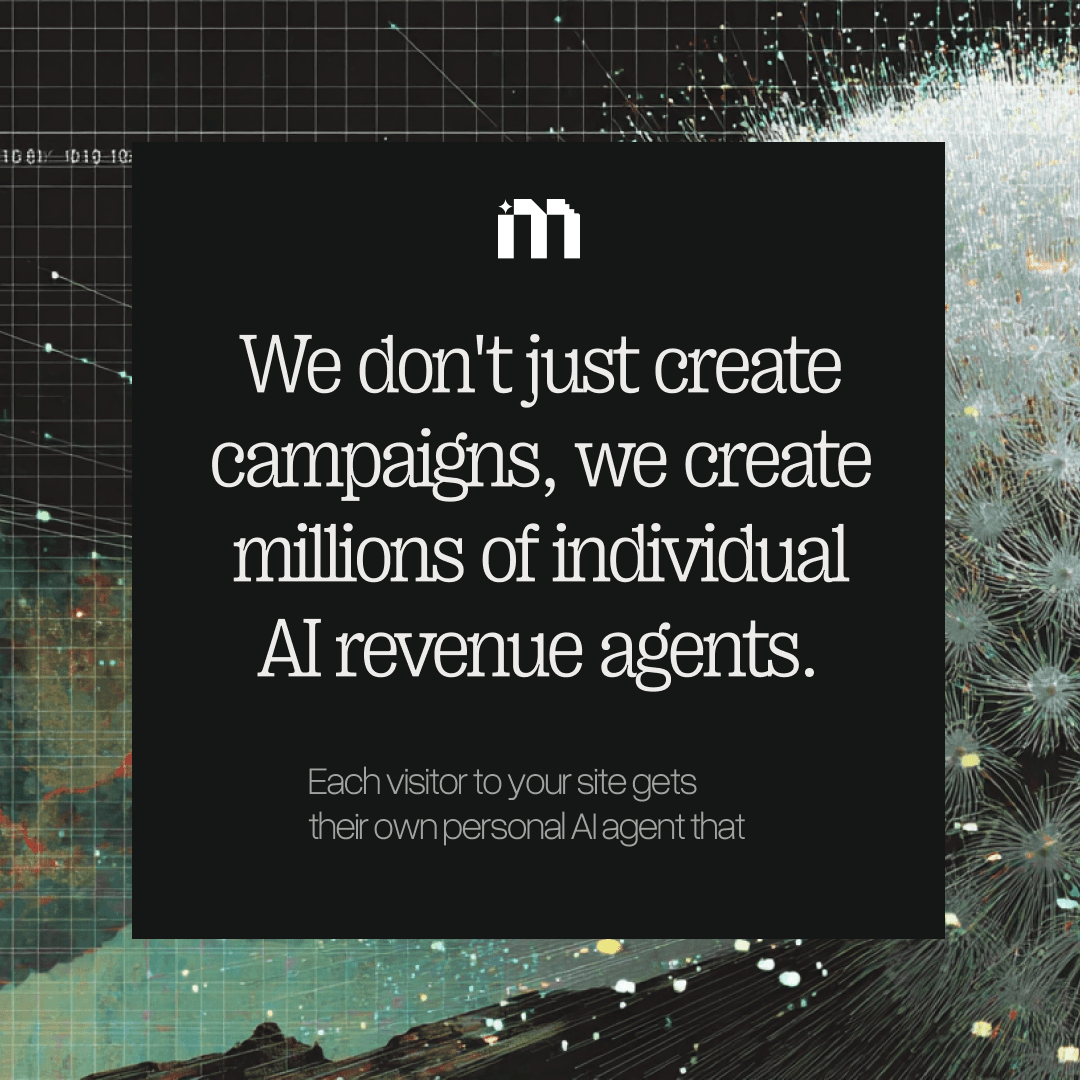
Braze applies the same workflow to everyone in a segment. Markopolo AI assigns each visitor their own AI revenue agent that understands their specific behavioral patterns, intent signals, and preferences to drive deeper customer engagement. Instead of “cart abandoned → send email,” Markopolo AI knows that a particular customer researches for three sessions before buying, responds to social proof over discounts, and engages with WhatsApp at 7 PM. This individual-level intelligence drives 3–4x higher recovery rates.
Behavioral vectorization with MarkTag
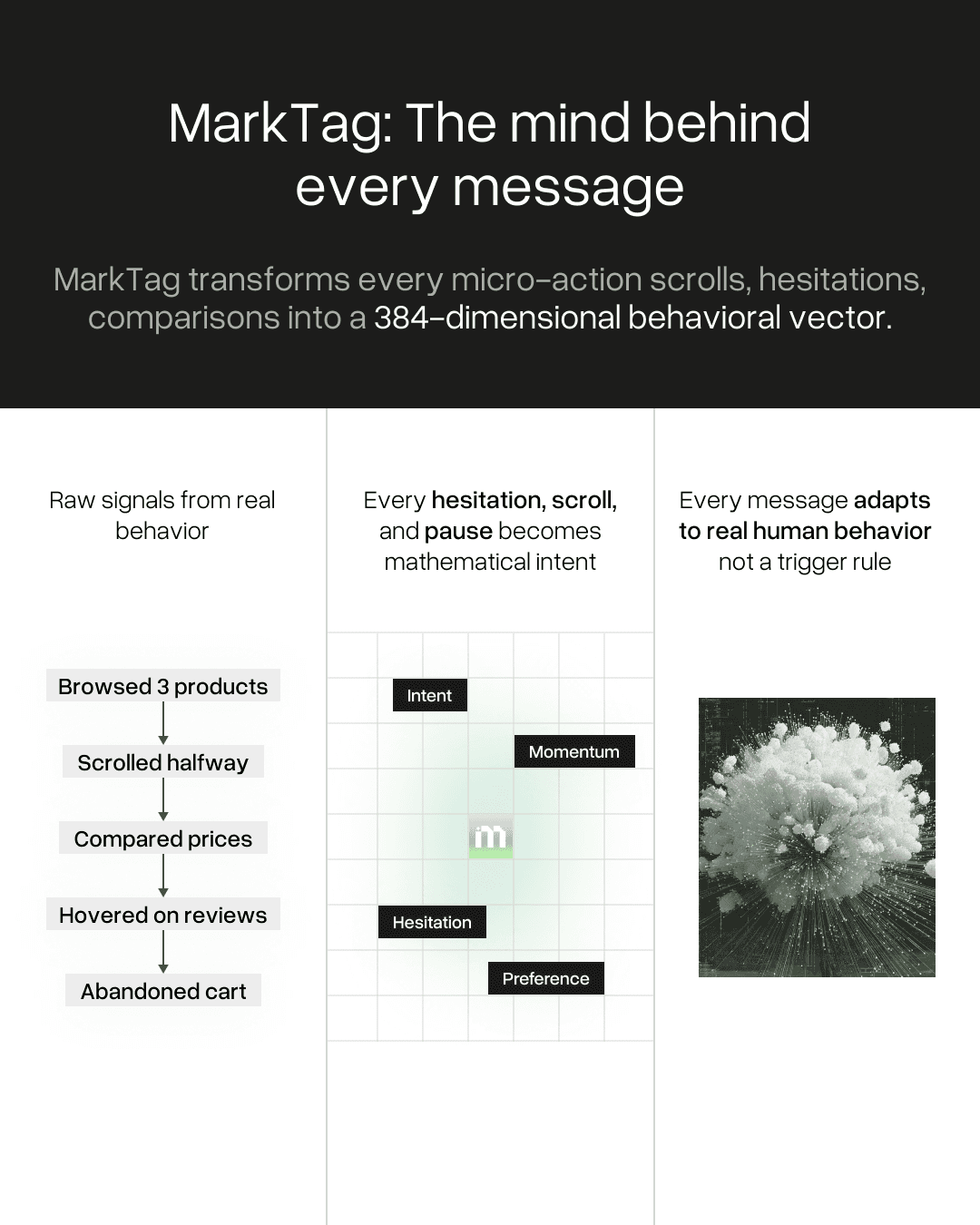
Braze tracks events as isolated data points. Markoplo's MarkTag transforms customer behavior into 384-dimensional vectors that capture semantic understanding of intent. The system identifies hesitation patterns, comparison behaviors, and purchase momentum in real time. This vectorized intelligence enables predictions like "this customer needs validation, not urgency" rather than just knowing "this customer abandoned their cart."
Autonomous omnichannel orchestration

Braze requires humans to design every workflow and decision tree, while Markopolo AI’s omnichannel customer engagement platform uses a campaign agent to autonomously design and run personalized campaigns. The AI generates unique strategies in under 50ms, selecting optimal channels, timing, and messaging for each individual, eliminating the bottleneck of manual workflow creation while improving results.
Netcore Cloud vs. Braze vs. Markopolo AI: which are the most appropriate for SMBs vs enterprises?
Markopolo AI is suitable for businesses of all sizes, and custom plans are available for small, medium, and enterprise brands.
Which platform works best for small businesses
Small businesses need platforms that deliver results without demanding large teams or budgets. Braze's enterprise pricing and implementation complexity put it out of reach for most small businesses. The minimum investment exceeds what early-stage companies can justify, and the technical requirements assume dedicated marketing operations resources.
Netcore Cloud offers a more accessible entry point with lower starting costs and simpler setup. The platform handles essential email and mobile marketing needs adequately. However, small businesses still face limitations around personalization depth and omnichannel sophistication.
Markopolo AI's value-based pricing model aligns costs with results, making advanced AI capabilities accessible regardless of company size. Small businesses pay only for recovered revenue, eliminating the risk of paying for unused capacity. |
|---|
Which platform serves enterprise needs best
Enterprises require scalability, security compliance, and integration flexibility. Braze delivers on these requirements with proven infrastructure, SOC 2 compliance, and extensive API capabilities. Large organizations with established marketing operations teams and significant budgets find Braze's power worth the complexity and cost.
Netcore Cloud serves enterprise needs in specific scenarios, particularly for organizations with strong email focus or operations in Asia and Middle East regions. The platform handles enterprise volumes but may lack some advanced features that global enterprises require.
Markopolo AI serves enterprises seeking differentiated results through AI-driven individual personalization. The platform processes millions of events per second and generates unique strategies in under 50ms, meeting enterprise scale requirements while delivering fundamentally better outcomes through individual-level intelligence rather than segment-based automation. |
|---|
Braze vs. Netcore Cloud vs. Markopolo AI: Technical guide to APIs, data migration, and performance
Braze technical specifications
API architecture and capabilities
Braze provides RESTful APIs for user data management, messaging, campaign management, and analytics export. The API handles batch operations for high-volume data imports. Rate limits apply based on contract tier. Webhook support enables real-time data flows to external systems. API documentation covers standard use cases thoroughly.
Data migration tools and processes
Braze supports data migration through CSV imports, API batch uploads, and partner integration tools. The platform provides data transformation guidelines and validation tools. Migration typically requires custom scripting for complex data structures. Professional services can assist with large-scale migrations.
Performance and scalability metrics
Braze infrastructure handles billions of messages monthly across global customer base. The platform maintains high availability with redundant systems. Message delivery latency meets enterprise requirements. Scaling happens automatically without customer intervention. Performance monitoring tools track delivery rates and system health.
Netcore Cloud technical specifications
API framework and integration options
Netcore offers REST APIs for data synchronization, campaign management, and reporting access. Pre-built connectors simplify integration with popular e-commerce platforms. The API supports real-time event tracking and batch data operations. Documentation provides examples for common integration patterns.
Data import and export capabilities
Netcore supports multiple data import methods including SFTP, API, and direct platform connectors. Export options include scheduled reports and API data extraction. The platform handles standard e-commerce data formats. Complex data transformations may require additional preparation.
System performance characteristics
Netcore infrastructure handles high email volumes with strong deliverability. The platform maintains uptime commitments for enterprise customers. Processing speeds support real-time triggered campaigns. Geographic distribution optimizes performance for regional deployments.
Markopolo AI technical specifications
Real-time processing architecture

Markopolo AI processes millions of events per second through a stream processing pipeline built on Apache Kafka. Vector embeddings generate via ONNX Runtime, with ClickHouse handling vector storage. The architecture delivers decisions in under 50ms from event capture to journey execution. This speed enables truly real-time personalization rather than batch processing delays.
Integration and data connection framework
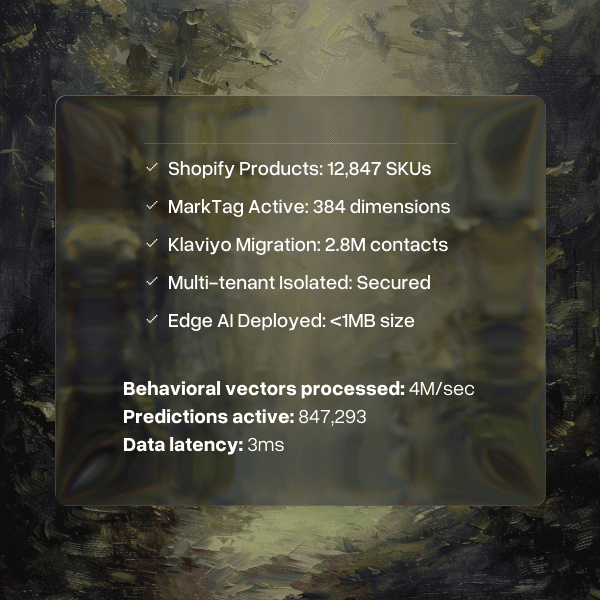
MarkTag connects data sources including websites, CRM systems, apps, and content platforms through a unified hub. The Data Room centralizes all customer intelligence for AI consumption. Integration setup happens through the platform interface without extensive coding. The system supports both event-based and audience-based campaign triggers.
AI model performance metrics
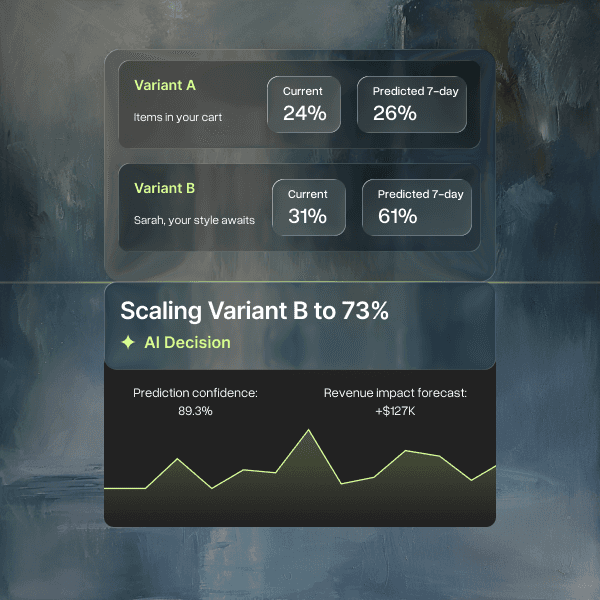
Behavioral embedding models use transformer architecture with 384-dimensional output trained on billions of e-commerce events. Intent prediction achieves 91% accuracy for next-action forecasting with sub-10ms inference latency. The orchestration model built on fine-tuned GPT-4 generates personalized journey strategies. Channel optimization uses Thompson sampling for continuous per-user learning.
Verdict: How Markopolo AI fills the gaps left by Netcore Cloud and Braze
True individual personalization at scale
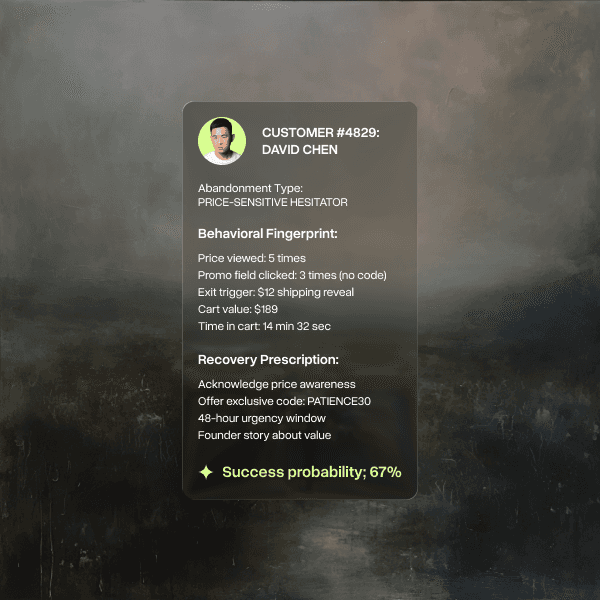
Both Braze and Netcore treat personalization as inserting customer names and applying segment-specific content variations. Markopolo AI delivers genuine individual personalization where every visitor receives their own AI revenue agent. Each agent creates a completely unique journey based on that specific person's behavioral fingerprint, intent signals, and engagement preferences. This shifts personalization from "Hi {FirstName}" to understanding each customer's complete context.
Intelligence that understands intent, not just actions
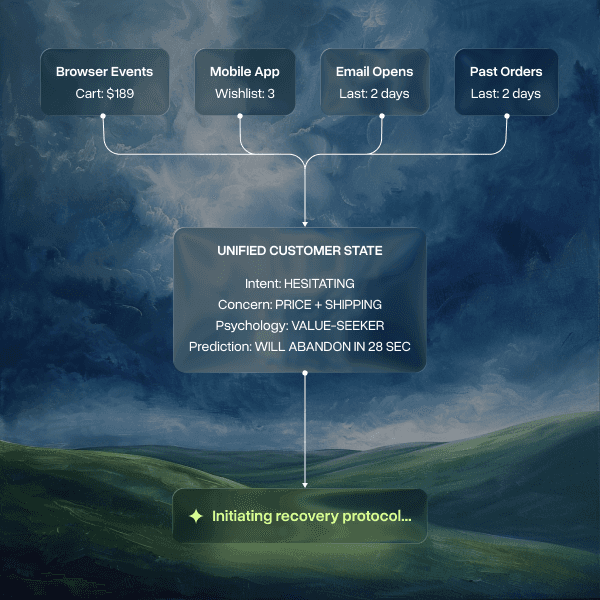
Traditional platforms record what customers do without understanding why. MarkTag's behavioral vectorization transforms actions into semantic understanding. The system recognizes that multiple price checks signal price sensitivity, that specification deep-dives indicate a technical validator, and that fast navigation with premium category focus suggests an impulse buyer. This intent understanding enables the AI to craft appropriate responses rather than generic triggers.
Autonomous operation that eliminates workflow bottlenecks

Braze and Netcore require humans to design every workflow, write every message variant, and configure every decision branch. Markopolo AI operates autonomously, generating strategies and content without human intervention for each engagement. The campaign agent designs omnichannel campaigns automatically. The voice agent has autonomous conversational capabilities and speaks 50 languages. This autonomy removes the bottleneck of manual campaign creation while actually improving results.
Pricing aligned with business outcomes
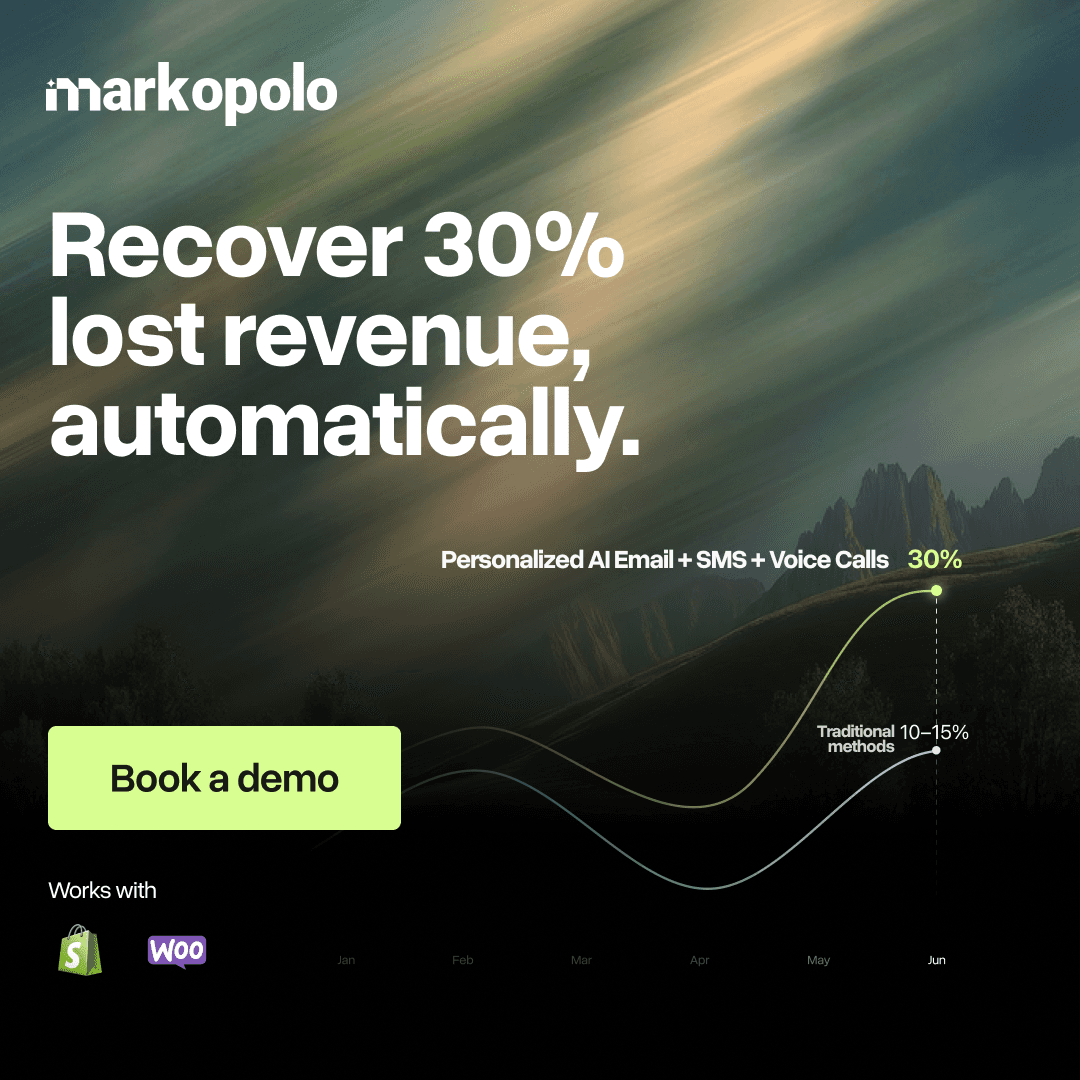
Traditional platforms charge based on contacts or message volume regardless of results. Markopolo AI's value-based pricing charges for recovered revenue rather than potential reach. This alignment means merchants pay for outcomes, not just activity. The model makes advanced AI capabilities accessible to businesses of any size and eliminates the risk of paying for unused capacity. When Markopolo AI succeeds, merchants succeed. When merchants succeed, Markopolo AI succeeds.