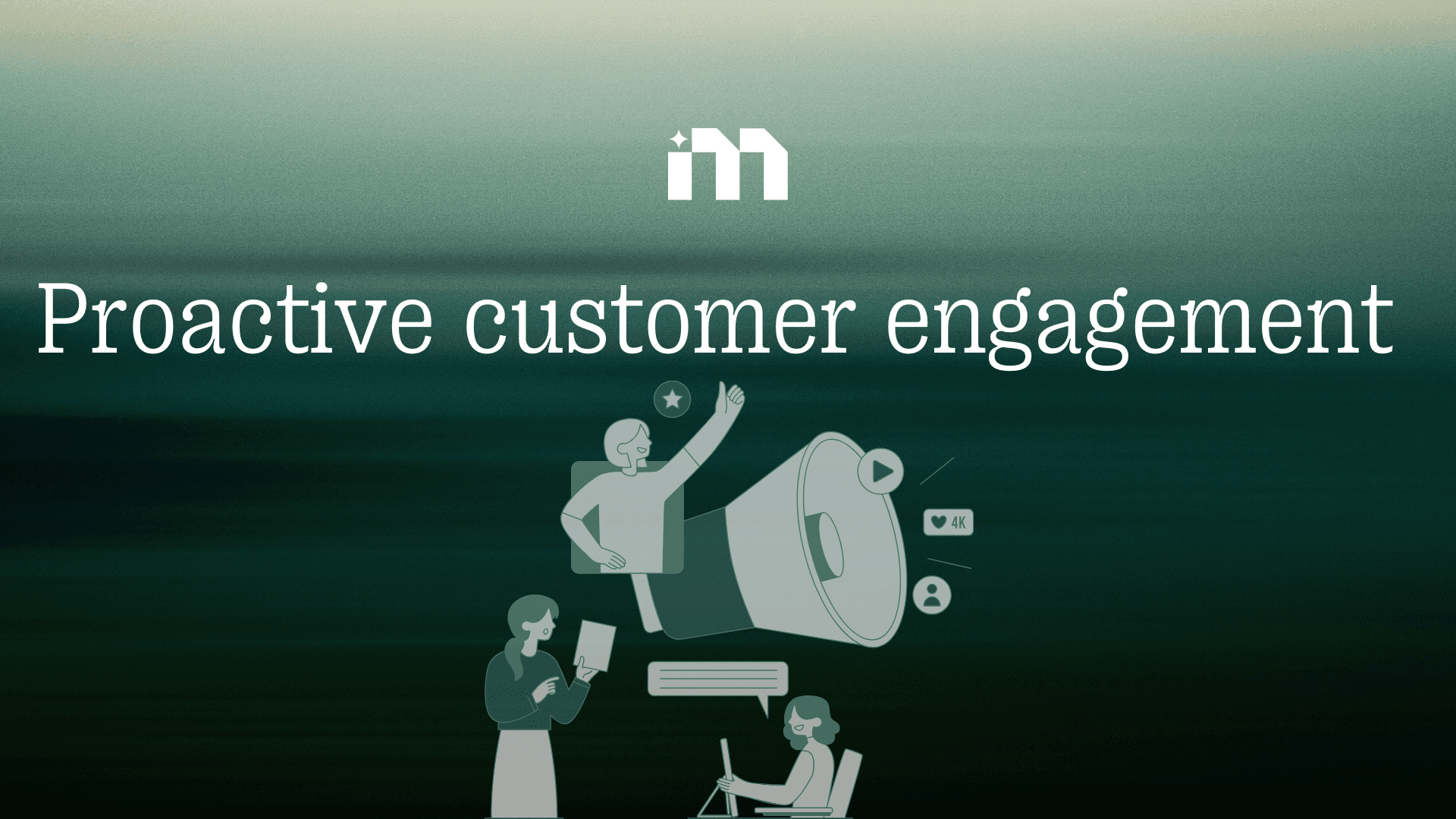
Businesses that wait for customers to reach out are losing revenue every day. Proactive customer engagement flips this approach. It means reaching customers at the right moment, with the right message, before they ask for help or abandon their purchase. This guide covers proven strategies and the best platforms for e-commerce, B2C, and D2C businesses in 2026.
What is proactive customer engagement
Proactive customer engagement means initiating contact with customers before they reach out to you, using AI-powered customer engagement to anticipate needs and respond intelligently across channels. Instead of waiting for a support ticket or an abandoned cart, businesses anticipate customer needs and act first. This approach uses behavioral data, purchase history, and real-time signals to deliver timely, relevant messages across email, SMS, WhatsApp, push notifications, and voice calls. For e-commerce and D2C brands, proactive customer engagement transforms passive browsing into active conversations that drive conversions and build loyalty.
What are the best marketing automation platforms that use AI to proactively recommend marketing campaigns instead of always reacting?
Platform | Engagement approach | Channels | AI orchestration | Cart recovery benchmark |
|---|---|---|---|---|
Markopolo AI | Fully autonomous Individual AI agents per customer | Email, SMS, WhatsApp, push, voice calls | Autonomous journey generation | 30-40% |
Klaviyo | Segment-based workflows | Email, SMS | Rule-based automation | 10-15% |
Braze | Segment-based journeys | Email, SMS, push, in-app | Rule engines with triggers | 10-15% |
HubSpot | Workflow automation | Email, chat, ads | CRM-driven sequences | 10-15% |
Intercom | Conversational messaging | Chat, email, product tours | Bot-based automation | 10-15% |
8 strategies and best practices for proactive customer engagement
Identify behavioral triggers that signal purchase intent
Track specific actions that indicate a customer is ready to buy. Page views, time spent on product pages, cart additions, and comparison shopping all reveal intent. When your system detects these signals, it can trigger personalized outreach at the optimal moment. A customer who views the same product three times in two days needs a different message than someone browsing for the first time.
Create personalized recovery journeys for cart abandonment
Cart abandonment plagues every e-commerce business. Generic recovery emails achieve 10-15% success rates at best. The solution is creating unique recovery journeys based on individual behavior. A price-sensitive shopper who searched for coupons needs a discount message. A premium buyer who moved quickly through checkout might respond better to a stock scarcity alert. Match the message to the customer.
Use Omnichannel orchestration for maximum reach
Customers have channel preferences. Some respond to SMS, others prefer WhatsApp or email. Effective proactive engagement reaches customers on their preferred channel at their preferred time. Omnichannel orchestration coordinates these touchpoints into a seamless journey. The first message might go via email, followed by SMS if unopened, then WhatsApp with a different angle if needed.
Implement real-time behavioral tracking
Static customer profiles miss the context that drives purchases. Real-time customer engagement captures micro-behaviors like scroll depth, hesitation patterns, and comparison activity. This data reveals not just what customers do, but why they hesitate. A customer who zooms in on product images and reads reviews extensively needs social proof. Someone who checks shipping costs repeatedly cares about total value.
Build AI-powered audience segments that update automatically
Traditional segments become stale quickly. Customer behavior changes daily. AI-powered segmentation creates dynamic cohorts that update in real-time based on fresh behavioral data. These living segments ensure your proactive outreach always targets the right customers with current, relevant messaging rather than outdated assumptions.
Deploy predictive engagement before problems occur
The most effective proactive engagement happens before customers show frustration. Predictive models can identify users likely to churn, abandon, or need support based on behavioral patterns. Reaching out with helpful information or incentives before the problem materializes prevents revenue loss and builds trust.
Personalize timing based on individual engagement windows
Every customer has optimal engagement windows. Some check messages during their morning commute. Others respond best in the evening. Analyzing historical engagement data reveals these patterns. Sending proactive messages during each customer's high-engagement window dramatically increases response rates.
Measure and optimize with attribution that shows causation
Basic metrics like open rates and click rates tell an incomplete story. Effective proactive engagement requires attribution models that show what actually caused the purchase decision. Understanding which touchpoint moved the customer from consideration to conversion helps optimize future journeys.
Top 5 proactive customer engagement platforms and software tools: comparison, features, pros and cons in 2026
Markopolo AI
Markopolo AI is a proactive customer engagement platform. It creates individual AI agents for every customer, each understanding that person's unique behavioral patterns, preferences, and purchase journey. Rather than applying the same workflow to thousands of customers, Markopolo generates millions of personalized engagement strategies in real-time.
Proactive engagement capabilities
Behavioral intelligence through MarkTag
MarkTag captures every customer interaction and transforms it into actionable intelligence. It tracks micro-behaviors like hesitation patterns, comparison shopping, and scroll depth. This data feeds into a behavioral vectorization engine that creates a complete understanding of each customer's intent, context, and likelihood to convert.
AI-driven journey orchestration
The platform's AI orchestrator generates unique engagement strategies for each individual customer. It considers behavioral vectors, real-time context, business goals, and inventory data. Each customer receives a completely personalized journey rather than a templated workflow.
Omnichannel campaign execution
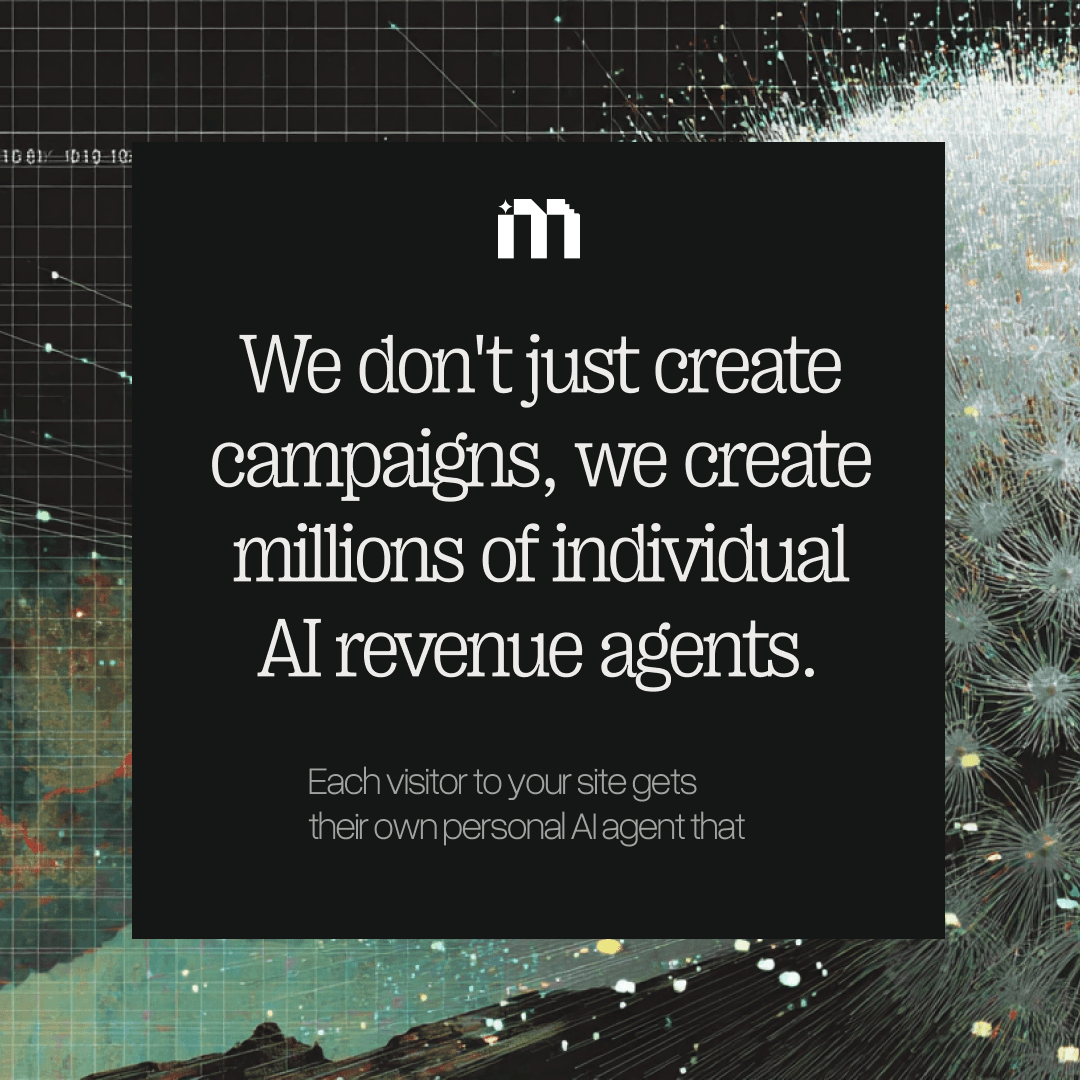
Markopolo AI coordinates omnichannel customer engagement across email, SMS, WhatsApp, push notifications, and AI voice calls. The system selects the optimal channel, timing, and message for each customer based on their engagement history and preferences.
Autonomous content generation
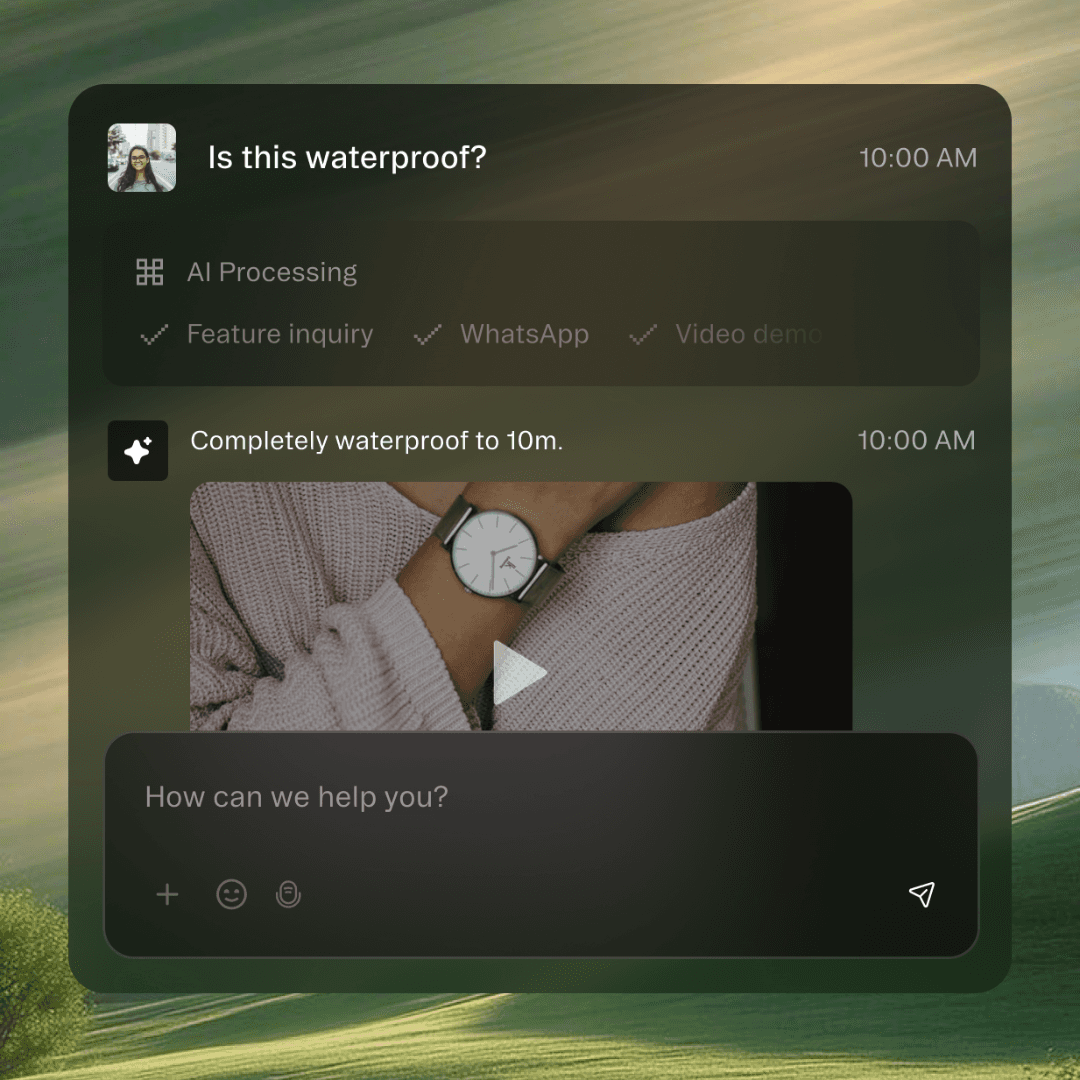
The Campaign Agent creates personalized content automatically using the business's knowledge base and audience data. Marketers can choose completely autonomous content generation or AI-assisted editing with human approval.
Pros
Creates individual AI agents for every customer rather than applying segment-based rules
Achieves 30-40% cart recovery rates compared to industry average of 10-15%
Processes behavioral data in real-time with sub-50ms decision latency
Includes AI voice calling capability for human-like phone engagement
Offers value-based pricing aligned with recovered revenue
Cons
Advanced features require learning curve for teams used to traditional workflow builders
Klaviyo
Klaviyo is an email and SMS marketing platform popular with e-commerce businesses. It integrates with major e-commerce platforms and offers automation capabilities for customer communication.
Proactive engagement capabilities
Email automation flows
Klaviyo provides pre-built email automation flows for common e-commerce scenarios. Users can set up abandoned cart sequences, welcome series, and post-purchase follow-ups. The platform supports conditional logic based on customer properties and behaviors.
SMS marketing integration
The platform includes SMS marketing capabilities alongside email. Businesses can create unified campaigns that reach customers through both channels based on preference settings and engagement data.
Segmentation based on e-commerce data
Klaviyo creates segments using purchase history, browsing behavior, and customer properties. Segments update as customer data changes, though the updates occur on scheduled intervals rather than true real-time.
Predictive analytics for customer behavior
The platform offers predictive analytics features including expected next order date and customer lifetime value predictions. These help prioritize outreach to high-value customers.
Pros
Deep integrations with Shopify, WooCommerce, and other e-commerce platforms
User-friendly interface for creating email and SMS campaigns
Large template library for common e-commerce use cases
Strong deliverability reputation for email marketing
Cons
Limited to email and SMS channels without native WhatsApp or voice
Segment-based approach treats customers as groups rather than individuals
Static workflows require manual updates as business needs change
Cart recovery rates plateau at industry-standard 10-15%
Klaviyo vs Markopolo AI for proactive customer engagement
Klaviyo excels at email and SMS marketing with solid e-commerce integrations. However, it uses traditional segment-based automation rather than individual personalization. Klaviyo applies the same workflow to everyone in a segment, while Markopolo AI creates unique journeys for each customer. For proactive engagement, the difference shows in results: Klaviyo achieves standard 10-15% cart recovery while Markopolo AI delivers 30-40% through true individualization.
Markopolo AI surpasses Klaviyo for proactive engagement because it understands each customer as an individual rather than a segment member. The behavioral vectorization technology captures nuanced intent signals that segment-based tools miss. Combined with AI-generated strategies and omnichannel orchestration including voice, Markopolo AI delivers significantly higher conversion rates.
Braze
Braze is a customer engagement platform used by larger enterprises for cross-channel marketing. It supports multiple communication channels and offers sophisticated journey building capabilities.
Proactive engagement capabilities
Canvas journey builder
Braze's Canvas feature allows marketers to build complex customer journeys with branching logic. Users can create multi-step campaigns that respond to customer actions and properties across touchpoints.
Cross-channel messaging
The platform supports email, push notifications, SMS, in-app messages, and web messaging. Campaigns can coordinate across these channels based on user preferences and engagement patterns.
Real-time data streaming
Braze processes customer events in real-time through its data streaming infrastructure. This enables triggered messaging based on immediate customer actions like purchases or app opens.
Personalization with Liquid templating
The platform uses Liquid templating language for message personalization. Marketers can insert dynamic content based on customer attributes, behaviors, and computed properties.
Pros
Robust infrastructure designed for enterprise-scale messaging
Supports a wide range of communication channels
Strong real-time event processing capabilities
Extensive API for custom integrations
Cons
Complex setup requires significant technical resources
Segment-based approach limits true individual personalization
High cost structure suited for enterprise budgets
No native AI voice calling capability
Braze vs Markopolo AI for proactive customer engagement
Braze provides powerful tools for enterprise marketing teams but still operates on segment-based logic. Marketers create journeys and apply them to customer groups. Markopolo AI takes a fundamentally different approach where AI generates unique strategies for each individual. Braze requires humans to design every workflow, while Markopolo AI autonomously creates millions of personalized journeys.
Markopolo AI outperforms Braze for proactive engagement because it eliminates the need for humans to create every workflow. The AI orchestration engine generates personalized strategies automatically based on individual behavioral understanding. This means faster deployment, less manual work, and better results than pre-defined journey templates.
HubSpot
HubSpot offers a comprehensive marketing, sales, and service platform. Its Marketing Hub includes automation features for customer communication and engagement.
Proactive engagement capabilities
Marketing automation workflows
HubSpot provides visual workflow builders for marketing automation. Users can create triggered email sequences based on form submissions, page visits, and other customer actions within the HubSpot ecosystem.
Contact scoring and prioritization
The platform scores contacts based on engagement and fit criteria. Sales and marketing teams use these scores to prioritize outreach to contacts showing higher engagement levels.
Conversational bots
HubSpot includes chatbot functionality for website visitor engagement. Bots can qualify leads, answer common questions, and route conversations to appropriate team members.
Reporting and attribution
The platform provides marketing analytics including attribution reporting. Users can track which touchpoints contributed to conversions across marketing campaigns.
Pros
All-in-one platform combining marketing, sales, and service tools
Extensive educational resources and active user community
Free tier available for small businesses to start
Strong CRM foundation for contact management
Cons
Built primarily for B2B rather than e-commerce velocity
Workflow-based automation lacks real-time behavioral response
Limited channels compared to e-commerce focused platforms
No voice AI or advanced behavioral intelligence
HubSpot vs Markopolo AI for proactive customer engagement
HubSpot serves B2B companies well but lacks the speed and behavioral depth e-commerce requires. Its workflow builder expects humans to anticipate every scenario and create corresponding automations. Markopolo AI was purpose-built for e-commerce where decisions happen in milliseconds and customer behavior changes constantly. The AI-driven approach adapts faster than human-designed workflows ever could.
Markopolo AI wins for proactive e-commerce engagement because it was built specifically for this use case. HubSpot's CRM-centric approach works for B2B sales cycles but cannot match the real-time behavioral intelligence Markopolo AI provides. For D2C and e-commerce businesses, the specialized focus delivers dramatically better results.
Intercom
Intercom is a customer communication platform known for its messaging and support capabilities. It helps businesses engage customers through chat, email, and product tours.
Proactive engagement capabilities
Proactive chat messages
Intercom can trigger chat messages based on visitor behavior on websites and in apps. Businesses use this to offer help, promote features, or guide users through key workflows.
Series for multi-channel campaigns
The Series feature allows creating automated message sequences across chat, email, and product tours. Campaigns can branch based on user responses and behaviors.
Custom bots for engagement
Intercom's bot builder creates automated conversational flows. Bots can qualify visitors, collect information, and provide immediate responses before human handoff.
Product tours and tooltips
The platform includes product tour functionality for user onboarding. Teams can create guided experiences that proactively help users discover features.
Pros
Strong conversational messaging infrastructure
Good for product-led growth and user onboarding
Modern interface with intuitive design
Effective for support and success use cases
Cons
Limited e-commerce specific features and integrations
No SMS, WhatsApp, or voice channel support
Pricing based on contacts can become expensive at scale
Focused on in-app engagement rather than revenue recovery
Intercom vs Markopolo AI for proactive customer engagement
Intercom excels at in-app messaging and support scenarios but lacks the revenue focus e-commerce requires. It cannot orchestrate recovery journeys across SMS, WhatsApp, and voice. Markopolo AI treats revenue recovery as its core mission, with behavioral intelligence specifically designed to understand purchase intent and convert abandoners.
Markopolo AI dominates for proactive revenue engagement because it covers all channels e-commerce customers use. Intercom's chat-centric approach misses customers who prefer SMS, WhatsApp, or phone calls. The AI-powered behavioral understanding Markopolo AI provides also far exceeds Intercom's rule-based triggering.
Proactive customer service and support communication techniques
Anticipate questions before customers ask
Analyze common support inquiries and proactively address them during the customer journey. If customers frequently ask about shipping times after purchase, send order confirmation emails with clear delivery estimates. If sizing questions drive returns, proactively offer size guides during browsing. Eliminating the need to contact support improves customer experience and reduces operational costs.
Send milestone notifications throughout the customer lifecycle
Keep customers informed at every stage of their relationship with your brand. Order confirmations, shipping updates, delivery notifications, and post-delivery check-ins show customers you are paying attention. These touchpoints build trust and create opportunities for feedback before small issues become complaints.
Offer help based on struggle signals
Behavioral data reveals when customers struggle. Repeated page refreshes, form abandonment, or extended time on help pages indicate friction. Proactive outreach at these moments turns potential frustration into positive experience. A simple chat message asking if they need assistance can prevent abandonment.
Create self-service resources and surface them proactively
Build comprehensive help content and recommend relevant articles based on customer context. If someone views a product with complex setup requirements, proactively share the setup guide. This approach provides help without requiring customers to search or wait for support response.
Use AI-powered voice outreach for high-touch support
Some situations warrant direct phone contact. Conversational AI for customer engagement uses AI voice agents to proactively call customers for order issues, delivery problems, or high-value opportunities. These calls feel personal while scaling efficiently. The key is using voice only where it genuinely adds value rather than interrupting customers unnecessarily.
Follow up after support interactions to ensure resolution
A closed ticket does not always mean a satisfied customer. Proactive follow-up after support interactions confirms the issue was truly resolved. This simple step catches problems that customers might not report and demonstrates genuine care for their experience.
How proactive engagement drives customer loyalty and retention
Personalized outreach makes customers feel understood
When businesses reach customers with relevant, timely messages, it signals genuine understanding. Markopolo AI creates this experience at scale by treating each customer as an individual with unique preferences and behaviors. A customer who receives perfectly timed outreach on their preferred channel with a message that addresses their specific situation feels valued rather than marketed to.
Anticipating needs builds trust faster than reactive responses
Solving problems before customers notice them creates powerful trust. Markopolo AI's predictive capabilities identify customers likely to encounter issues and enable preemptive outreach. This proactive care demonstrates that the business prioritizes customer success, not just customer acquisition.
Consistent, relevant communication keeps brands top of mind
Customers forget brands that only communicate transactionally. Proactive engagement maintains ongoing relationships between purchases. Markopolo AI orchestrates unified touchpoints based on individual engagement patterns, ensuring communication frequency matches each customer's preferences without overwhelming them.
Recovering abandoners preserves relationships that would otherwise end
Cart abandonment often represents relationship abandonment. Customers who leave without purchasing rarely return unprompted. Markopolo AI's intelligent recovery journeys bring these customers back with personalized approaches that address their specific hesitations. Each recovered customer becomes an opportunity for long-term loyalty.
Data-driven personalization compounds over time
Every interaction generates data that improves future engagement. Markopolo AI's behavioral intelligence learns continuously from customer responses. This creates a compound effect where personalization becomes increasingly accurate over time, driving stronger loyalty as customers experience ever-more-relevant engagement.
Proactive vs. reactive customer experience and predictive engagement
Reactive approaches wait for problems while proactive approaches prevent them
Reactive customer experience means responding after customers complain, abandon, or churn. The business is always one step behind. Proactive experience anticipates these moments and intervenes before they occur. A customer about to abandon their cart receives an engaging message. A user showing churn signals gets a retention offer. The business stays ahead.
Predictive engagement uses behavioral signals to forecast customer needs
Predictive engagement goes beyond simple triggers. It analyzes patterns across behavioral data to forecast what customers will need or do. Machine learning models trained on millions of customer journeys can predict abandonment, churn, and purchase likelihood with high accuracy. This enables intervention at the optimal moment for maximum impact.
Speed determines success in the shift from reactive to proactive
Proactive engagement requires real-time capabilities. By the time batch-processed data identifies an opportunity, the customer has moved on. Successful proactive engagement processes behavioral signals and generates personalized responses in milliseconds. This speed transforms what is possible in customer experience.
The future belongs to autonomous engagement systems
Manual campaign creation cannot keep pace with individual customer needs. The future of proactive engagement is autonomous systems that understand customer behavior and generate appropriate responses without human intervention. These systems continuously learn and improve, delivering personalization at a scale humans could never achieve manually.
Why Markopolo AI excels at proactive customer engagement
Every customer gets their own AI revenue agent
Markopolo AI creates a dedicated AI agent for every customer who interacts with a business. Each agent understands that specific customer's behavioral patterns, preferences, and journey stage. This is fundamentally different from segment-based tools that apply the same rules to everyone matching certain criteria. Individual agents mean truly individual experiences.
Predicts what customers will do with industry leading accuracy
Markopolo's data layer "MarkTag" turns customer actions into detailed 384-number profiles that reveal subtle clues about what they really want.
Traditional tools see surface-level events like page views and cart additions. Markopolo AI understands hesitation patterns, comparison behaviors, and emotional states. This depth of understanding enables precise personalization that generic data cannot support.
Then, Markopolo's AI ATHENA predicts customer actions with top accuracy. Trained on 43.7 million behaviors from 603 businesses—like fashion, streaming, and apps—it spots universal patterns.
When someone visits your site, ATHENA instantly checks their clicks, navigation, hesitations, and reading time. In seconds, it knows if they're browsing, researching, or ready to buy. It picks the best nudge: discounts, reviews, email, WhatsApp, or perfect timing.
With a 0.97 AUC-ROC score, it identifies high-intent leads (surpassing Google's benchmarks by a wide margin).
Real-time AI orchestration generates unique journeys automatically
The AI orchestrator creates completely unique engagement strategies for each customer in real-time. It considers behavioral vectors, current context, business goals, and inventory data. Humans never need to design every workflow or anticipate every scenario. The AI generates optimal approaches automatically and continuously improves through learning.
Omnichannel execution including AI voice reaches customers everywhere
Markopolo AI coordinates engagement across email, SMS, WhatsApp, push notifications, and AI voice calls. The platform selects the optimal channel for each customer based on their engagement history and preferences. The AI voice capability enables human-like phone conversations at scale, reaching customers who prefer direct communication. This complete channel coverage ensures no customer falls through the cracks.