8 best AI platforms for abandoned cart recovery in 2026: comparison, features, pros and cons
Sirazum Monir Osmani
While the industry still obsesses over raw abandonment volume, the real 2026 metric is Intent Accuracy. Recent data shows that 43% of abandoned carts are "digital window shopping" that shouldn't be chased. High-performance AI tools like Markopolo now filter for high-intent signals. They reduce "discount fatigue" and recover 30-40% of high-value carts through behavioral intelligence, 1:1 hyper-personalized communications in real-time. If you’re still relying on a 3-step email sequence, you’re leaving money on the table for your competitors.
5 ways AI helps in abandoned cart recovery
Behavioral pattern recognition
AI tracks micro-interactions like scroll depth, hesitation time, and product comparisons. These signals reveal why shoppers abandon, not just when. A customer who zooms in on product images three times needs different messaging than one who bounced after seeing shipping costs.
Predictive timing optimization
Machine learning analyzes millions of recovery attempts to find each shopper's ideal contact window. Some customers respond best within 15 minutes. Others convert after 24 hours. AI learns individual patterns and sends messages when engagement probability peaks.
Dynamic content personalization
AI generates recovery messages based on real-time context. It considers cart value, browsing history, purchase frequency, and even device type. For example, social proof-driven cart recovery campaigns can quickly convert a a first-time visitor. A returning customer sees loyalty rewards. Each message matches the specific abandonment reason.
Omnichannel orchestration
Smart platforms coordinate recovery across email, SMS, WhatsApp, push notifications, and voice calls. AI determines the best channel sequence for each customer. Someone who ignores emails might respond to SMS. AI tests and learns which combinations work for different shopper profiles.
Real-time intent scoring
AI assigns conversion probability scores based on behavioral signals. High-intent shoppers get immediate outreach. Low-intent browsers enter nurture sequences. This prioritization focuses on resources where they drive the most revenue.
AI cart recovery platforms
Here are 15 platforms offering AI-powered cart recovery capabilities:
Markopolo AI
Klaviyo
Omnisend
Braze
Attentive
Drip
CartStack
TxtCart
Recart
ActiveCampaign
Iterable
Barilliance
OptiMonk
Ringly.io
Customer.io
Top 8 AI platforms for abandoned cart recovery: key features, comparison, pros, and cons
Platform | AI capabilities | Primary channels | Best for | Starting price | Recovery rate |
|---|---|---|---|---|---|
Markopolo AI | Autonomous agents, behavioral vectorization, agentic orchestration | Email, SMS, WhatsApp, push, voice calls | D2C brands wanting fully autonomous recovery | Free plan available, $39/month (annual plan), $49/month (monthly plan) | 30-40% |
Klaviyo | Predictive analytics, send-time optimization | Email, SMS, mobile push | Data-driven Shopify stores | Free tier, then $45/month | 10-30% |
Omnisend | Product recommendations, automated workflows | Email, SMS, push | SMBs wanting simplicity | Free tier, then $16/month | 15-25% |
Braze | Canvas journey builder, real-time triggers | Email, SMS, push, in-app | Enterprise omnichannel brands | $60K+/year | 15-25% |
Attentive | Conversational AI, SMS optimization | SMS, email | SMS-first D2C brands | $100/month minimum | 20-30% |
Drip | Visual workflow builder, behavioral segmentation | Email, SMS, on-site | Ecommerce CRM needs | $39/month | 15-25% |
CartStack | Real-time email capture, multi-channel campaigns | Email, SMS, push | Budget-conscious stores | $29/month | 15-20% |
TxtCart | Two-way AI conversations, objection handling | SMS only | Shopify stores prioritizing SMS | Performance-based | 20-35% |
Markopolo AI

Markopolo AI comes with AI-native cart recovery solutions. Instead of creating static workflows that treat customers as segments, it deploys individual AI revenue agents for each visitor. These agents understand complete behavioral context through 384-dimensional vector embeddings, making recovery decisions in real-time rather than following pre-programmed rules.
This means that the system turns everything a shopper does (clicks, hesitations, device, channel responses, cart value, etc.) into a very detailed numerical fingerprint made of 384 numbers, and uses that fingerprint to understand what the shopper is likely thinking or intending so it can choose the right message, timing, channel, and for strategies for abandoned cart recovery.
The platform captures micro-interactions like hesitation patterns, comparison behaviors, and decision momentum. This behavioral intelligence feeds AI models that generate unique recovery strategies for every abandoner. Where traditional tools send identical email sequences to everyone who leaves a cart, Markopolo creates millions of individual journeys based on what actually drives each person to purchase.
Why is Markopolo AI the best autonomous solution for recovering abandoned carts
Fully autonomous operation

Markopolo's AI agents work without human intervention. They observe behavior, generate strategies, execute outreach, and optimize continuously. Marketing teams focus on business goals while AI handles the complexity of individual customer journeys. No workflow building, template testing, or manual optimization required.
No A/B testing required
Traditional platforms need endless split tests to find winning messages. Markopolo's AI learns from every interaction across millions of journeys. It already knows what works for price-sensitive researchers versus impulse premium buyers versus technical validators. The system skips the testing phase and applies proven patterns immediately.
Behavioral vectorization
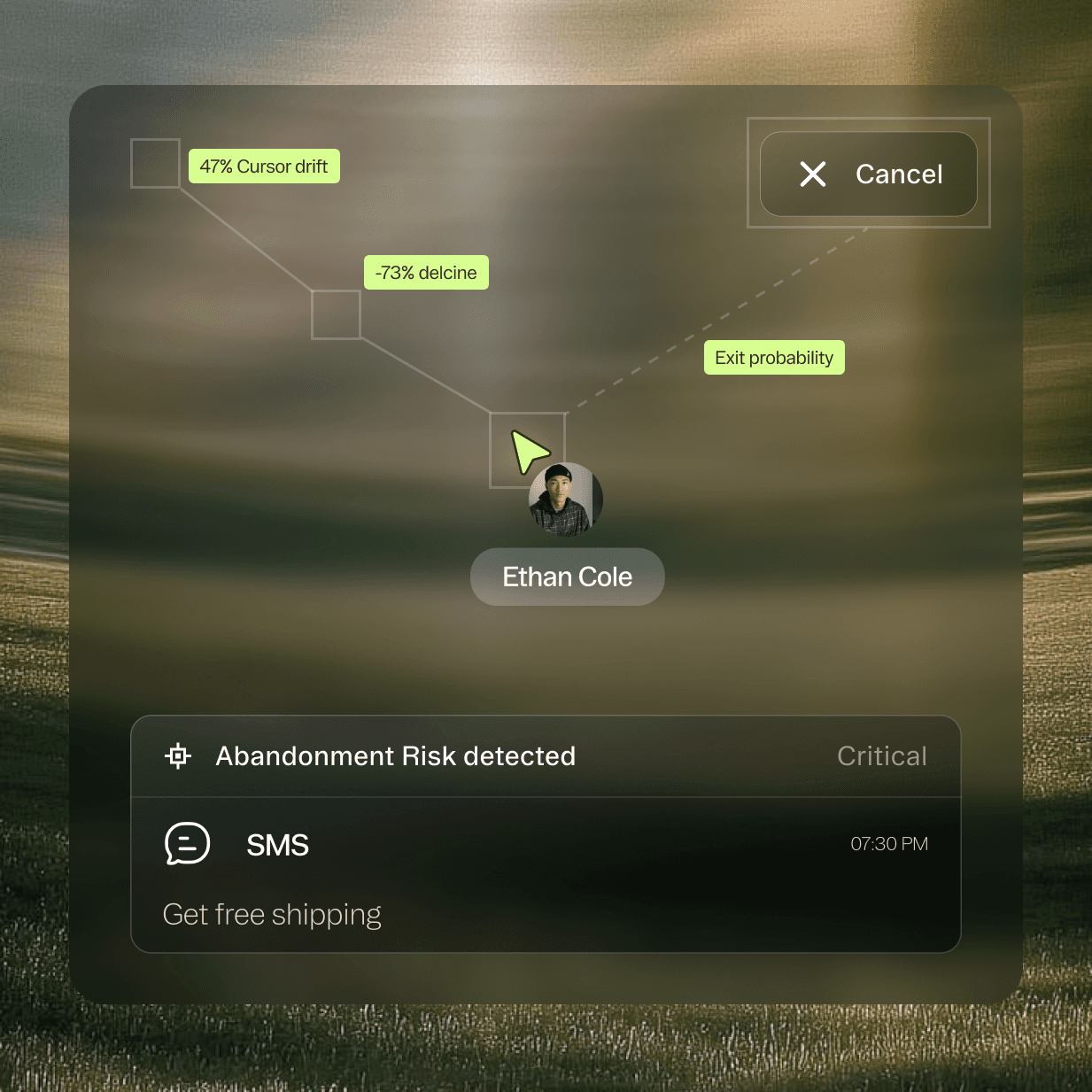
Markopolo AI transforms raw clicks into 384-dimensional vectors representing intent, emotional state, and purchase probability. This mathematical understanding goes far beyond event tracking. The AI sees hesitation patterns suggesting price sensitivity, comparison behavior indicating research phase, and micro-behaviors predicting abandonment before it happens.
Agentic decision-making
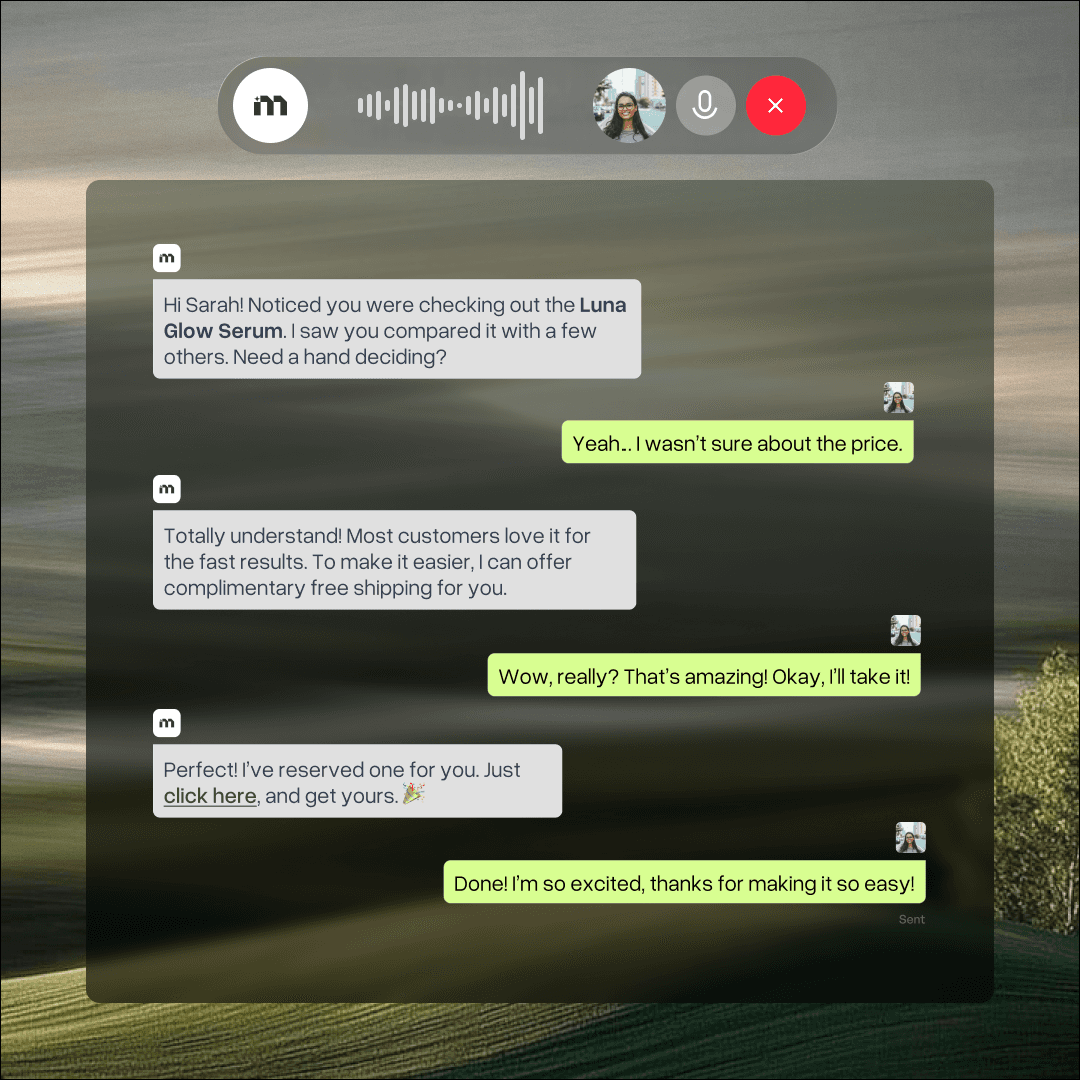
Each revenue agent reasons about context rather than following rules. When Sarah abandons at 2:47 PM, her agent knows she typically researches for three sessions before buying, responds to social proof over discounts, and engages with WhatsApp at 7 PM. It waits for the optimal moment with the right message on the right channel.
Omnichannel intelligence

Markopolo coordinates email, SMS, WhatsApp, push notifications, and AI voice calls in perfect harmony. Channel selection happens dynamically based on individual response patterns. The system learns that Customer A converts from SMS while Customer B needs email-then-WhatsApp sequences.
Real-time journey generation
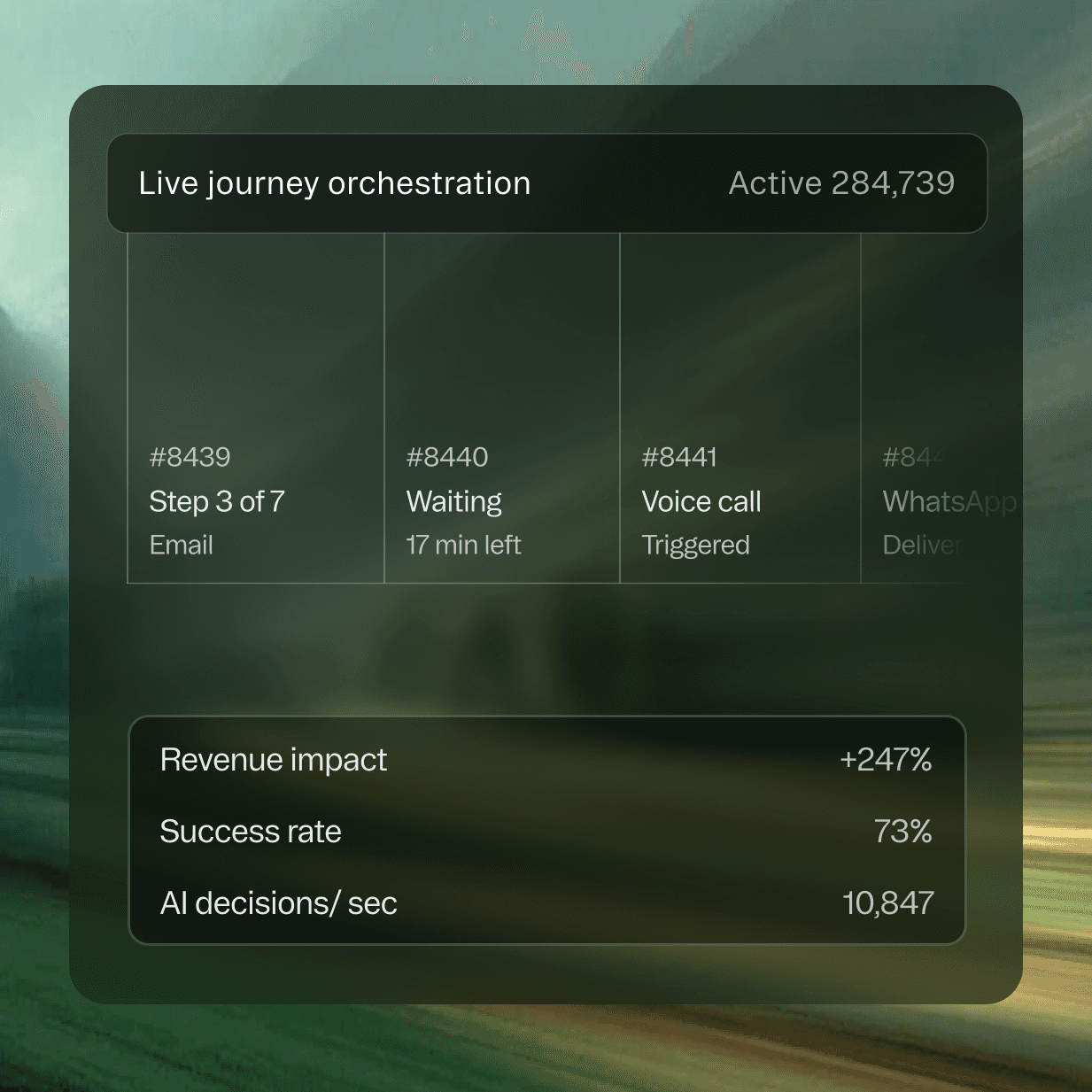
Strategies generate in under 50 milliseconds. As behavioral signals arrive, the AI adjusts approach instantly. No pre-built flow can match this responsiveness. Each intervention reflects the customer's current state, not assumptions from hours earlier.
Lifetime attribution modeling

The platform tracks complete customer journeys across sessions and channels. It identifies what actually causes purchase decisions, not just correlations. This causal understanding drives more effective recovery by addressing real objections rather than guessing.
Intent prediction accuracy
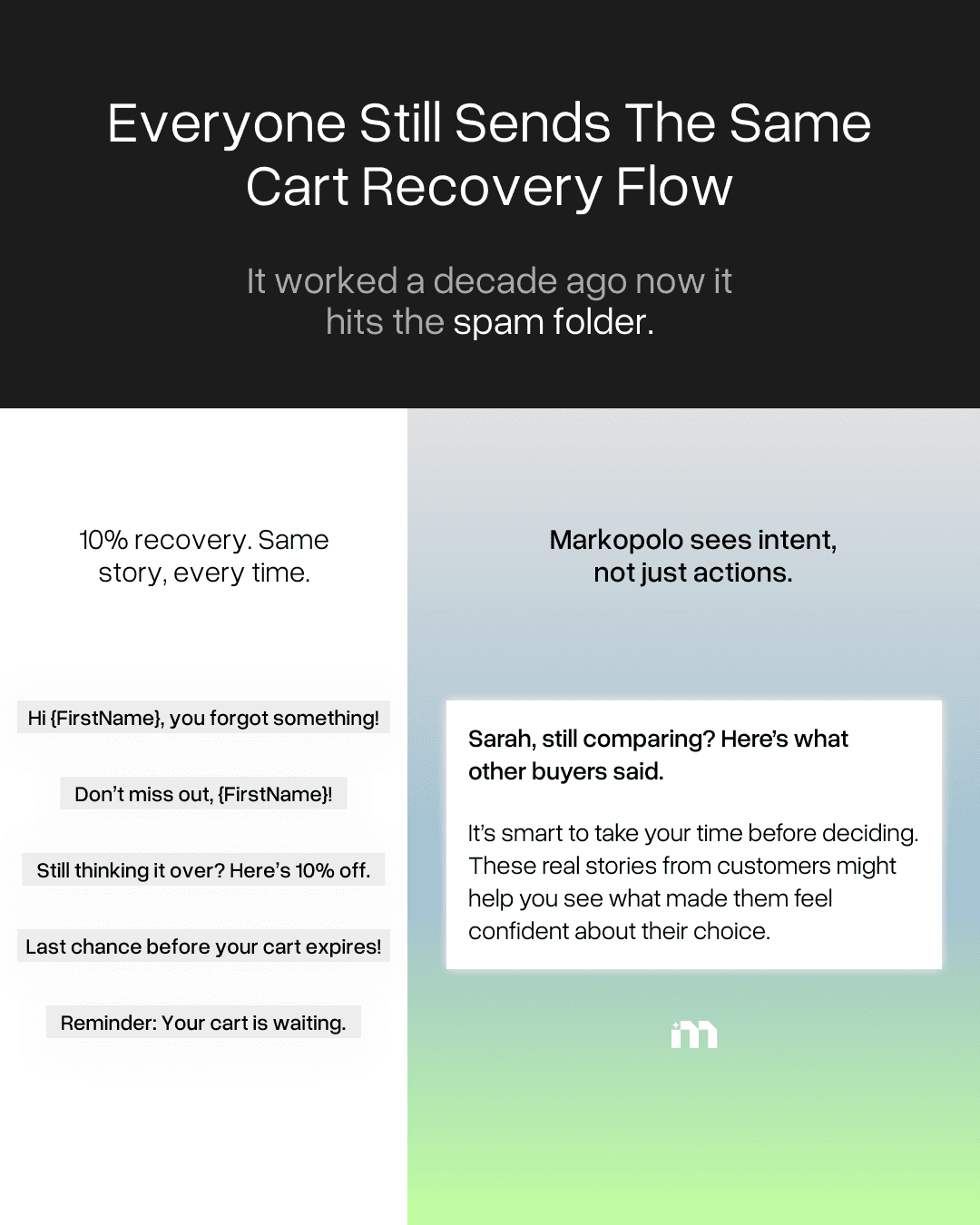
Markopolo's models predict next actions with 91% accuracy based on behavioral patterns. This precision enables proactive intervention before abandonment happens. The AI detects declining purchase momentum and acts while the customer still shows interest.
Compound intelligence effect
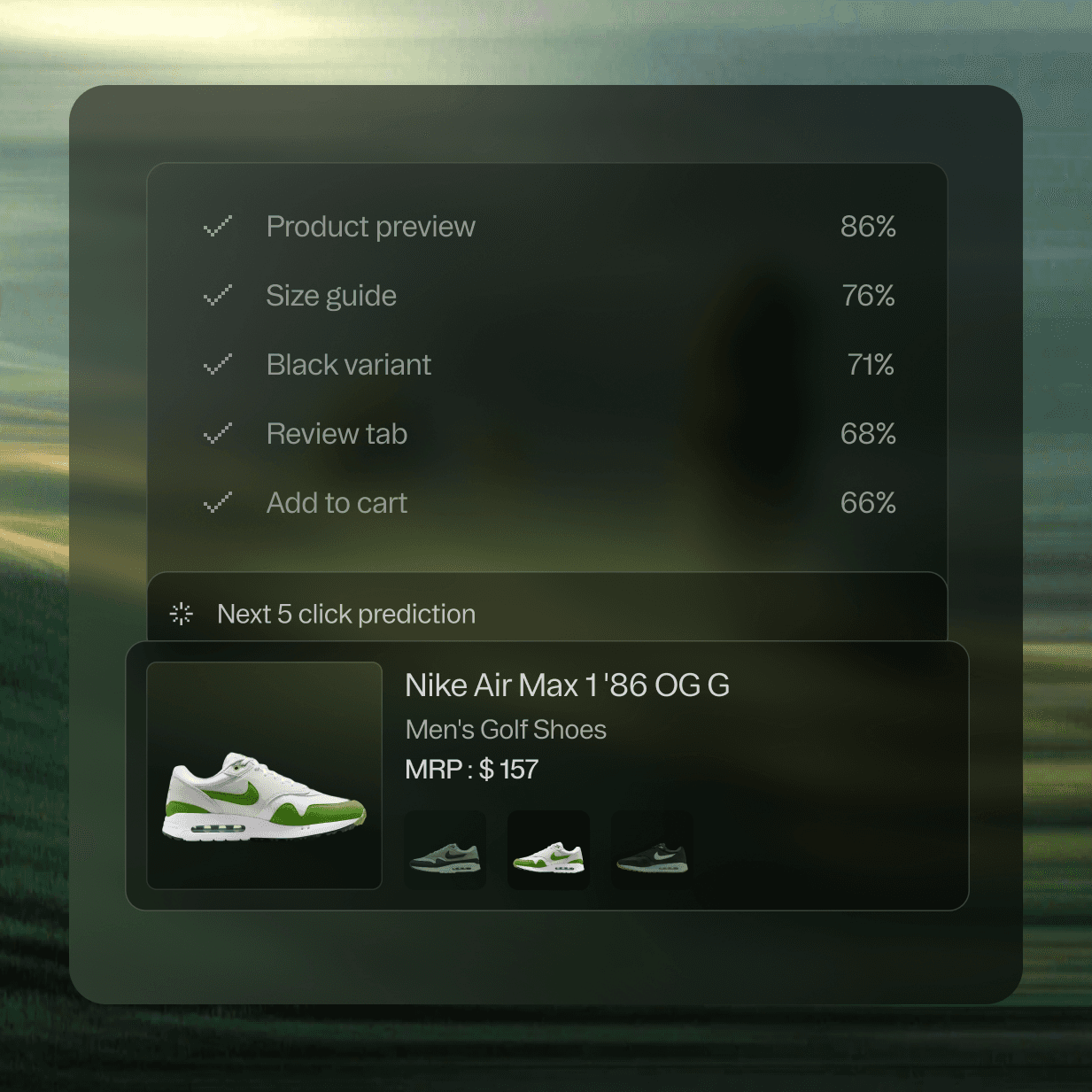
Every interaction makes the system smarter. By month six, AI predicts individual behavior with 85%+ accuracy. By month twelve, it knows customers better than they know themselves. This learning compounds across the entire customer base, benefiting all merchants.
Voice AI integration
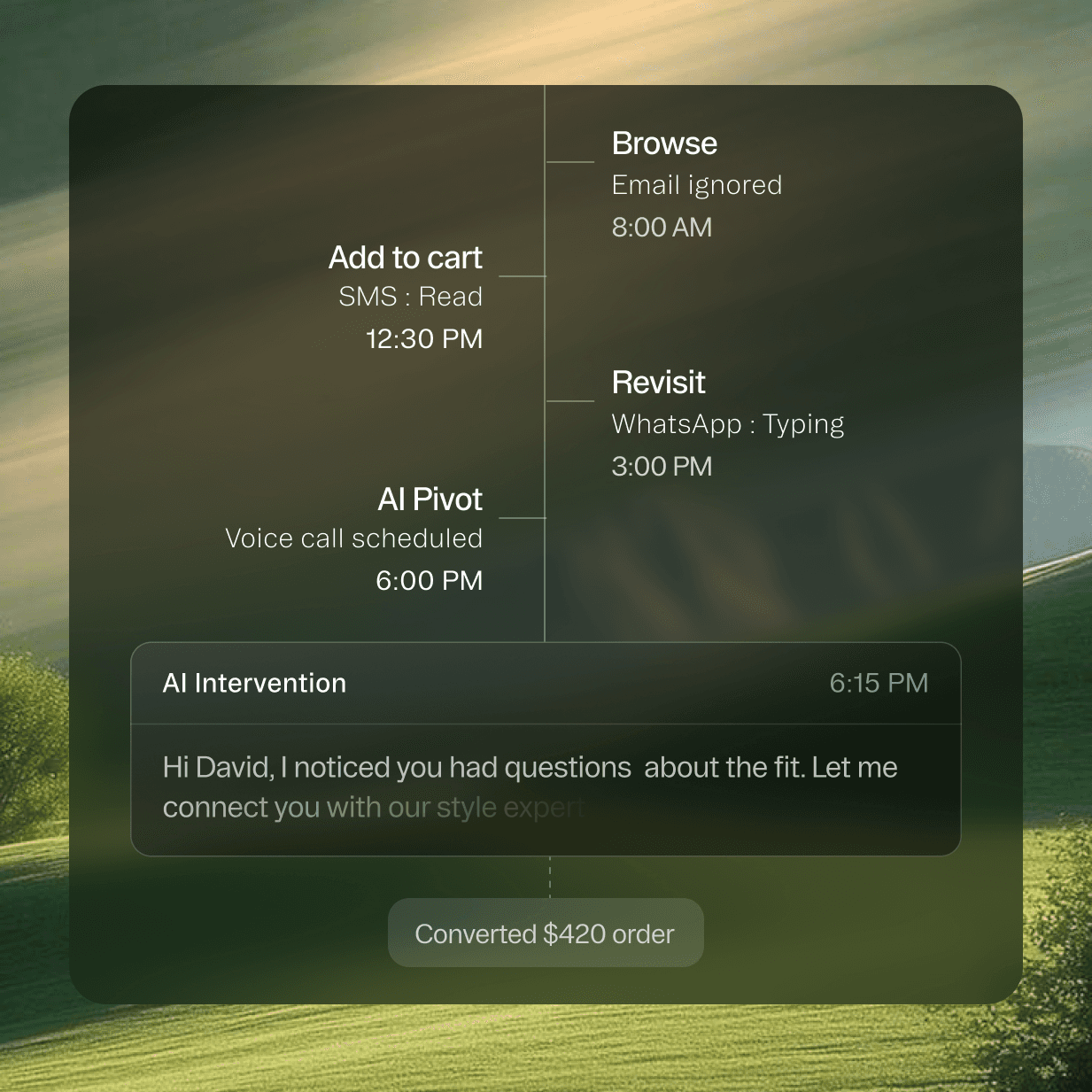
Markopolo includes AI voice agents that call customers with human-like conversations. These agents know cart contents, answer product questions, and handle objections. Voice adds a recovery channel that competitors cannot match at scale.
Pros
Creates unique journeys for every individual rather than segments
Eliminates workflow building and template management
Achieves 30-40% recovery rates versus 10-15% industry average
Includes voice AI for high-touch engagement
Value-based pricing aligns platform success with merchant success
Continuous learning improves results automatically over time
Available for Shopify, WooCommerce, BigCommerce, and native ecosystems
Cons
Traditional marketers may struggle to understand the platform at first glance
Klaviyo
Klaviyo is popular for ecommerce email and SMS marketing with deep Shopify integration and sophisticated data capabilities. The platform automatically captures browsing, purchasing, and engagement history from connected stores, building comprehensive customer profiles that power personalized recovery flows.
AI capabilities in Klaviyo
Klaviyo uses machine learning for predictive analytics, including expected customer lifetime value, churn risk, and optimal send times. Its AI generates subject lines, recommends products, and predicts which customers will likely convert. The platform supports complex automation flows with conditional logic based on real-time behavior.
Pros
Native Shopify and WooCommerce integrations require minimal setup
Predictive analytics identify high-value abandoners for prioritization
Pre-built abandoned cart flows launch in minutes
Detailed revenue attribution tracks campaign performance precisely
Free tier supports testing with up to 250 contacts
Cons
Pricing scales steeply with contact list size
Advanced features require significant learning investment
Limited to email and SMS channels without third-party additions
Segment-based approach treats similar customers identically
Flows require manual creation and ongoing optimization
Klaviyo vs Markopolo AI comparison for cart recovery
Klaviyo excels at data-driven email marketing but relies on marketers to build flows and define segments. Markopolo automates the entire recovery process with individual AI agents. While Klaviyo achieves 10-30% recovery with well-optimized flows, Markopolo reaches 30-40% through true personalization at scale. Klaviyo suits teams who want control over campaign creation. Markopolo serves brands wanting autonomous revenue recovery without ongoing workflow management.
Omnisend
Omnisend combines email, SMS, and push notifications in a single platform built specifically for ecommerce. Its strength lies in accessibility and pre-built automation templates that get stores recovering carts within hours of setup.
AI capabilities in Omnisend
The platform offers AI-powered product recommendations in recovery messages, automated send-time optimization, and behavioral segmentation for targeting. Pre-built workflows handle common scenarios like cart abandonment, browse abandonment, and win-back sequences with intelligent branching logic.
Pros
User-friendly interface requires no technical expertise
Pre-built automations deploy immediately
Competitive pricing starts with a generous free tier
Multi-channel orchestration in one workflow editor
Strong customer support and onboarding assistance
Cons
Limited advanced customization for complex scenarios
SMS features less robust than dedicated SMS platforms
Segmentation depth doesn't match enterprise tools
Scalability constraints emerge for high-volume senders
No voice channel integration
Omnisend vs Markopolo AI comparison for cart recovery
Omnisend simplifies multi-channel marketing with templates and workflows. It's ideal for teams wanting quick setup without technical complexity. However, its segment-based approach means many customers receive similar messages. Markopolo's individual AI agents create unique journeys for every abandoner, achieving higher recovery rates without requiring workflow creation. Omnisend works for brands starting with automation. Markopolo suits those ready for AI-driven personalization at scale.
Braze
Braze serves enterprise brands needing sophisticated cross-channel customer engagement. Its Canvas journey builder orchestrates complex campaigns across email, SMS, push notifications, in-app messages, and webhooks with real-time triggering capabilities.
AI capabilities in Braze
Braze applies machine learning to optimize send timing, predict customer behavior, and personalize content dynamically. Its real-time data processing enables instant responses to customer actions. The platform handles complex journey logic with advanced experimentation and testing tools.
Pros
Enterprise-grade scalability handles massive message volumes
Real-time triggering responds instantly to customer behavior
Extensive channel coverage including in-app messaging
Advanced experimentation capabilities optimize performance
Strong API flexibility for custom integrations
Cons
Pricing starts at $60K+ annually, excluding smaller brands
Requires technical resources for implementation
E-commerce-specific triggers need custom configuration
No built-in CDP requires separate data management
Steep learning curve for full capability utilization
Braze vs Markopolo AI comparison for cart recovery
Braze provides powerful infrastructure for enterprise marketing teams with technical resources. Its flexibility suits complex requirements but demands significant investment in setup and management. Markopolo delivers similar personalization capabilities without enterprise pricing or technical complexity. The autonomous agents handle what Braze requires teams to configure manually. For cart recovery specifically, Markopolo's specialized focus outperforms Braze's general-purpose platform.
Attentive
Attentive specializes in SMS marketing with conversational AI capabilities. The platform focuses on building subscriber lists and recovering carts through text messaging, achieving the high open rates that make SMS effective for urgent recovery communications.
AI capabilities in Attentive
The platform uses AI for message optimization, send-time prediction, and two-way conversational flows. Its compliance features ensure deliverability while personalization capabilities tailor messages based on customer data and behavior.
Pros
Best-in-class SMS deliverability and compliance
Conversational AI enables two-way interactions
Strong subscriber acquisition tools grow SMS lists
High engagement rates from SMS focus
Enterprise-grade reliability for high-volume sending
Cons
SMS-only focus requires additional tools for email
Premium pricing limits accessibility for smaller brands
Channel limitations restrict omnichannel strategies
No voice or advanced multi-channel orchestration
Requires separate platform for email campaigns
Attentive vs Markopolo AI comparison for cart recovery
Attentive dominates SMS marketing but covers only one channel. Markopolo orchestrates email, SMS, WhatsApp, push, and voice calls through unified AI agents. Where Attentive requires manual flow creation, Markopolo generates journeys autonomously. Brands prioritizing SMS above all else might prefer Attentive's specialization. Those wanting comprehensive recovery across channels while eliminating workflow management choose Markopolo.
Drip
Drip positions itself as an ecommerce CRM with marketing automation capabilities. Its visual workflow builder and behavioral segmentation help brands create targeted recovery campaigns based on shopping patterns.
AI capabilities in Drip
Drip applies machine learning to product recommendations, customer scoring, and engagement prediction. Its automation engine supports complex conditional logic while the on-site marketing features capture leads before abandonment happens.
Pros
Visual workflow builder simplifies complex automations
Strong behavioral segmentation capabilities
On-site marketing prevents some abandonment
Ecommerce-focused feature set
Reasonable pricing for growing brands
Cons
Smaller integration ecosystem than larger competitors
Limited channel options beyond email and SMS
Less sophisticated AI than dedicated platforms
No voice or advanced messaging channels
Requires ongoing workflow optimization
Drip vs Markopolo AI comparison for cart recovery
Drip offers solid automation for brands comfortable building workflows. Its visual builder makes complex sequences accessible. However, Drip still requires marketers to design and optimize flows manually. Markopolo's autonomous agents handle strategy generation, execution, and optimization without human intervention. Drip suits teams wanting control over recovery logic. Markopolo serves brands preferring AI-driven automation.
CartStack
CartStack focuses specifically on abandoned cart and browse abandonment recovery through email, SMS, and push notifications. Its real-time email capture technology collects contact information before checkout, expanding recovery reach.
AI capabilities in CartStack
The platform uses machine learning for send-time optimization and basic personalization. Its strength lies in real-time data capture that identifies abandoners other platforms miss. A/B testing capabilities help optimize message performance over time.
Pros
Affordable pricing starts at $29/month
Real-time email capture expands reach
Multi-channel campaigns include push notifications
Quick setup integrates with major platforms
Strong ROI typically around 27:1
Cons
Less sophisticated AI than newer platforms
Limited personalization depth
Requires manual A/B testing for optimization
No voice channel capabilities
Basic segmentation compared to enterprise tools
CartStack vs Markopolo AI comparison for cart recovery
CartStack provides affordable, effective recovery for budget-conscious stores. Its real-time capture technology adds value competitors lack. However, the platform uses traditional workflow approaches requiring ongoing optimization. Markopolo's AI agents deliver superior personalization without manual testing. CartStack suits stores starting with recovery automation. Markopolo serves brands ready for AI-driven scale.
TxtCart
TxtCart focuses exclusively on SMS cart recovery with AI-powered two-way conversations. Its chatbot engages abandoners in natural dialogue, handling objections and answering questions in real-time to close sales.
AI capabilities in TxtCart
The platform's AI conducts genuine conversations rather than sending one-way messages. It addresses specific objections, offers personalized incentives, and guides customers back to checkout. Custom AI personas match brand voice while real-time analytics track conversation performance.
Pros
Two-way AI conversations feel natural and human
98% open rates from SMS focus
Performance-based pricing reduces risk
Real-time objection handling closes sales
Strong ROI reported up to 3000%
Cons
SMS-only limits channel coverage
Shopify-exclusive integration
No email, push, or voice options
Requires SMS subscriber list
Single-channel approach misses some customers
TxtCart vs Markopolo AI comparison for cart recovery
TxtCart excels at conversational SMS recovery with impressive results. Its two-way AI creates engaging customer interactions. However, SMS-only coverage leaves significant recovery opportunities untouched. Markopolo combines conversational AI with email, WhatsApp, push, and voice channels. It creates similar personalized interactions across every touchpoint. TxtCart works for SMS-focused Shopify stores. Markopolo serves brands wanting comprehensive recovery across all channels.
How to choose the right AI platform for abandoned cart recovery
Match capabilities to your business model
D2C brands selling directly to consumers need different tools than B2B companies or marketplace sellers. Markopolo AI specifically targets ecommerce and D2C businesses with its behavioral intelligence layer. Consider whether the platform understands your customer journey before investing.
Evaluate true personalization depth
Many platforms claim AI personalization but simply insert customer names or recommend popular products. True personalization means unique strategies for each individual based on behavioral context. Markopolo's 384-dimensional behavioral vectors enable genuine individuation. Ask vendors to explain exactly how their AI creates personalized experiences.
Consider total cost of ownership
Platform subscriptions represent just one cost component. Factor in team time for flow creation, template design, A/B testing, and ongoing optimization. Autonomous platforms like Markopolo eliminate these operational costs while delivering better results. Calculate fully-loaded expenses when comparing options.
Assess channel coverage needs
Your customers use multiple channels. Platforms covering only email or only SMS miss recovery opportunities. Markopolo coordinates email, SMS, WhatsApp, push notifications, and voice calls through unified AI agents. Ensure your chosen platform reaches customers wherever they engage.
Project future scalability
Growing brands need platforms that scale without proportional cost increases. Segment-based approaches require more segments as businesses grow. Markopolo's individual agent architecture scales naturally, handling millions of unique journeys without additional configuration.
Reasons to choose Markopolo AI for abandoned cart recovery

Individual intelligence replaces segment thinking
Traditional platforms group similar customers together, sending identical messages to everyone in each bucket. A cart worth $100 abandoned on mobile triggers the same email as a $500 desktop cart. Markopolo assigns every visitor their own AI revenue agent that understands their complete behavioral context. The agent observes hesitation patterns, comparison behaviors, channel preferences, and purchase timing. It creates a completely unique recovery journey designed specifically for that individual.
Autonomous operation eliminates busy work
Marketing teams spend weeks building flows, writing templates, running A/B tests, and optimizing performance. This operational overhead consumes resources that could drive growth. Markopolo's AI agents handle everything autonomously. They generate strategies, create messages, select channels, time delivery, and optimize continuously based on outcomes. Teams set business goals and the AI executes.
Behavioral intelligence sees what others miss
Standard tracking captures events like "added to cart" and "abandoned checkout." MarkTag transforms these events into deep behavioral understanding through vectorization. It detects research phase progress, price sensitivity levels, social proof requirements, and optimal engagement windows. This intelligence enables interventions that address actual customer needs rather than assumptions.
Results compound over time
Every recovery attempt teaches Markopolo's AI something new. The system learns which messages work for which behavioral profiles, which channels drive engagement for different customer types, and which timing patterns maximize conversion. After six months, the AI predicts individual behavior with 85%+ accuracy. After twelve months, it knows customers better than they know themselves. This compound learning creates sustainable competitive advantage that grows stronger with use.