Mastering customer engagement and loyalty: best platform, strategies, and metrics in 2026
Customer loyalty doesn't happen by accident. It grows from every interaction a brand has with its customers. For e-commerce, B2C, and D2C businesses, mastering this relationship is the difference between one-time buyers and lifelong advocates. This guide covers practical strategies, measurable metrics, and the tools that make loyalty scalable.
What's the relationship between customer engagement and loyalty?
Customer engagement is the ongoing dialogue between a brand and its customers. Loyalty is the outcome when that dialogue feels personal and valuable. Engaged customers interact more often. They open emails, respond to messages, and return to make repeat purchases. Over time, these consistent positive experiences build trust. Trust becomes loyalty. The relationship is cyclical: better engagement creates stronger loyalty, and loyal customers become more engaged. For D2C and B2C brands, this cycle is essential. Acquiring new customers costs five to seven times more than retaining existing ones. Brands that invest in meaningful engagement see higher retention rates, increased customer lifetime value, and more organic referrals.
Why Markopolo AI is ideal for D2C and B2C brands to grow customer loyalty
It treats every customer as an individual

Markopolo AI is an AI-native customer engagement platform that was built to move beyond segments and templates. Its behavioral vectorization technology creates a unique understanding of each customer's intent, context, and journey. Every visitor effectively gets their own AI revenue agent. This approach delivers personalization that generic marketing platforms cannot match.
It orchestrates journeys across every channel
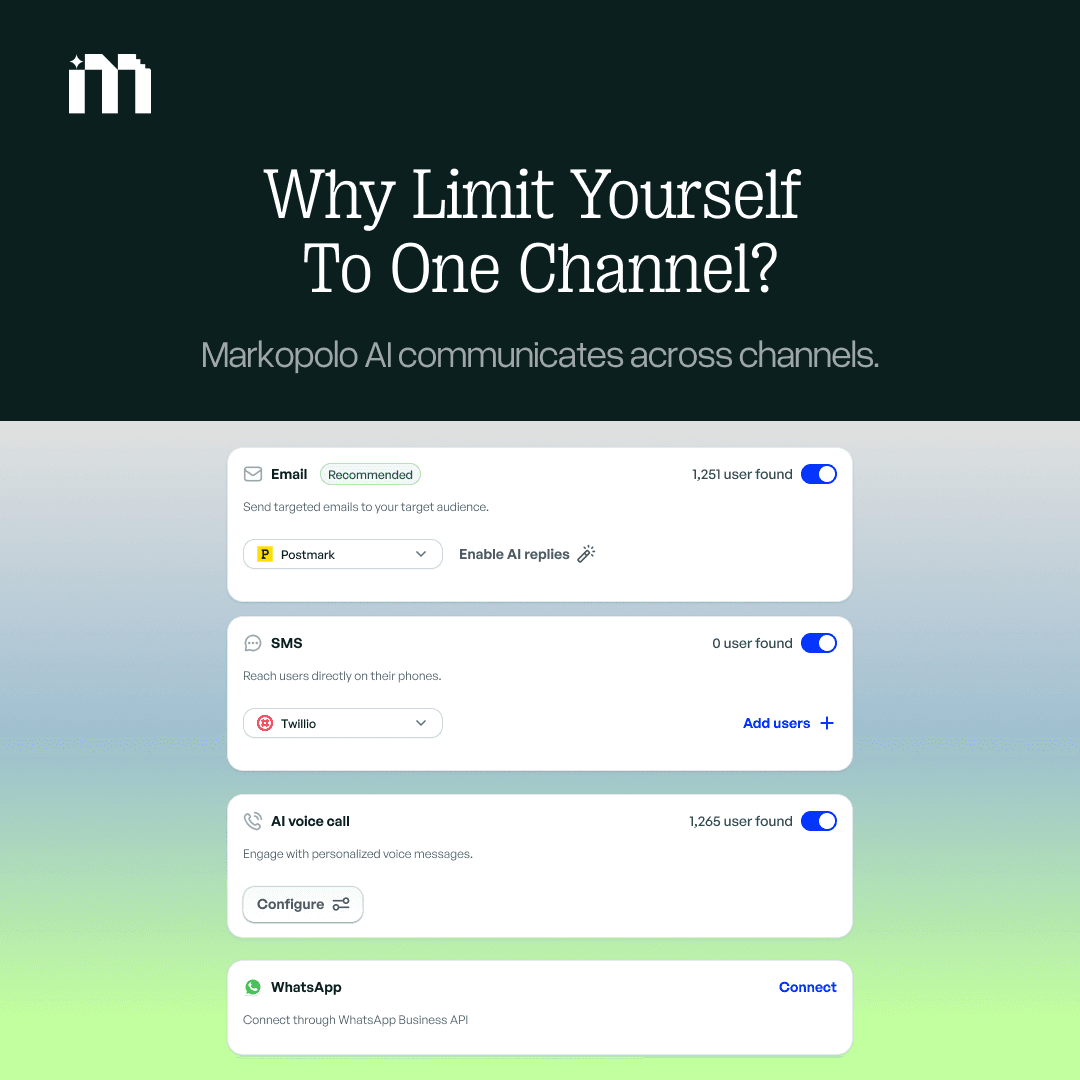
D2C and B2C brands need to reach customers wherever they are. Markopolo AI coordinates email, SMS, WhatsApp, push notifications, and voice calls from a single platform. The AI determines the right channel, timing, and message for each individual. Consistency across touchpoints builds the trust that loyalty requires.
It learns and improves continuously
The platform's AI doesn't just execute. It learns from every interaction. Over time, it identifies patterns that predict behavior with increasing accuracy. Brands benefit from compound intelligence. The system grows smarter with each customer journey it orchestrates.
It recovers revenue that competitors miss
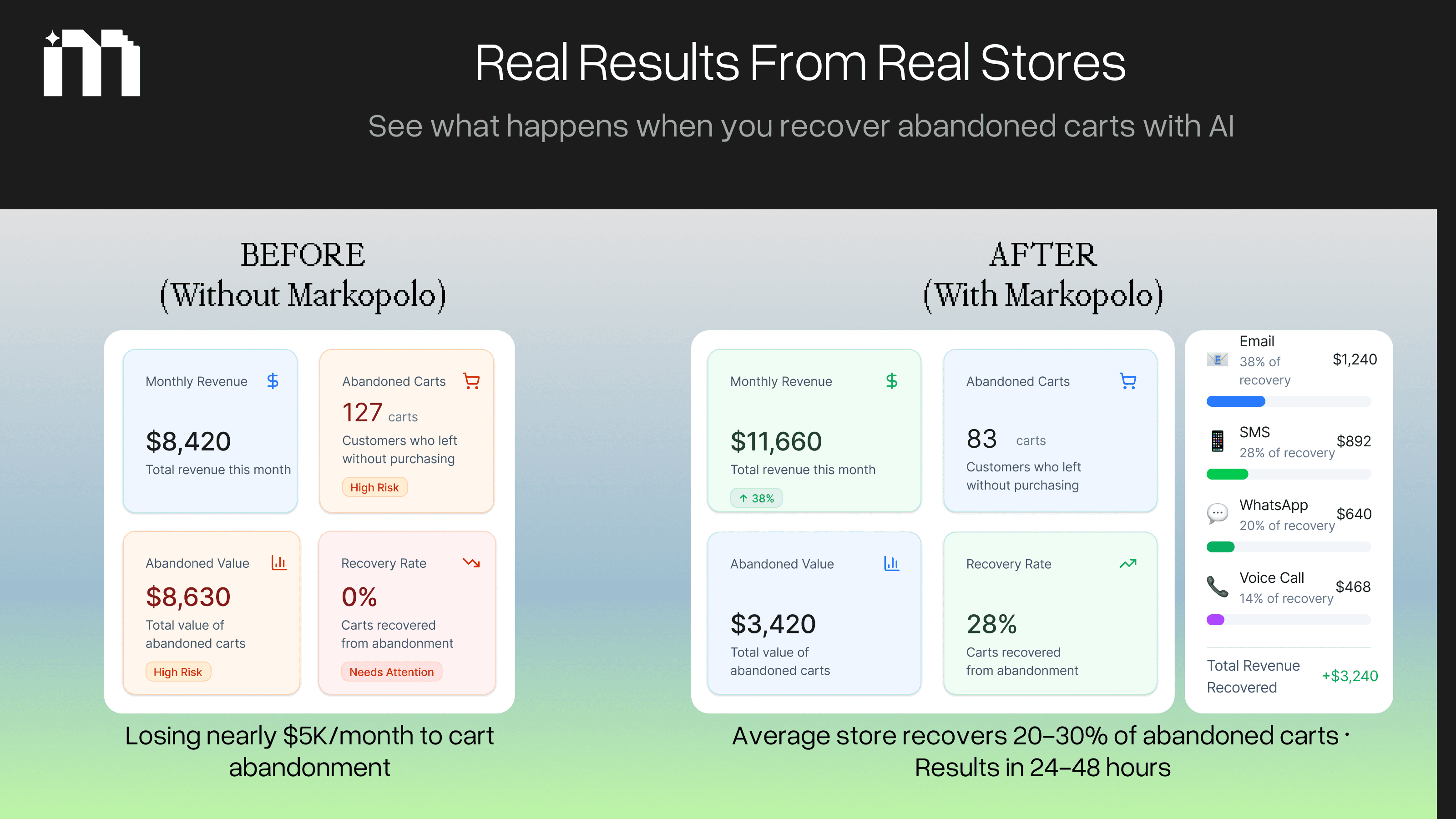
Traditional tools hit a ceiling on cart recovery and re-engagement. Markopolo AI breaks through by creating unique journeys for every abandoner and every lapsed customer. The result is significantly higher recovery rates and more opportunities to turn one-time visitors into loyal customers. For D2C and B2C brands competing on margins, this recovered revenue transforms business outcomes.
7 ways customer engagement platforms boost loyalty for D2C and B2C brands
1. Unified customer data creates a complete picture
Markopolo AI's Data Room (MarkTag) collects and attributes every customer event across channels. It connects data from websites, CRMs, apps, and content sources into one unified hub. This eliminates data silos and gives brands a complete view of each customer's journey. When teams understand the full picture, they can create more relevant experiences that strengthen loyalty.
2. Behavioral intelligence reveals true customer intent
Markopolo AI goes beyond basic tracking. It transforms customer actions into 384-dimensional behavioral vectors. This means the platform understands not just what customers do, but why they do it. It detects hesitation patterns, comparison behaviors, and purchase momentum. Brands can respond to real intent rather than guessing, which makes every interaction more meaningful.
3. AI-powered audience segmentation finds hidden opportunities
Markopolo's Audience Studio uses AI to proactively build self-updating customer cohorts from real-time behavioral data. Brands can select from pre-built segmentation templates or create custom audiences with simple prompts. The platform identifies high engagement users, potential gems who haven't engaged recently but have high conversion probability, and frequent shoppers. These dynamic segments ensure loyalty efforts reach the right people at the right time.
4. Omnichannel campaign orchestration delivers consistent experiences
Markopolo AI's Campaign Agent designs and runs personalized campaigns across email, SMS, WhatsApp, push notifications, and voice calls. Brands configure campaigns in a few clicks by defining audiences, selecting channels, setting objectives, and choosing products. The AI handles the complexity of timing and sequencing. Through omnichannel engagement platforms, customers receive consistent, relevant messages wherever they prefer to engage.
5. Autonomous content generation saves time and improves relevance
The platform offers two content modes: completely autonomous and mostly self-written. In autonomous mode, AI creates personalized content using the brand's knowledge base and audience data. In the self-written mode, AI tweaks existing content for linguistics and tone. Both approaches ensure every message feels personal without requiring hours of manual work.
6. Voice agents enable human-like conversations at scale
Markopolo AI's Voice Agent engages leads and customers with context-driven voice calls. These conversational AI agents sound like real sales development representatives. They can handle thousands of conversations simultaneously while maintaining natural dialogue. For D2C brands, this adds a high-touch channel that competitors rarely offer. Voice creates emotional connections that text-based channels cannot match.
7. Real-time analytics measure what actually drives loyalty
The Analytics dashboard tracks every website event and monitors campaign performance in real time. Brands see total events, active users, conversion rates, and revenue contribution across every touchpoint. This visibility reveals which engagement tactics build loyalty and which fall flat. Data-driven decisions replace guesswork.
10 proven customer engagement strategies that build loyalty
1. Personalize every touchpoint based on behavior
Generic messages fail. Customers expect brands to remember their preferences and past interactions. Use behavioral data to customize product recommendations, email content, and messaging timing. A customer who browses premium products wants different communication than a price-sensitive shopper. Personalization shows customers they matter.
2. Respond to customer actions in real time
Speed matters in e-commerce. When a customer abandons a cart, adds an item to their wishlist, or returns after weeks of inactivity, the moment is ripe for engagement. Real-time triggers capture attention while intent is high. Delayed responses feel irrelevant. Automation makes instant, contextual outreach possible at scale.
3. Meet customers on their preferred channels
Some customers live in their inbox. Others prefer WhatsApp or SMS. Forcing everyone into the same channel frustrates those who would engage elsewhere. Omnichannel strategies respect customer preferences. They also increase the chances of messages being seen and acted upon. Let customers choose how they want to hear from brands.
4. Use social proof to build trust
Reviews, testimonials, and user-generated content reduce purchase anxiety. New customers trust other customers more than they trust brand messaging. Feature social proof prominently on product pages, in emails, and across campaigns. For customers who research extensively before buying, social validation often tips the decision.
5. Create value beyond transactions
Loyalty grows when brands offer more than products. Educational content, exclusive tips, community access, and entertainment add value between purchases. A skincare brand might share routines. A fitness company might offer workout guides. These touchpoints keep customers engaged when they're not actively shopping.
6. Reward engagement, not just purchases
Traditional loyalty programs reward spending. Modern programs also reward engagement. Points for reviews, referrals, social shares, and email opens encourage ongoing interaction. Engaged customers feel invested in the brand. They become advocates who drive organic growth.
7. Segment audiences to avoid irrelevant messaging
Blasting the same message to an entire list annoys customers and tanks engagement rates. Segmentation ensures messages reach people who care about them. Group customers by purchase history, browsing behavior, engagement level, and preferences. Smaller, targeted sends outperform large generic campaigns.
8. Ask for feedback and act on it
Customers notice when brands listen. Surveys, reviews, and direct questions show that their opinions matter. More importantly, acting on feedback demonstrates commitment to improvement. Share what changed based on customer input. This transparency builds trust and loyalty.
9. Surprise customers with unexpected moments of delight
Predictable experiences are forgettable. Unexpected gestures stand out. A handwritten note, a surprise discount, early access to a sale, or a birthday message creates emotional impact. These moments don't need to be expensive. They need to feel genuine and unexpected.
10. Maintain consistent brand voice across all interactions
Every email, SMS, chat message, and social post should feel like it comes from the same brand. Inconsistency creates confusion and erodes trust. Define voice guidelines and ensure everyone—human and AI—follows them. Consistency reinforces brand identity and makes customers feel at home.
6 metrics to measure customer loyalty and lifetime value
1. Customer retention rate
Retention rate shows the percentage of customers who continue buying over a specific period. Calculate it by dividing the number of returning customers by the total customers at the start of the period. High retention means engagement efforts work. Low retention signals problems in the customer experience.
2. Customer lifetime value (CLV)
CLV predicts the total revenue a customer will generate throughout their relationship with a brand. It accounts for average purchase value, purchase frequency, and customer lifespan. This metric reveals which customer segments deserve the most investment and helps justify acquisition costs.
3. Net promoter score (NPS)
NPS measures how likely customers are to recommend a brand to others. A single survey question—"How likely are you to recommend us?"—generates a score from -100 to 100. Promoters (scores 9-10) drive growth. Detractors (scores 0-6) signal loyalty problems that need attention.
4. Repeat purchase rate
This metric tracks the percentage of customers who make more than one purchase. It directly reflects loyalty. A rising repeat purchase rate indicates that customers find enough value to return. Segment this data by acquisition channel, product category, or customer cohort for deeper insights.
5. Average order value (AOV)
AOV measures the average amount spent per transaction. Loyal customers often spend more per order because they trust the brand. Track AOV over time and across segments. Rising AOV among repeat customers suggests growing loyalty and willingness to invest in the relationship.
6. Churn rate
Churn rate measures the percentage of customers who stop buying over a given period. It's the inverse of retention. High churn means brands lose customers faster than they can replace them. Analyzing churn by segment reveals which customers leave and why. This insight guides intervention strategies.
5 best practices for developing customer loyalty programs
1. Keep the structure simple
Complicated point systems confuse customers. If earning and redeeming rewards requires a manual, participation drops. Clear rules and easy math increase engagement. Customers should understand exactly how to earn rewards and what those rewards are worth.
2. Offer rewards customers actually want
Generic discounts work for some customers. Others prefer exclusive access, free shipping, or experiential rewards. Survey customers to learn their preferences. Tiered programs can offer different reward types to different segments. Relevance drives participation.
3. Make enrollment effortless
Friction kills signups. Auto-enrollment at checkout removes barriers. If registration is required, keep forms short. Request only essential information upfront. Additional details can be collected later as customers engage with the program.
4. Communicate program benefits consistently
Customers forget about programs they don't see. Regular reminders about point balances, available rewards, and program perks keep participation active. Include loyalty status in emails, on the website, and at checkout. Visibility drives usage.
5. Iterate based on data
Loyalty programs are not set-and-forget. Track enrollment rates, redemption rates, and the behavior of members versus non-members. Identify what's working and what's not. Test new reward types, earning mechanisms, and communication strategies. Continuous improvement keeps programs effective.
6 benefits of improving customer loyalty and engagement
1. Higher customer lifetime value
Loyal customers spend more over time. They buy more frequently and explore more products. Increasing retention by just 5% can boost profits by 25% to 95%. The math favors investment in loyalty.
2. Lower customer acquisition costs
Acquiring new customers is expensive. Loyal customers reduce the pressure to constantly find new buyers. They also refer friends and family, creating organic acquisition at no additional cost. Strong retention improves marketing efficiency.
3. More predictable revenue
One-time buyers create revenue spikes and valleys. Repeat customers create steady, predictable income. This stability makes planning easier. Brands can forecast inventory, staffing, and cash flow with greater confidence.
4. Increased word-of-mouth marketing
Loyal customers become advocates. They leave positive reviews, share on social media, and recommend brands to their networks. This organic marketing carries more trust than paid advertising. It also reaches audiences traditional channels might miss.
5. Valuable customer feedback
Engaged customers care enough to share opinions. They report problems, suggest improvements, and offer ideas. This feedback is invaluable for product development and experience optimization. Loyal customers help brands get better.
6. Competitive differentiation
Products and prices can be copied. Customer relationships cannot. Brands with strong loyalty create emotional connections competitors struggle to replicate. In crowded markets, these relationships become a durable competitive advantage.