Customer engagement automation strategies, best platforms, and implementation in 2026
Customer engagement automation helps e-commerce brands connect with shoppers at the right time, through the right channel, with the right message. This guide covers proven strategies, leading platforms, and practical implementation steps for B2C and D2C businesses in 2026.
What is customer engagement automation and how does it work
Customer engagement automation uses software to manage and personalize interactions with customers without manual effort. These systems track customer behavior, segment audiences, and trigger communications based on specific actions. For example, when someone abandons a cart, the system automatically sends a reminder email or executes an AI voice call.
AI for customer engagement works by collecting data from multiple touchpoints like websites, apps, and purchase history. It then uses rules or AI to decide what message to send, when to send it, and which channel to use. Modern platforms go beyond simple triggers. They analyze patterns in customer behavior to predict intent and create personalized experiences at scale.
Why customer engagement automation matters for growth
Customers expect personalized experiences
Today's shoppers want brands to understand their preferences. Generic messages feel irrelevant and often get ignored. Automation enables businesses to deliver tailored content to thousands of customers simultaneously. Each person receives communications that match their interests and buying stage. This creates better experiences without requiring massive marketing teams.
Manual processes cannot scale
A small business might personally respond to every customer inquiry. But as order volumes grow, this becomes impossible. Automation handles repetitive tasks like welcome sequences, order confirmations, and re-engagement campaigns. Marketing teams then focus on strategy and creative work instead of sending individual messages. The result is consistent communication quality regardless of customer base size.
Revenue recovery requires speed
Cart abandonment happens constantly in e-commerce. Industry data shows most abandoned carts never convert without intervention. Automated recovery sequences reach customers within minutes of leaving. This timing matters because purchase intent fades quickly. Brands that automate recovery consistently outperform those relying on manual follow-ups.
Top platforms and tools for automating customer engagement
Platform | Channels | Personalization approach | Automation type | Voice support | Best for |
|---|---|---|---|---|---|
Markopolo AI | Email, SMS, WhatsApp, Push, Voice | Individual-level (behavioral vectors) | Autonomous AI agents | Yes | E-commerce, D2C, and B2C brands |
Klaviyo | Email, SMS | Segment-based | Rule-based workflows | No | E-commerce email marketing |
Braze | Email, SMS, Push, In-app | Segment-based | Rule-based journeys | No | Enterprise cross-channel |
HubSpot | Email, Chat, Ads | Segment-based | Workflow automation | No | B2B marketing and sales |
Attentive | SMS, Email | Segment-based | Triggered campaigns | No | SMS-focused retail |
Markopolo AI
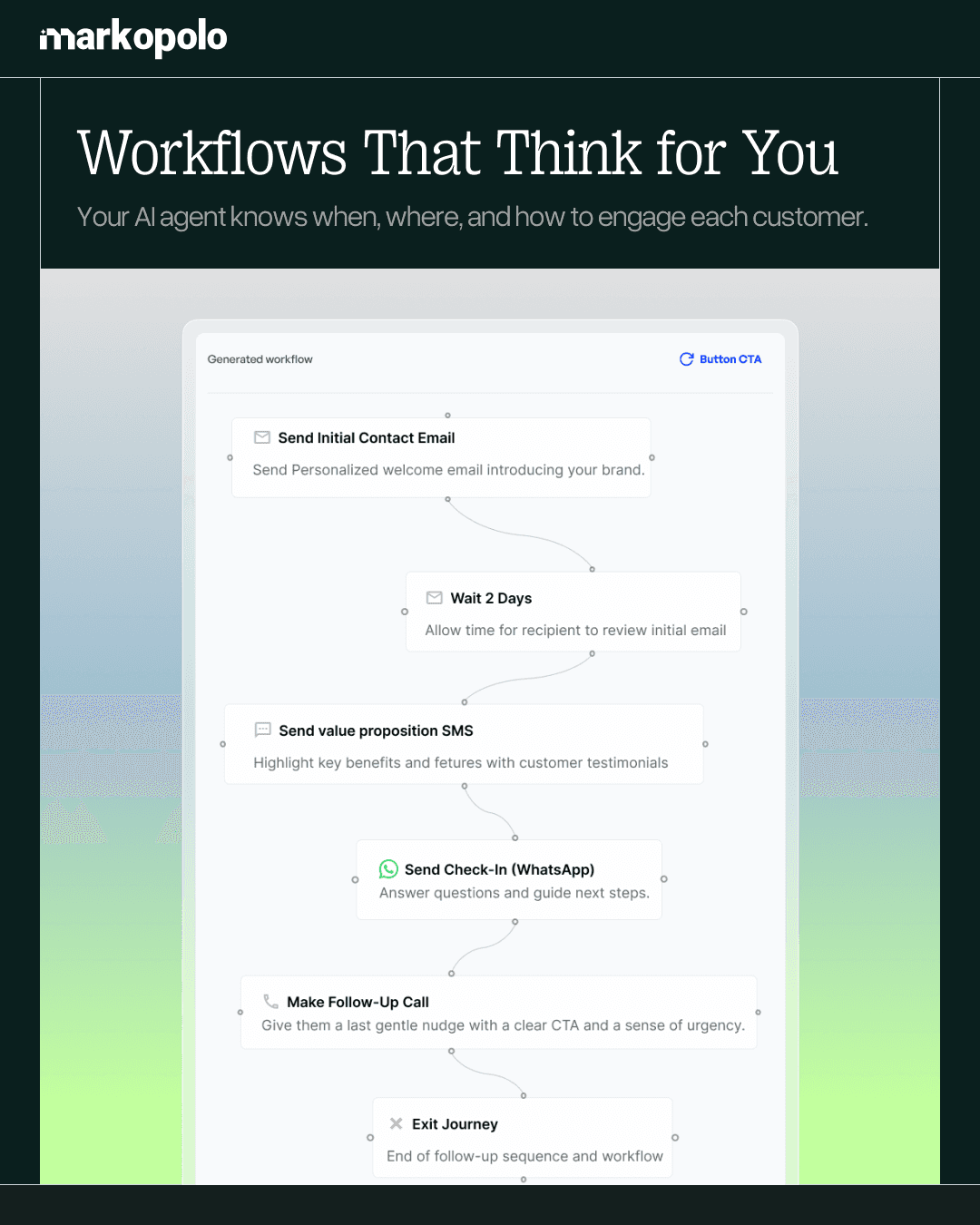
Markopolo is an AI-native customer engagement platform that is fully autonomous. It is ahead of automated platforms. Markopolo AI takes a fundamentally different approach to customer engagement automation. Instead of creating static workflows that apply to segments, the platform generates individual AI agents for each customer.
These agents analyze behavioral data and orchestrate unique journeys based on each person's patterns and preferences. The system operates autonomously without requiring A/B testing because it continuously learns what works for each individual.
The platform's foundation is its behavioral intelligence layer called MarkTag. This technology transforms customer actions into 384-dimensional vectors that capture intent, preferences, and purchase readiness. Rather than seeing isolated events like page views or cart adds, the system understands context. It recognizes when someone is researching versus ready to buy, and whether they respond better to social proof or discounts.
Markopolo AI supports omnichannel engagement across email, SMS, WhatsApp, push notifications, and AI voice calls. The platform decides not just what to say, but which channel and timing will resonate with each specific customer. E-commerce brands using this approach report cart recovery rates of 30-40%, compared to the industry average of 10-15%.
Automation capabilities
Real-time autonomous decision making

Markopolo's AI agents operate autonomously without human intervention. The system observes customer behavior, predicts intent, generates strategies, and executes real-time engagement across channels automatically. This eliminates the need for marketers to build workflows or create campaign rules. The AI handles everything from cart abandonment to post-purchase nurturing based on individual customer contexts.
1:1 hyper-personalization at scale
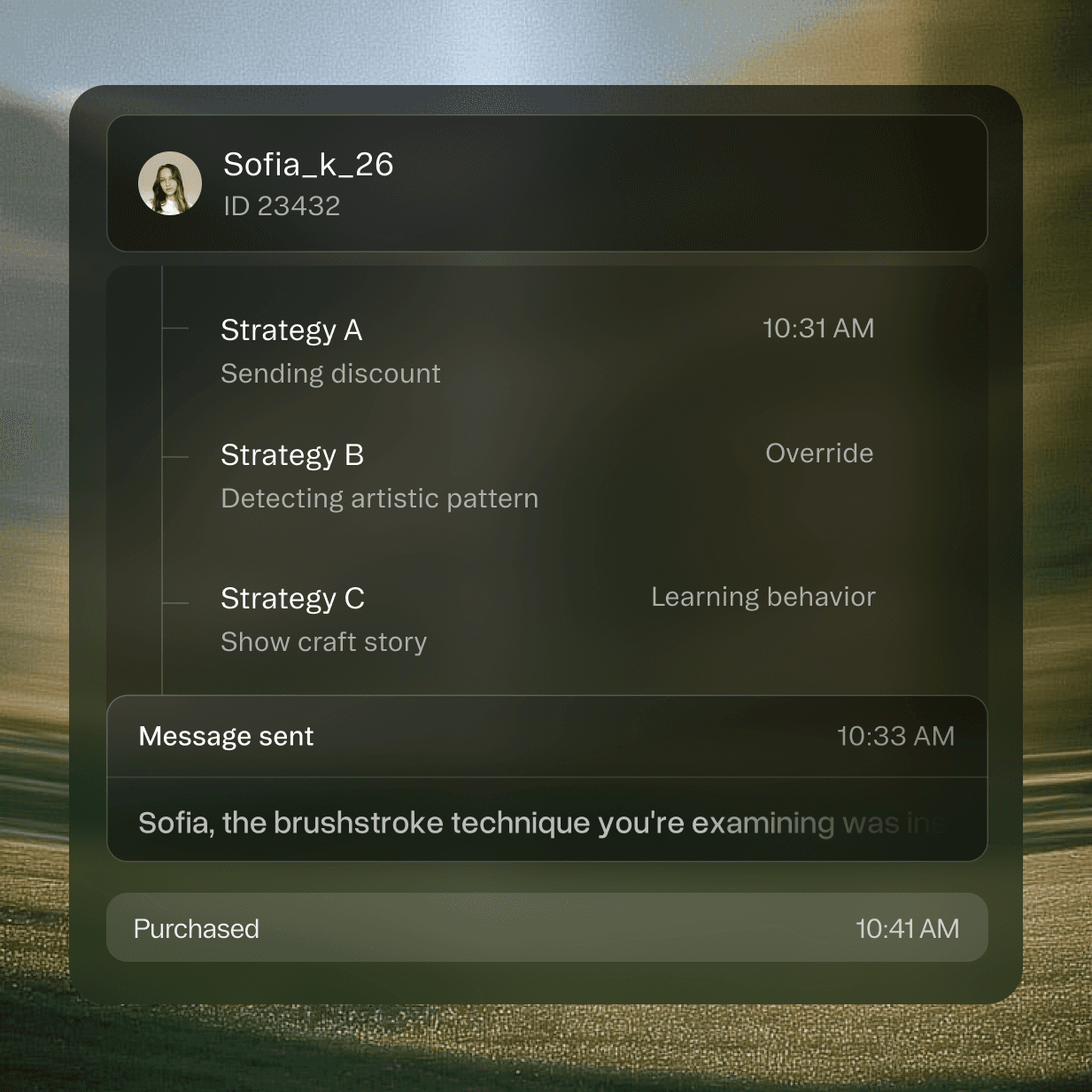
Every customer receives a completely unique journey tailored to their behavioral fingerprint. The platform doesn't apply templates or segment rules. Instead, it creates millions of individual strategies simultaneously. One customer might receive a WhatsApp message with social proof while another gets an AI voice call about payment options, all based on their specific behavioral vectors and predicted needs.
Omnichannel context-aware orchestration

The automation maintains complete context across all channels and touchpoints using omnichannel customer engagement platforms. When a customer engages via email, that interaction informs subsequent SMS and WhatsApp messages. An AI voice call references products the customer viewed on the website. This context awareness creates seamless experiences where every touchpoint builds on previous interactions rather than operating in isolation.
Dynamic content generation and optimization
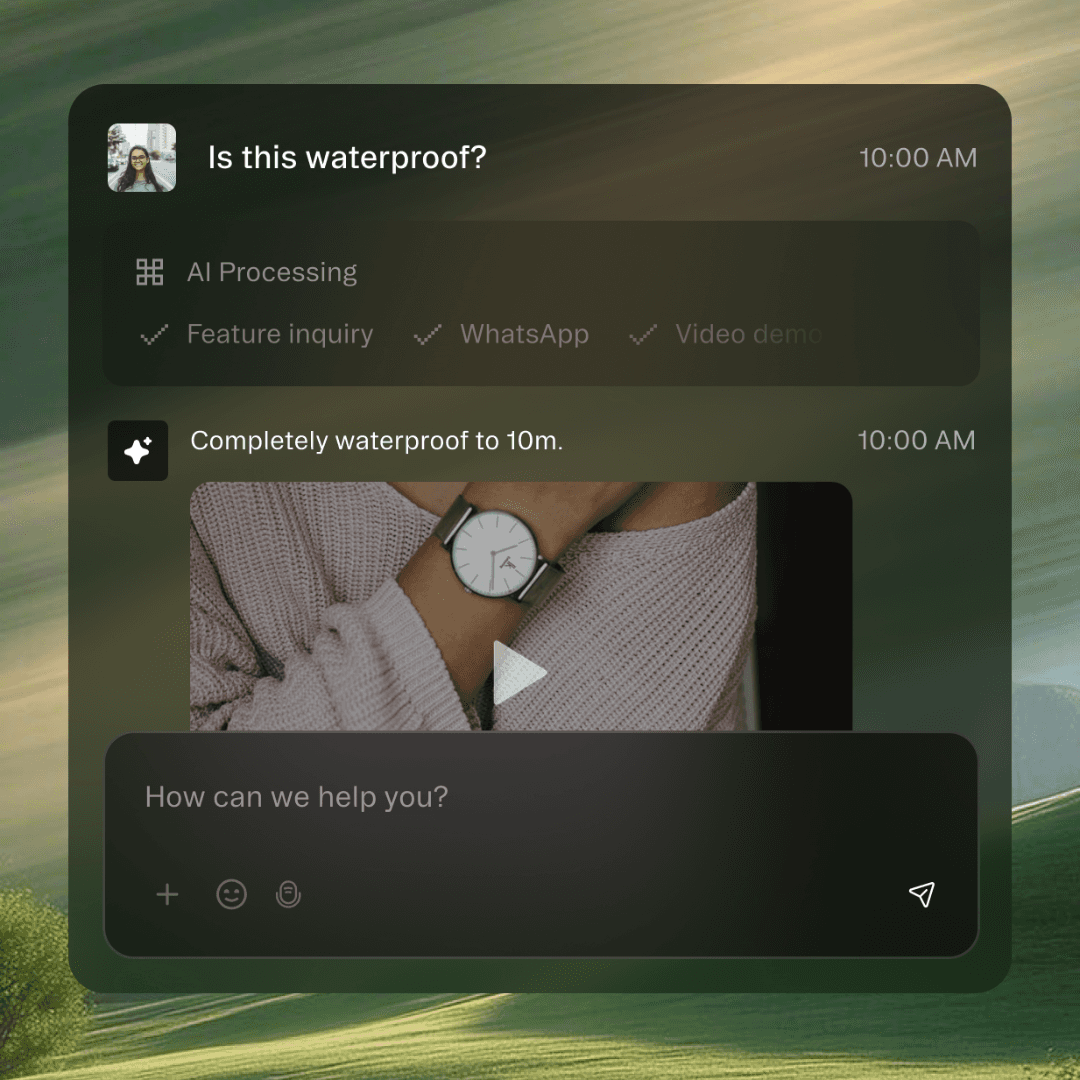
Markopolo proactively generates personalized content for each customer automatically. Email copy, SMS text, WhatsApp messages, and voice call scripts adapt to individual preferences and contexts. The system tests different approaches, learns what works for each person, and optimizes content continuously without requiring manual A/B testing or template creation.
Scalable infrastructure for millions of concurrent agents
The platform handles millions of individual AI agents running simultaneously without performance degradation. Whether you have 1,000 or 1,000,000 visitors, each receives their own dedicated agent with sub-50ms response times. This scalability makes true individualization practical for businesses of any size, from startups to enterprises processing billions of events.
Pros
Creates individual journeys for each customer, not segment-based workflows
Operates autonomously without A/B testing requirements
Unifies data from CRM, website, and apps in one place
Includes AI voice calling capabilities
Real-time behavioral understanding through vectorization
Cons
Newer platform compared to established competitors
Klaviyo
Klaviyo dominates email marketing for e-commerce with deep Shopify integration and powerful segmentation tools. The platform excels at creating automated email flows based on customer actions and purchase history. It provides robust analytics showing exactly how campaigns impact revenue.
Automation capabilities
Pre-built flow templates for welcome series, abandoned cart, post-purchase, and win-back campaigns. Supports SMS alongside email with unified customer profiles.
Pros
Excellent Shopify integration
Strong email deliverability
Extensive template library
Detailed revenue attribution
Cons
Primarily email-focused
Static workflows require manual optimization
Segment-based approach limits true personalization
No voice channel support
Comparing Klaviyo vs Markopolo AI for automation engagement
Klaviyo applies the same automated sequence to everyone in a segment. Markopolo AI creates unique journeys for each individual based on their behavioral patterns. Klaviyo requires marketers to build and test workflows manually, while Markopolo's AI operates autonomously. For brands wanting email-first simplicity, Klaviyo works well. Those seeking individual-level personalization across all channels benefit more from Markopolo AI.
Braze
Braze serves enterprise brands needing sophisticated cross-channel campaigns. The platform supports email, push, SMS, in-app messages, and content cards through a unified interface. Its Canvas feature lets marketers build complex journey flows with branching logic.
Automation capabilities
Cross-channel journey orchestration, real-time triggered messaging, predictive churn scoring, and dynamic content personalization based on user attributes.
Pros
Enterprise-grade scalability
Strong mobile engagement features
Advanced journey builder
Robust API infrastructure
Cons
Complex setup and learning curve
High cost for smaller businesses
Rule-based, not AI-native
Requires significant configuration
Comparing Braze vs Markopolo AI for automation engagement
Braze provides powerful tools but requires humans to define all the rules and journeys. Marketers must anticipate customer needs and build appropriate branches. Markopolo AI generates strategies automatically based on real-time behavioral analysis. Braze suits enterprises with large marketing teams who want control. Markopolo AI fits brands wanting autonomous operation with less manual oversight.
HubSpot
HubSpot offers an all-in-one platform combining CRM, marketing automation, sales tools, and customer service. Its marketing hub includes email automation, landing pages, and lead scoring. The platform works well for businesses wanting unified customer data across departments.
Automation capabilities
Workflow automation for email sequences, lead nurturing, internal notifications, and CRM updates. Includes chatbot builder and basic personalization tokens.
Pros
Unified CRM and marketing data
User-friendly interface
Extensive educational resources
Free tier available
Cons
Built primarily for B2B use cases
E-commerce features less developed
Basic personalization compared to specialists
Can become expensive at scale
Comparing HubSpot vs Markopolo AI for automation engagement
HubSpot targets B2B companies with longer sales cycles. Markopolo AI was built specifically for e-commerce speed and scale. HubSpot's automation follows predefined workflows while Markopolo creates individual strategies in real-time. E-commerce brands with D2C models typically find Markopolo AI better aligned with their needs for rapid, personalized engagement.
Attentive
Attentive specializes in SMS and email marketing for retail and e-commerce brands. The platform focuses on growing subscriber lists through optimized sign-up units and driving conversions through text messaging. It offers strong compliance tools for SMS regulations.
Automation capabilities
Triggered SMS campaigns based on browser behavior, cart abandonment, and purchase events. Two-way conversational messaging and AI-powered send time optimization.
Pros
SMS expertise and deliverability
Strong list growth tools
Compliance management built-in
Good e-commerce integrations
Cons
Limited to SMS and email channels
Segment-based personalization
No voice engagement capability
Requires separate tools for full coverage
Comparing Attentive vs Markopolo AI for automation engagement
Attentive excels at SMS but lacks the full channel coverage modern engagement requires. It segments audiences rather than personalizing individually. Markopolo AI covers email, SMS, WhatsApp, push, and voice within one platform. It treats each customer as unique rather than part of a group. Brands serious about omnichannel engagement typically need Markopolo AI's broader capabilities.
7 automation benefits across the customer lifecycle
Faster response to customer actions
Automation eliminates delays between customer behavior and brand response. When someone views a product multiple times, the system recognizes buying intent immediately. It can send relevant information within minutes rather than waiting for a marketer to notice and act. This speed captures customers while interest remains high.
Consistent experience across channels
Customers interact through websites, email, SMS, social media, and apps. Automation ensures the message stays consistent regardless of channel, especially when powered by an omnichannel customer engagement platform. Someone who received an email offer sees the same discount in their SMS reminder. This coherence builds trust and reduces confusion that causes customers to abandon purchases.
Reduced customer acquisition costs
Engaging existing customers costs less than acquiring new ones. Automation makes re-engagement efficient through personalized win-back campaigns and loyalty programs. It identifies at-risk customers before they churn and intervenes automatically. These efforts stretch marketing budgets further by maximizing value from current customers.
Higher conversion rates
Generic messages convert poorly because they lack relevance. Automation enables personalization at scale, matching content to individual preferences and behaviors. When customers receive offers aligned with their interests at optimal times, they convert more frequently. The lift from personalization compounds across the entire customer base.
5. Improved customer retention
Retention depends on ongoing positive experiences. Automation maintains engagement between purchases through helpful content, product recommendations, and loyalty rewards. It recognizes customer milestones and celebrates them automatically. This consistent attention keeps brands top-of-mind and builds emotional connections.
Better data utilization
E-commerce generates massive amounts of behavioral data. Without automation, most of this information goes unused. Automated systems continuously analyze patterns to identify opportunities and risks. They transform raw data into actionable customer intelligence that improves decision-making across the organization.
Scalable growth without proportional cost increases
Traditional engagement requires adding staff as customer counts grow. Automation handles increasing volume without proportional cost increases. A system sending personalized messages to 10,000 customers costs little more than one reaching 1,000. This leverage enables profitable scaling that manual approaches cannot match.
Streamlining customer service and support through automation
Instant answers to common questions
Most customer inquiries involve the same topics: shipping times, return policies, and order status. Automated responses handle these questions immediately without human involvement. Customers get answers within seconds rather than waiting hours for a support agent. This speed improves satisfaction while reducing support ticket volume.
Proactive issue resolution
Automation identifies problems before customers complain. When a shipment shows delivery delays, the system sends proactive updates. If someone struggles during checkout, automated help appears immediately. This anticipatory approach prevents frustration and demonstrates care for customer experience.
Intelligent routing for complex issues
Not all questions have simple answers. Automation recognizes when human help is needed and routes inquiries to appropriate agents. It provides context about the customer's history and issue so agents can respond effectively. This combination of automated handling and smart routing optimizes both efficiency and quality.
Post-resolution follow-up
Customer service interactions don't end with problem resolution. Automation sends follow-up messages confirming satisfaction and offering additional help. It requests feedback at appropriate intervals and escalates unresolved concerns. These touches complete the service experience and gather insights for improvement.
Automating the customer journey for a seamless experience
Personalized onboarding sequences
First impressions shape long-term relationships. Automated onboarding introduces new customers to products, features, and brand values. The sequence adapts based on how customers engage with initial messages. Someone who clicks on product education receives more detailed content while quick buyers get streamlined communications.
Behavior-triggered recommendations
Customer actions reveal preferences better than stated interests. Automation tracks browsing patterns, purchase history, and engagement data to generate relevant recommendations. When someone repeatedly views a category, related products appear in their next communication. This relevance drives additional purchases without manual curation.
Lifecycle stage transitions
Customer needs evolve over time. New buyers want different information than loyal repeat purchasers. Automation recognizes lifecycle stage changes and adjusts messaging accordingly. It graduates customers from acquisition to retention programs automatically. This ensures communications remain appropriate as relationships mature.
Cross-channel journey continuity
Customers switch between devices and channels constantly. Automation maintains context across these transitions. Someone who added items to cart on mobile receives a desktop reminder showing those same products. Unified engagement platforms continue their journey smoothly regardless of how customers choose to interact.
Integrating CRM and marketing automation for deeper engagement
Unified customer profiles
CRM systems store transaction history and contact information. Marketing platforms track engagement and preferences. Integration combines these into complete customer profiles. Marketers see purchase patterns alongside email interactions and website behavior. This holistic view enables smarter personalization decisions.
Real-time data synchronization
Customer information changes constantly. Integration ensures updates flow immediately between systems. When someone makes a purchase, their CRM record updates and marketing automations adjust accordingly. This synchronization prevents embarrassing mistakes like promoting products customers have already bought.
Segment refinement through purchase data
Marketing segments become more precise when informed by CRM data. Instead of targeting "email openers," brands can target "email openers who purchased premium products in the last 90 days." Integration makes these rich segments possible without manual data manipulation.
Attribution and revenue tracking
Understanding which automations drive revenue requires connecting marketing activities to purchases. Integration links campaign engagement to CRM transactions. Marketers see exactly which messages influenced buying decisions. This attribution guides budget allocation and optimization efforts.
AI, chatbots, and real-time digital engagement strategies
Conversational commerce through messaging
Conversational AI for customer engagement handles product questions, provides recommendations, and processes simple transactions. AI-powered versions understand natural language and maintain context across conversations. They engage customers through website chat, WhatsApp, and social messaging platforms. This conversational approach feels more personal than traditional web forms.
Predictive engagement timing
AI analyzes individual behavior patterns to identify optimal contact times. Some customers engage in the morning while others respond best in evening hours. Machine learning models predict when each person is most receptive. Automation then delivers messages at those predicted optimal moments.
Intent recognition and response
Advanced AI recognizes customer intent from behavioral signals. It distinguishes browsers from buyers, price-shoppers from premium seekers. This understanding enables appropriate responses. Someone showing price sensitivity receives value-focused messaging while premium buyers see quality highlights.
Real-time personalization at scale
Traditional personalization requires predefined rules for every scenario. AI generates personalized content dynamically based on current context. It creates unique combinations of product recommendations, messaging tone, and offers for each individual. This real-time capability delivers true one-to-one personalization that rules-based systems cannot match.
Why is Markopolo AI the best platform for automating customer engagement
Individual intelligence replaces segment guessing
Most platforms group customers into segments and apply identical treatments within each group. This approach ignores the significant variation between individuals in any segment. Markopolo AI's behavioral vectorization captures each customer's unique patterns. Its AI agents create customer engagement strategies tailored to individual preferences and contexts. This individual focus consistently outperforms segment-based approaches in conversion and recovery metrics.
Autonomous operation reduces complexity
Traditional automation platforms require marketers to build workflows, run A/B tests, and manually optimize performance. This demands significant time and expertise. Markopolo AI operates autonomously, continuously learning what works for each customer. It makes real-time decisions without requiring human intervention for every adjustment. Teams get better results with less ongoing effort.
Complete channel coverage in one platform
Customer engagement spans email, SMS, WhatsApp, push notifications, and voice. Using separate tools for each channel creates data silos and inconsistent experiences. Markopolo AI unifies all channels with shared customer intelligence. Its AI orchestrates cross-channel journeys that feel coherent to customers. This unified approach simplifies operations while improving engagement effectiveness.